
How to Water Succulents: 7 Proven Rules for Healthy Growth


Mastering how to water succulents is the fundamental dividing line between plump, jewel-toned rosettes and a mushy pot of collapsed foliage. I am Dennis P. Hansen, an everyday home gardener sharing simple, practical plant care tips based on my day-to-day gardening practice at home. In this definitive guide, I will deconstruct Crassulacean Acid Metabolism (CAM) photosynthesis, explain why traditional watering schedules kill arid plants, and provide my 7 proven rules to water your succulents with complete confidence.
Table of Contents: Jump to a Section
- 1. Arid Plant Physiology: CAM Photosynthesis & Water Storage
- 2. The Clinical Diagnosis: Overwatering vs. Underwatering Symptoms
- 3. 7 Proven Rules: How to Water Succulents
- 4. The “Soak and Dry” Method: Step-by-Step Execution
- 5. Soil Physics: Particle Porosity and Drainage Dynamics
- 6. Seasonal Dormancy Adjustments (Summer vs. Winter Growers)
- 7. Pot Selection & Drainage Mechanics (Terracotta vs. Plastic)
- 8. Frequently Asked Questions (FAQ)
- 9. Final Verdict & Dennis’s Xeriscape Watering Checklist
Unlike tropical understory foliage that thrives in consistently damp humus, succulents evolved in hyper-arid landscapes characterized by prolonged droughts punctuated by violent, episodic cloudbursts. To survive in these harsh environments, succulents developed specialized mucilaginous water-storage parenchyma cells inside their thick leaves, stems, and swollen caudexes. Understanding how to water succulents requires replicating this natural boom-and-bust desert cycle inside your living space.
When well-meaning indoor gardeners apply frequent “sips” of water every few days, the potting soil remains continuously damp. In this oxygen-deprived environment, delicate root hair cells suffocate, opportunistic fungal pathogens (like Pythium and Phytophthora) invade the root vascular system, and the entire plant collapses from root rot within weeks—a common cause of yellowing diagnosed in Why Are My Plant Leaves Turning Yellow. Learning how to water succulents correctly eliminates root rot permanently, prevents pest attraction covered in our Houseplant Pest Control Guide, and ensures compact, vibrant geometric growth. Discovering how to water succulents is the cornerstone of arid gardening.
Arid Plant Physiology: CAM Photosynthesis & Water Storage
To master how to water succulents, one must understand Crassulacean Acid Metabolism (CAM). Most tropical foliage opens its stomata during daylight hours to capture carbon dioxide. In arid desert climates, opening stomatal pores during hot days would cause catastrophic transpirational water loss. Therefore, succulents evolved CAM photosynthesis:
1. Nocturnal Gas Exchange
Succulents keep their stomata tightly sealed during the heat of the day. Only at night, when temperatures cool and ambient vapor pressure deficit drops, do they open their stomatal pores to absorb carbon dioxide. They chemically store this CO2 overnight as malic acid in cellular vacuoles, then decarboxylate it during the day to run the Calvin cycle without opening their stomata. Knowing how to water succulents respects this nocturnal metabolic rhythm, ensuring roots absorb moisture during active metabolic periods and demonstrating why how to water succulents differs from standard houseplants.
2. Cellular Water Parenchyma and Epicuticular Farina
The plump flesh of an Echeveria or Sedum leaf is packed with specialized water-storage parenchyma cells protected by a waxy, hydrophobic powdery coating known as farina (epicuticular wax). Understanding how to water succulents involves never spraying overhead water onto the delicate farina coating, as water droplets wash away this protective sunscreen and trap moisture that invites fungal spores. This principle of how to water succulents preserves leaf integrity.
The Clinical Diagnosis: Overwatering vs. Underwatering Symptoms
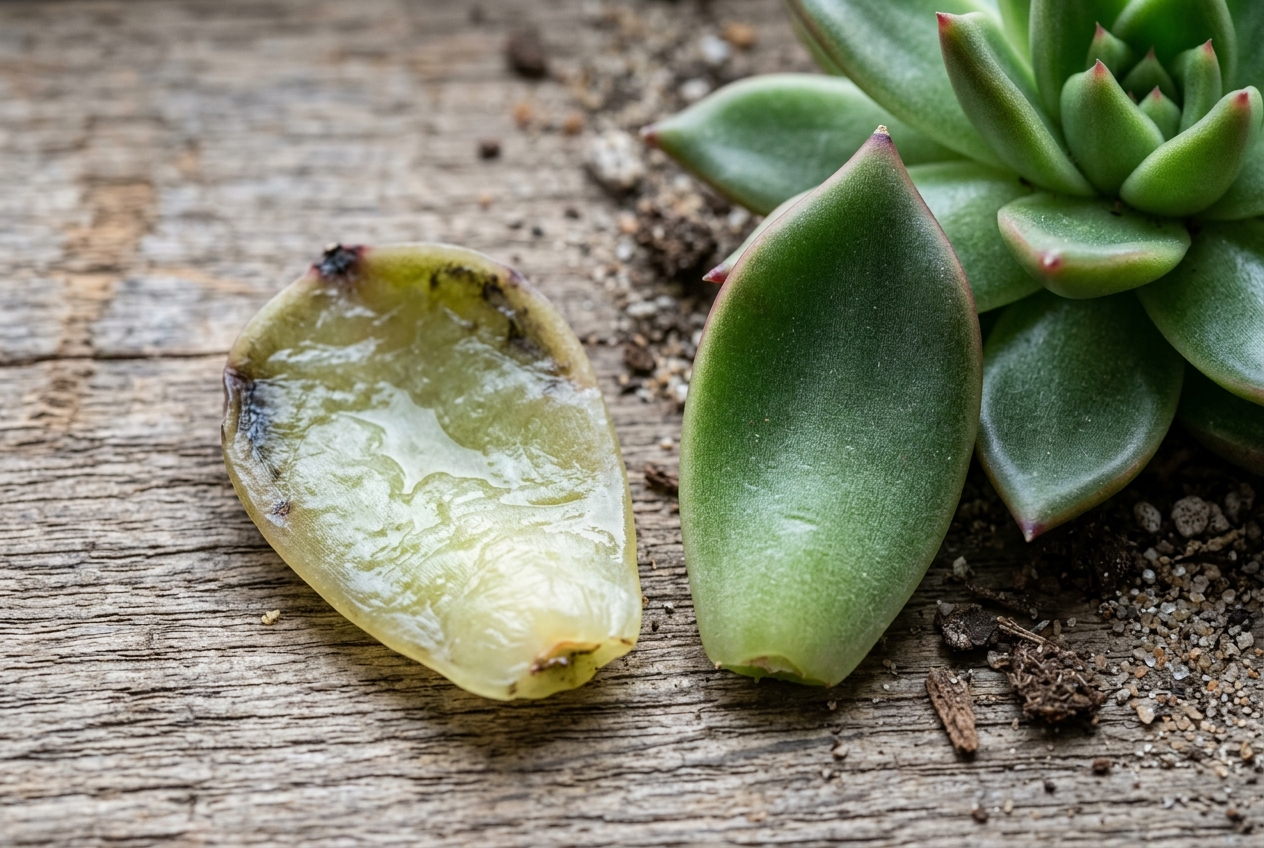
Diagnosing whether a succulent needs water requires observing tactile leaf turgor rather than checking a calendar. Here is my diagnostic comparison table for how to water succulents:
| Diagnostic Factor | Overwatered Succulent (Root Rot Crisis) | Underwatered Succulent (Thirsty State) |
|---|---|---|
| Leaf Texture & Feel | Soft, mushy, squishy, jelly-like; leaves pop under light pressure | Soft, pliable, wrinkled like an old raisin; leathery feel |
| Foliar Color | Translucent, pale yellow, watery, blackening at stem base | Dull, faded color; enhanced stress colors (pink/purple edges) |
| Leaf Shedding Pattern | Plump green/yellow leaves drop at the slightest touch | Bottom-most oldest leaves dry into crispy brown flakes |
| Root Condition | Black, slimy, foul-smelling, stripped root cortices | Dry, brittle, wiry, pale tan root strands |
| Immediate Corrective Action | Unpot, prune rotted roots, air dry for 48h, repot into dry grit | Execute deep “soak and dry” bottom or top drench |
7 Proven Rules: How to Water Succulents
Executing how to water succulents with scientific accuracy prevents overwatering and keeps rosettes plump and vibrant. Follow these seven golden rules for how to water succulents:
Rule 1: Always Drench Thoroughly—Never Give “Sips”
The most catastrophic mistake in how to water succulents is applying small dribbles of water around the stem. In nature, desert roots grow deep and wide to chase rainwater. Light surface watering wets only the top few millimeters of soil, leaving deep root tips to wither and die while encouraging stem rot. When you water, soak the substrate until water streams freely from the bottom drainage holes, embodying how to water succulents properly.
Rule 2: Allow the Soil to Dry Out 100% Completely Between Waterings
Succulent roots require complete dry periods between watering events. Moisture in the soil prevents air diffusion into the root zone. Before watering, ensure the entire substrate—from the top surface to the bottom of the pot—is bone dry. If in doubt, wait another 3 to 5 days before applying how to water succulents.
Rule 3: Water Based on Leaf Wrinkles, Never on a Rigid Calendar
Environmental variables (light intensity, room temperature, pot size, relative humidity) change constantly throughout the year. Watering on a fixed “every Tuesday” schedule is a recipe for root rot. Instead, gently squeeze the lower leaves: if they are firm and rock-hard, do not water. If they are soft and show micro-wrinkles along the sides, it is time for how to water succulents.
Rule 4: Utilize Sub-Irrigation and Bottom Soaking
Sub-irrigation is an exceptional technique for how to water succulents. By placing your succulent pot into a basin of water and allowing capillary action to draw moisture upward as detailed in Bottom Watering Plants, you saturate the root ball thoroughly without wetting the delicate rosette crown or disturbing the protective farina.
Rule 5: Keep Rosette Centers and Stem Axils Completely Dry
When top-watering, use a long, narrow gooseneck watering spout to apply water directly to the soil surface around the pot perimeter. Never pour water directly into the central crown of the rosette. Standing water trapped inside dense leaf crevices creates an anaerobic breeding ground for crown rot and black fungal decay, a crucial warning in how to water succulents.
Rule 6: Never Mist Succulents with a Spray Bottle
Misting succulents is completely counterproductive. Fine mist droplets do not reach the root system where water is absorbed, but they do wash off protective epicuticular wax and create high humidity that encourages fungal leaf rot and aerial root formation, proving misting fails at how to water succulents. For tropicals requiring moisture, refer to How to Increase Humidity for Indoor Plants instead.
Rule 7: Drastically Reduce Watering During Winter Dormancy
When daylight hours shorten in autumn and winter, succulents slow their metabolic rate and enter semi-dormancy. Their water uptake drops by over 80%. During winter, reduce watering frequency to once every 4 to 6 weeks, watering only when leaves show visible dehydration wrinkling, an essential seasonal rule for how to water succulents.
The “Soak and Dry” Method: Step-by-Step Execution
The “Soak and Dry” method is the industry standard protocol for how to water succulents:
- Test Soil Dryness: Insert a wooden skewer or chopstick to the very bottom of the pot. If it emerges completely clean and bone-dry with zero clinging soil particles, the plant is ready for water.
- Apply Water Generously: Using room-temperature water, pour generously over the entire soil surface until water pours out of the drainage holes into the saucer.
- Allow Full Drainage: Let the pot drain freely for 10 to 15 minutes.
- Empty the Catch Saucer: Never allow the succulent pot to sit in standing runoff water. Empty the saucer immediately to prevent saturation of the bottom soil layer.
- Return to Bright Sunlight: Place the succulent back in bright, direct sunlight or beneath high-output LED grow lights where active photosynthesis can resume. If multiplying your collection, clean foliage first with How to Clean Indoor Plant Leaves and explore How to Propagate Pothos for tropical companion care.
Soil Physics: Particle Porosity and Drainage Dynamics

You cannot separate how to water succulents from the physical properties of the potting medium. Standard peat-based potting soil retains moisture for weeks, which is lethal to arid roots. Succulents require a hyper-porous, gritty substrate:
Dennis’s Commercial Succulent Grit Recipe
- 20% Organic Base: High-grade sifted coco coir or composted pine bark fines.
- 40% Horticultural Pumice: Volcanic stone that provides non-collapsing macropores and holds micro-nutrients.
- 20% Coarse Perlite or Expanded Shale: Creates permanent air passages for rapid water percolation.
- 20% Lava Rock or Calcined Clay (Turface): Adds mineral weight and prevents soil compaction.
This gritty blend drains completely within 5 seconds of application and dries out within 2 to 4 days, allowing you to execute how to water succulents without fearing root rot.
Seasonal Dormancy Adjustments (Summer vs. Winter Growers)
Succulents belong to two distinct metabolic dormancy categories that dictate how to water succulents:
- Summer Growers (Active Spring/Summer, Dormant Winter): Genera such as Echeveria, Sempervivum, Sedum, and Kalanchoe grow actively during warm long-day seasons and require regular soak-and-dry watering. In winter, reduce watering to once a month.
- Winter Growers (Active Autumn/Winter, Dormant Summer): Genera such as Aeonium, Haworthia, Gasteria, and Sansevieria go dormant during hot midsummer heatwaves (curling their rosettes shut). Reduce watering during July/August and increase watering during mild autumn and winter months to master how to water succulents year-round.
Pot Selection & Drainage Mechanics (Terracotta vs. Plastic)

The container you choose directly impacts how to water succulents:
- Unglazed Terracotta (Best Choice): Terracotta is porous clay that breathes. It wicks moisture outward through its walls and allows evaporation from the sides, cutting soil dry-out time in half and providing the ultimate safety margin against overwatering.
- Plastic and Glazed Ceramic: Non-porous containers trap moisture. When using glazed pots, increase the gritty mineral content of your soil to 80% to compensate for reduced sidewall evaporation.
- Drainage Holes Are Mandatory: Never pot succulents in containers without bottom drainage holes. Without drainage, accumulated water turns the bottom soil into an anaerobic swamp.
For delicate trailing varieties that are sensitive to moisture around the crown, see our detailed String of Pearls Care guide.
Frequently Asked Questions (FAQ)
How often should I water my indoor succulents?
On average, indoor succulents in bright light require watering every 10 to 14 days during the active spring/summer growing season, and every 3 to 5 weeks during winter dormancy. Always verify that the soil is 100% bone-dry before watering.
Can an overwatered succulent be saved from root rot?
Yes, if caught before the stem turns completely black. Immediately unpot the plant, wash away all wet soil, prune all black mushy roots with sterile shears, let the plant air-dry in shade for 48 hours to callus, and repot into 100% dry gritty mix. Do not water for 7 days.
Why are the bottom leaves of my succulent turning yellow and mushy?
Yellow, translucent, mushy lower leaves are the classic symptom of overwatering and early root suffocation. In contrast, normal aging leaves turn dry, crispy, and brown before falling off cleanly.
Is tap water safe for watering succulents?
Most succulents tolerate tap water well, but if your municipal water is heavily treated with chlorine or fluoride, let it sit out for 24 hours or use rainwater/distilled water to prevent mineral crusting on leaf tips.
Should I water succulents after repotting them?
No! Never water succulents immediately after repotting. Wait 5 to 7 days before the first watering to allow any micro-tears on the root system to callus over, preventing fungal infection.
Final Verdict & Dennis’s Xeriscape Watering Checklist
Succulents are among the most resilient, architecturally striking plants on Earth when their natural desert biology is respected. By mastering how to water succulents using the deep “soak and dry” method, pairing plants with ultra-porous gritty substrates, and observing tactile leaf turgor rather than a rigid calendar, you will keep your rosettes plump, colorful, and free from root rot for years to come.
Here is Dennis’s golden succulent rule: When in doubt, do not water! Succulents can survive weeks of drought without flinching, but a single week in waterlogged soil can prove fatal. Trust their desert instincts, provide blazing bright light, and watch your succulent collection thrive with stunning geometrical beauty!
{
“@context”: “https://schema.org”,
“@graph”: [
{
“@type”: “Article”,
“@id”: “https://www.plantingcare.com/how-to-water-succulents/#article”,
“isPartOf”: {
“@type”: “WebPage”,
“@id”: “https://www.plantingcare.com/how-to-water-succulents/”
},
“headline”: “How to Water Succulents: 7 Proven Rules for Healthy Growth”,
“description”: “Learn how to water succulents with Dennis P. Hansen’s 7 proven rules. Master the soak and dry method, avoid root rot, and keep fleshy foliage thriving.”,
“image”: “https://www.plantingcare.com/wp-content/uploads/2026/08/sun_stress_featured_1787735218876-1.jpg”,
“author”: {
“@type”: “Person”,
“name”: “Dennis P. Hansen”,
“jobTitle”: “Hobby Gardener”,
“worksFor”: {
“@type”: “Organization”,
“name”: “PlantingCare.com”
}
},
“publisher”: {
“@type”: “Organization”,
“name”: “PlantingCare”,
“url”: “https://www.plantingcare.com”
},
“mainEntityOfPage”: “https://www.plantingcare.com/how-to-water-succulents/”
},
{
“@type”: “HowTo”,
“name”: “How to Water Succulents (Soak and Dry Method)”,
“description”: “Step-by-step horticultural guide to properly watering indoor succulents to prevent rot and promote growth.”,
“image”: “https://www.plantingcare.com/wp-content/uploads/2026/08/sun_stress_featured_1787735218876-1.jpg”,
“totalTime”: “PT15M”,
“tool”: [
{“@type”: “HowToTool”, “name”: “Gooseneck Watering Can”},
{“@type”: “HowToTool”, “name”: “Wooden Moisture Testing Skewer”}
],
“supply”: [
{“@type”: “HowToSupply”, “name”: “Room Temperature Water”},
{“@type”: “HowToSupply”, “name”: “Gritty Porous Succulent Soil”}
],
“step”: [
{
“@type”: “HowToStep”,
“name”: “Verify Complete Soil Dryness”,
“text”: “Insert a wooden skewer to the bottom of the pot to confirm that the substrate is 100% dry before watering.”,
“image”: “https://www.plantingcare.com/wp-content/uploads/2026/08/succulent_acclimation_recovery_1787735251559-1.jpg”
},
{
“@type”: “HowToStep”,
“name”: “Inspect Foliage Turgor”,
“text”: “Gently touch lower leaves to confirm they are soft and slightly wrinkled, indicating true thirst.”,
“image”: “https://www.plantingcare.com/wp-content/uploads/2026/08/succulent_sunburn_damage_1787735241044-1.jpg”
},
{
“@type”: “HowToStep”,
“name”: “Soak Substrate and Drain”,
“text”: “Pour water around the pot perimeter until it drains freely from the bottom, then discard all standing runoff water.”,
“image”: “https://www.plantingcare.com/wp-content/uploads/2026/08/sun_stress_pigments_1787735230155-1.jpg”
}
]
},
{
“@type”: “FAQPage”,
“mainEntity”: [
{
“@type”: “Question”,
“name”: “How often should I water my indoor succulents?”,
“acceptedAnswer”: {
“@type”: “Answer”,
“text”: “Every 10 to 14 days during spring/summer, and every 3 to 5 weeks during winter dormancy when soil is 100% dry.”
}
},
{
“@type”: “Question”,
“name”: “Can an overwatered succulent be saved from root rot?”,
“acceptedAnswer”: {
“@type”: “Answer”,
“text”: “Yes, unpot immediately, prune black mushy roots, let air-dry for 48 hours to callus, and repot into dry gritty mix.”
}
},
{
“@type”: “Question”,
“name”: “Why are the bottom leaves of my succulent turning yellow and mushy?”,
“acceptedAnswer”: {
“@type”: “Answer”,
“text”: “Translucent mushy leaves are caused by overwatering and cellular rupture from excess moisture.”
}
},
{
“@type”: “Question”,
“name”: “Is tap water safe for watering succulents?”,
“acceptedAnswer”: {
“@type”: “Answer”,
“text”: “Most succulents tolerate tap water, but letting it sit for 24 hours or using rainwater prevents mineral crusts.”
}
},
{
“@type”: “Question”,
“name”: “Should I water succulents after repotting them?”,
“acceptedAnswer”: {
“@type”: “Answer”,
“text”: “No, wait 5 to 7 days after repotting before watering to allow root micro-tears to callus over.”
}
}
]
}
]
}
Dennis P. Hansen
Dennis P. Hansen is a home gardener with a genuine passion for plants and the simple pleasure of growing them. He enjoys caring for houseplants, succulents, and other plants at home while continually learning from everyday gardening experiences. Dennis likes to share practical plant care tips, useful observations, and simple solutions that can help others grow healthier plants. He believes that caring for plants is a rewarding journey and that there is always something new to learn along the way.