
Tradescantia Zebrina Houseplant: 7 Joyful Proven Secrets


Few indoor plants reward home gardeners with such fast, colorful growth as the tradescantia zebrina houseplant. My name is Dennis P. Hansen, and caring for this silver-and-violet trailing beauty in my own living room taught me how light angles control leaf pigmentation, how to prevent bald stems, and how effortless stem propagation can be. In this complete care guide, you will learn practical watering routines, soil recipes, light balancing tips, and rejuvenating pruning methods to keep your tradescantia zebrina dense and healthy year after year.
Table of Contents
- Botanical Profile and Natural Growing Habit
- Comprehensive Care Guide for Tradescantia Zebrina Indoors
- Tradescantia Zebrina Care Summary Table
- Dennis’s Advanced Troubleshooting for Common Problems
- Pruning, Pinching, and Continuous Propagation
- Seasonal Care Transitions from Summer to Winter
- Frequently Asked Questions About Tradescantia Zebrina
Botanical Profile and Natural Growing Habit
The tradescantia zebrina houseplant, commonly referred to as the inch plant or wandering dude, belongs to the Commelinaceae family. Native to the humid forest floors and rocky outcrops of southern Mexico and Central America, this plant naturally functions as an aggressive ground cover. In its native habitat, it creeps along the soil surface, forming adventitious roots wherever its jointed stem nodes make contact with damp earth.
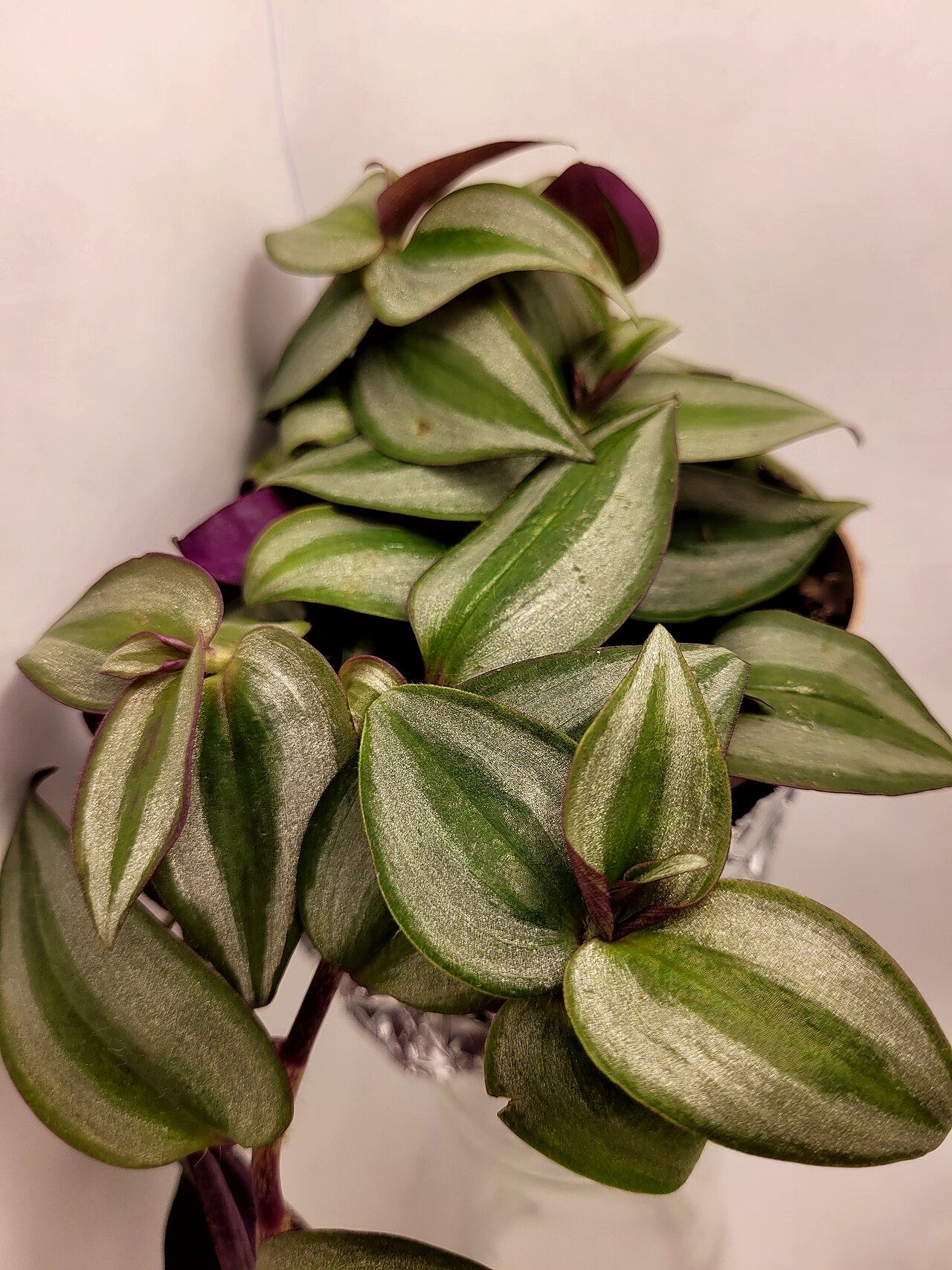
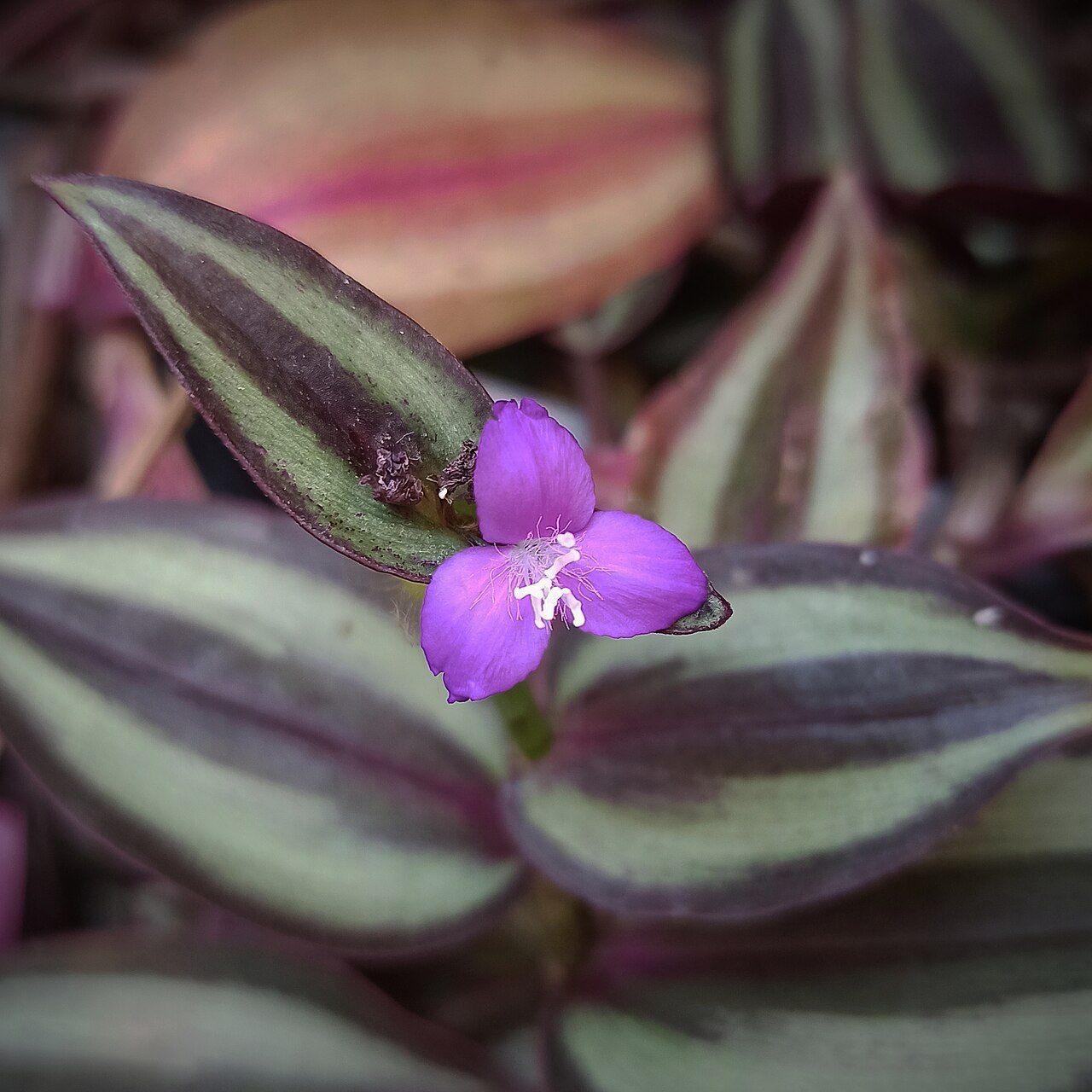
What makes this species stand out indoors is its striking leaf architecture. Each pointed, ovate leaf features two broad, shimmering silver longitudinal stripes running down the upper surface, bordered by deep green margins and a central green stripe. The underside of every leaf is coated in a rich, velvety magenta-purple. Under strong light, specialized epidermal cells create an iridescent, metallic sheen that sparkles when sunlight strikes the foliage.
According to botanical records documented in the North Carolina State Extension Plant Toolbox on Tradescantia zebrina, this herbaceous perennial thrives in partial shade to bright filtered light and spreads rapidly via sprawling succulent-like stems. For indoor gardeners, understanding its natural creeping habit explains why stems that spill over hanging baskets eventually lose their oldest leaves near the soil crown. It is not failing; it is simply trying to crawl across the ground to find fresh soil.
Comprehensive Care Guide for Tradescantia Zebrina Indoors
Keeping a tradescantia zebrina houseplant full, compact, and vividly colored requires balancing light exposure, soil moisture, and physical maintenance. Follow these practical environmental guidelines to maintain vigorous foliage in home settings.
1. Light Intensity and Anthocyanin Pigmentation
Light is the direct trigger for the purple and silver coloration that defines this plant. Tradescantia zebrina produces purple anthocyanin pigments as a natural sunscreen to protect its tender leaf cells from intense light. When you place the plant in bright indirect sunlight, such as an east-facing window with gentle morning sun or a few feet back from an unobstructed south-facing window, the leaves produce intense magenta undersides and sharp silver bands.
If you tuck the plant into a dark corner or north-facing room with low light, anthocyanin production stops. The leaves fade to a dull, washed-out green, the silver stripes disappear, and the internodes (the stem space between leaves) stretch out, causing the plant to look leggy, sparse, and weak. Aim for 200 to 400 foot-candles (roughly 2,000 to 4,000 lux) of indirect light. Avoid harsh, unfiltered midday summer sun hitting the foliage directly through unshaded south windows, as hot glass can scorch bleached brown patches onto the leaves.
2. Watering Dynamics and Soil Moisture Balance
The fleshy, succulent-like stems of tradescantia zebrina store a modest amount of water, which makes the plant moderately drought tolerant once established. However, allowing the soil to dry out completely into hard, cracked dust causes the lower leaves to turn brown, dry up like paper, and drop off.
The safest watering schedule follows the “top-half-dry” rule. Before adding water, insert your index finger two inches into the potting soil. If the top two inches feel dry, cool, and powdery, water the plant thoroughly until moisture drains freely from the bottom holes. If the soil still feels damp or sticks to your finger, wait another two to three days before testing again.
When watering, always pour water around the outer rim of the pot onto the soil, rather than pouring directly into the center of the crown. Trapping standing water inside the dense cluster of base leaves invites bacterial crown rot and fungal decay, especially during cooler winter months when indoor evaporation slows down.
3. Well-Draining Soil Mix Formulation
Heavy, dense potting soils that hold stagnant moisture are the primary enemy of tradescantia zebrina roots. The root system consists of fine, fibrous root hairs that require plenty of oxygen between waterings. Standard store-bought potting soil contains too much fine peat, which easily compacts over time and turns anaerobic.
A reliable soil mix for tradescantia zebrina combines two parts standard peat-based or coco-coir potting soil, one part coarse horticultural perlite, and one part orchid bark fines or coarse pumice. The perlite and bark create macroscopic channels throughout the container, allowing excess water to flush out in seconds while keeping the soil loose and aerated. For plant parents curious about soil choices across trailing species, reviewing Hanging Houseplants: 7 Proven Picks for Cascading Indoor Vines helps illustrate how drainage impacts long-term foliage health.
4. Container Selection and Drainage Holes
Whether you grow your tradescantia zebrina in a desktop pot on a bookshelf or suspended from a ceiling hook in a macrame hanger, functional drainage holes are mandatory. Decorative pots without drainage holes trap water in the bottom gravel layer, turning the lower substrate into a sour, anaerobic swamp that rots fine root hairs within a week.
Plastic nursery pots inside decorative cachepots or unglazed terracotta containers work exceptionally well. Terracotta is porous, allowing moisture to evaporate through the pot walls, which naturally protects against overwatering. Because tradescantia zebrina has a relatively shallow root system, shallow wide containers (azalea pots or hanging bowls) encourage denser surface rooting than tall, narrow cylinders.
5. Temperature Thresholds and Cold Drafts
Coming from tropical climates, tradescantia zebrina performs best at average room temperatures between 65°F and 80°F (18°C to 27°C). It handles warmer summer temperatures easily as long as soil moisture remains consistent.
What this plant cannot tolerate is cold drafts. Exposure to temperatures below 55°F (13°C) causes the cellular walls in the leaves to collapse, turning the foliage into dark, watery, limp mush. During winter, keep the plant several feet away from drafty single-pane windows, external entrance doors, and unheated garages. Likewise, avoid placing it directly in the blast path of forced-air heating vents or air conditioners, which desiccate foliage rapidly.
6. Humidity and Indoor Air Quality
Tradescantia zebrina adapts to average household humidity levels between 40% and 50% without complaint. Unlike finicky calatheas or delicate ferns, it does not demand a dedicated greenhouse environment to thrive. However, when winter heating drops indoor relative humidity below 30%, the tips of older leaves often turn crispy and brown.
To improve ambient humidity around your plant, group it closely with other indoor foliage plants to create a natural transpiration pocket. You can also place the pot on a shallow saucer filled with clean pebbles and water, ensuring the bottom of the pot rests safely above the water line. Avoid misting the leaves with a spray bottle; wet foliage in stagnant indoor air invites leaf-spot fungus and leaves unsightly mineral water spots on the iridescent silver stripes.
7. Nutrition and Gentle Fertilizer Routines
Because tradescantia zebrina grows rapidly during the spring and summer, it benefits from modest nutritional support. However, heavy synthetic fertilizers can do more harm than good. Excessive nitrogen forces rapid, weak stem growth with wide internodes, making the plant look leggy and diluting the purple coloration.
During the active growing season (April through September), feed your plant once every three to four weeks with a balanced liquid indoor plant fertilizer diluted to half of the recommended label strength. Always apply fertilizer to damp soil after a normal watering to avoid burning fine feeder roots. Stop feeding entirely during late autumn and winter when the plant slows its metabolic rate. For broader guidance on gentle feeding practices across indoor varieties, explore Plant Food for Houseplants: 7 Proven Joyful Secrets for Thriving Indoor Foliage.
Tradescantia Zebrina Care Summary Table
The table below summarizes the key environmental conditions and practical checks needed to keep your tradescantia zebrina houseplant thriving indoors.
| Care Parameter | Optimal Condition | Dennis’s Practical Home Observation |
|---|---|---|
| Light Exposure | Bright indirect light; gentle morning sun | If silver stripes fade to green, move 2 feet closer to a sunny window. |
| Watering Frequency | Allow top 2 inches of soil to dry between waterings | Water around the rim; never pour water into the center of the leaf crown. |
| Substrate / Soil | 2 parts potting mix, 1 part perlite, 1 part bark | Water should drain through bottom holes within 10 seconds of application. |
| Temperature Range | 65°F to 80°F (18°C to 27°C) | Never allow temperatures to dip below 55°F; cold turns leaves to brown mush. |
| Relative Humidity | 45% to 60%; tolerates 35% | Dry winter air causes crispy leaf tips; group plants together to trap humidity. |
| Pruning Schedule | Pinch growing tips monthly during spring/summer | Pinching forces two new stems from the node below, doubling plant density. |
Dennis’s Advanced Troubleshooting for Common Problems
Every indoor gardener eventually encounters cosmetic or cultural setbacks with tradescantia zebrina. Here are the five most frequent issues, along with step-by-step diagnostic and remediation protocols.
1. Bare, Leafless Stems at the Top of the Pot
Visual Symptoms: The cascading vines look colorful at the bottom, but the top surface of the pot looks like a messy tangle of dry, brown, leafless sticks.
Primary Cause: Natural aging combined with insufficient light reaching the top soil surface. In nature, trailing stems root into new ground as they advance. When confined to a pot, older leaves near the base naturally senesce and die off. If the pot sits high on a shelf, light reaches the hanging tips but leaves the soil surface in deep shade.
Diagnostic Inspection: Examine the base of the stems. If the stems are still green and firm inside but simply shed their leaves, it is natural aging accelerated by low overhead light. If the base stems are black and hollow, root rot is the cause.
Corrective Action: Take 4-to-6-inch healthy stem cuttings from the vigorous tips. Prune the leafless bare stems back to within two inches of the soil. Root the cuttings in water or insert them directly into the bare spots on the soil surface to fill out the top of the pot. Lower the plant so natural light hits the soil crown.
Long-Term Prevention: Regularly pinch stem tips throughout the spring and summer to force side branching directly from the crown. Position the plant where light illuminates the top of the container.
2. Faded Green Foliage and Loss of Purple Stripes
Visual Symptoms: The leaves turn solid dull green with weak, faint silver markings. The distinctive purple undersides fade to pale lime, and the stems stretch out with long gaps between leaves.
Primary Cause: Chronic insufficient light. The plant stops producing purple anthocyanin pigments and ramps up chlorophyll production to capture whatever minimal light is available.
Diagnostic Inspection: Measure the distance between leaf nodes. On a healthy plant, leaves sit 0.5 to 1 inch apart. If nodes are separated by 2 to 3 inches of thin stem, the plant is actively etiolating (stretching for light).
Corrective Action: Move the plant closer to an east-facing window or install an LED grow light positioned 6 to 10 inches away for 12 hours daily. Prune away the stretched, faded stems; new growth emerging from the trimmed nodes under better light will display intense purple and sharp silver striping.
Long-Term Prevention: Never keep tradescantia zebrina in low-light bathrooms or dark interior rooms without supplemental artificial lighting.
3. Crispy Brown Leaf Tips and Dried Margins
Visual Symptoms: Leaf tips turn dry, crispy, and brittle. Brown edges curl inward along older foliage, eventually causing entire leaves to shrivel and drop.
Primary Cause: Low indoor humidity, underwatering, or excessive mineral salts from tap water or over-fertilization.
Diagnostic Inspection: Check your watering habits and soil moisture. If the soil dried into a hard brick that repels water, underwatering is the issue. If the soil is moist and white crusty mineral deposits coat the terracotta rim, fertilizer salt buildup is scorching the leaf tips.
Corrective Action: Snip off completely dead leaves with clean scissors. If soil dried out severely, submerge the pot in a bucket of room-temperature water for 20 minutes to rehydrate the peat core. If salt accumulation is present, leach the soil by pouring distilled water through the pot for two minutes to flush excess salts through the drainage holes.
Long-Term Prevention: Maintain consistent watering when the top two inches dry out. Use filtered or rainwater if your municipal tap water has high fluoride or chlorine levels, and dilute all synthetic fertilizers to half strength.
4. Yellow, Translucent Leaves and Soft Black Stems
Visual Symptoms: Lower leaves turn limp, pale yellow, and translucent. The base of the stems turns black, mushy, and collapses when touched, giving off a sour, swampy odor.
Primary Cause: Overwatering and root rot caused by stagnant water in poorly draining soil.
Diagnostic Inspection: Slide the root ball out of the pot. Healthy tradescantia roots are firm, white, or light cream. Rotted roots look dark brown, stringy, slimy, and slide off when touched.
Corrective Action: Act quickly to salvage healthy material. Cut several healthy, firm stem tips well above the blackened mushy zone. Discard the rotted root ball and soil entirely. Wash the pot thoroughly with hot soapy water. Root your healthy stem cuttings in fresh water or clean sterile perlite.
Long-Term Prevention: Always confirm the top two inches of soil are dry before watering. Ensure drainage holes are never blocked, and use a loose mix with plenty of perlite and bark.
5. Fine Webbing and Stippled Yellow Leaves (Spider Mites)
Visual Symptoms: Foliage develops tiny yellow or bronze speckles on the upper surface. Fine, silky webbing appears across the undersides of leaves and in the branch crotches.
Primary Cause: Spider mites (Tetranychidae) invading in dry, warm indoor environments.
Diagnostic Inspection: Hold a white sheet of paper beneath an affected stem and tap the foliage. If tiny dark specks fall onto the paper and begin crawling, spider mites are present.
Corrective Action: Isolate the plant immediately. Take it to the shower or sink and spray the undersides of all leaves thoroughly with lukewarm water to physically dislodge the pests. Once dry, spray the foliage with insecticidal soap or diluted cold-pressed neem oil, ensuring complete coverage on the leaf undersides. Repeat the treatment every five days for three weeks to break the egg hatching cycle.
Long-Term Prevention: Boost room humidity above 50% during winter, as spider mites reproduce rapidly in hot, dry, stagnant air.

Pruning, Pinching, and Continuous Propagation
Pruning is not an occasional chore for tradescantia zebrina; it is the fundamental secret to keeping this plant looking lush and attractive over multiple seasons. Without regular pinching, every stem grows outward as a single long, stringy vine, eventually losing its upper leaves and leaving an unsightly bald crown.
The Pinching Technique
Pinching refers to removing the top terminal bud of a growing vine. Using your thumb and fingernail or a pair of clean micro-snips, cut off the top one to two inches of each stem just an eighth-inch above a leaf node. Removing the terminal growth point halts apical dominance, which releases dormant buds located in the leaf axils below. Within 7 to 10 days, two new side branches will sprout from that node, effectively doubling the foliage density of the plant.
Water Propagation
Tradescantia zebrina is one of the easiest indoor plants to propagate. Take 4-to-5-inch stem cuttings from healthy growing tips. Strip off the lower two or three leaves so you have a bare stem section with at least two exposed nodes. Place the cuttings into a small glass of clean room-temperature water, keeping the remaining top leaves suspended above the water line.
Place the glass on a bright windowsill with indirect light. Because the nodes contain pre-formed root initials, white roots will emerge within 48 to 72 hours. Within 10 to 14 days, the root system will be 2 inches long and ready for transplanting into soil. You can also research broader botanical taxonomy and plant distribution data through the USDA Natural Resources Conservation Service Plants Database.
Soil Propagation and Rejuvenation
You can skip water rooting entirely and stick fresh cuttings straight into damp potting soil. Take 10 to 15 fresh stem cuttings, dip the bottom nodes in water, and push them one inch deep into the soil of your container. Keep the soil consistently moist for two weeks. The cuttings will root directly in place, instantly transforming a sparse, thinning pot into a bushy, multi-stemmed specimen.
For gardeners exploring dependable trailing plants that propagate easily, reviewing Easy to Grow Houseplants: 7 Proven Joyful Choices for Homes provides helpful comparisons on rooting speeds and maintenance schedules.
Seasonal Care Transitions from Summer to Winter
While tradescantia zebrina grows continuously indoors, seasonal shifts in outdoor daylight and indoor climate require small adjustments to keep the plant in peak condition.
Spring and Summer Management
During the warm months from April through September, tradescantia zebrina enters its most active growth phase. Stems can lengthen by several inches each month. Keep up with watering as soon as the top two inches dry, and pinch back long vines every three to four weeks to encourage branching.
If you move your plant outdoors for the summer onto a covered porch or shaded patio, ensure it stays completely protected from harsh midday sun. Outdoor warmth accelerates growth dramatically, but you must check the soil daily for moisture loss. Before bringing the plant back inside in September, inspect the foliage thoroughly for outdoor pests like aphids or thrips.
Autumn and Winter Management
When autumn arrives and daylight hours decline, tradescantia zebrina slows its metabolic rate. Indoor heating systems dry out the air while shorter days reduce photosynthetic energy. Water consumption drops by roughly half compared to midsummer.
Extend the interval between waterings, waiting until the top half of the soil column is completely dry. Stop applying fertilizer entirely until late March. Move the plant to your brightest window to compensate for shorter winter days, or position it beneath a simple full-spectrum grow light to keep the purple stripes bright and prevent leggy winter growth. For additional insights on plant cell development and winter metabolic shifts, consult Penn State Extension horticultural research.
Frequently Asked Questions About Tradescantia Zebrina
Why is my tradescantia zebrina losing its purple color and turning green?
Loss of purple coloration on a tradescantia zebrina houseplant is almost always caused by insufficient light. The plant synthesizes rich purple anthocyanin pigments as a protective screen against intense light. When placed in low light, dark corners, or north-facing windows, the plant stops producing these purple pigments and ramps up green chlorophyll production to capture whatever minimal light is available. To restore colorful purple undersides and bright silver stripes, move your plant to an east-facing window with gentle morning sunlight or position it 6 to 12 inches beneath an LED grow light for 12 to 14 hours daily. Fresh growth will quickly regain its colorful foliage.
How often should you water a tradescantia zebrina houseplant indoors?
There is no rigid calendar schedule for watering tradescantia zebrina because room temperature, pot size, light intensity, and seasonal humidity all change soil dry-down rates. In average indoor conditions, watering every 7 to 10 days during spring and summer is common, while winter intervals often extend to every 12 to 16 days. Always use the finger test: insert your finger two inches into the topsoil. Water thoroughly only when that top layer feels completely dry. Water around the edge of the pot until water runs freely from the drainage holes, and empty the drip saucer after 15 minutes to prevent saturated root rot.
Why does tradescantia zebrina get bald and leggy at the top of the pot?
Baldness at the base of the plant is part of the natural growth habit of tradescantia zebrina. In nature, this plant is a creeping ground cover that roots along its trailing stem nodes as it spreads across forest floors. When confined to an indoor hanging pot, older leaves near the soil crown naturally age, turn brown, and drop off while the growing tips continue cascading downward. Furthermore, if the pot is hung high near the ceiling, the top of the soil receives very little light. You can fix and prevent this by regular pruning: cut back long trailing vines, root the fresh cuttings, and insert them directly back into the bare spots at the top of the pot to maintain continuous density.
Is tradescantia zebrina toxic to cats, dogs, and pets?
Yes, tradescantia zebrina is classified as mildly toxic to cats, dogs, and other household pets according to veterinary toxicology databases. The plant’s sap contains microscopic calcium oxalate crystals and irritating compounds that cause mild contact dermatitis, skin redness, itching, and mouth irritation if chewed or ingested by animals. Symptoms in pets typically include drooling, pawing at the mouth, swelling around the lips, or mild digestive upset such as vomiting. If you share your home with curious pets that like to nibble on plants, display your tradescantia zebrina in a secure hanging planter or high wall shelf well out of reach of pets.
How do you propagate tradescantia zebrina stem cuttings in water or soil?
Propagating tradescantia zebrina is straightforward because the jointed stem nodes contain pre-formed adventitious root initials. Take 4-to-5-inch cuttings from healthy stem tips using clean shears. Strip the leaves from the bottom two nodes, leaving two or three healthy leaves at the top. For water rooting, submerge the bare nodes in a small jar of clean room-temperature water on a bright windowsill; vigorous white roots will emerge within 48 to 72 hours and reach planting length within two weeks. For soil propagation, push the bare nodes directly into moist, well-draining potting soil; keep the soil damp for two weeks, and the cuttings will root firmly in place without any intermediate steps.
Dennis P. Hansen
Dennis P. Hansen is a home gardener with a genuine passion for plants and the simple pleasure of growing them. He enjoys caring for houseplants, succulents, and other plants at home while continually learning from everyday gardening experiences. Dennis likes to share practical plant care tips, useful observations, and simple solutions that can help others grow healthier plants. He believes that caring for plants is a rewarding journey and that there is always something new to learn along the way.