
Sun Stress Succulent Sunburn Care: 7 Ultimate Secrets

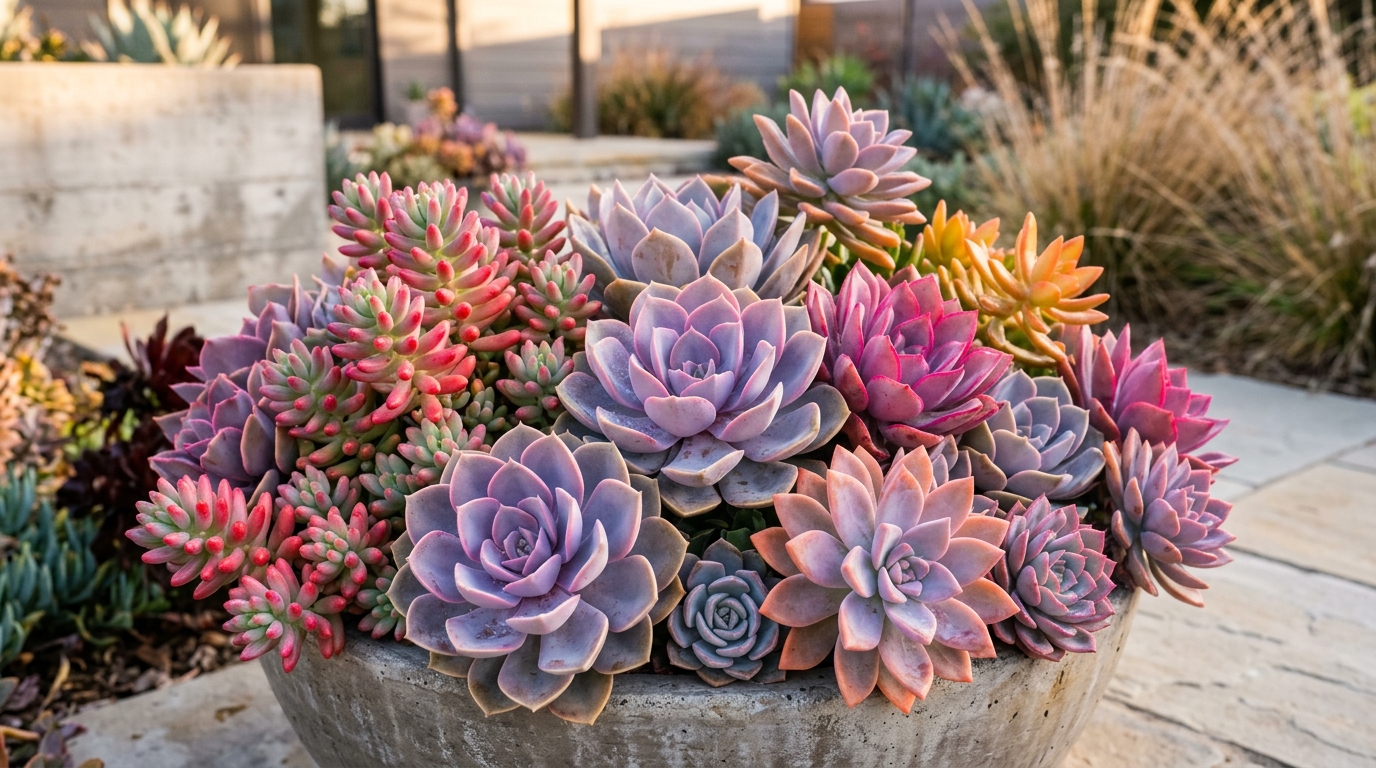
Mastering sun stress succulent sunburn care empowers every gardener to cultivate breathtaking, jewel-toned plants while preventing permanent, disfiguring cellular damage. While gentle UV radiation induces protective anthocyanin and carotenoid pigments that produce vibrant pink, red, and purple hues, excessive thermal exposure rapidly cooks plant tissues into bleached or charred necrotic scars. This definitive guide reveals the exact physiological mechanisms, acclimation protocols, and therapeutic recovery techniques to keep your succulents thriving safely.
Table of Contents
- 1. Sun Stress vs. Sunburn: The Biological Distinction
- 2. The Chemistry of Anthocyanins, Carotenoids, and Farina
- 3. Diagnosing the 4 Progressive Stages of Succulent Sunburn
- 4. Emergency Triage: Immediate First Aid for Sunburnt Succulents
- 5. The 14-Day Scientific Sun Acclimation Protocol
- 6. Deploying Shade Cloths and Strategic Light Filtration
- 7. Hydration Dynamics During Extreme Heat Waves
- 8. Succulent Species Sun Tolerance and Sensitivity Index
- 9. Long-Term Rehabilitation, Scarring, and Beheading Protocols
- 10. Inducing Safe Color Stress Indoors with LED Grow Lights
- 11. Frequently Asked Questions
- 12. Master Checklist for Safe Sun Stress Management
Among succulent enthusiasts, the phrase “sun stress” often evokes mixed emotions. On social media platforms and horticultural forums, growers admire photographs of intensely blushing Echeveria, ruby-tipped Sedum, fiery Euphorbia, and deep burgundy Aeonium. These vivid color transformations represent the pinnacle of succulent beauty. However, in an eager attempt to replicate these dramatic colors, well-meaning hobbyists frequently place tender, greenhouse-grown or indoor succulents directly into scorching midday sun. Within a matter of hours, the gorgeous pastel tones vanish, replaced by ghastly white bleached patches, water-soaked blisters, and permanently blackened, crispy leaf tissue.
The confusion lies in a fundamental misunderstanding of plant physiology. In botanical science, “stress” does not automatically signify disease or fatal damage; rather, it describes any environmental condition (such as high solar radiation, temperature fluctuations, or controlled drought) that triggers adaptive metabolic responses within plant cells. When managed scientifically, sun stress is a benign, natural defense mechanism that fortifies plant tissues and produces stunning chromatic displays. Conversely, sunburn represents irreversible photothermal destruction—a cellular catastrophe where photon overload ruptures chloroplast membranes and vaporizes intracellular moisture. Understanding this crucial divide is the foundation of effective sun stress succulent sunburn care.
1. Sun Stress vs. Sunburn: The Biological Distinction
To successfully navigate the delicate boundary between aesthetic color enhancement and fatal tissue necrosis, growers must understand the cellular events occurring beneath the succulent epidermis.
What is Controlled Sun Stress?
Controlled sun stress is a non-destructive physiological adaptation. In their natural desert and alpine habitats, succulents are exposed to intense ultraviolet (UV-A and UV-B) radiation. To protect their core photosynthetic machinery—specifically chlorophyll molecules located in the chloroplasts—from photoinhibition and reactive oxygen species (ROS), succulent cells produce specialized protective pigments. These pigments act as botanical sunscreen, absorbing excess light energy and dissipating it harmlessly as ambient heat.
During controlled sun stress, the succulent’s epidermal tissue remains completely firm, plump, turgid, and biologically active. The leaf surface retains its smooth texture or waxy coating, and the plant continues normal, healthy respiration and root nutrient uptake. The resulting color shift from plain green to shades of orange, pink, lavender, red, or dark plum is entirely reversible; if moved to lower light, the plant will gradually synthesize more green chlorophyll and return to its baseline vegetative color.
What is Succulent Sunburn?
Succulent sunburn is a traumatic, acute abiotic disorder caused by excessive photon flux density combined with thermal heat accumulation. When the amount of light energy striking the leaf exceeds the plant’s capacity for photochemical dissipation and pigment production, excess photons generate toxic free radicals that destroy cellular walls, denature structural proteins, and rupture vascular bundle cells.
Unlike human skin, which can regenerate new epidermal layers and heal minor burns over time, succulent leaf tissue cannot repair sunburn scars. Once a leaf area is bleached, browned, or blackened by severe thermal burns, those specific cells are dead. The scar tissue remains permanently visible until the succulent eventually outgrows the damaged foliage and sheds the lower leaves through natural leaf succession. Authoritative management of such environmental damage is documented by the University of California Statewide Integrated Pest Management Program guidelines on plant sunburn.
| Diagnostic Attribute | Controlled Sun Stress (Healthy) | Severe Succulent Sunburn (Damaged) |
|---|---|---|
| Leaf Texture & Firmness | Firm, plump, smooth, fully turgid | Crisp, pitted, papery, sunken, or mushy |
| Color Expression | Vibrant pink, purple, ruby red, apricot, bronze | Bleached white, chalky beige, dark brown, or charred black |
| Cellular Viability | 100% alive, fully functional photosynthesis | Irreversible cell death and necrotic tissue collapse |
| Reversibility | Fully reversible when returned to lower light | Permanent physical scarring on affected leaves |
| Impact on Plant Health | Enhances pest resistance and compact rosette form | Stunts growth, invites fungal rot and secondary infection |
2. The Chemistry of Anthocyanins, Carotenoids, and Farina
To master sun stress succulent sunburn care, it is helpful to appreciate the fascinating biochemical pigments responsible for these transformations.
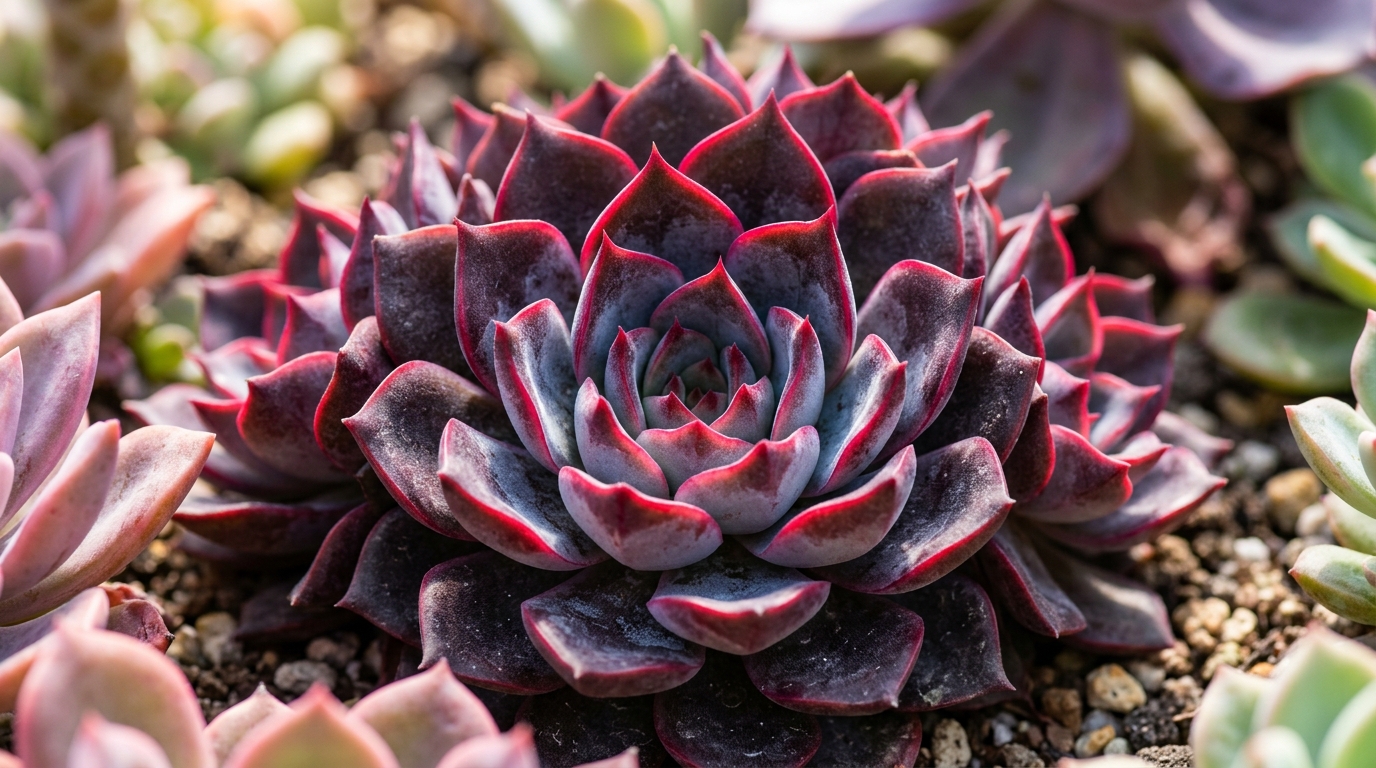
1. Anthocyanins (The Red, Purple, and Blue Pigments)
Anthocyanins are water-soluble flavonoid pigments stored in the plant cell vacuoles. Under baseline low-light conditions, chlorophyll (which reflects green light) dominates the leaf’s visual spectrum. However, when stimulated by high light levels, temperature drops, or low nitrogen availability, succulent cells accelerate anthocyanin synthesis. Anthocyanins absorb green and blue light wavelengths while reflecting red and purple wavelengths, effectively acting as an umbrella that shields sensitive photosynthetic enzymes from excess excitation energy.
2. Carotenoids (The Yellow, Orange, and Golden Pigments)
Carotenoids (including beta-carotene, lutein, and zeaxanthin) are lipid-soluble pigments embedded directly in the thylakoid membranes of chloroplasts. They play a dual role in succulent health: they assist in light harvesting during dim conditions and participate in the xanthophyll cycle during intense sun exposure. Through this cycle, carotenoids rapidly dissipate excess photon energy as harmless thermal radiation, preventing the formation of damaging singlet oxygen molecules.
3. Farina / Epicuticular Wax (The Physical Sunscreen)
Many prized succulent genera (such as Echeveria, Pachyphytum, Graptopetalum, and Dudleya) produce a delicate, powdery white or silver coating on their leaf surfaces known as farina (epicuticular wax). Farina is not dirt or mold; it is a microscopic crystalline wax structure that provides three vital survival benefits:
- Reflects Harsh UV Radiation: Farina reflects up to 50% of incoming solar radiation, dramatically lowering internal leaf temperatures.
- Prevents Transpirational Water Loss: It forms a hydrophobic vapor barrier that traps internal moisture within succulent tissues.
- Repels Water Droplets: By causing water to bead and roll off leaves, farina prevents water droplets from acting as miniature magnifying lenses that concentrate solar rays and ignite burn spots.
Critical Warning: Never wipe off farina with your fingers or cloth. Once wiped away, farina rarely regenerates on mature leaves, leaving the bare underlying cuticle permanently vulnerable to solar scorching.
For more insights on cultivating hardy, resilient succulents that withstand challenging outdoor elements, review our detailed guide on How to Master Succulent Care Outdoors in 9 Easy Wins.
3. Diagnosing the 4 Progressive Stages of Succulent Sunburn
Succulent sunburn does not always appear instantaneously as blackened charcoal. It typically progresses through four distinct anatomical stages based on exposure duration, light intensity, and ambient air temperatures.
Stage 1: Photo-Bleaching (Early Warning Sign)
The earliest symptom of excessive light exposure is photo-bleaching or fading. The rich green or vibrant stressed colors begin to look dull, washed out, or pale yellowish-white. The leaf surface remains firm and smooth, but the chlorophyll is beginning to degrade faster than the plant can replace it. If moved to dappled shade immediately, the plant will fully recover within 7 to 10 days without scarring.
Stage 2: Mild Thermal Blistering & Discoloration
In this stage, the leaf surfaces facing direct sun develop small, slightly rough, beige, silvery, or tan patches. The uppermost layer of epidermal cells has been damaged by thermal heat, but the underlying succulent water-storage parenchymal cells remain intact. The plant will retain this mild cosmetic texture, but its overall growth will not be compromised.
Stage 3: Moderate Scorching & Tissue Collapse (Necrosis)
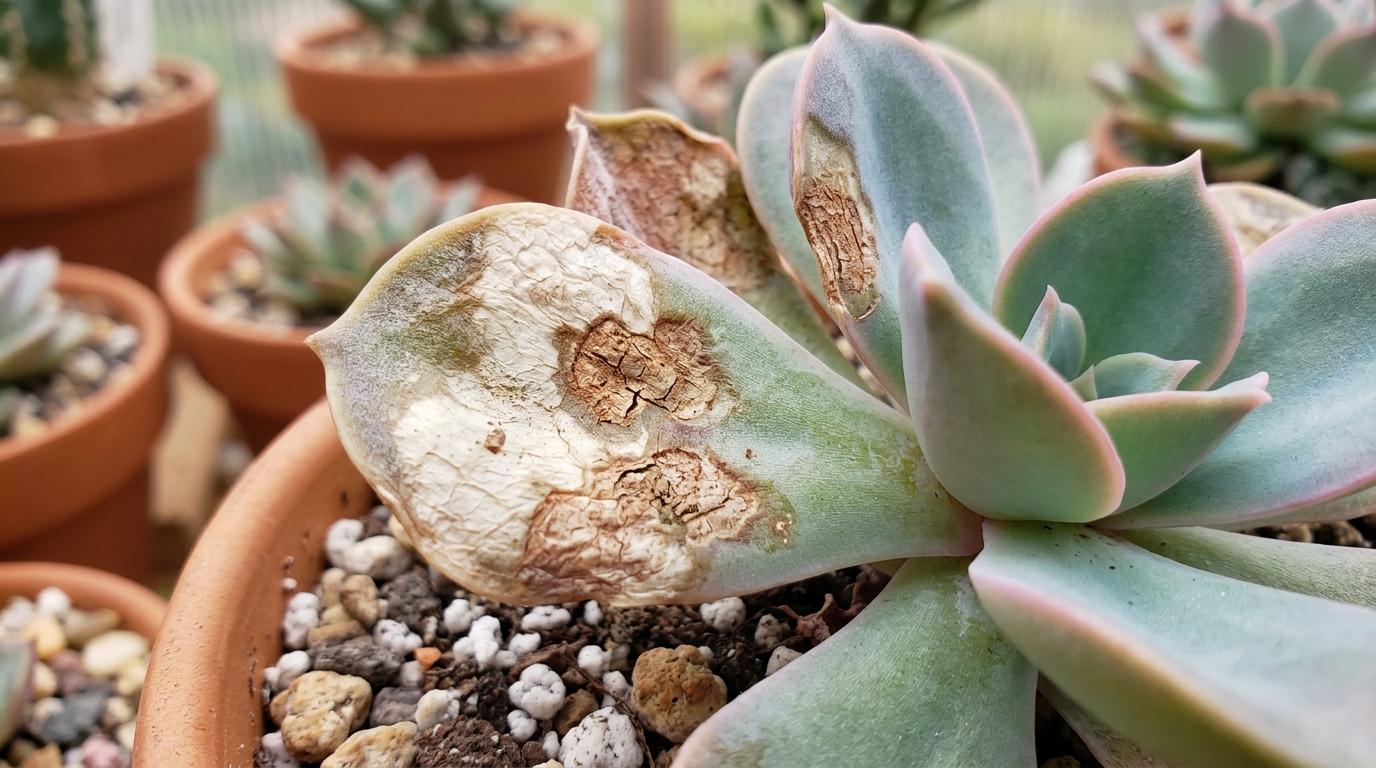
When intense sunlight continues unabated, solar radiation penetrates deep into the water-storage tissues. The affected areas turn stark white, light brown, or sunken gray, and the tissue becomes paper-thin, dry, and brittle. The internal vascular framework in these patches is completely destroyed. The damaged areas will dry out and form permanent, woody, cork-like scabs.
Stage 4: Severe Charring & Apical Rot
The most catastrophic stage occurs when prolonged direct sun is combined with ambient temperatures exceeding 95°F (35°C). The succulent leaves literally boil and cook from within. The scorched tissue turns dark brown or jet-black, soft, and mushy. If the central apical meristem (the growing heart of the rosette) is charred, the main stem may collapse and succumb to systemic bacterial soft rot or fungal decay.
4. Emergency Triage: Immediate First Aid for Sunburnt Succulents
If you discover your succulents actively burning under scorching sun, quick and correct intervention can mean the difference between a minor cosmetic blemish and total plant loss.
The 5-Step Emergency Sunburn Rescue Protocol
- Relocate to Dappled Shade Immediately: Move the affected pot into a bright, shaded location that receives only indirect, filtered light. Do NOT move the plant into a pitch-black closet or dark room, as sudden light deprivation induces severe secondary shock and causes rapid etiolation.
- NEVER Douse Hot Foliage with Cold Water: One of the most common catastrophic mistakes is spraying cold water onto a sun-heated succulent. Icy water on super-heated leaf tissues causes instantaneous cellular shock, rupturing cell walls and inducing rapid tissue rot. Furthermore, water droplets on leaves act as convex lenses that intensify solar burns.
- Allow the Root Ball to Cool Naturally: Let the container and soil cool down to ambient room temperature over several hours before assessing moisture needs.
- Hydrate from the Base (If Soil is Dry): If the soil is bone-dry, bottom-water the container by placing it in a shallow tray of room-temperature water for 20 minutes. This rehydrates the root system without wetting damaged foliage.
- DO NOT Pluck Damaged Leaves Immediately: Resist the urge to tear off sunburnt leaves right away. Even partially scorched leaves continue to supply stored moisture and carbohydrates to the central growing core. Removing them leaves large open wounds that invite pathogens. Wait until new center growth emerges before considering cosmetic pruning.
If opportunistic fungal pathogens threaten damaged tissue, learn how to protect your collection with our guide on How to Use Fungicides for Indoor Plants: 7 Pro Tips.
5. The 14-Day Scientific Sun Acclimation Protocol
Sunburn is almost never caused by the sun alone; it is caused by sudden, un-acclimated sun exposure. A succulent that has spent months in a greenhouse, commercial nursery, or indoor windowsill has thin cell walls and minimal protective farina. Moving such a plant directly into outdoor full sun is guaranteed to cause severe sunburn. Plants require gradual hardening-off to build up protective anthocyanin reserves and thicken their cuticle layers.

The Step-by-Step 14-Day Hardening Schedule
- Days 1 to 3 (Bright Full Shade): Place your new or overwintered succulent in full outdoor shade where it receives bright ambient sky light, such as under a covered porch, patio overhang, or dense tree canopy. No direct sun rays should touch the leaves during this phase.
- Days 4 to 6 (Early Morning Sun Only): Move the plant into a position where it receives 1 to 2 hours of gentle, early morning direct sun (between 7:00 AM and 9:00 AM), followed by bright shade for the remainder of the day. Morning sun has low UV and thermal intensity, allowing the plant to start synthesizing anthocyanins safely.
- Days 7 to 9 (Expanding Morning Sun): Increase direct morning sun exposure to 3 to 4 hours (7:00 AM to 11:00 AM). Ensure the plant is shielded from harsh midday sun (11:00 AM to 4:00 PM).
- Days 10 to 12 (Dappled Midday Light): Expose the plant to morning sun plus filtered or dappled midday light (such as through a 40% shade cloth or latticework). Monitor the leaf tips for initial healthy blushing versus pale bleaching.
- Days 13 to 14+ (Full Target Exposure): Move the fully acclimated succulent into its permanent outdoor location. The succulent will now possess thickened epidermal cell walls, dense farina wax, and high anthocyanin concentrations capable of withstanding direct sun.
6. Deploying Shade Cloths and Strategic Light Filtration
For outdoor succulent gardens, balconies, and patios in regions with intense summer heat (such as the American Southwest, Mediterranean climates, or southern latitudes), natural sunlight between 11:00 AM and 3:00 PM is frequently too intense for even fully acclimated succulents. Strategic physical shading is your most powerful tool.
Selecting the Right Shade Cloth Percentage
Horticultural shade cloths are rated by the percentage of solar radiation they block:
- 30% to 40% Shade Cloth (Ideal for Succulents): Blocks 30% to 40% of intense direct light while transmitting 60% to 70% of photosynthetically active radiation. This is the optimal sweet spot for succulent growers; it eliminates thermal leaf scorch while preserving sufficient photon density to stimulate vivid, jewel-toned sun stress colors.
- 50% to 60% Shade Cloth: Recommended for delicate genera (such as Haworthia, Gasteria, and variegated cultivars) or during extreme heatwaves where ambient temperatures exceed 100°F (38°C).
- 70%+ Shade Cloth (Avoid): Blocks too much light, causing sun-loving succulents to lose their compact rosette shapes and revert to etiolated green growth within weeks.
For additional scientific insights into abiotic environmental stressors and solar radiation in arid climates, explore research published by the University of Arizona Cooperative Extension on abiotic environmental stress in arid plants.
7. Hydration Dynamics During Extreme Heat Waves
Water management during intense heatwaves is one of the most misunderstood aspects of succulent care. A common assumption is that if a succulent is hot and sun-stressed, it requires extra water. However, applying water during peak heat is the leading cause of “succulent melt” and bacterial stem rot.
The Science of CAM Photosynthesis and High Heat
Most succulents utilize Crassulacean Acid Metabolism (CAM) photosynthesis. Unlike standard plants that open their stomata (breathing pores) during the day, succulents keep their stomata tightly closed during hot daylight hours to prevent moisture loss. They open their stomata only at night when temperatures drop, absorbing carbon dioxide and storing it as malic acid for daytime photosynthesis.
When nighttime temperatures remain above 80°F (27°C), many succulents enter a state of temporary summer dormancy or heat estivation, ceasing root water absorption entirely. If you saturate the soil during this period, the moisture sits stagnant around the dormant root system in hot, anaerobic conditions. The combination of heat and stagnant moisture literally cooks the roots and allows opportunistic bacterial pathogens to rot the plant from the inside out.
Golden Rules for Summer Hydration
- Water Exclusively in the Evening or Night: Always water succulents after the sun has set and ambient temperatures have cooled down. This allows the roots to absorb moisture during their active nocturnal CAM respiration cycle without boiling in hot soil.
- Water the Soil, Never the Leaves: Pour water directly onto the soil at the base of the plant. Never use overhead sprinklers or hoses during sunny periods, as water trapped in rosette crevices causes crown rot and focal burns.
- Ensure Rapid Drainage: Use porous, gritty soil containing at least 60% inorganic minerals (perlite, pumice, coarse sand, and crushed lava rock) housed in unglazed terracotta containers with open drainage holes.
8. Succulent Species Sun Tolerance and Sensitivity Index
Different succulent genera possess vastly different biological thresholds for sun and heat tolerance based on their native ecological origins.
| Succulent Genus / Group | Sun Tolerance Level | Optimal Sun Stress Potential | Sunburn Vulnerability |
|---|---|---|---|
| Sedum & Sempervivum | Extreme (Full Sun) | High (Vivid reds, purples, oranges) | Low (Highly resilient) |
| Echeveria & Graptopetalum | Moderate to High | Exceptional (Pastel pinks, blues, burgundies) | Moderate (Requires careful acclimation) |
| Kalanchoe & Crassula | Moderate (Morning Sun) | High (Bright red rims, fiery orange tips) | Moderate to High (Afternoon sun causes scorch) |
| Aeonium | Low to Moderate | High (Deep black-purple in cultivars) | High (Enters summer dormancy; burns easily) |
| Haworthia & Gasteria | Low (Filtered Shade Only) | Low (Turns dull muddy brown when stressed) | Extreme (Direct afternoon sun destroys foliage) |
| Variegated Succulents (All Genera) | Very Low | Moderate (Cream/white zones blush pink) | Extreme (White tissue lacks chlorophyll protection) |
For broader cultivation standards across diverse succulent families, consult the authoritative Royal Horticultural Society (RHS) Succulent Cultivation and Environmental Light Guide.
9. Long-Term Rehabilitation, Scarring, and Beheading Protocols
When a prized succulent suffers moderate to severe sunburn, thoughtful long-term rehabilitation restores the plant’s aesthetic beauty and structural vigor.
Method 1: Natural Leaf Succession (For Mild to Moderate Scarring)
If the central growing core of the rosette remains healthy and green, the best course of action is patience. Move the plant into optimal growing conditions (bright filtered morning sun, well-draining gritty soil, and regular watering). As the plant grows over the following months, the apical meristem will produce fresh, pristine, unblemished leaves at the center. The scarred, sunburnt leaves will gradually migrate toward the outer perimeter of the rosette, where they will naturally dry up, callous, and fall off.
Method 2: Beheading / Decapitation (For Severe Apical Damage)
If the top of the succulent stem is badly charred but lower stem segments remain healthy, perform a surgical beheading:
- Sterilize a sharp horticultural scalpel or hobby knife using 70% isopropyl alcohol.
- Make a clean, horizontal cut through the stem 1 to 2 inches below the damaged crown, ensuring you cut into healthy, green vascular tissue free of brown rot.
- Dust the severed stem on the rooted base with sulfur powder or ground cinnamon to prevent fungal colonization.
- Within 3 to 6 weeks, the bare rooted stem will activate latent nodal buds, producing multiple brand-new baby rosettes along the stalk.
- If the top rosette still has healthy tissue below the burn, allow the cut end to callous in dry shade for 5 days, then set it atop dry gritty soil to root into a brand new plant.
To discover more unique, conversation-starting plants that add dramatic color and architectural texture to your home, check out our guide on 7 Stunning Unique Indoor Plants to Transform Your Home.
10. Inducing Safe Color Stress Indoors with LED Grow Lights
You do not need scorching outdoor summer heat to achieve breathtaking, vibrant succulent colors. In fact, cultivating sun stress indoors using modern full-spectrum LED grow lights is vastly safer, as it provides high photon saturation without dangerous thermal heat buildup.
How to Safely Stress Succulents Under Grow Lights
- Select High-Output Full-Spectrum LEDs: Choose fixtures that emit high photon flux in the blue (450 nm) and deep red (660 nm) spectral bands, with a Color Rendering Index (CRI) of 90+.
- Optimize Distance: Position the light fixture 6 to 10 inches directly above the succulent canopy to deliver a PPFD of 350 to 500 µmol/m²/s.
- Extend the Photoperiod: Run grow lights for 12 to 16 hours daily on an automated timer. The long duration provides ample light volume (DLI) to stimulate anthocyanin production without thermal scorch.
- Pair with Controlled Moisture Stress: Allow the potting mix to dry out thoroughly between waterings. Mild, controlled drought combined with intense LED light triggers vivid color expression in Echeveria, Graptosedum, and Crassula within 2 to 3 weeks.
11. Frequently Asked Questions
Will sunburnt succulent leaves ever heal back to green?
No. Sunburn causes permanent cellular necrosis. Once succulent leaf tissue turns bleached white, brown, or charred black, those specific cells cannot regenerate. However, the plant itself will survive and grow brand new, healthy leaves from its central core over time.
Can succulents get sunburnt through a glass window?
Yes. While residential glass window panes filter out most UV-B radiation, they transmit intense UV-A and visible light while creating a greenhouse microclimate that traps thermal heat. A succulent placed directly against hot window glass without adequate air circulation can easily scorch on sunny summer afternoons.
How long does it take for a sun-stressed succulent to change color?
Under optimal high light and cool night conditions, initial blushing along leaf margins appears within 3 to 7 days. Full, intense jewel-toned color saturation throughout the entire rosette typically develops over 2 to 4 weeks of consistent exposure.
Is sun stress harmful to succulents over the long term?
No. Moderate, controlled sun stress is a completely natural, healthy adaptation that succulents have developed over millions of years. In addition to producing vibrant colors, it encourages tight, compact rosette growth, thickens protective leaf cuticles, and strengthens resistance against fungal and insect pests.
Why did my succulent turn black after one day in the sun?
Sudden blackening indicates severe Stage 4 thermal sunburn and heat rot. This happens when a succulent that was previously kept in dim indoor conditions is suddenly placed into intense, direct afternoon sun during hot weather (>90°F / 32°C). The internal plant sap reaches boiling temperatures, killing the cells instantaneously.
12. Master Checklist for Safe Sun Stress Management
The Golden Rules of Sun Stress & Sunburn Care
- Always Acclimate Slowly: Follow the 14-day hardening protocol whenever moving plants into higher light.
- Protect from Midday Sun: Shield plants from intense solar rays between 11:00 AM and 3:00 PM using a 30%–40% shade cloth.
- Preserve Farina: Never wipe or handle powdery white leaf wax.
- Water at Night: Never water over leaves in direct sun; saturate roots in the evening during hot seasons.
- Watch the Leaf Texture: If leaves remain firm, color is healthy sun stress. If leaves turn pale, bleached, or rough, provide immediate shade.
- Don’t Panic on Burns: Provide gentle recovery shade, maintain proper base watering, and allow new central leaves to naturally replace damaged foliage.
Dennis P. Hansen
Dennis P. Hansen is a home gardener with a genuine passion for plants and the simple pleasure of growing them. He enjoys caring for houseplants, succulents, and other plants at home while continually learning from everyday gardening experiences. Dennis likes to share practical plant care tips, useful observations, and simple solutions that can help others grow healthier plants. He believes that caring for plants is a rewarding journey and that there is always something new to learn along the way.