
Growing Eucalyptus Plant Indoors: 7 Ultimate Secrets for Thriving Aromatic Foliage

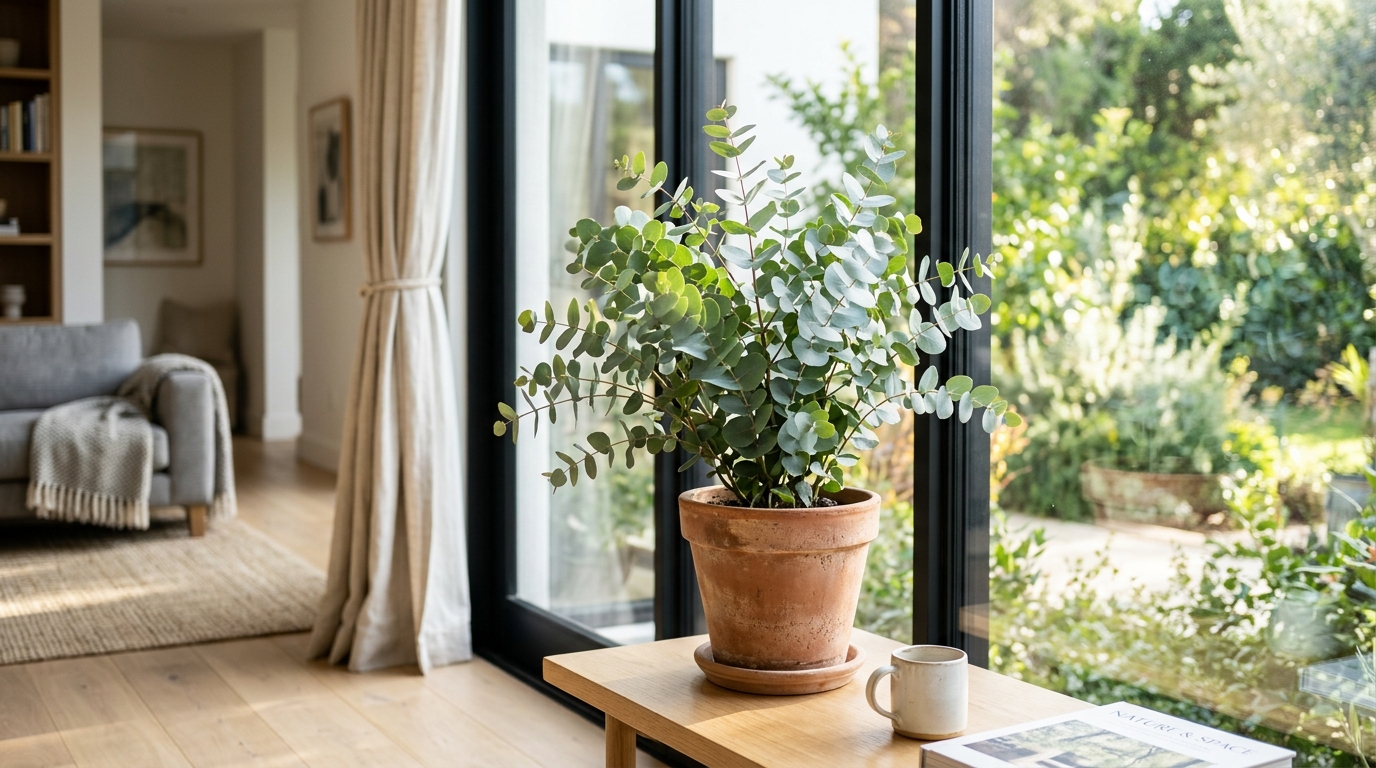
Successfully growing eucalyptus plant indoors brings a rejuvenating spa-like atmosphere, crisp menthol aroma, and striking silvery-blue foliage directly into your living space. While these Australian native giants naturally grow into towering outdoor trees, cultivating them in containers requires mastering their intense solar radiation demands, rapid drainage needs, and aggressive root management. This comprehensive master guide reveals the proven horticultural protocols to keep your potted indoor eucalyptus healthy, bushy, and thriving.
Table of Contents
- 1. Top Eucalyptus Varieties for Indoor Container Cultivation
- 2. Light and Solar Radiation: The Make-or-Break Growth Factor
- 3. Soil Chemistry, Aeration Porosity, and Pot Selection
- 4. Watering Dynamics: The Precision Soak-and-Dry Protocol
- 5. Strategic Pruning and Pinching for Dense, Bushy Architecture
- 6. Precision Fertilization and Micronutrient Management
- 7. Temperature Thresholds, Humidity, and Atmospheric Air Flow
- 8. Propagation Mastery: Cuttings, Air-Layering, and Seeds
- 9. Diagnosing Common Pests, Root Rot, and Physiological Disorders
- 10. Harvesting and Preserving Aromatic Foliage for Aromatherapy and Decor
- 11. Toxicity Mechanisms, Essential Oils, and Pet Safety Protocols
- 12. Frequently Asked Questions
- 13. Master Seasonal Care Routine and Success Checklist
For many passionate houseplant collectors, cultivating a thriving indoor eucalyptus tree represents both the ultimate aesthetic ambition and a formidable horticultural test. Novice indoor gardeners are routinely enchanted by the plant’s powdery blue, coin-shaped leaves, smooth bark, and invigorating therapeutic aroma when browsing boutique plant nurseries. However, within a matter of weeks after bringing one home, many discover their eucalyptus dropping leaves, turning brittle, or suddenly collapsing from the base up. The reason for this common struggle is simple: eucalyptus species have not evolved as understory rainforest plants; they are rugged, sun-worshipping pioneer trees native to the harsh, nutrient-lean landscapes of Australia and Tasmania.
Treating a eucalyptus like a standard tropical houseplant (such as a monstera, pothos, or ficus) is the quickest path to failure. Eucalyptus trees possess exceptionally high metabolic rates, demanding intense photon saturation, rapid oxygenation at the root zone, and strict moisture cycles that prevent stagnant fungal pathogens from establishing. When you deliberately design your indoor environment around these biological imperatives—providing unobstructed solar access, gritty fast-draining mineral soil, unglazed breathable containers, and systematic apical pruning—growing eucalyptus plant indoors transforms from a delicate challenge into an incredibly satisfying, long-lasting centerpiece for your home.
1. Top Eucalyptus Varieties for Indoor Container Cultivation
The vast genus Eucalyptus includes over 700 distinct evergreen species, ranging from prostrate coastal shrubs (mallees) to towering forest giants exceeding 300 feet in height. Because container culture restricts root expansion, choosing a species with compact juvenile growth characteristics, excellent pruning responsiveness, and intense aromatic oil production is critical.
1. Silver Dollar Tree (Eucalyptus cinerea)
The Silver Dollar Tree is by far the most popular and aesthetically striking choice for indoor cultivation. In its juvenile stage, this species produces rounded, stem-clasping, opposite leaves covered in a dense powdery bloom (glaucous wax) that imparts an ethereal silvery-blue coloration. This waxy coating serves an evolutionary purpose by reflecting harsh ultraviolet light and preventing excessive transpiration. Eucalyptus cinerea responds vigorously to regular tip pinching and develops a thick, woody lignotuber at the base that readily pushes out fresh new shoots when pruned. For comprehensive botanical data, consult the University of Wisconsin-Madison Extension Silver Dollar Tree profile.
2. Cider Gum (Eucalyptus gunnii)
Originating in the subalpine habitats of central Tasmania, Cider Gum is prized for its extreme cold tolerance, robust root system, and dense branching habit. Its juvenile leaves are slightly more elongated and heart-shaped than those of E. cinerea, displaying a rich blue-green sheen and emitting a resinous, balsamic camphor fragrance when gently brushed. Cultivars like ‘Azura’ and ‘Silverana’ have been specifically selected for dwarf, dense architecture, making them extraordinarily well-suited for container living. Detailed physiological characteristics are cataloged in the NC State Extension Gardener Plant Toolbox Cider Gum profile.
3. Lemon-Scented Gum (Corymbia citriodora, formerly Eucalyptus citriodora)
Renowned worldwide for its intoxicating citrus scent, Lemon-Scented Gum features soft, lanceolate leaves covered in fine glandular trichomes that release copious amounts of citronellal when disturbed. While it grows at a rapid rate and requires frequent pruning to maintain a bushy silhouette, its unmatched fragrance acts as a powerful natural air freshener and mosquito deterrent in indoor living rooms.
4. Baby Blue Eucalyptus (Eucalyptus pulverulenta ‘Baby Blue’)
Unlike standard eucalyptus varieties that eventually transition into long, sickle-shaped adult leaves, ‘Baby Blue’ is a true natural dwarf cultivar that maintains its rounded, silvery-blue juvenile foliage permanently throughout its lifespan. It produces tightly clustered leaf pairs along stiff, architectural stems, making it a favorite among professional floral designers and indoor container gardeners alike.
| Eucalyptus Species | Foliage Shape & Texture | Aroma Profile | Indoor Container Suitability |
|---|---|---|---|
| Eucalyptus cinerea (Silver Dollar) | Round, glaucous, powdery silver-blue | Sharp, refreshing menthol camphor | (Exceptional) |
| Eucalyptus gunnii (Cider Gum) | Heart-shaped to oval, steel-blue | Sweet, resinous herbal balsam | (Exceptional) |
| Eucalyptus pulverulenta (‘Baby Blue’) | Compact, stacked rounded silver discs | Deep cineole, classic botanical | (Top Choice) |
| Corymbia citriodora (Lemon Gum) | Lance-shaped, fuzzy bright green | Intense crushed lemon & citronella | (Very Good) |
2. Light and Solar Radiation: The Make-or-Break Growth Factor
Without question, the availability of intense, direct solar radiation is the single most vital factor determining success or failure when growing eucalyptus plant indoors. Eucalyptus leaves are built to maximize photosynthetic photon capture; when deprived of high light levels, the plant’s internal auxin balance shifts, triggering severe internodal elongation (stretching), leaf chlorosis, premature shedding of lower branches, and catastrophic loss of natural immune resistance.

Maximizing Natural Window Exposures
An indoor eucalyptus requires an absolute minimum of 6 to 8 hours of unfiltered, direct sunlight every day. The only natural window placement capable of meeting this threshold in the northern hemisphere is an unobstructed south-facing window. If a south-facing orientation is unavailable, an unobstructed west-facing window that receives blazing afternoon sun is the second-best position. East-facing windows provide gentle morning light that is beneficial but typically insufficient to maintain long-term foliage density during winter.
Rotation Strategy: Because eucalyptus stems exhibit strong phototropism (bending aggressively toward the primary light source), rotate your container by 90 degrees every 3 to 4 days. This simple practice ensures balanced light exposure across all sides of the canopy, maintaining a symmetrical, upright growth habit.
Deploying Supplemental Full-Spectrum LED Grow Lights
In modern homes—particularly throughout the overcast winter months of temperate climates—natural daylight through residential glass is diminished by 30% to 50% due to low-emissivity (Low-E) window coatings. To ensure your indoor eucalyptus receives the required Daily Light Integral (DLI) of 18 to 25 mol/m²/day, installing a dedicated horticulture grow light is highly recommended:
- Lighting Technology: Choose a full-spectrum LED fixture with enhanced blue (450 nm) and far-red (660 nm) wavelengths to stimulate dense branching and thick cuticle formation.
- PAR / PPFD Levels: Target a Photosynthetic Photon Flux Density (PPFD) between 450 and 650 µmol/m²/s at the uppermost leaf canopy.
- Hanging Height: Suspend the LED fixture 12 to 16 inches above the crown. Ensure sufficient distance to prevent heat accumulation on the topmost shoots.
- Timer Schedule: Set an automated electrical timer for 12 to 14 hours of continuous daily illumination.
If you want to expand your indoor botanical collection with other commanding architectural specimens that love sunny spaces, explore our comprehensive guide on how to grow 6 tall indoor house plant beauties.
3. Soil Chemistry, Aeration Porosity, and Pot Selection
In nature, eucalyptus trees thrive in nutrient-lean, gritty, decomposed mineral soils where water percolates rapidly through the root zone. When potted in dense, peat-dominated commercial potting soils, their fibrous feeder roots are quickly deprived of oxygen, triggering anaerobic root rot (Phytophthora cinnamomi).

The Ultimate Gritty Eucalyptus Soil Recipe
To cultivate an impenetrable defense against root rot while providing stable moisture channels, mix a customized growing medium with a target pH of 5.8 to 6.5:
- 35% Premium Organic Potting Soil or Coco Coir: Provides baseline organic cation-exchange capacity.
- 30% Coarse Horticultural Perlite or Pumice: Establishes permanent macropores that resist compaction and maximize gas exchange.
- 20% Horticultural Sharp Coarse Sand or Gritty Quartz: Mimics Australian mineral soil composition and anchors the container.
- 15% Fine Orchid Pine Bark Fines: Introduces acidic organic matter, prevents soil crusting, and fosters beneficial mycorrhizal colonization.
Why Porous Terracotta is Essential
The container material you select has an enormous impact on soil thermodynamics and moisture evaporation. Avoid non-porous plastic, glazed ceramic, or metallic planters for eucalyptus:
- Sidewall Transpiration: Unfinished terracotta is naturally porous. It wicks moisture through its clay walls, allowing the soil to dry evenly from the outside in, preventing soggy moisture pockets at the bottom of the pot.
- Evaporative Root Cooling: As moisture evaporates through terracotta walls, it cools the root ball, closely simulating the natural subterranean temperature gradients found outdoors.
- Drainage Dynamics: Ensure your terracotta pot features large, unobstructed bottom drainage holes. Never place pebbles or shards in the bottom of the pot, as this creates a perched water table that actually raises the saturation level closer to the root ball.
4. Watering Dynamics: The Precision Soak-and-Dry Protocol
Watering indoor eucalyptus requires a disciplined approach. Because eucalyptus foliage produces abundant volatile essential oils and transpires rapidly under bright light, the plant consumes water quickly during sunny growth periods. However, their roots will rot rapidly if kept continuously wet.
The Soak-and-Dry Routine
- Tactile Moisture Verification: Never water on a fixed weekly schedule. Insert a wooden dowel or your finger 2 inches into the substrate. If the dowel comes out with damp soil particles attached, delay watering. Water only when the top one-third (1/3) of the container volume feels dry.
- Deep, Uniform Saturation: When moisture is required, apply room-temperature filtered water slowly across the entire soil surface until liquid flows freely from the drainage holes. This ensures that every root cluster receives hydration while flushing accumulated mineral salts out of the soil profile.
- Immediate Drainage Evacuation: Allow the pot to drain completely for 15 to 20 minutes. Empty the drainage saucer immediately; never allow an indoor eucalyptus to sit in standing stagnant water.
Managing the Crispy Leaf Phenomenon: If a eucalyptus is allowed to dry out completely to the point of severe wilting, its leaves will turn crisp, dry, and brittle within hours. Unlike tropical aroids whose leaves rehydrate after a thorough soak, damaged eucalyptus leaves will not recover and will shed. If this happens, water the plant immediately and prune back the dead tips to stimulate latent auxiliary buds.
For more insights on cultivating fragrant, sun-loving botanicals indoors, read our expert guide on 5 smart ways to make your lavender plant indoor flourish.
5. Strategic Pruning and Pinching for Dense, Bushy Architecture
Eucalyptus trees are genetically wired for rapid, vertical apical growth, with wild specimens adding up to 6 feet of height per year. In an indoor setting, an unpruned sapling quickly becomes a tall, spindly, single-stemmed pole that hits the ceiling and sheds its lower foliage. Systematic pruning is your primary tool for shaping your tree into a dense, multi-branched indoor bush.
1. The Regular “Tip Pinching” Method
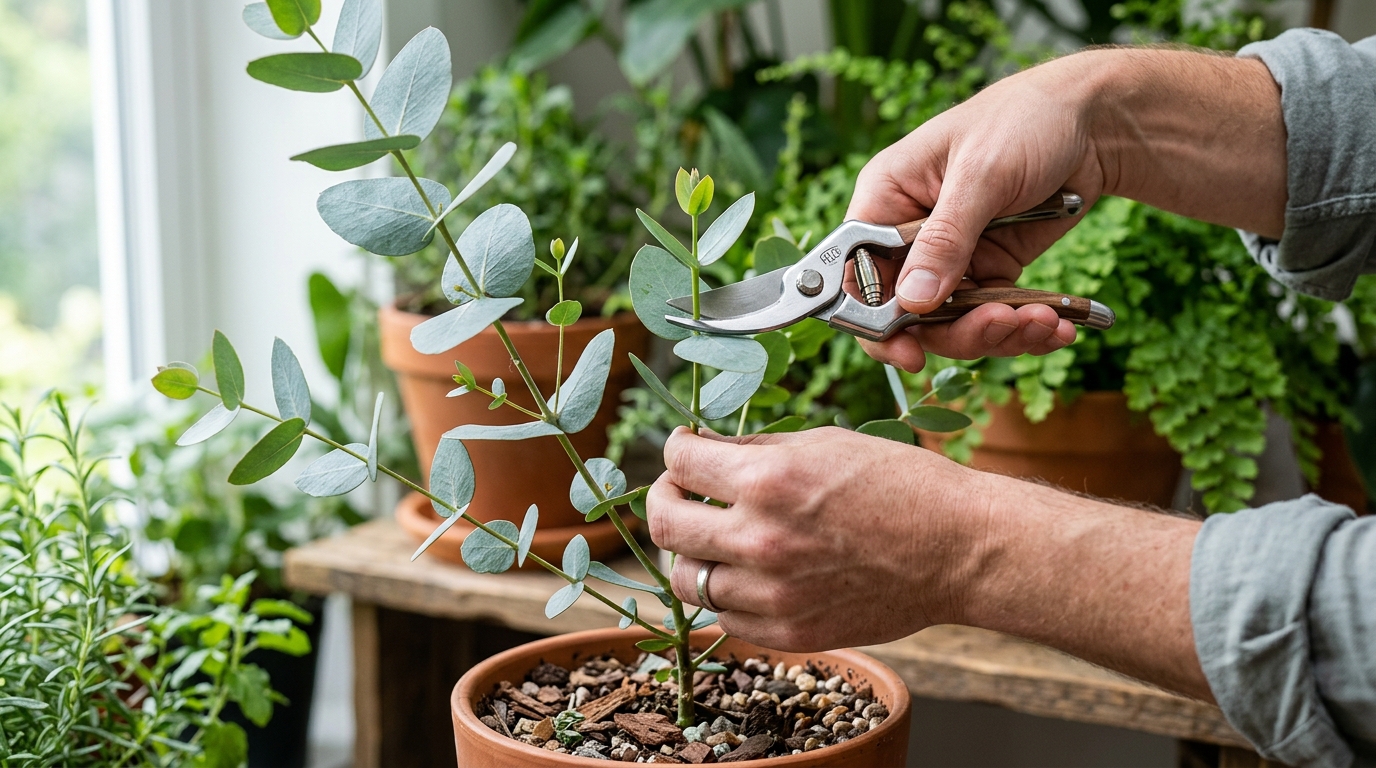
Throughout the spring and summer growing season, inspect your eucalyptus every two weeks. Using sharp pruning snips or your thumb and forefinger, pinch out the soft terminal growth bud (the very top 1/2 inch) of every leading stem. This simple pinch stops vertical elongation and redirects growth energy into dormant lateral nodes below, causing the plant to branch outward into a lush, rounded canopy.
2. Structural Branch Reduction
In early spring (March or April), assess the architectural framework of the plant. Cut back overly elongated or asymmetrical branches by one-third to one-half of their length. Always make clean, 45-degree cuts 1/4 inch above an active leaf node using bypass shears sterilized in 70% isopropyl alcohol.
3. Rejuvenation Coppicing
If your indoor eucalyptus has become excessively leggy, bare at the bottom, or overgrown after several seasons, you can perform a traditional horticultural technique known as coppicing. In late winter, cut the main stems back hard to within 4 to 8 inches above the soil line. Because eucalyptus trees possess a basal woody swelling known as a lignotuber filled with dormant buds and starch reserves, the plant will produce a dramatic fountain of fresh, dense, silver-blue juvenile shoots within 4 to 6 weeks.
For official horticultural pruning recommendations, review the Royal Horticultural Society (RHS) Eucalyptus Growing Guide.
6. Precision Fertilization and Micronutrient Management
Because Australian soils are notoriously ancient and leached of phosphorus, native eucalyptus species have developed specialized proteoid-like root adaptations that extract nutrients with extreme efficiency. Consequently, heavy applications of standard high-nitrogen or high-phosphorus houseplant fertilizers can easily burn root tips and cause fatal salt toxicity.
Optimal N-P-K Formulation
Select a gentle, water-soluble organic fertilizer formulated with a low-phosphorus, balanced nitrogen-to-potassium ratio, such as an N-P-K of 10-4-8 or 5-2-4, containing supplemental chelated iron, zinc, and magnesium:
- Nitrogen (N): Supports steady vegetative leaf formation without producing weak, floppy stems.
- Phosphorus (P): Kept low to prevent toxic phosphate accumulation in root tissues.
- Potassium (K): Strengthens stem cell walls, regulates stomatal water efficiency, and enhances disease resistance.
- Iron & Magnesium: Essential for chlorophyll synthesis, preventing interveinal chlorosis in fast-growing foliage.
Seasonal Feeding Calendar
- Spring & Summer (Active Growth): Apply diluted fertilizer every 3 to 4 weeks at half the manufacturer’s recommended strength. Always apply fertilizer to pre-moistened soil to prevent root shock.
- Autumn & Winter (Resting Period): Completely halt all fertilizer applications from October through February. Feeding during low-light winter months forces weak, etiolated growth that attracts sap-sucking pests.
7. Temperature Thresholds, Humidity, and Atmospheric Air Flow
Temperature Range
Indoor eucalyptus thrives in standard household daytime temperatures between 65°F and 75°F (18°C–24°C). At night, they benefit from a natural drop to 50°F to 60°F (10°C–15°C). Most container-grown varieties (especially E. gunnii and E. cinerea) are remarkably cold tolerant and can easily handle dips down to 40°F (4°C) without cellular damage.
Caution: Keep your container at least 4 feet away from artificial heat sources, including forced-air vents, radiators, and space heaters, which can dehydrate foliage rapidly.
Humidity and Air Circulation Dynamics
Unlike tropical indoor plants that demand elevated relative humidity levels, eucalyptus thrives in dry to moderate household air with 30% to 50% relative humidity. Their thick, waxy leaf cuticles are specifically adapted to resist atmospheric drought.
However, continuous air circulation is vital. In stagnant rooms, moisture can linger around the dense center of the canopy, encouraging fungal spores to germinate. Keep an oscillating room fan running on low speed across the room to maintain gentle, steady airflow around the foliage.
8. Propagation Mastery: Cuttings, Air-Layering, and Seeds
Propagating eucalyptus allows you to expand your indoor collection and share aromatic plants with fellow gardeners. While commercial growers primarily use seed propagation, hobbyists can also utilize semi-hardwood cuttings and air-layering.
Method 1: Growing Eucalyptus from Seed (Highest Success Rate)
- Stratification (Optional but Recommended): Place eucalyptus seeds in a sealed plastic bag filled with slightly moist peat moss and refrigerate at 40°F (4°C) for 2 to 3 weeks to break physiological dormancy.
- Sowing: Fill seed flats with a sterile, fine mix of 50% peat moss and 50% perlite. Scatter seeds on the surface and cover with a paper-thin layer of fine horticultural vermiculite.
- Germination Environment: Maintain a consistent temperature of 68°F to 72°F (20°C–22°C) under bright grow lights. Keep the medium evenly moist using a fine spray bottle. Germination typically occurs within 10 to 21 days.
- Potting Up: When seedlings develop 3 to 4 pairs of true silver leaves, gently pot them into individual 3-inch terracotta containers with gritty potting soil.
Method 2: Semi-Hardwood Stem Cuttings
Taking stem cuttings from eucalyptus requires precision, as the woody stems contain natural rooting inhibitors:
- In mid-summer, take a 4- to 6-inch cutting from a healthy, semi-hardwood lateral branch just below a leaf node.
- Strip the lower leaves, leaving only the top 2 pairs of juvenile leaves.
- Dip the severed base in a high-concentration rooting hormone gel (IBA 0.8% to 1.0%).
- Insert the cutting into a sterile medium composed of 70% perlite and 30% coarse sand.
- Enclose the pot in a clear plastic propagation dome and place it on a propagation heat mat set to 72°F (22°C) under 14 hours of daily LED grow light. Roots form in 4 to 8 weeks.
9. Diagnosing Common Pests, Root Rot, and Physiological Disorders
| Visible Symptom | Underlying Cause | Horticultural Remedy |
|---|---|---|
| Crispy, Brittle, Shriveled Leaves | Severe drought stress or advanced root rot preventing water intake | Check soil: if bone-dry, saturate immediately. If wet, inspect root ball for black rot. |
| Fine Webbing & Pale Leaf Stippling | Two-spotted spider mites (Tetranychidae) in dry, warm air | Wash canopy with water stream; apply insecticidal soap or neem oil every 5 days for 3 weeks. |
| White Powdery Film on Upper Leaves | Powdery mildew (Erysiphales) caused by stagnant air | Increase room air circulation; spray with diluted potassium bicarbonate or organic bio-fungicide. |
| Elongated Stems & Pale Green Leaves | Insufficient light intensity / etiolation | Move to an unobstructed south window; install supplemental full-spectrum LED grow light. |
| Black Stem Base & Sudden Collapse | Fungal root rot from overwatering in dense, non-draining soil | Unpot immediately, trim rotten roots, dust with cinnamon/sulfur, and repot into gritty mix. |
To discover more unique, statement houseplants with striking textures and easy maintenance, check out our guide on 7 stunning unique indoor plants to transform your home.
10. Harvesting and Preserving Aromatic Foliage for Aromatherapy and Decor
One of the greatest rewards of cultivating an indoor eucalyptus is the ability to harvest fresh, therapeutic stems directly from your own living room.
Creative DIY Uses for Home-Grown Eucalyptus
- Aromatherapy Shower Bundles: Harvest 4 to 6 fresh stems (8 to 12 inches long). Bind the cut ends with natural jute twine and tie the bundle behind your showerhead, out of the direct water spray. The hot steam activates and vaporizes the natural eucalyptol oils, creating an invigorating, respiratory-clearing home spa.
- Long-Lasting Fresh Floral Arrangements: Cut stems at a sharp 45-degree angle in the morning and place them immediately in a vase filled with cool water and a splash of floral preservative. Fresh stems stay crisp and fragrant for 3 to 4 weeks.
- Glycerin Botanical Preservation: Mix 1 part vegetable glycerin with 2 parts boiling water. Allow to cool to room temperature, then place fresh cut eucalyptus stems in the solution for 2 to 3 weeks. The foliage will absorb the glycerin, remaining pliable, soft, and glossy for years without shattering.
11. Toxicity Mechanisms, Essential Oils, and Pet Safety Protocols
While eucalyptus provides wonderful aromatherapy benefits for people, responsible plant parenting requires strict awareness of its chemical defenses regarding household pets.
Toxicity Chemistry (Eucalyptol / 1,8-Cineole)
Eucalyptus foliage contains concentrated essential oils, principally eucalyptol (1,8-cineole), macrocarpals, and tannins. According to the ASPCA Animal Poison Control Center, all parts of the eucalyptus plant are toxic to domestic pets including dogs, cats, and horses when ingested.
- Clinical Symptoms in Pets: Excessive salivation, nausea, vomiting, acute diarrhea, lethargy, dilated pupils, and in severe cases of tuberous ingestion or concentrated oil exposure, central nervous system depression, muscle weakness, or seizures.
- Safety & Placement Protocol: Always place indoor eucalyptus containers on high plant stands, wall-mounted display shelving, or tall accent tables completely out of reach of curious pets. Never apply concentrated eucalyptus essential oils directly to pet bedding or fur.
12. Frequently Asked Questions
Why is my indoor eucalyptus dropping its leaves?
The two most common culprits behind indoor eucalyptus leaf drop are light starvation and overwatering. If the plant is situated more than 2 feet away from a direct south-facing window, it will shed its lower foliage to conserve energy. If the soil remains damp for more than a week, root rot is suffocating the vascular system. Move the plant into direct sunlight and allow the top 2 inches of soil to dry out between waterings.
How tall will a eucalyptus grow indoors in a pot?
When grown indoors in a 10- to 14-inch container, a eucalyptus tree typically reaches a height of 3 to 6 feet. With regular spring pruning and bi-weekly tip pinching, you can easily maintain your plant at whatever height and bushy silhouette fits your room.
Can I move my potted indoor eucalyptus outside during summer?
Yes, absolutely! Placing your indoor eucalyptus outside on a sunny patio or deck during the warm spring and summer months accelerates growth and strengthens the trunk. Acclimate the plant gradually over 7 to 10 days by placing it in dappled shade first before transitioning it to full outdoor sun. Bring it back indoors before nighttime temperatures dip below 45°F (7°C).
Why did my eucalyptus stop producing round silver leaves and start growing long green ones?
Eucalyptus plants demonstrate heteroblasty, meaning their foliage changes shape as the tree matures. Juvenile leaves are circular and silver-blue, while mature adult leaves are elongated, green, and sickle-shaped. Regular pinching and annual spring pruning stimulate continuous juvenile shoot production, keeping the round silver leaves active.
How often should I repot an indoor eucalyptus?
Because eucalyptus trees develop extensive, vigorous root systems, juvenile plants should be repotted once every 1 to 2 years in early spring. Always choose a pot that is only 2 to 3 inches wider in diameter than the current container to prevent excess wet soil volume.
13. Master Seasonal Care Routine and Success Checklist
The Year-Round Eucalyptus Care Calendar
- Spring (March – May): Repot if root-bound into a slightly larger terracotta pot with fresh gritty mix. Perform structural shaping cuts. Resume half-strength low-phosphorus organic fertilizer every 3 to 4 weeks.
- Summer (June – August): Peak growth season. Provide maximum direct sunlight or move outdoors onto a sunny deck. Water thoroughly when top third of soil dries. Pinch terminal tips bi-weekly.
- Autumn (September – November): Bring outdoor plants inside before nighttime temperatures drop below 45°F (7°C). Setup LED grow lights for 12 to 14 hours daily. Taper fertilizer.
- Winter (December – February): Maintain cool room temperatures (55°F–65°F). Run grow lights on an automated timer. Cease all fertilization. Water moderately, allowing top half of soil to dry out between waterings.
Quick Takeaway Checklist for Success
- Maximum Light: South-facing window + supplemental full-spectrum LED grow light (12–14 hrs/day).
- Gritty Aeration: 35% soil, 30% perlite, 20% coarse sand, 15% bark in porous terracotta containers.
- Soak & Drain: Saturate completely when top third dries; never let pot sit in standing water.
- Pinch Regularly: Remove top terminal buds every 2–3 weeks to enforce dense, bushy branching.
- Pet Safety: Keep on elevated furniture out of reach of curious cats and dogs.
Dennis P. Hansen
Dennis P. Hansen is a home gardener with a genuine passion for plants and the simple pleasure of growing them. He enjoys caring for houseplants, succulents, and other plants at home while continually learning from everyday gardening experiences. Dennis likes to share practical plant care tips, useful observations, and simple solutions that can help others grow healthier plants. He believes that caring for plants is a rewarding journey and that there is always something new to learn along the way.