
How to Clean Indoor Plant Leaves: 7 Proven Ways to Thrive

Mastering how to clean indoor plant leaves is the single most transformative habit you can develop as an indoor gardener. I am Dennis P. Hansen, an everyday home gardener sharing simple, practical plant care tips based on my day-to-day gardening practice at home. In this definitive guide, I will share my proven techniques for eliminating mineral grime, dislodging pests, and rejuvenating foliage so your beloved houseplants can photosynthesize at peak biological efficiency.
Table of Contents: Jump to a Section
- 1. Why Dust Kills Indoor Plants (The Botanical Science)
- 2. Essential Tools for Cleaning Plant Leaves (Dennis’s Toolkit)
- 3. 5 Proven Methods: How to Clean Indoor Plant Leaves
- 4. Plant-by-Plant Guide (Broad Leaf, Fuzzy, Succulent, Ferns)
- 5. Dangerous Leaf Shine Products vs. Safe DIY Alternatives
- 6. Common Leaf Cleaning Mistakes to Avoid
- 7. Troubleshooting Common Issues (Water Spots & Residue)
- 8. Frequently Asked Questions (FAQ)
- 9. Final Verdict & Dennis’s Seasonal Cleaning Routine
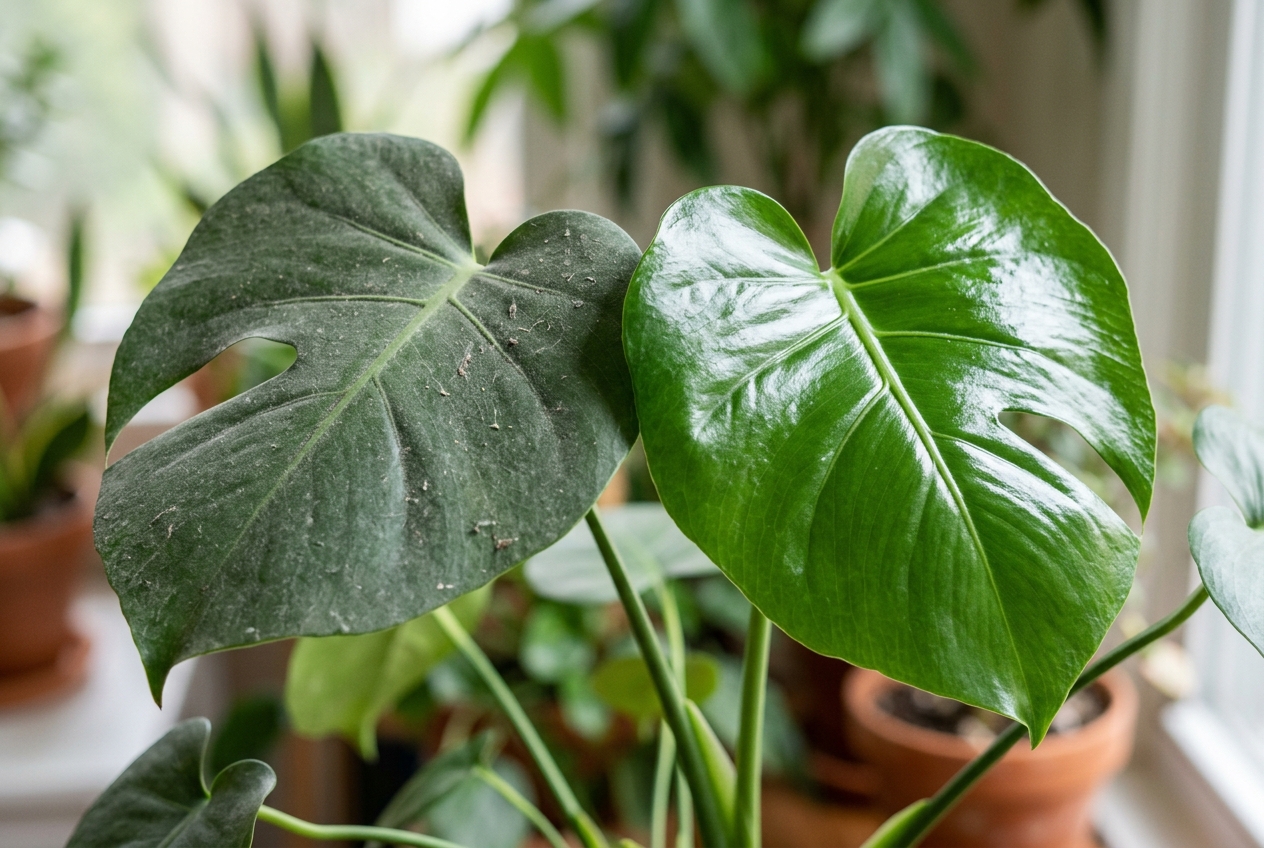
When cultivated in an enclosed domestic environment, houseplants lack the natural cleansing mechanisms provided by outdoor ecosystems. In nature, torrential tropical rainstorms, heavy morning condensation, and continuous atmospheric breezes wash away accumulated mineral deposits, organic detritus, and airborne particulates before they can form a stubborn physical barrier. Indoors, however, microscopic debris settles continuously upon horizontal and angled leaf surfaces. This ambient indoor dust is a complex mixture of shed skin cells, textile fibers, pet dander, aerosolized cooking greases, fireplace soot, and microscopic fine dust particles. Over weeks and months, these particulates form an opaque, cohesive coating that significantly reduces the amount of ambient solar energy reaching the leaf’s internal cellular apparatus. Understanding how to clean indoor plant leaves regularly prevents this suffocating accumulation and restores natural foliar brilliance.
Furthermore, regular leaf maintenance directly dictates plant respiration, transpiration, and immune resilience. A plant’s epidermis is punctuated with thousands of specialized microscopic pores known as stomata, flanked by pairs of regulatory guard cells that dilate and constrict to govern gas exchange. When dirt, cooking grease, and mineral scale obstruct these microscopic openings, the plant suffers from acute respiratory distress and severe hydraulic inefficiency. Transpiration rates plummet, limiting the plant’s ability to pull water and vital dissolved minerals from the root ball to the upper foliage canopy. By learning how to clean indoor plant leaves thoroughly and methodically, you eliminate these physiological bottlenecks, disrupt cryptic insect pest lifecycles, and unlock vigorous, robust foliar growth throughout the entire growing season.
Why Dust Kills Indoor Plants (The Botanical Science)
To truly master how to clean indoor plant leaves, an indoor grower must first comprehend the delicate microscopic architecture of the plant leaf. The outermost surface of the leaf blade is enveloped by a protective, waxy lipid layer called the cuticle, synthesized by the underlying epidermal cells. Embedded within this epidermis are stomatal complexes that control the intake of carbon dioxide and the release of water vapor and oxygen. Knowing how to clean indoor plant leaves protects these delicate epidermal layers. When dust accumulates unchecked across this living surface, it triggers three severe biological disruptions:
1. Impairment of Photosynthetically Active Radiation (PAR)
Plant chloroplasts depend on Photosynthetically Active Radiation (PAR)—specifically the blue (430–450 nm) and red (640–660 nm) wavelengths of the solar spectrum—to power the light-dependent reactions of photosynthesis. An uncleaned, dusty leaf reflects and scatters up to 35% of incoming photons before they can penetrate the palisade mesophyll cells where chlorophyll resides. Rigorous botanical research from horticultural institutions like the University of Minnesota Extension demonstrates that dirty houseplant foliage exhibits drastically suppressed carbon fixation rates. Under low-light indoor winter conditions, understanding how to clean indoor plant leaves prevents this light deficit from pushing a plant below its light compensation point, where it would otherwise consume stored starches, leading to leaf drop and chlorosis.
2. Stomatal Occlusion and Disrupted Transpiration Dynamics
Transpiration is not merely the loss of water vapor; it is the vital physical pulling force—known as the transpirational pull—that drives the movement of water and dissolved macro- and micronutrients through the plant’s xylem conduits. When airborne grease and dust particles settle into stomatal cavities, they form a semi-permanent physical plug. Consequently, even if you are providing optimal soil nutrition and following our comprehensive guide on Do You Need Nutrients After Repotting Indoor Plants, the plant remains physiologically incapable of pulling essential calcium, magnesium, and nitrogen upward to developing leaf buds. This manifests as weak stems, stunted new leaves, and marginal leaf necrosis. Understanding how to clean indoor plant leaves removes these physical blockages, restoring healthy vascular flow throughout the plant.
3. Proliferation of Cryptic Pest Colonies
A dry, dusty leaf canopy creates the ideal microhabitat for devastating greenhouse pests, particularly two-spotted spider mites (Tetranychus urticae), false spider mites (Brevipalpus spp.), greenhouse thrips, and scale insects. Dust particles absorb ambient moisture from the leaf boundary layer, creating a dry microclimate where spider mites thrive and reproduce at exponential rates. Furthermore, the layer of dust coats predatory beneficial insects, impeding their movement and hunting capability. Discovering how to clean indoor plant leaves effectively strips away protective webbing, crushes microscopic egg clusters, and removes emerging nymphs before they can establish an entrenched infestation, aligning directly with our proven strategies in the Complete Houseplant Pest Control Guide.
Essential Tools for Cleaning Plant Leaves (Dennis’s Toolkit)
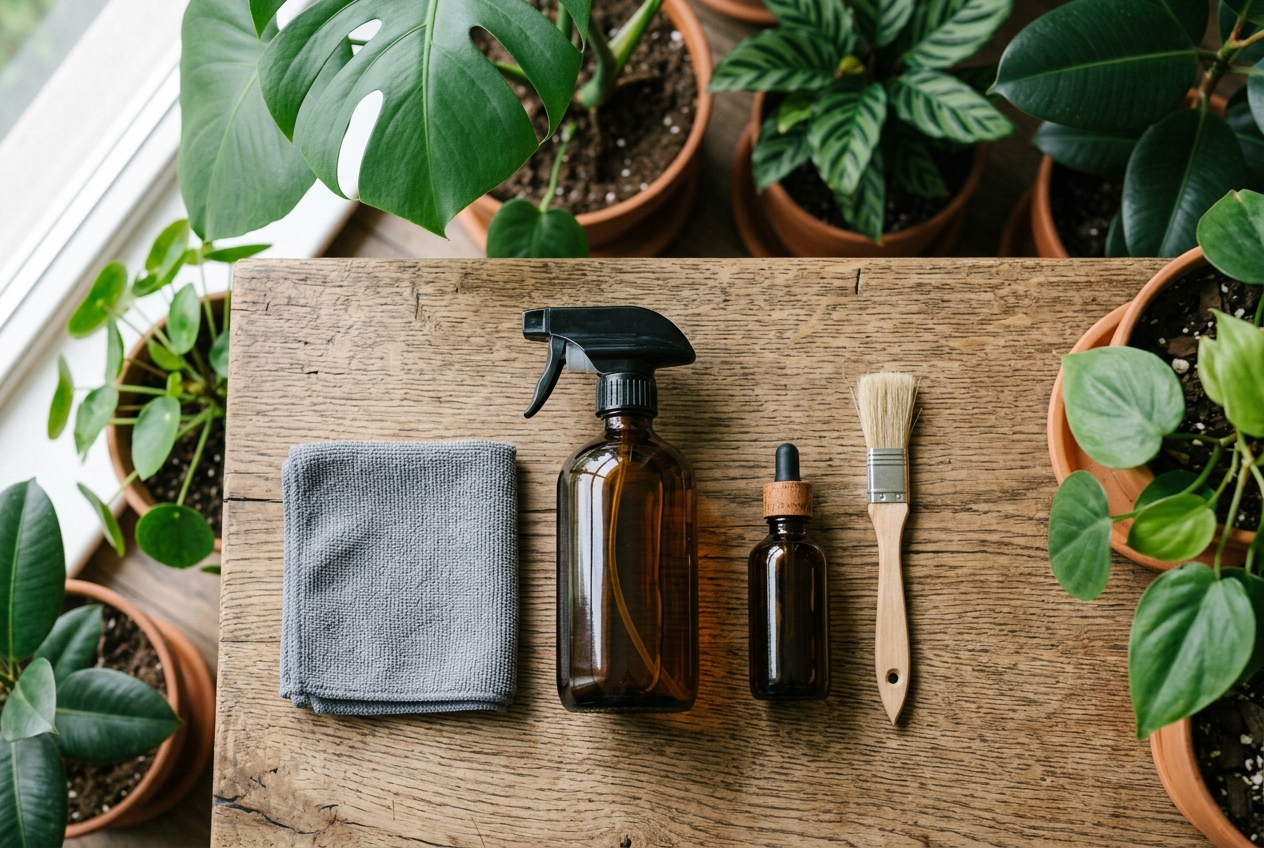
Executing how to clean indoor plant leaves effectively requires the proper specialized horticultural tools. Utilizing rough kitchen paper towels, coarse bath towels, or harsh chemical detergents can micro-abrade the delicate epidermal cuticle, creating microscopic entry wounds for fungal spores and bacterial pathogens. Knowing how to clean indoor plant leaves with the correct instruments ensures maximum safety. Below is the curated equipment toolkit I rely on daily across my personal collection and propagation facilities:
- High-Density Plush Microfiber Cloths: Premium 400+ GSM microfiber cloths with split-fiber technology are non-negotiable for anyone learning how to clean indoor plant leaves. Their electrostatic properties and millions of microscopic hooks physically trap and lift dust, pollen, and grease without requiring excessive wiping pressure or leaving behind stray synthetic lint fibers.
- Natural Camel-Hair or Goat-Hair Dusting Brushes: An essential dry-grooming instrument designed specifically for fuzzy, pubescent, or spine-laden plants where damp wiping would trap moisture and provoke fungal rot. These brushes demonstrate how to clean indoor plant leaves on delicate species without scratching sensitive tissue.
- Ultra-Fine Continuous Atomizer Sprayer: Unlike standard trigger sprayers that emit large, heavy droplets that pool and run, a continuous ultra-fine pressure mister dispenses an aerosol-grade 0.3 mm fog of water that gently hydrates leaf surfaces without oversaturating the underlying potting soil during your routine of how to clean indoor plant leaves.
- Pure Distilled or Reverse Osmosis (RO) Water: Municipal tap water contains dissolved calcium bicarbonate, magnesium sulfate, and fluoride that leave chalky mineral rings upon evaporation. Pure distilled water is vital when learning how to clean indoor plant leaves, guaranteeing a flawless, spotless finish every time.
- Pure Organic Castile Soap (Potassium Cocoate): An all-natural, vegetable-oil-derived surfactant free of synthetic detergents, artificial fragrances, and chelating agents. When practicing how to clean indoor plant leaves with greasy residue, diluting 1–2 drops per quart of water safely dissolves hydrophobic grease films and breaks pest surface tension.
- Cold-Pressed Virgin Horticultural Neem Oil: Extracted from the seeds of the Azadirachta indica tree, cold-pressed neem oil contains azadirachtin, which serves as a natural organic polish, anti-transpirant, and broad-spectrum pest deterrent when implementing how to clean indoor plant leaves on robust tropical foliage.
- Waterproof Container Shields (Compostable Plastic Wrap or Silicone Mats): Used to wrap the root ball and potting pot during shower sessions to prevent soggy soil conditions, safeguarding your plants against the pitfalls detailed in Common Indoor Plant Watering Mistakes while you practice how to clean indoor plant leaves.
5 Proven Methods: How to Clean Indoor Plant Leaves
Because indoor plants originate from drastically diverse ecological biomes—ranging from equatorial rainforest understories to arid desert plateaus—a single cleaning technique cannot be applied universally. Below are the five proven methods for how to clean indoor plant leaves, calibrated to distinct botanical structures:
Method 1: The Dual-Hand Microfiber Wipe (For Broad-Leaf Tropicals)
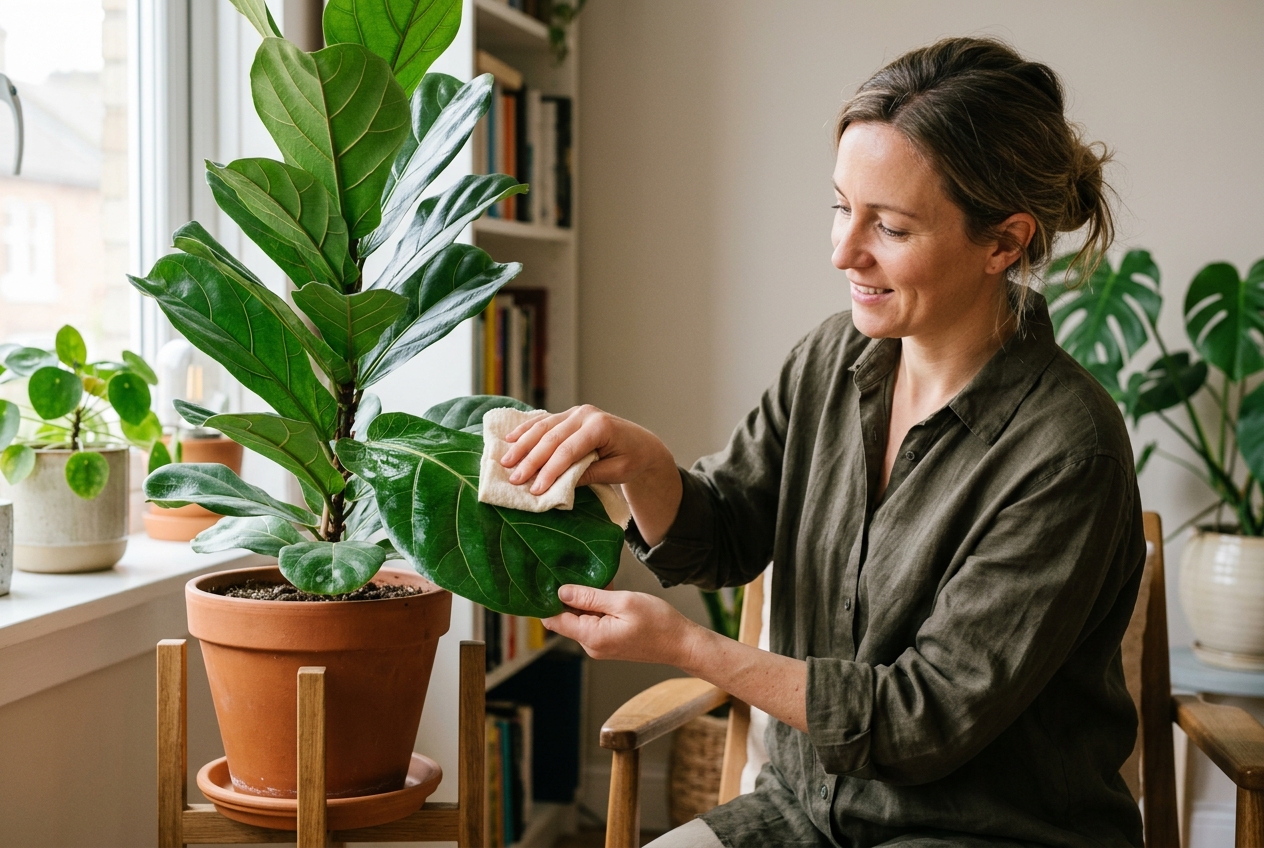
The dual-hand microfiber wipe is the quintessential technique for how to clean indoor plant leaves on large-leaved tropical species such as Monstera deliciosa, Ficus lyrata (Fiddle Leaf Fig), Strelitzia nicolai (Bird of Paradise), Philodendron, and Anthurium. These specimens present expansive horizontal surface areas that accumulate dense dust coatings:
- Dampen a clean plush microfiber cloth with lukewarm distilled water. Wring it out thoroughly until it is barely moist to the touch—a fundamental rule of how to clean indoor plant leaves without drips.
- Slide your non-dominant hand directly beneath the leaf blade to serve as a firm, stable physiological anvil. Never wipe a free-hanging leaf unsupported, as the sheer lateral torque can fracture the sensitive pulvinus or petiole junction.
- With your dominant hand holding the damp microfiber cloth, gently glide from the petiole base outward along the primary midrib and secondary lateral veins toward the leaf tip in long, continuous strokes, showing how to clean indoor plant leaves with smooth precision.
- Flip the cloth frequently to expose fresh, clean microfiber surfaces, preventing the redeposition of abrasive grit as you continue how to clean indoor plant leaves.
- Support the leaf inverted and repeat the process on the abaxial (underside) surface, paying special attention to the vein axils where juvenile spider mites and thrips nymphs congregate.
Method 2: The Lukewarm Tepid Shower (For Dense, Multi-Stemmed Canopy Plants)
When dealing with highly branched, multi-foliate houseplants—such as weeping figs (Ficus benjamina), umbrella trees (Schefflera arboricola), parlor palms (Chamaedorea elegans), and pothos poles—hand-wiping individual leaves is intensely labor-prohibitive. In these circumstances, the tepid shower method provides a comprehensive full-canopy wash demonstrating how to clean indoor plant leaves by closely simulating an equatorial monsoon downpour:
- Wrap the base of the plant pot and the entire surface of the potting substrate with a plastic barrier or stretch film, cinching it snugly around the main stems to prevent soil erosion and waterlogging during the process of how to clean indoor plant leaves.
- Transport the potted specimen into your bathroom shower stall or deep laundry basin.
- Calibrate the shower water temperature with a digital thermometer to strictly lukewarm (between 68°F and 75°F / 20°C to 24°C). Extreme cold water shocks root tissue, while hot water denatures foliar enzymes.
- Adjust the shower head to a wide, gentle rain setting. Direct the water spray across the entire foliage canopy for 3 to 5 minutes, rotating the container 90 degrees every minute to cleanse both upper and lower leaf surfaces, illustrating how to clean indoor plant leaves in bulk.
- Allow the plant to remain in the warm, humid shower enclosure for 45 minutes to drain completely from its basal drainage holes before placing it back into its decorative saucer. Ensure gentle room ventilation to evaporate residual water droplets from leaf nodes.
Method 3: The Submersion Swish (For Compact Trailing & Hanging Specimens)
Small, delicate trailing cultivars—such as String of Hearts (Ceropegia woodii), Peperomia prostrata (String of Turtles), English Ivy (Hedera helix), and juvenile trailing Philodendrons—possess fragile stems that snap easily during mechanical wiping. The submersion swish technique shows how to clean indoor plant leaves across hundreds of miniature leaves simultaneously in seconds:
- Fill a clean, sanitized basin or sink with room-temperature distilled water, establishing the perfect bath for how to clean indoor plant leaves.
- Place a circular piece of cardboard with a stem slit over the potting soil, or spread your fingers across the top of the root ball to securely hold the soil mixture in place.
- Invert the small plant carefully and submerge only the foliar canopy into the water bath.
- Gently agitate and swish the foliage through the water in smooth, circular motions for 15 to 20 seconds. The fluid drag gently strips dust and floating debris away from every leaf without tearing delicate vines, making it a masterclass in how to clean indoor plant leaves.
- Lift the plant upright, allow excess water to drain back into the basin, and place the specimen on a towel in a warm room with indirect sunlight to dry naturally.
Method 4: The Soft-Bristle Dry Dusting (For Pubescent & Velvet Foliage)
Certain botanical families possess specialized epidermal hairs called trichomes that produce a soft, velvety texture. Notable examples include African Violets (Saintpaulia ionantha), Purple Velvet Plants (Gynura aurantiaca), Calathea warscewiczii, and Begonia masoniana. Liquid water trapped among dense trichomes cannot evaporate readily, triggering rapid fungal infection (Botrytis crown rot) and unsightly necrotic spotting. For these species, mastering how to clean indoor plant leaves requires dry dusting:
- Procure a clean, dry natural camel-hair watercolor brush, cosmetic powder brush, or soft artist badger-hair mop brush to execute how to clean indoor plant leaves safely.
- Place your index finger beneath the target leaf to provide steady, rigid structural backing.
- Starting at the petiole junction, sweep the brush outward across the lamina toward the leaf margin in gentle, rhythmic feathering motions, demonstrating how to clean indoor plant leaves without moisture.
- Tap the brush head against your palm after every two to three strokes to discharge accumulated dust grains before moving to the next leaf.
Method 5: The Atomized Misting & Microfiber Glove Technique
For large houseplant collections featuring medium-sized upright leaves—such as Chinese Evergreens (Aglaonema), Peace Lilies (Spathiphyllum), and Dieffenbachia—wearing specialized microfiber dusting gloves combined with ultra-fine atomization creates an ultra-efficient workflow for how to clean indoor plant leaves. Professional guidelines from organizations such as the Royal Horticultural Society confirm that frequent, gentle foliar grooming stimulates local leaf circulation and maintains peak horticultural vigor.
Plant-by-Plant Guide (Broad Leaf, Fuzzy, Succulent, Ferns)
Applying the proper method based on precise botanical morphology is the golden rule of how to clean indoor plant leaves safely. Below is our species-by-species operational protocol:
1. Broad-Leaf Araceae & Moraceae (Monstera, Ficus elastica, Ficus lyrata, Philodendron)
These majestic tropical specimens feature thick, heavily cutinized leaf surfaces designed to withstand regular manual wiping. Implement Method 1 (Dual-Hand Microfiber Wipe) every 2 to 3 weeks using pure distilled water, showcasing how to clean indoor plant leaves with broad foliage. For mature Monsteras with complex fenestrations, support each sub-section of the lamina independently to avoid tearing along natural slit margins. Always follow up with a thorough inspection of the abaxial leaf surface along the primary midrib.
2. Delicate Pubescent & Velvet-Leaf Cultivars (African Violets, Calathea warscewiczii, Begonia)
Strictly prohibit any form of water spraying, shower baths, or commercial leaf polish products. Use Method 4 (Soft-Bristle Dry Dusting) exclusively when researching how to clean indoor plant leaves for fuzzy varieties. African Violets in particular are intensely sensitive to cold water droplets, which cause temperature-shock-induced ring spot disease. Keep brushes completely dry and clean them with isopropyl alcohol between plants to prevent the mechanical transmission of viral mosaic pathogens.
3. Glaucous Succulents & Epiphytic Cacti (Echeveria, Sedum, Euphorbia, Schlumbergera)
Many succulent genera produce a delicate, powdery, silver-blue coating called farina (epicuticular wax). Farina serves as an indispensable natural sunblock, anti-transpirant, and hydrophobic moisture barrier. Rubbing, wiping, or washing succulents with soaps or microfiber cloths strips farina permanently, exposing tender epidermal cells to severe solar scorch and scarring. When evaluating how to clean indoor plant leaves on succulents, use a handheld rubber air bulb blower (such as a camera lens dust blower) or an ultra-soft cosmetic fan brush to gently puff dust particles off rosettes without physically touching the farina.
4. Fine-Textured Ferns & Micro-Foliage (Boston Fern, Maidenhair Fern, Nephrolepis)
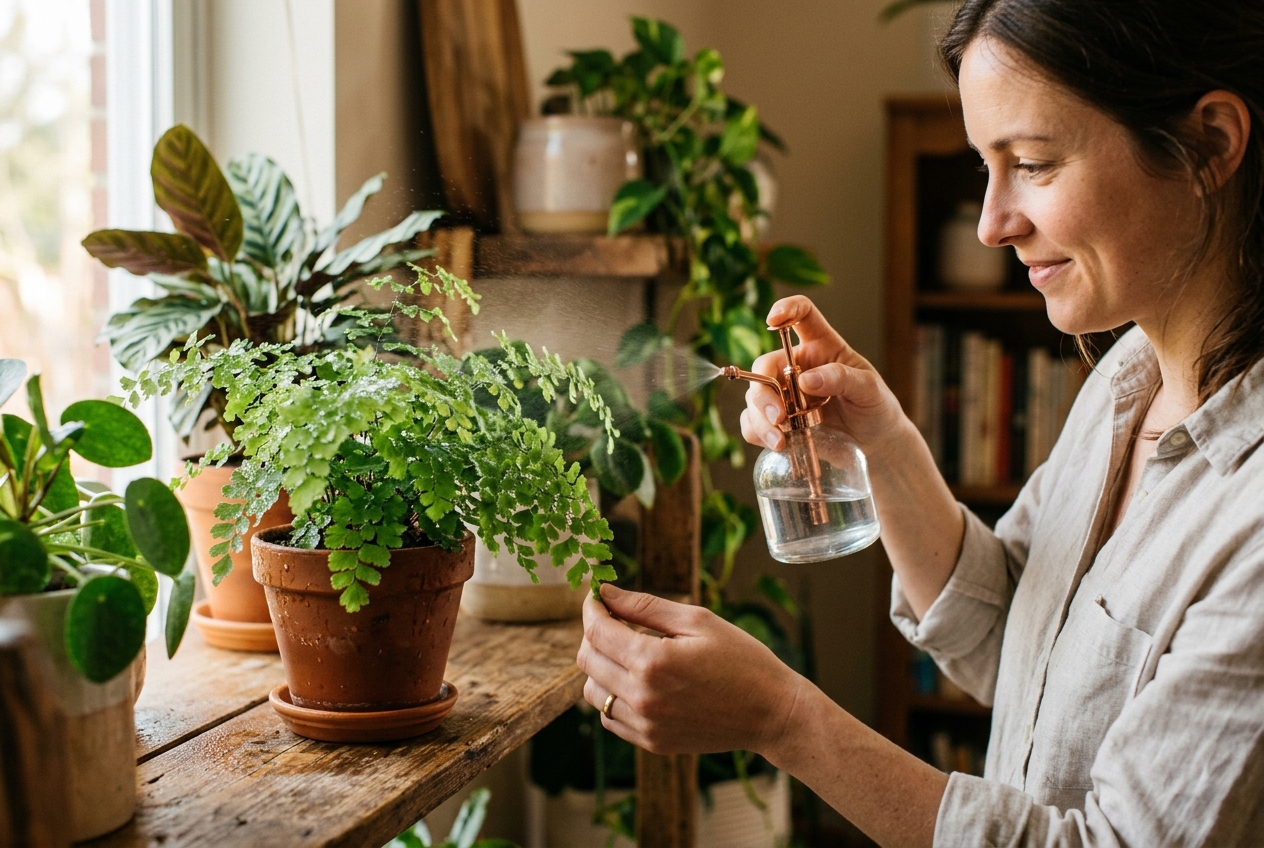
With thousands of minute fronds and leaflets (pinnae), mechanical wiping is impossible. The ideal method for how to clean indoor plant leaves on ferns is Method 2 (Lukewarm Tepid Shower) or fine overhead atomization every 2 weeks. Ferns natively inhabit humid waterfall gorges and cloud forest canopies, so they respond to warm showers with accelerated frond emergence. Ensure optimal room airflow following washing so excess water does not linger within the central crown rhizome.
Dangerous Leaf Shine Products vs. Safe DIY Alternatives
One of the most persistent and damaging practices in indoor horticulture is the use of petroleum-based commercial aerosol leaf shines, mayonnaise, full-fat milk, coconut oil, or baby oil to force a synthetic high-gloss sheen onto foliage. As a professional horticulturist, I strictly advise against these detrimental products when evaluating how to clean indoor plant leaves.
The Destructive Mechanism of Oily Foliar Coatings
Aerosol leaf shines contain synthetic silicones, mineral hydrocarbons, and non-breathable resins that coat the plant’s epidermis in an impermeable film. This film physically cements stomatal guard cells shut, halting gas exchange and creating severe tissue hypoxia. Furthermore, home hacks like applying milk or mayonnaise deposit animal fats and proteins onto the leaf surface. Within 48 hours at indoor room temperature, these organic residues spoil, emit foul rancid odors, attract swarms of fungus gnats and fruit flies, and act as a nutritious breeding substrate for sooty mold and bacterial rot. Scientific trials documented by the University of Florida IFAS Extension confirm that clean, unadulterated water and mild surfactant solutions are the only safe, scientifically sound cleansing agents when discovering how to clean indoor plant leaves effectively.
Comprehensive Comparison Table: Commercial Leaf Shines vs. Safe Botanical Cleansers
| Cleansing Agent | Stomatal Impact | Pest Deterrence | Dennis’s Garden Rating |
|---|---|---|---|
| Pure Distilled Water | 100% Safe (Leaves zero mineral or chemical residue) | Neutral (Physical removal of dust and pests) | Top Gold Standard – Best for routine bi-weekly maintenance |
| Diluted Castile Soap Solution (2 drops per 1 quart water) | 98% Safe (Rinses completely clean without residue) | High (Breaks insect cuticle membranes) | Highly Recommended – Ideal for greasy kitchen foliage |
| Cold-Pressed Neem Oil Emulsion (0.5 tsp neem + 2 drops soap/qt) | 92% Safe (Safe on thick cuticles when kept from direct sun) | Exceptional (Disrupts pest hormone cycles and feeding) | Recommended – Monthly preventative pest shield |
| Commercial Aerosol Leaf Shine | Severe Damage (Suffocates stomata with synthetic resins) | Poor (Leaves a tacky residue that attracts dust over time) | Strictly Prohibited – Triggers chlorosis and leaf drop |
| Mayonnaise / Milk / Cooking Oils | Critical Hazard (Clogs pores with decomposing lipids) | Disastrous (Attracts fungus gnats, flies, and mold spores) | Strictly Prohibited – Causes rot, mold, and rancidity |
Common Leaf Cleaning Mistakes to Avoid
Even passionate indoor gardeners frequently make unintentional errors that compromise plant health during routine maintenance. When refining how to clean indoor plant leaves, ensure you steer clear of these four critical pitfalls:
- Using Cold Tap Water Direct from the Faucet: Most indoor houseplants originate from tropical and equatorial regions where rainfall temperatures consistently hover between 70°F and 80°F (21°C to 27°C). Applying municipal tap water chilled below 60°F (15°C) inflicts acute physiological thermal shock upon root tips and foliar tissue, resulting in vascular collapse, interveinal chlorosis, and permanent dark brown necrotic ring spots. Always allow your cleaning water to sit until it reaches ambient room temperature before executing how to clean indoor plant leaves.
- Exposing Wet Foliage to Direct Sunlight: Water droplets remaining upon horizontal leaf blades function as miniature optical convex lenses. Under intense, direct sunlight, these droplets concentrate solar rays onto pinpoint areas of the epidermis, causing instantaneous cellular burn (foliar solar scorch). When practicing how to clean indoor plant leaves, always clean in early morning hours under soft, diffused lighting, and allow all foliage to dry thoroughly before moving plants back into bright sunny windows.
- Wiping Only the Upper Adaxial Leaf Surface: Over 70% of respiratory stomata and virtually all initial populations of spider mites, thrips larvae, and mealybugs congregate on the shaded abaxial (underside) surface of the leaf. If you exclusively clean the top surface, you fail to understand how to clean indoor plant leaves completely, leaving primary breathing pores blocked and allowing pest reservoirs to multiply unhindered.
- Neglecting Root Protection During Showers: Giving plants a full foliage shower without sealing the pot rim saturates the potting medium with excess moisture, causing compaction and anaerobic soil conditions that lead directly to root rot. Always secure a waterproof barrier over the soil container before washing to maintain high standards of how to clean indoor plant leaves.
Troubleshooting Common Issues (Water Spots & Residue)
During the process of executing how to clean indoor plant leaves, you may encounter persistent aesthetic blemishes and stubborn deposits. Here is our expert troubleshooting diagnosis and remedial protocol:
Chalky White Mineral Scale & Hard Water Spots
Hard domestic water contains elevated concentrations of dissolved calcium carbonate, magnesium sulfate, and silica. When moisture evaporates, it leaves behind stubborn chalky white crusts that resist ordinary water wiping. To eradicate mineral scale without damaging the leaf cuticle, prepare a gentle organic acid chelating wash by mixing one tablespoon of organic raw apple cider vinegar or freshly squeezed lemon juice into one quart of distilled water. The mild acetic or citric acid rapidly dissolves alkaline calcium salts on contact. Apply with a microfiber cloth, let sit for 30 seconds, and wipe clean with a second cloth dampened with pure distilled water, demonstrating how to clean indoor plant leaves with mineral buildup.
Sticky Sap-Like Droplets (Honeydew Excretion)
If you detect shiny, sticky droplets coating foliage surfaces or dripping onto nearby furniture, your plant is suffering from an active sap-sucking pest infestation. Phloem-feeding insects—including scale, aphids, whiteflies, and mealybugs—ingest vast quantities of plant sap and excrete excess sugary fluids known as honeydew. Treat immediately with an insecticidal soap wipe-down across all leaf surfaces, stems, and leaf axils, isolating the plant from your wider collection while executing how to clean indoor plant leaves to eradicate pests.
Torn Margins and Snapped Petioles
Mechanical tearing during wiping indicates excessive lateral friction and inadequate physical support. Always position your flat palm directly underneath the leaf blade before applying wiping pressure, moving outward toward the margin with smooth, gentle strokes to ensure how to clean indoor plant leaves without mechanical injury.
Frequently Asked Questions (FAQ)
How often should I clean my indoor plant leaves?
For standard indoor home settings, learning how to clean indoor plant leaves once every 2 to 4 weeks provides optimal photosynthetic efficiency. If your home has pets, active heating/AC forced-air vents, or you live in an arid, high-dust geographic region, inspect and wipe foliage every two weeks. In rooms equipped with HEPA filtration and high relative humidity (above 60%), a monthly cleaning session is fully sufficient.
Can I use standard dish soap to clean indoor plant leaves?
Commercial dishwashing liquids contain aggressive synthetic degreasers, sodium laureth sulfate, and synthetic fragrances designed to strip animal fats from cookware. When applied to living foliage, they dissolve the plant’s natural protective lipid cuticle, causing acute chemical burns, rapid dehydration, and necrotic leaf margins. When determining how to clean indoor plant leaves safely, always use pure potassium-based Castile soap (1-2 drops per quart of water) or horticultural insecticidal soap.
Should I dry houseplant leaves manually after cleaning them?
Broad, smooth leaves dry quickly and naturally when positioned in a room with steady air circulation and indirect light. However, when practicing how to clean indoor plant leaves, if excess moisture pools in deep leaf joints, petiole gutters, or central growth crowns (such as in Bird of Paradise, Philodendrons, or Bromeliads), gently dab away the pooled water with a clean microfiber cloth to eliminate the risk of bacterial crown rot and fungal leaf spot.
Is cold-pressed neem oil safe for all indoor plant varieties?
Cold-pressed neem oil is exceptional for broad, thick-cuticled tropicals such as Monsteras, Rubber Trees, and Philodendrons when researching how to clean indoor plant leaves, but it should never be applied to delicate ferns, fuzzy pubescent leaves, or glaucous succulents with farina coatings. In addition, always keep neem-treated plants shielded from direct sun exposure for at least 24 hours to prevent phototoxic foliar scorching.
What is the single best time of day to clean indoor plant leaves?
Early morning is the ideal time of day to clean indoor plant leaves. Morning cleaning allows any incidental moisture on foliage and stems to evaporate steadily under rising ambient daylight temperatures and natural daytime air movement, ensuring leaves are completely dry before cooler nighttime temperatures set in.
Final Verdict & Dennis’s Seasonal Cleaning Routine
Cultivating lush, vibrant, and resilient indoor greenery requires giving your plants the foundational support that nature provides outdoors. By mastering how to clean indoor plant leaves with scientific precision, you eliminate barriers to photosynthetic photon absorption, re-open vital stomatal gas pathways, and create an inhospitable environment for insect pests.
Here is my seasonal golden rule: Integrate how to clean indoor plant leaves directly into your bi-weekly plant wellness inspection. Pair your routine soil moisture assessment with a gentle microfiber dusting pass. Your botanical companions will reward your dedicated care with accelerated new leaf emergence, deep emerald coloration, and long-lasting indoor vitality. Give your foliage the clean start it deserves, and enjoy watching your indoor jungle flourish!
{
“@context”: “https://schema.org”,
“@graph”: [
{
“@type”: “Article”,
“@id”: “https://www.plantingcare.com/how-to-clean-indoor-plant-leaves/#article”,
“isPartOf”: {
“@type”: “WebPage”,
“@id”: “https://www.plantingcare.com/how-to-clean-indoor-plant-leaves/”
},
“headline”: “How to Clean Indoor Plant Leaves: 7 Proven Ways to Thrive”,
“description”: “Learn how to clean indoor plant leaves with Dennis P. Hansen’s 7 proven methods to boost photosynthesis, remove dust, and keep houseplants thriving.”,
“image”: “https://www.plantingcare.com/wp-content/uploads/2026/08/featured_clean_plant_leaves_1787908422862.jpg”,
“author”: {
“@type”: “Person”,
“name”: “Dennis P. Hansen”,
“jobTitle”: “Hobby Gardener”,
“worksFor”: {
“@type”: “Organization”,
“name”: “PlantingCare.com”
}
},
“publisher”: {
“@type”: “Organization”,
“name”: “PlantingCare”,
“url”: “https://www.plantingcare.com”
},
“mainEntityOfPage”: “https://www.plantingcare.com/how-to-clean-indoor-plant-leaves/”
},
{
“@type”: “HowTo”,
“name”: “How to Clean Indoor Plant Leaves”,
“description”: “Step-by-step horticultural guide to cleaning indoor plant leaves to boost photosynthesis and deter pests.”,
“image”: “https://www.plantingcare.com/wp-content/uploads/2026/08/featured_clean_plant_leaves_1787908422862.jpg”,
“totalTime”: “PT15M”,
“tool”: [
{“@type”: “HowToTool”, “name”: “Plush Microfiber Cloth”},
{“@type”: “HowToTool”, “name”: “Soft Camel-Hair Brush”},
{“@type”: “HowToTool”, “name”: “Continuous Atomizer Sprayer”}
],
“supply”: [
{“@type”: “HowToSupply”, “name”: “Pure Distilled Water”},
{“@type”: “HowToSupply”, “name”: “Organic Castile Soap”}
],
“step”: [
{
“@type”: “HowToStep”,
“name”: “Inspect and Support the Leaf”,
“text”: “Place your non-dominant hand beneath the leaf blade to support the petiole and prevent mechanical tearing.”,
“image”: “https://www.plantingcare.com/wp-content/uploads/2026/08/featured_clean_plant_leaves_1787908422862.jpg”
},
{
“@type”: “HowToStep”,
“name”: “Wipe with Damp Microfiber”,
“text”: “Using lukewarm distilled water, glide the damp microfiber cloth from the leaf base outward along the lateral veins.”,
“image”: “https://www.plantingcare.com/wp-content/uploads/2026/08/dusty_vs_clean_foliage_1787908436436.jpg”
},
{
“@type”: “HowToStep”,
“name”: “Clean Leaf Undersides”,
“text”: “Invert and gently wipe the abaxial underside of the leaf to remove hidden spider mites and clear respiratory stomata.”,
“image”: “https://www.plantingcare.com/wp-content/uploads/2026/08/plant_shower_technique_1787908453148.jpg”
},
{
“@type”: “HowToStep”,
“name”: “Dry Dust Pubescent Foliage”,
“text”: “For fuzzy leaves and African Violets, use a soft camel-hair brush to feather dust outward without water.”,
“image”: “https://www.plantingcare.com/wp-content/uploads/2026/08/natural_plant_cleaning_tools_1787908471167.jpg”
}
]
},
{
“@type”: “FAQPage”,
“mainEntity”: [
{
“@type”: “Question”,
“name”: “How often should I clean my indoor plant leaves?”,
“acceptedAnswer”: {
“@type”: “Answer”,
“text”: “For most indoor environments, cleaning leaves once every 2 to 4 weeks is optimal to maintain peak photosynthetic efficiency.”
}
},
{
“@type”: “Question”,
“name”: “Can I use standard dish soap to clean indoor plant leaves?”,
“acceptedAnswer”: {
“@type”: “Answer”,
“text”: “No. Commercial dish soaps contain harsh synthetic degreasers that strip the protective cuticle. Use only pure potassium-based Castile soap (1-2 drops per quart of water).”
}
},
{
“@type”: “Question”,
“name”: “Should I dry houseplant leaves manually after cleaning them?”,
“acceptedAnswer”: {
“@type”: “Answer”,
“text”: “Smooth foliage dries naturally in well-ventilated rooms, but excess water pooling in deep leaf crevices or growth crowns should be gently dabbed dry to prevent bacterial rot.”
}
},
{
“@type”: “Question”,
“name”: “Is cold-pressed neem oil safe for all indoor plant varieties?”,
“acceptedAnswer”: {
“@type”: “Answer”,
“text”: “Neem oil is safe for broad-leaf tropicals with thick cuticles, but should never be applied to delicate ferns, fuzzy pubescent leaves, or farina-coated succulents.”
}
},
{
“@type”: “Question”,
“name”: “What is the single best time of day to clean indoor plant leaves?”,
“acceptedAnswer”: {
“@type”: “Answer”,
“text”: “Early morning is the best time, allowing moisture to evaporate steadily during daylight hours before cooler nighttime temperatures set in.”
}
}
]
}
]
}
Dennis P. Hansen
Dennis P. Hansen is a home gardener with a genuine passion for plants and the simple pleasure of growing them. He enjoys caring for houseplants, succulents, and other plants at home while continually learning from everyday gardening experiences. Dennis likes to share practical plant care tips, useful observations, and simple solutions that can help others grow healthier plants. He believes that caring for plants is a rewarding journey and that there is always something new to learn along the way.