
How to Clean Houseplant Leaves Naturally: Home Gardener Guide

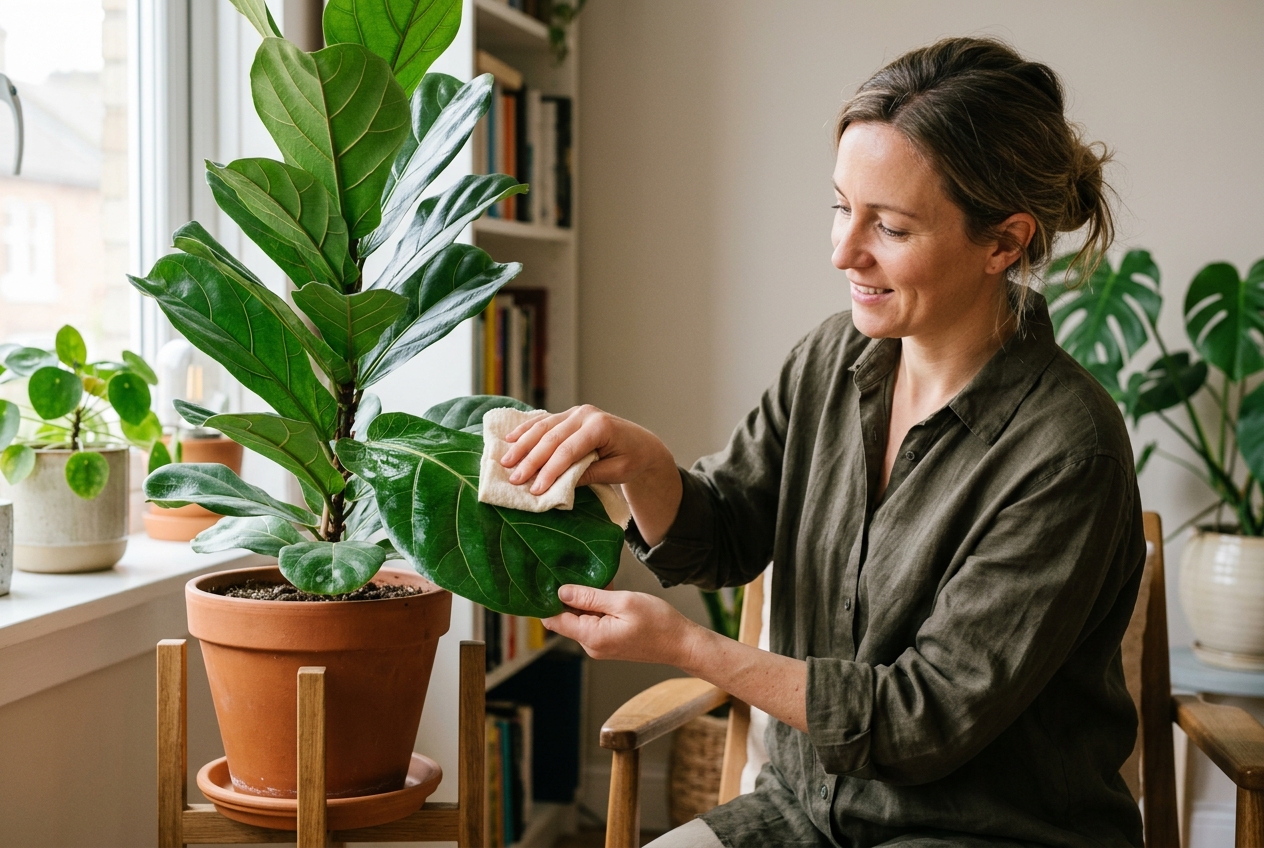
Taking time to regularly clean houseplant leaves is vital because indoor houseplants act as natural electrostatic filters, accumulating airborne dust, pet dander, and cooking residue on their foliage over time. A noticeable layer of dust reduces photosynthetic efficiency by reflecting usable photons and blocking the microscopic stomata (pores) through which the plant breathes. Keeping foliage clean is not merely an aesthetic task—it is a vital maintenance routine that supports vigorous root growth, efficient transpiration, and natural pest resistance.
| Foliage Cleaning Parameter | Botanical Best Practice | Hazardous Practice to Avoid |
|---|---|---|
| Primary Cleaning Agent | Tepid distilled or rainwater paired with a microfiber cloth. | Commercial chemical leaf shine sprays that clog respiratory stomata. |
| Cleaning Frequency | Once every 2 to 4 weeks depending on indoor air quality. | Ignoring dust until leaves turn dull gray and drop in vigor. |
| Technique for Fuzzy Foliage | Soft-bristled makeup or paint brush used dry (e.g., for African Violets). | Wetting hairy foliage, which traps water and induces fungal spots. |
| Mineral Deposit Removal | Diluted lemon juice or mild white vinegar solution (1 tsp per quart of water). | Using milk, mayonnaise, or coconut oil, which attract mold and pests. |
Why You Must Clean Houseplant Leaves: Stomata Health & Respiration
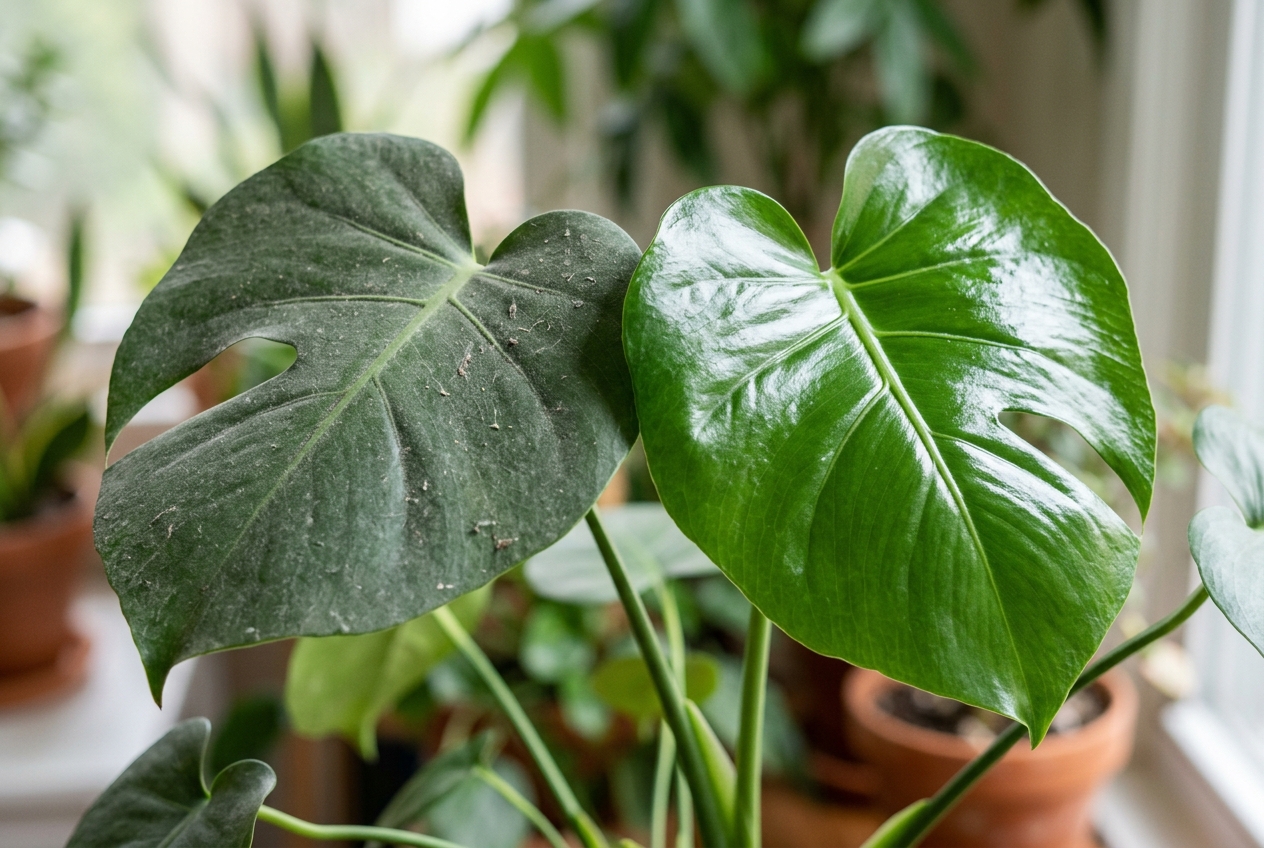
Many commercial leaf shine products rely on petroleum distillates, waxes, or silicone polymers to create a glossy surface. While visually appealing, these compounds leave a persistent coating over the epidermal layer. The plant’s stomata—microscopic pores concentrated primarily on the lower leaf surface but present on both sides of many species—become clogged, restricting gas exchange (carbon dioxide uptake and oxygen release) and disrupting transpiration.
Home remedies like rubbing foliage with mayonnaise, milk, or cooking oils create similar issues. In addition to coating the leaf surface, organic fats spoil at room temperature, creating an environment that invites dust mites, bacterial decay, and indoor fruit flies.
Step-by-Step Natural Leaf Cleaning Protocol
Follow Dennis’s 5-step method to safely clean and polish smooth-leaf tropical plants:
Botanical guidelines from the Royal Horticultural Society Houseplant Care Advice emphasize that routine foliar cleaning with soft, lukewarm water removes dust layers that obstruct light interception and gas exchange.
Step 1: Inspect for Pests Prior to Cleaning
Before wiping foliage, examine the leaf undersides and petiole junctions. If you spot signs of pests, treat the infestation with targeted controls before wiping the canopy to avoid inadvertently spreading eggs across healthy leaves.
Step 2: Prepare a Lukewarm Cleansing Solution
Fill a bowl with lukewarm distilled water or filtered rainwater. If your foliage has stubborn white mineral water spots, add 1 teaspoon of fresh lemon juice or organic apple cider vinegar per quart of water. The mild citric acid safely dissolves alkaline calcium deposits without burning leaf tissue.
Step 3: Support the Leaf Blade from Underneath
Never wipe a floating or unsupported leaf; the mechanical pressure can easily tear delicate leaf tissue or snap petioles. Rest your non-dominant hand flat beneath the leaf blade to provide firm, gentle support.
Step 4: Wipe Smoothly from Petiole to Leaf Tip
Using a damp, well-wrung microfiber cloth, wipe gently outward from the base of the leaf along the natural direction of the veins toward the tip. Rinse the cloth frequently in clean water so you are lifting dust away rather than redistributing it.
Step 5: Pat Dry and Allow Good Air Circulation
Use a second dry microfiber cloth to lightly pat away excess moisture, particularly around the leaf axils where water tends to collect. Keep the plant in an area with good air circulation for 1 hour to ensure the foliage dries completely before returning to bright light.
Ultra-Soft Microfiber Plant Care Cloths
Lint-free, high-density microfiber lifts dust particles and mineral scale from delicate leaf cuticles without requiring chemical polishing agents.
Dust-free leaves optimize photosynthesis and nutrient absorption; see our seasonal schedule in How to Fertilize Indoor Plants. In addition, routine leaf cleaning serves as your frontline defense against pests; see how to spot early infestations in our guide to Spider Mites on Indoor Plants.
Frequently Asked Questions About Cleaning Plant Leaves
Can I clean plant leaves by putting them in the shower?
Yes. Taking large tropical plants (like Monsteras and Palms) into the shower and rinsing them with a gentle lukewarm spray is an effective way to rinse dust off extensive canopies. Cover the soil with plastic to avoid over-saturating the pot.
How do I clean plants with fuzzy or velvety leaves?
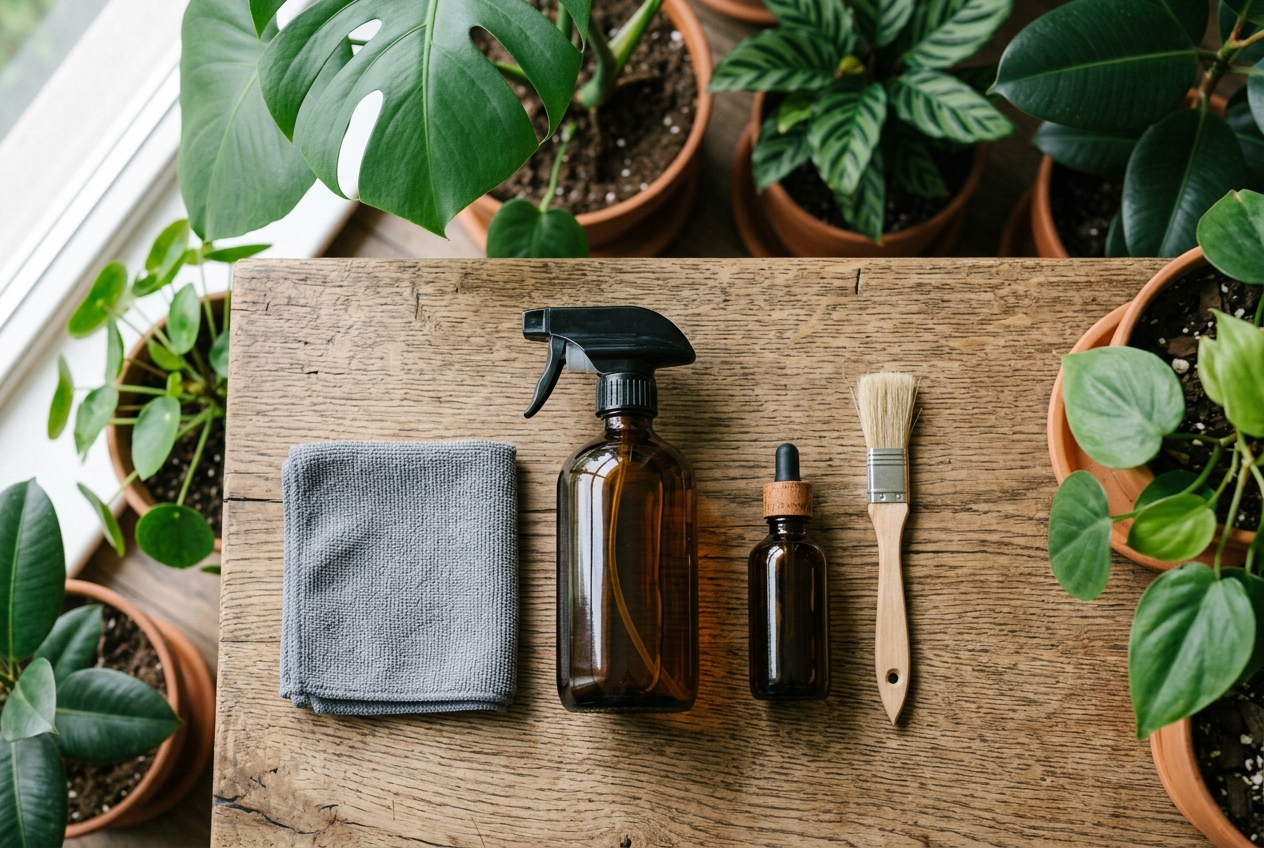
Never use wet cloths or water sprays on hairy-leafed plants like African Violets, Calathea warscewiczii, or Begonias. Instead, gently brush dust away using a dry, soft-bristled artist’s paintbrush or makeup brush.
Does cleaning leaves prevent spider mites and thrips?
Yes. Regularly wiping foliage eliminates the micro-dust layer that spider mites use for shelter, while physical wiping removes pest eggs and immature nymphs before they establish a breeding population.
Is it safe to use coconut oil to shine leaves?
No. Coconut oil, olive oil, and vegetable oil form an airtight seal over the foliage that blocks the plant’s respiratory stomata, attracts airborne dust, and can cause foliage to turn brown under direct light.
To maximize photosynthetic efficiency after dusting your leaves, check out our recommendations for the Best Grow Lights for Indoor Plants.
Dennis P. Hansen
Dennis P. Hansen is a home gardener with a genuine passion for plants and the simple pleasure of growing them. He enjoys caring for houseplants, succulents, and other plants at home while continually learning from everyday gardening experiences. Dennis likes to share practical plant care tips, useful observations, and simple solutions that can help others grow healthier plants. He believes that caring for plants is a rewarding journey and that there is always something new to learn along the way.