
How to Fertilize Indoor Plants: 7 Proven Feeding Rules


Mastering how to fertilize indoor plants is the scientific engine that drives vigorous foliar expansion, robust cellular vitality, and vibrant chlorophyll production in containerized houseplants. I am Dennis P. Hansen, an everyday home gardener sharing simple, practical plant care tips based on my day-to-day gardening practice at home. In this definitive guide, I will demystify primary N-P-K chemistry, explain why over-fertilization is far deadlier than nutrient depletion, and share my 7 field-tested rules to nourish your indoor jungle safely.
Table of Contents: Jump to a Section
- 1. The Biological Chemistry of Plant Nutrition (N-P-K & Micronutrients)
- 2. Synthetic Chemical Salts vs. Organic Liquid Concentrates
- 3. 7 Proven Rules: How to Fertilize Indoor Plants
- 4. Clinical Nutrient Deficiency vs. Fertilizer Burn Matrix
- 5. The Seasonal Feeding Schedule: Active Growth vs. Winter Dormancy
- 6. How to Flush Toxic Fertilizer Salts from Potting Soil
- 7. Frequently Asked Questions (FAQ)
- 8. Final Verdict & Dennis’s Annual Fertilization Calendar
In outdoor natural ecosystems, plant roots have access to infinite soil volume constantly replenished by decomposing organic matter, earthworm activity, and complex soil microbial food webs. Potted indoor houseplants, however, exist in closed artificial micro-reservoirs filled with soilless growing media (peat, coco coir, pumice, and bark). Within 60 to 90 days of repotting into fresh substrates such as our Best Soil Mix for Monstera, available soil nutrients become depleted through root absorption and bottom drainage leaching. Understanding how to fertilize indoor plants bridges this nutritional gap, providing essential mineral ions required for enzyme synthesis, amino acid building, and ATP energy transport.
However, indoor plants consume far less fertilizer than outdoor landscape specimens due to lower indoor light levels. When excessive fertilizer salts accumulate in the root zone, the electrical conductivity (EC) and osmotic pressure of the soil solution skyrocket, pulling moisture out of root cells and causing catastrophic chemical root burn and foliar necrosis diagnosed in Why Are My Plant Leaves Turning Yellow. By learning how to fertilize indoor plants with scientific precision, you deliver balanced nutrition without salt shock, accelerating mature growth and complementing foliar hygiene described in How to Clean Indoor Plant Leaves. Learning how to fertilize indoor plants unlocks lasting horticultural success.
The Biological Chemistry of Plant Nutrition (N-P-K & Micronutrients)
Every fertilizer label displays a 3-number guaranteed analysis representing the percentage by weight of Nitrogen (N), Phosphorus (P), and Potassium (K). Understanding how to fertilize indoor plants requires knowing their distinct metabolic roles:
1. Nitrogen (N) – Vegetative Leaf & Stem Architecture
Nitrogen is the core structural element of amino acids, proteins, and the central atom in the chlorophyll molecule. It powers lush, deep green vegetative foliage. Deficiencies appear as generalized chlorosis starting on older leaves. Mastering how to fertilize indoor plants ensures adequate nitrogen availability without causing weak, leggy growth.
2. Phosphorus (P) – ATP Cellular Energy & Root Branching
Phosphorus forms the backbone of RNA, DNA, and adenosine triphosphate (ATP)—the fundamental energy transfer currency of plant cells. It drives root elongation and flowering induction. In learning how to fertilize indoor plants, moderate phosphorus levels sustain active root formation without toxifying beneficial soil fungi.
3. Potassium (K) – Stomatal Regulation & Disease Resistance
Potassium acts as an osmotic pump, controlling the opening and closing of stomatal guard cells to regulate transpiration and moisture retention. It strengthens cell walls, builds disease resistance, and facilitates sub-irrigation efficiency in Bottom Watering Plants, making potassium a pillar in how to fertilize indoor plants.
4. Essential Secondary & Micronutrients
Complete indoor plant feeds must include Calcium (Ca) for cell wall pectins, Magnesium (Mg) for the center of the chlorophyll ring, and chelated Iron (Fe) to catalyze electron transfer systems, illustrating why holistic nutrition defines how to fertilize indoor plants.
Fiddle Leaf Fig Slow-Release Plant Food (3-1-2 NPK)
Specially formulated 3-1-2 NPK ratio designed for Fiddle Leaf Figs and indoor tropicals. Delivers steady, urea-free micronutrients for 6 months without root scorch.
Synthetic Chemical Salts vs. Organic Liquid Concentrates
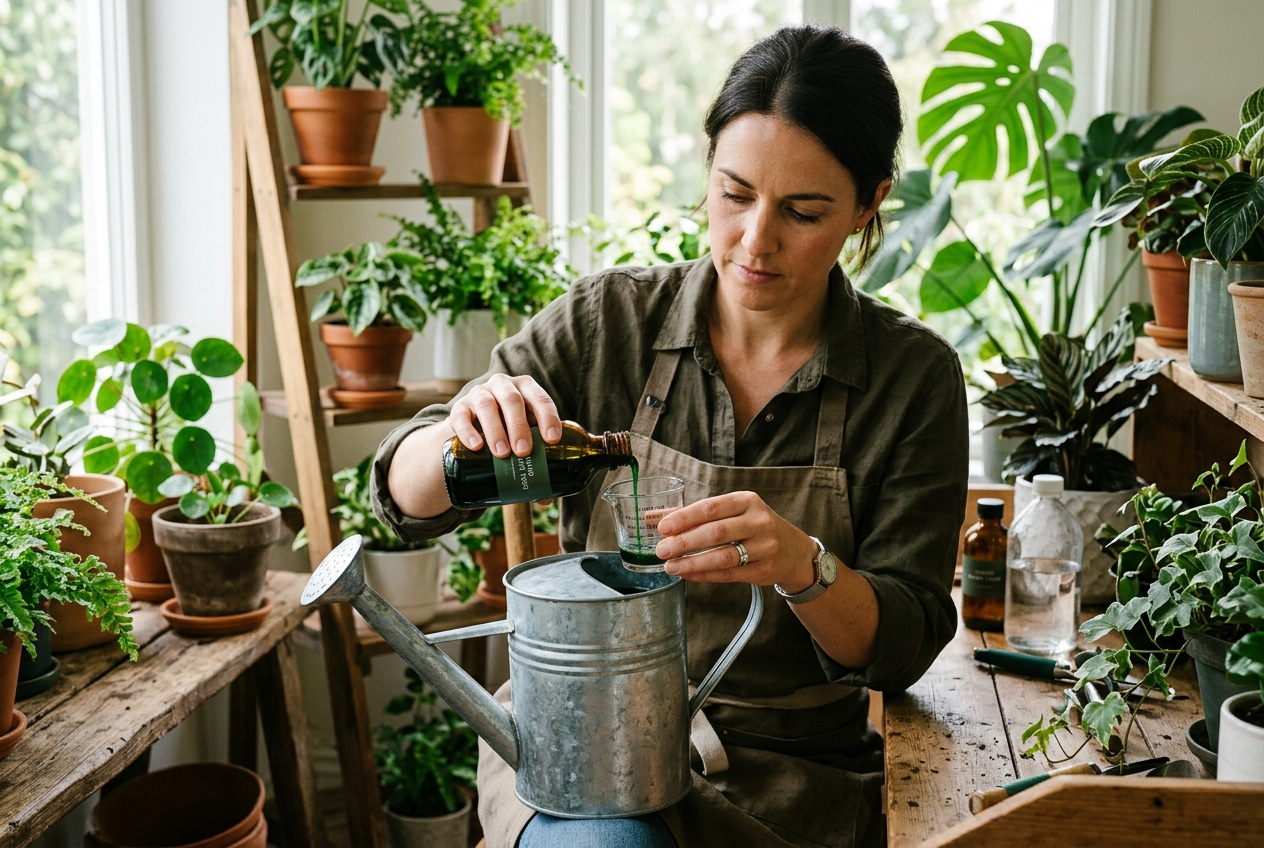
Choosing the right nutrient source is a vital decision when learning how to fertilize indoor plants:
| Fertilizer Type | Bioavailability & Release Rate | Salt Index & Burn Risk | Dennis’s Recommendation |
|---|---|---|---|
| Organic Liquid Feeds (Seaweed, Fish Hydrolysate, Humic Acid) | Slow-to-moderate; feeds beneficial soil microbes | Extremely low salt index; almost impossible to burn roots | Ideal for continuous bi-weekly feeding of tropical houseplants |
| Synthetic Mineral Liquids (Urea-Free 20-20-20 or 3-1-2) | 100% immediately bioavailable ionic salts | Moderate-to-high; requires 1/2 or 1/4 strength dilution | Excellent for precision hydroponics & rapid green-up |
| Controlled-Release Pellets (Polymer-Coated Osmocote) | Temperature-dependent gradual release over 3–6 months | Low risk unless soil stays above 85°F (dumping danger) | Great for low-maintenance collectors; apply once in spring |
| Fertilizer Spikes (Solid Compressed Sticks) | Localized uneven dissolution around spike only | High localized root burn around the insertion point | Not recommended; causes hot spots and uneven root growth |
7 Proven Rules: How to Fertilize Indoor Plants
Applying nutrients correctly ensures steady cellular growth without chemical stress. Follow these seven golden rules for how to fertilize indoor plants:
Rule 1: Always Dilute to Half-Strength (The “Weakly, Weekly” Philosophy)
Manufacturer dosage instructions on fertilizer packaging are almost universally calculated for fast-growing outdoor agricultural crops under full sun. In indoor environments with moderate light, full-strength concentrations will quickly scorch root hairs. Always dilute synthetic liquid fertilizers to 1/4 to 1/2 of the recommended dosage when implementing how to fertilize indoor plants. Applying a very dilute solution with every other watering (“weakly, weekly”) provides a gentle, continuous nutrient supply that mimics nature.
Rule 2: Never Fertilize Bone-Dry Soil
Applying concentrated mineral nutrients directly to desiccated root balls causes immediate reverse osmosis: the high salt concentration in the dry soil draws water out of root cells, resulting in chemical root tip burn. Always pre-moisten your plant with plain water or verify moderate substrate moisture before applying liquid fertilizer in how to fertilize indoor plants.
Rule 3: Match Fertilizer Dose to Light Intensity
Fertilizer is not plant food; sunlight is. Fertilizer provides raw building blocks, but light provides the photons that power photosynthesis to assemble those blocks into tissue. A plant in a blazing south-facing window with high Daily Light Integral (DLI) can process regular nutrients, whereas a plant in a low-light corner has a sluggish metabolism and needs only 1/4 strength feeding every 6 to 8 weeks, a critical nuance of how to fertilize indoor plants.
Rule 4: Choose Urea-Free Nitrogen Formulations
Many cheap synthetic fertilizers derive their nitrogen from urea. In outdoor garden soils, soil microbes convert urea into nitrate via nitrification. However, indoor soilless potting mixes often lack the specific bacteria required for this conversion, leading to toxic urea salt buildup. Always look for fertilizers where nitrogen is derived from Nitrate Nitrogen and Ammoniacal Nitrogen when learning how to fertilize indoor plants.
Rule 5: Pause Fertilization During Winter Semi-Dormancy
When natural daylight hours shorten during late autumn and winter, indoor plant growth slows down dramatically. Feeding plants during dormancy leads to salt accumulation in the soil, attracting fungus gnats covered in our Houseplant Pest Control Guide. Halt all fertilization between November and February unless you grow under high-intensity LED grow lights, an indispensable rule for how to fertilize indoor plants.
Rule 6: Never Fertilize Sick, Pest-Infested, or Root-Rotted Plants
When a houseplant is struggling with root rot or insect shock, adding fertilizer will not cure it; it will exacerbate the damage. Damaged root systems cannot absorb nutrients, and excess mineral salts further stress weakened tissues. First eliminate pests, adjust humidity per How to Increase Humidity for Indoor Plants, and restore root health before resuming gentle feeding.
Rule 7: Flush the Substrate with Pure Water Every 6 to 8 Weeks
Even with careful dilution, mineral salts from tap water and fertilizers naturally accumulate in container substrates over time. Every two months, take your houseplants to the sink and flush the soil with pure room-temperature water equal to 3 to 4 times the volume of the pot, allowing all excess salts to leach out completely, ensuring long-term success in how to fertilize indoor plants.
Clinical Nutrient Deficiency vs. Fertilizer Burn Matrix
Diagnosing nutritional imbalances accurately prevents damaging treatment mistakes in how to fertilize indoor plants:
| Nutrient Condition | Visual Foliar Symptoms | Affected Plant Tissue | Dennis’s Corrective Treatment |
|---|---|---|---|
| Fertilizer Salt Burn | Crispy brown leaf margins, white salt crust on soil/pot, sudden leaf scorch | Foliar tips, leaf margins, and young expanding shoots | Flush soil thoroughly with 4x volume of distilled water; withhold fertilizer for 30 days |
| Nitrogen Deficiency | Uniform pale yellow-green chlorosis; stunted slow vegetative growth | Oldest bottom leaves first (mobile nutrient translocation) | Apply 1/2 strength high-nitrogen liquid feed (3-1-2 ratio) + topdress worm castings |
| Iron / Micronutrient Lock | Sharp interveinal chlorosis (veins remain dark green while leaf blades yellow) | Newest emergent juvenile leaves (immobile nutrient) | Check soil pH (lower to 5.8–6.2) and apply chelated Iron (Fe-EDDHA) drench |
| Magnesium Deficiency | Interveinal yellowing with distinct arrowhead green pattern along midrib | Mature lower leaves | Dissolve 1/2 tsp Epsom salts (Magnesium Sulfate) per gallon of water |
The Seasonal Feeding Schedule: Active Growth vs. Winter Dormancy

Timing your feeding with natural photoperiod changes optimizes nutrient uptake when mastering how to fertilize indoor plants:
- Spring Surge (March – May): As day length increases, plants wake up with a surge of vegetative growth. Begin feeding with half-strength balanced 3-1-2 liquid fertilizer every 2 to 3 weeks as part of how to fertilize indoor plants.
- Summer Peak (June – August): Maximum photosynthesis and active transpiration. Feed every 2 weeks or use the “weakly, weekly” method at 1/4 strength with every watering. For succulents, follow strict dry periods outlined in How to Water Succulents and propagate companion cuttings via How to Propagate Pothos.
- Autumn Slowdown (September – October): Growth rates begin tapering off. Reduce feeding to once a month at 1/4 strength in how to fertilize indoor plants.
- Winter Dormancy (November – February): Zero fertilizer for standard tropicals. Water with pure water only until spring arrives.
How to Flush Toxic Fertilizer Salts from Potting Soil
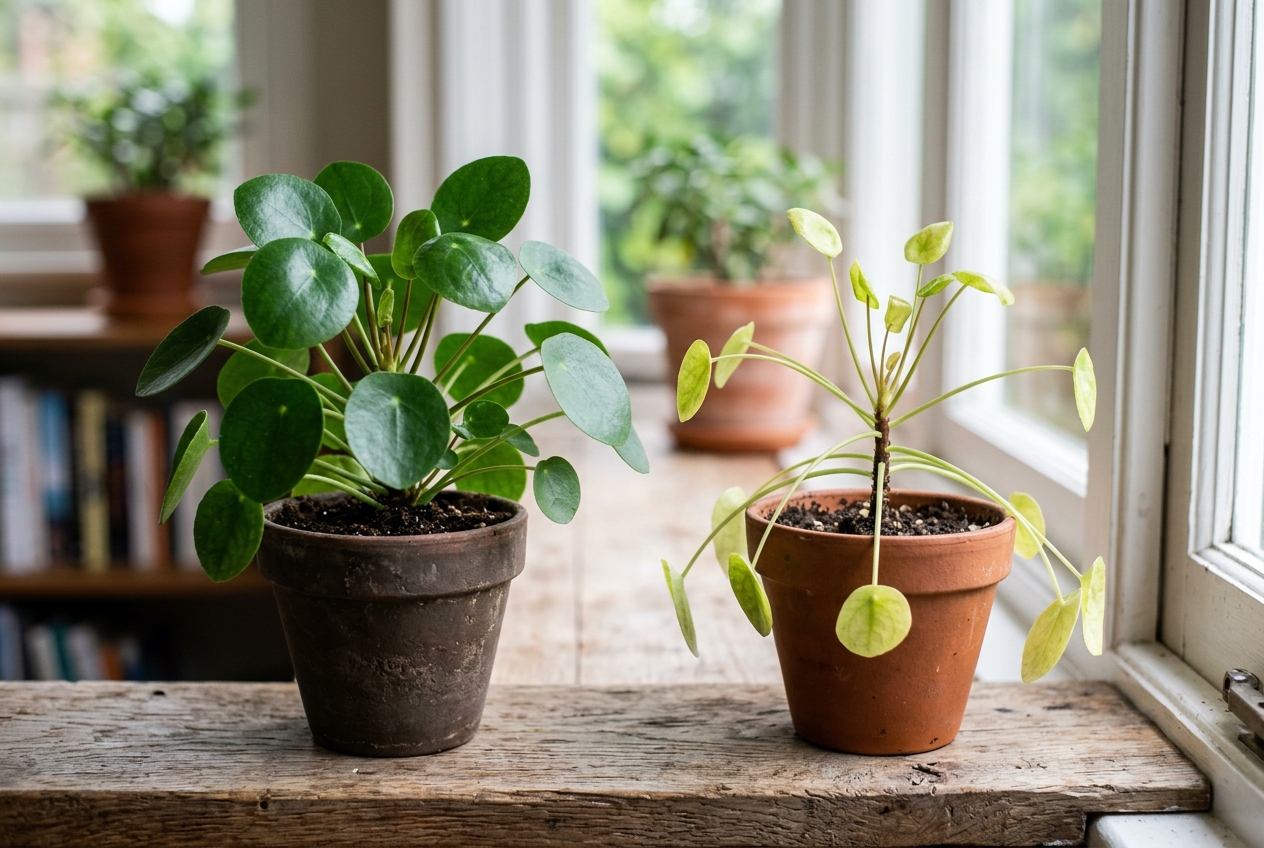
If you notice a white, chalky mineral crust forming on the potting soil surface or along the rim of terracotta pots, toxic fertilizer salts have accumulated. Execute Dennis’s deep soil flushing protocol for how to fertilize indoor plants:
- Scrape off and discard the top 1/2 inch of crusty soil using a spoon.
- Take the plant to a sink, bathtub, or outdoor patio.
- Slowly pour room-temperature water through the pot, allowing it to drain freely out the bottom for 3 to 5 minutes (using approximately 3 to 4 times the volume of the container).
- Allow the pot to drain completely for 30 minutes before returning it to its saucer.
When feeding sensitive flowering understory specimens, review our balanced nutrient rules in Peace Lily Care.
Frequently Asked Questions (FAQ)
What is the best NPK ratio for indoor houseplants?
A balanced 3-1-2 ratio (such as 9-3-6) or a balanced 1-1-1 ratio (such as 20-20-20 diluted to 1/4 strength) is ideal for tropical foliage plants like Monsteras, Pothos, and Philodendrons.
How often should I fertilize indoor houseplants?
During active spring and summer growth, fertilize every 2 to 4 weeks with half-strength liquid fertilizer. In winter dormancy, stop fertilizing completely.
How can I tell if my plant has fertilizer burn?
Fertilizer burn presents as brown, scorched, crispy leaf margins, blackened root tips, a white salt crust on the soil surface, and rapid leaf drop shortly after feeding.
Should I fertilize newly repotted houseplants?
No. Wait 4 to 6 weeks after repotting before applying fertilizer. Fresh commercial potting soil contains starter nutrients, and newly pruned roots need time to recover without salt stress.
Is coffee or banana peel water good for houseplants?
No. DIY food waste teas (coffee grounds, banana water) ferment in indoor pots, creating unpleasant odors, attracting fungus gnats, and encouraging root rot. Always use calibrated organic or mineral fertilizers.
Final Verdict & Dennis’s Annual Fertilization Calendar
Feeding houseplants is a science of restraint. Indoor containers are small, delicate closed loops where a little nutrition goes a long way. By mastering how to fertilize indoor plants using the “weakly, weekly” dilution rule, matching feeding to light availability, choosing urea-free formulas, and flushing salts regularly, you will cultivate lush, vibrant foliage that commands attention.
Here is Dennis’s golden feeding rule: When in doubt, under-fertilize! A slightly hungry plant will simply grow a little slower, but an over-fertilized plant can suffer fatal root burn in a matter of days. Nourish with care, provide bright light, and watch your indoor oasis thrive with radiant health!
{
“@context”: “https://schema.org”,
“@graph”: [
{
“@type”: “Article”,
“@id”: “https://www.plantingcare.com/how-to-fertilize-indoor-plants/#article”,
“isPartOf”: {
“@type”: “WebPage”,
“@id”: “https://www.plantingcare.com/how-to-fertilize-indoor-plants/”
},
“headline”: “How to Fertilize Indoor Plants: 7 Proven Feeding Rules”,
“description”: “Learn how to fertilize indoor plants with Dennis P. Hansen’s 7 proven rules. Master N-P-K ratios, stop fertilizer burn, and boost vibrant growth.”,
“image”: “https://www.plantingcare.com/wp-content/uploads/2026/08/measuring_indoor_plant_fertilizer_1787838173445-3.jpg”,
“author”: {
“@type”: “Person”,
“name”: “Dennis P. Hansen”,
“jobTitle”: “Hobby Gardener”,
“worksFor”: {
“@type”: “Organization”,
“name”: “PlantingCare.com”
}
},
“publisher”: {
“@type”: “Organization”,
“name”: “PlantingCare”,
“url”: “https://www.plantingcare.com”
},
“mainEntityOfPage”: “https://www.plantingcare.com/how-to-fertilize-indoor-plants/”
},
{
“@type”: “HowTo”,
“name”: “How to Fertilize Indoor Plants Safely”,
“description”: “Step-by-step horticultural guide to diluting and applying liquid fertilizer to indoor houseplants.”,
“image”: “https://www.plantingcare.com/wp-content/uploads/2026/08/measuring_indoor_plant_fertilizer_1787838173445-3.jpg”,
“totalTime”: “PT10M”,
“tool”: [
{“@type”: “HowToTool”, “name”: “Measuring Syringe / Pipette”},
{“@type”: “HowToTool”, “name”: “1-Gallon Watering Can”}
],
“supply”: [
{“@type”: “HowToSupply”, “name”: “Balanced Urea-Free Liquid Fertilizer”},
{“@type”: “HowToSupply”, “name”: “Room Temperature Water”}
],
“step”: [
{
“@type”: “HowToStep”,
“name”: “Pre-Moisten Soil Substrate”,
“text”: “Ensure the potting soil is lightly moist to prevent concentrated nutrient salts from scorching dry root hairs.”,
“image”: “https://www.plantingcare.com/wp-content/uploads/2026/08/plant_roots_repotting_inspection_1787838157266-3.jpg”
},
{
“@type”: “HowToStep”,
“name”: “Dilute Fertilizer to Half-Strength”,
“text”: “Measure half the manufacturer’s recommended dose into a gallon of room-temperature water and mix thoroughly.”,
“image”: “https://www.plantingcare.com/wp-content/uploads/2026/08/measuring_indoor_plant_fertilizer_1787838173445-3.jpg”
},
{
“@type”: “HowToStep”,
“name”: “Apply Evenly Across Soil Surface”,
“text”: “Pour the dilute solution evenly around the base of the plant until slight runoff appears in the drainage saucer.”,
“image”: “https://www.plantingcare.com/wp-content/uploads/2026/08/healthy_indoor_plant_flourishing_1787838187445-3.jpg”
}
]
},
{
“@type”: “FAQPage”,
“mainEntity”: [
{
“@type”: “Question”,
“name”: “What is the best NPK ratio for indoor houseplants?”,
“acceptedAnswer”: {
“@type”: “Answer”,
“text”: “A balanced 3-1-2 ratio (like 9-3-6) or 1-1-1 ratio diluted to half-strength is optimal for tropical foliage.”
}
},
{
“@type”: “Question”,
“name”: “How often should I fertilize indoor houseplants?”,
“acceptedAnswer”: {
“@type”: “Answer”,
“text”: “Every 2 to 4 weeks during spring and summer at half-strength. In winter, halt all fertilization.”
}
},
{
“@type”: “Question”,
“name”: “How can I tell if my plant has fertilizer burn?”,
“acceptedAnswer”: {
“@type”: “Answer”,
“text”: “Brown crispy leaf margins, blackened roots, white salt crusts on soil, and sudden leaf drop indicate salt burn.”
}
},
{
“@type”: “Question”,
“name”: “Should I fertilize newly repotted houseplants?”,
“acceptedAnswer”: {
“@type”: “Answer”,
“text”: “No, wait 4 to 6 weeks after repotting before fertilizing to allow roots to establish without salt stress.”
}
},
{
“@type”: “Question”,
“name”: “Is coffee or banana peel water good for houseplants?”,
“acceptedAnswer”: {
“@type”: “Answer”,
“text”: “No, food wastes ferment indoors, cause foul odors, and attract fungus gnats. Always use calibrated fertilizers.”
}
}
]
}
]
}
Dennis P. Hansen
Dennis P. Hansen is a home gardener with a genuine passion for plants and the simple pleasure of growing them. He enjoys caring for houseplants, succulents, and other plants at home while continually learning from everyday gardening experiences. Dennis likes to share practical plant care tips, useful observations, and simple solutions that can help others grow healthier plants. He believes that caring for plants is a rewarding journey and that there is always something new to learn along the way.