
7 Proven Ways to Use Fertilizer for Indoor Plants


Table of Contents
Introduction:
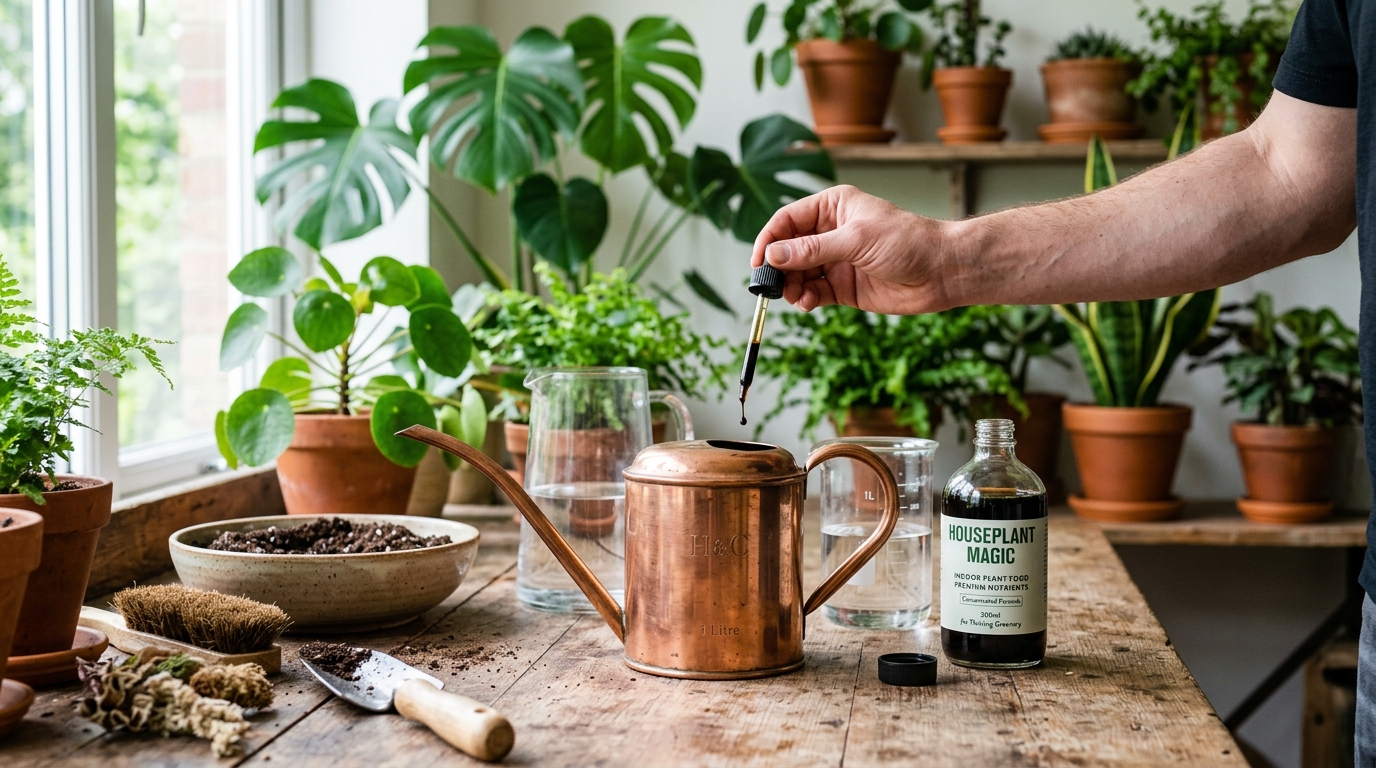
You water on schedule, your light is dialed in—so why aren’t your leaves lush and your stems sturdy? The missing piece is often nutrition. Fertilizer for indoor plants is the quiet engine behind steady growth, richer color, and resilient roots—and it’s easier to master than you think.
Still wondering where to start? Do indoor plants need fertilizer year-round, or only in spring? Which fertilizer is best for indoor plants—balanced liquid, slow‑release, or organic? And how do you prevent salt build‑up and leaf burn while keeping your routine simple?
In this guide, we’ll demystify fertilizer for indoor plants and give you seven proven, easy-to-repeat methods you can apply today. You’ll set a feeding schedule that matches your light and season, choose the best fertilizer for indoor plants for your goals, and even experiment with safe, effective DIY options.
What you’ll learn:
- The basics: how NPK and micronutrients power growth—and when to feed.
- Practical methods: a “weekly, weakly” liquid routine, slow‑release boosts, foliar micronutrients, soil drenches, and more.
- Smart selection: how to match formula to plant type (foliage vs. blooming) without guesswork.
- DIY options that work: homemade fertilizer for indoor plants, including simple homemade liquid fertilizer for indoor plants.
- Protection and performance: dilution, flushes, and floor-safe setups to avoid burn and mess.
By the end, you’ll know exactly what is best to feed indoor plants in your home—and how to build a fertilizer for indoor plants plan that delivers predictable, healthy growth without overcomplicating care.
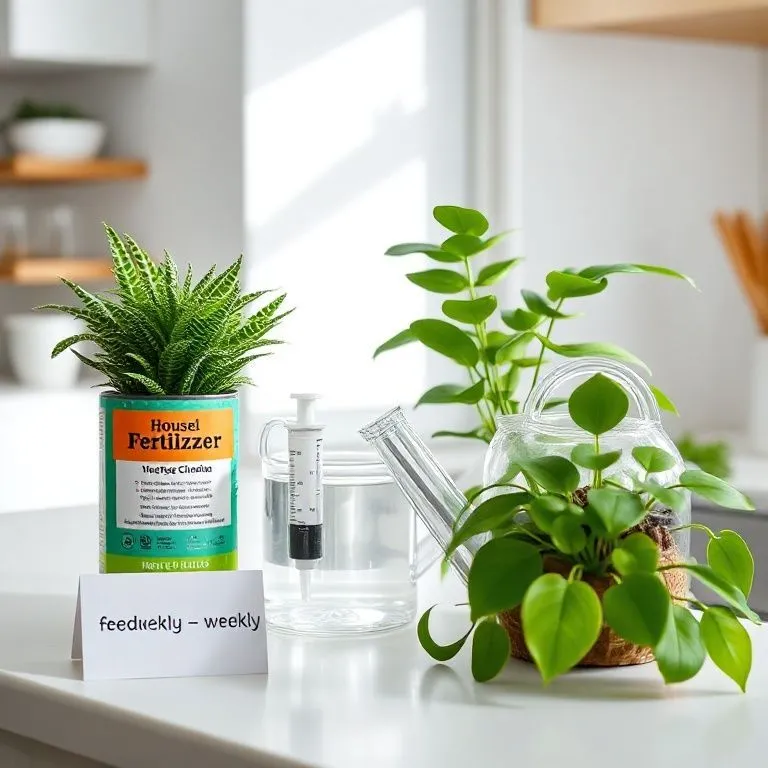
Fertilizer for indoor plants basics: why, when, and how to feed for healthy growth
Healthy leaves and steady new growth aren’t just about light and water—nutrition is the third pillar. With the right fertilizer for indoor plants, you’ll fuel vibrant color, stronger roots, and resilience to stress, all without complicating your routine.
Do indoor plants need fertilizer? signs your plant is hungry and when to start
Yes—potting mixes indoors have limited nutrients and leach with each watering. If you’ve been asking “Do indoor plants need fertilizer?” the answer is a confident yes during active growth.
Watch for these cues:
- Smaller, paler new leaves compared to older ones
- Slowed growth in spring/summer despite good light
- Weak, leggy stems or poor branching
- Potting mix older than 6–12 months with no recent refresh
When to start feeding
- After repotting: wait 4–6 weeks if your mix includes slow‑release pellets.
- New plant from the store: begin at 1/4 strength after two waterings at home.
- Dormant months: feed sparingly or pause unless growth continues under strong light.
Pro tip: If you see crusty white salts on soil or pot rims, reduce feeding and flush with plain water—this signals excess, not deficiency.
Understanding NPK in fertilizer for indoor plants: foliage vs. bloom goals
NPK = Nitrogen (leaf/stem growth), Phosphorus (roots/flowers), Potassium (overall vigor). Matching ratios to goals helps you choose the best fertilizer for indoor plants without overthinking it.
Quick guide
- Foliage-first houseplants (pothos, rubber plant, monstera)
- Look for a balanced, leaf-leaning ratio such as 3‑1‑2 or 2‑1‑2.
- Prefer nitrate‑based, urea‑free nitrogen to reduce tip burn in low light.
- Bloomers (African violet, orchid, anthurium)
- Use moderate P, not extreme “bloom booster” levels; consistency beats spikes.
- Add chelated micros (Fe, Mn, Zn) and calcium/magnesium for long-term strength.
Label clues that help answer “Which fertilizer is best for indoor plants?”
- Chelated iron (EDDHA/EDTA) for better uptake
- Low salt index; clearly listed micros
- Instructions that allow “weak, frequent” dosing
Feeding schedules by light and season: avoid overfertilizing and salt build-up
Tie your schedule to energy (light) and growth rate. More light = more frequent, dilute feedings.
Simple schedule matrix
- High light (bright window, grow lights)
- Spring–summer: 1/4–1/2 strength every 1–2 weeks
- Fall–winter: 1/4 strength monthly if growth continues
- Medium light
- Spring–summer: 1/4 strength every 2–3 weeks
- Fall–winter: every 4–6 weeks or pause
- Low light
- Spring–summer: monthly at 1/4 strength
- Fall–winter: pause unless you see active growth
Salt management
- Flush with plain water until runoff every 4–6 weeks.
- Skip a feeding after any plant stress (repot, pruning, pest treatment).
- Refresh potting mix every 12–18 months to reset nutrient balance.
Consistency over intensity: a light, regular plan of fertilizer for indoor plants outperforms occasional heavy doses.
Dilution and dosing made simple: prevent burn and keep roots happy
Dosing is where “easy” can go wrong—so keep it precise and gentle.
Your foolproof method
- Start weaker than the label: use 1/4 strength for the first three feeds.
- Measure, don’t guess: syringes or micro‑spoons beat “glugs.”
- Pre‑mix a concentrate: label dose in a small bottle; add drops to your watering can for repeatable results.
- Water thoroughly: feed into already moist soil and aim for slight runoff to distribute nutrients evenly.
- Flush monthly: run plain water through to clear salts (especially with tap water).
- Track and adjust: if leaves pale, increase to 1/3–1/2 strength; if tips brown, dilute more or feed less often.
Examples
- Label says 1 tsp per gallon: try 1/4 tsp weekly (“weekly, weakly”) or 1/2 tsp every two weeks in high light.
- Slow‑release granules: apply 1–2 inches below the surface per label, then halve the rate if you also use liquid feeds.
Bottom line: precise dilution, smart flushing, and a light‑but‑regular cadence make fertilizer for indoor plants safe, predictable, and effective.
7 proven ways to use fertilizer for indoor plants (step-by-step)
Ready to feed like a pro? Here’s a practical, low‑risk playbook you can mix and match. If you’ve wondered “Which fertilizer is best for indoor plants?” the truth is: the best choice is the one you can apply consistently, at the right strength, for your light and season. Use these methods to get predictable results from fertilizer for indoor plants—lush leaves, strong roots, and steady growth without burn.
1) Liquid feed routine: “weekly, weakly” for steady growth and fewer issues
A light, regular cadence outperforms big, infrequent doses.
How to do it
- Pick a balanced formula (e.g., 3‑1‑2) labeled for houseplants—the Best fertilizer for indoor plants for foliage goals.
- Start at 1/4 strength for the first 3 feeds; raise to 1/3–1/2 strength if growth is strong and tips don’t brown.
- Feed into pre‑moistened soil to protect roots, aiming for a little runoff.
- Track in a simple calendar: high light = every 1–2 weeks; medium light = every 2–3 weeks; low light = monthly at most.
Pro tips
- Measure precisely—syringe or micro‑spoons beat eyeballing.
- Skip the feed after repotting stress, pruning, or pest treatment.
- Flush with plain water every 4–6 weeks to prevent salt build‑up.
2) Slow‑release granules/spikes: low‑maintenance nutrition that lasts
Perfect when you want “set it and forget it” support.
How to do it
- Mix granules lightly into the top 1–2 inches of soil or place spikes around the rim—never right against the stem.
- Water in well to start release; reapply per label (usually 2–3 months).
- If combining with liquids, cut liquid strength in half to avoid excess.
Best for
- Busy schedules, large planters, and plants that prefer steady, gentle feeding.
- Vacation coverage or offices with shared care.
Avoid
- Overloading small pots—err on the low end of the label rate.
3) Foliar sprays and micros: fast corrections with iron, magnesium, and calcium
When leaves pale or show patterned chlorosis, foliar feeding can deliver quick relief.
How to do it
- Choose chelated iron (for yellowing between veins), magnesium (Epsom salt), or a complete micro mix.
- Dilute 2–4× weaker than label for foliar use.
- Mist in the morning on clean leaves; hit undersides; keep off fuzzy leaves (like African violets).
- Repeat weekly for 2–3 weeks, then return to your regular plan.
Smart options
- Seaweed/kelp extract is a gentle micronutrient add‑on; some people also use homemade liquid fertilizer for indoor plants like diluted compost tea—keep it well‑strained, low‑odor, and very weak if you try it.
4) Soil drench + monthly flush: boost uptake and clear salts
Drenching drives nutrients deep, then a flush resets the soil to prevent salt stress—an ideal pairing with fertilizer for indoor plants.
Soil drench steps
- Mix 1/4–1/2 strength fertilizer and thoroughly water the root zone until 15–25% runoff.
- Rotate the pot a quarter turn and drench again a week later for even distribution.
Monthly flush
- Run plain, room‑temp water through the soil until you see generous runoff.
- If your tap water is very hard, use filtered or let water sit overnight to off‑gas chlorine.
When to use
- Plants in bright light, heavy feeders, or after a growth spurt.
5) Self‑watering setups with fertilizer for indoor plants: consistent dosing without burn
Reservoirs and wicking planters can deliver steady moisture and nutrients with minimal effort.
Setup
- Pre‑wet the wick and the soil so capillary action starts immediately.
- Fill the reservoir with 1/4‑strength fertilizer for indoor plants; mark your dilution on the bottle for repeatability.
- Top‑water lightly once to seat the mix; then let the system do the work.
- Every 4–6 weeks, top‑water with plain water until runoff to prevent salt creep.
Dial it in
- Brighter light or faster growth? Refill a bit more often—keep the same low dilution.
- Cooler months? Use plain water in the reservoir and feed every few refills.
Safety notes
- Keep fertilizer solution off leaves and metal surfaces to avoid staining or corrosion.
- Wipe the reservoir monthly to deter algae.
With these methods, fertilizer for indoor plants becomes simple and predictable—measured, gentle, and tailored to your light and routine.

Choosing the best fertilizer for indoor plants: formulas and smart picks
You don’t need a shelf full of bottles—just the right match of formula and dosage. Think of fertilizer for indoor plants as a tool you tailor to your light, plant goals, and watering style. Let’s translate labels into clear choices you can trust.
Which fertilizer is best for indoor plants? match NPK to plant type and goals
Start with goals (lush foliage, steady blooms, or compact structure) and plug in a ratio that supports them.
- Foliage-first houseplants (pothos, rubber plant, monstera)
- Aim for a balanced, leaf-leaning ratio like 3‑1‑2 or 2‑1‑2.
- Look for nitrate-dominant, urea‑free nitrogen to reduce tip burn in low light.
- Bloomers (African violet, anthurium, some orchids)
- Use a moderate‑P formula (not extreme “bloom boosters”): 3‑1‑2 or 2‑2‑3 works well.
- Ensure magnesium and calcium are present (or add a light Cal‑Mag).
- Cacti and succulents
- Low‑nitrogen, higher‑potassium support for firm growth: think 2‑1‑3 at 1/4 strength.
- Feed less often; too much N = soft, leggy tissue.
- Palms and ficus
- Balanced feed plus extra Mg for frond color; steady, dilute dosing prevents salt stress.
- Hydro or semi‑hydro (LECA, pon)
- Use a complete, low‑EC solution with micros; keep EC on the gentle side and flush regularly.
If you’ve wondered “Which fertilizer is best for indoor plants?” the most honest answer is: the one you can apply consistently, in the right ratio, without stressing roots.
Best fertilizer for indoor plants: balanced, urea‑free, low‑salt options to trust
Cut through the marketing by checking five things on the label. Your goal is a clean, predictable fertilizer for indoor plants that won’t scorch leaves or build salts too fast.
What to look for
- Balanced NPK aligned to your plant goals (3‑1‑2 is a reliable all‑rounder for foliage).
- Nitrogen sources list “nitrate” and/or “ammoniacal”—minimal or no “urea.”
- Chelated micros: iron (EDTA/DTPA/EDDHA), manganese, zinc, boron, copper, molybdenum.
- Low salt tendency: products that recommend dilute, frequent dosing and disclose EC or ppm guidance.
- Clear directions for indoor use, plus compatibility with self‑watering or semi‑hydro if you use them.
Quick picks by category (no brands needed)
- Foliage workhorse: balanced 3‑1‑2, urea‑free, weekly‑weakly.
- Bloom support: balanced base plus a light bloom-leaning feed during spike or bud set.
- Succulents/cacti: lower N, higher K formula at 1/4 strength, monthly.
- Orchids: dilute, complete fertilizer with micros; flush monthly.
- Large floor planters: slow‑release prills plus a gentle liquid “top‑up” during peak growth.
Remember: the best fertilizer for indoor plants is the one that plays nicely with your watering rhythm and light level.
Organic vs. synthetic: when to use each for leaves, roots, and blooms
Both can be excellent—choose by precision, pace, and your tolerance for odor or gnats.
- Organic (seaweed, fish emulsion, worm castings/tea)
- Pros: feeds soil life, gentler on roots, harder to overdo.
- Cons: less precise NPK, may smell, can invite fungus gnats if overapplied.
- Best when: you want slow, steady improvement and healthier potting mix over time.
- Synthetic (complete liquid concentrates, coated slow‑release prills)
- Pros: precise dosing, immediate results, tidy and consistent.
- Cons: can accumulate salts; requires flushing and careful dilution.
- Best when: you need predictable growth, clean application, or use self‑watering/semi‑hydro.
Practical hybrid
- Top‑dress with worm castings for soil health, then dose a dilute, urea‑free liquid for precision. This combo makes fertilizer for indoor plants effective and forgiving.
Label reading 101: EC, chelated micros, and what “slow‑release” really means
Get fluent in four terms and you’ll shop like a pro.
- EC (electrical conductivity)
- Indicates nutrient concentration. For most houseplants in soil, aim around 0.8–1.5 mS/cm at use strength.
- If only “ppm” is listed, think roughly 500–1000 ppm for regular feeds (meters vary—stay conservative).
- Chelated micronutrients
- Iron chelates matter: EDTA works in neutral pH, DTPA is more stable up to ~7.5, EDDHA holds in higher pH mixes.
- Chelated Mn, Zn, Cu improve availability at indoor pH ranges.
- Nitrogen sources
- Nitrate + ammoniacal is gentler; heavy urea can scorch in low light. Choose urea‑free for safer, frequent feeding.
- “Slow‑release” explained
- Polymer/resin‑coated prills release nutrients with temperature and moisture; the “3‑month” claim assumes ~70°F.
- Spikes are just compressed fertilizer; place them away from stems and pair with periodic flushing.
- Even with coated prills, a monthly plain‑water flush prevents crusting and keeps roots comfortable.
Bottom line: pick a complete, urea‑free, balanced formula, read EC guidance, and pair it with smart flushing. That’s the simplest path to reliable results from fertilizer for indoor plants.
Homemade fertilizer for indoor plants: safe DIY options that work
DIY doesn’t have to be messy or risky. With a few proven inputs, you can make gentle, effective fertilizer for indoor plants that supports steady growth, richer color, and healthier roots—without attracting pests or overwhelming your routine.
What is the best homemade fertilizer for indoor plants? proven, plant‑safe choices
Start with ingredients that are consistent, low‑odor, and easy to dose.
- Worm castings (top‑dress)
- Benefits: adds mild nutrients and beneficial microbes; improves soil structure.
- Use: 2–4 tablespoons per 6–8″ pot; 1/4–1/2 cup for 10–12″ pots. Refresh every 8–12 weeks.
- Seaweed/kelp extract (diluted liquid)
- Benefits: micronutrients + natural growth hormones for resilience.
- Use: see dilution guidance below; ideal as a gentle booster with regular feeds.
- Fish emulsion or fish hydrolysate (deodorized)
- Benefits: nitrogen and trace minerals for leaf growth.
- Use lightly indoors to avoid odor; dilute more than outdoor rates.
- Finished compost extract/tea (well‑strained, fresh)
- Benefits: microbe-rich tonic that supports root health.
- Use: soil drench only; avoid foliar on fuzzy leaves.
Skip these trending “hacks” indoors
- Raw coffee grounds, banana peels, milk, or uncured eggshells—they rot in pots, invite gnats, and offer unpredictable nutrition. For a safe calcium boost, use a pinch of dolomitic lime or a Cal‑Mag supplement instead.
Homemade liquid fertilizer for indoor plants: seaweed, fish emulsion, and compost tea basics
Dial in dilution first; then layer frequency to fit your light and season.
- Seaweed/kelp extract
- Mix 1/2–1 tsp per gallon of water for indoor use (weaker than most labels).
- Apply every 2–4 weeks during active growth.
- Great as a complement to your main fertilizer for indoor plants (not a sole source of NPK).
- Fish emulsion (deodorized)
- Start at 1 tsp per gallon; increase to 2 tsp only if growth stalls and no tip burn appears.
- Feed every 3–4 weeks in spring/summer; pause or halve in winter.
- Water into pre‑moistened soil; wipe any spills to avoid lingering odor.
- Compost tea (aerated, fresh, and filtered)
- Place 1 cup mature, finished compost in a mesh bag per gallon of dechlorinated water.
- Aerate with a small aquarium pump for 12–24 hours; keep it out of direct sun.
- Strain very well; dilute 1:4 for soil drench. Use within 24 hours.
- Apply monthly; alternate with your regular fertilizer for indoor plants.
Pro tip: If your tap water is heavily chlorinated, let it sit 24 hours or use filtered water to protect microbes.
Best homemade fertilizer for indoor plants: ratios, storage, and odor control
Ratios at a glance
- Seaweed: 1/2–1 tsp per gallon (mild micronutrient boost).
- Fish emulsion: 1–2 tsp per gallon (light nitrogen source).
- Compost tea: dilute 1:4 (1 part tea to 4 parts water) for soil drench.
Storage rules
- Mix fresh for each use whenever possible.
- Compost tea and worm tea: do not store—use within 24 hours.
- Keep concentrates (seaweed, fish) sealed, cool, and dark; shake before measuring.
Odor control
- Choose deodorized fish products and lower indoor dilutions.
- Apply fish‑based feeds on watering day with windows cracked or outdoors, then bring plants back in.
- Immediately wipe rims, saucers, and floors after feeding.
Consistency beats intensity: gentle, repeatable doses of homemade fertilizer for indoor plants outperform occasional heavy applications.
6) Top‑dress with worm castings + 7) Diluted worm tea: gentle, soil‑first feeding
- Worm castings top‑dress (set it and forget it)
- How: Spread a thin 1/4–1/2″ layer over the soil, keeping 1/2″ away from stems. Lightly scratch in.
- When: Every 8–12 weeks during active growth.
- Why it works: Slow, steady nutrients and beneficial biology that keep potting mixes lively.
- Diluted worm tea (periodic microbe boost)
- Brew: 1/2 cup worm castings in a mesh bag per gallon of dechlorinated water; aerate 12–24 hours.
- Dilute: 1:4 for soil drench; apply monthly during spring/summer.
- Tip: Flush with plain water every 6–8 weeks to prevent salt or biofilm buildup.
What is best to feed indoor plants? ingredients that support soil life
Think beyond NPK—feed the soil so it can feed the plant.
- Smart, soil‑friendly inputs
- Worm castings, compost extracts, seaweed/kelp, fish hydrolysate (lightly used), humic/fulvic acids, and a touch of biochar pre‑charged with fertilizer.
- Use carefully or skip indoors
- Epsom salt (Mg) only for confirmed deficiency; otherwise skip.
- Raw food scraps, sugary solutions, and unsterilized “kitchen teas”—they ferment and attract pests.
Bottom line: a simple rotation of worm castings, occasional worm or compost tea, and a mild seaweed or fish feed gives you a complete, microbe‑friendly fertilizer for indoor plants program—clean, predictable, and kind to roots.
FAQs—fertilizer for indoor plants quick answers
Curious, cautious, or just short on time? Here are crisp, field-tested answers to the most common questions about fertilizer for indoor plants—so you can feed confidently, avoid burn, and see real results.
Do indoor plants need fertilizer? how often to feed per season and light level
Yes. Potting mixes deplete quickly indoors and leach with every watering, so gentle, regular feeding is essential—especially in spring and summer.
Simple schedule by light
- High light or grow lights
- Spring–summer: 1/4–1/2 strength every 1–2 weeks (“weekly, weakly”).
- Fall–winter: 1/4 strength monthly if growth continues.
- Medium light
- Spring–summer: 1/4 strength every 2–3 weeks.
- Fall–winter: every 4–6 weeks or pause.
- Low light
- Spring–summer: monthly at 1/4 strength.
- Fall–winter: usually pause; resume when you see new growth.
Smart safeguards
- After repotting, wait 4–6 weeks before feeding.
- Flush with plain water every 4–6 weeks to prevent salt build-up.
- Brown tips or crusty rims? Dilute more, feed less often, and flush.
Which fertilizer is best for indoor plants? fast recommendations by plant category
Choose by plant type and goal; keep it consistent and dilute.
- Foliage plants (pothos, monstera, rubber plant)
- Balanced, urea‑free 3‑1‑2 at 1/4–1/2 strength.
- Bloomers (African violet, anthurium, some orchids)
- Balanced base (3‑1‑2 or 2‑2‑3) with adequate Ca/Mg; increase frequency slightly during bud set.
- Cacti and succulents
- Low‑nitrogen, higher‑K formula (e.g., 2‑1‑3) at 1/4 strength, monthly in season.
- Palms and ficus
- Balanced, urea‑free liquid + a touch of magnesium if fronds pale; steady, dilute cadence.
- Semi‑hydro/LECA
- Complete, low‑EC nutrient solution with micros and Ca/Mg; flush reservoirs regularly.
Bottom line: the best fertilizer for indoor plants is balanced, urea‑free, and easy for you to apply on schedule.
What is the best homemade fertilizer for indoor plants? safest recipes and cautions
Keep DIY clean, consistent, and low‑odor.
- Go-to, plant‑safe choices
- Worm castings (top‑dress): 2–4 tbsp per 6–8″ pot every 8–12 weeks.
- Seaweed/kelp extract: 1/2–1 tsp per gallon every 2–4 weeks (micronutrients + resilience).
- Deodorized fish hydrolysate/emulsion: 1–2 tsp per gallon every 3–4 weeks in active growth.
- Well‑strained compost tea: dilute 1:4 and use within 24 hours as a soil drench.
- Avoid indoors
- Raw coffee grounds, banana peels, milk, uncured eggshells—rot, gnats, and uneven nutrition.
If you experiment with homemade liquid fertilizer for indoor plants, start extra‑dilute, watch for odors, and flush monthly.
What is best to feed indoor plants? simple matrix for leaves, roots, and blooms
| Goal | Best feed type | How to use | Notes |
|---|---|---|---|
| Lush leaves | Balanced, urea‑free 3‑1‑2 liquid | 1/4–1/2 strength, every 1–3 weeks | “Weekly, weakly” outperforms heavy doses |
| Strong roots/soil life | Worm castings + seaweed | Top‑dress + 2–4 week seaweed boost | Gentle, microbe‑friendly routine |
| Continuous blooms | Balanced base + Ca/Mg support | Maintain dilute base; nudge frequency during bud set | Skip extreme “bloom boosters” |
| Recovery after stress | Very dilute complete feed | 1/8–1/4 strength after 2–3 plain waterings | Prioritize flushing and light first |
| Low-light survival | Minimal, occasional feeding | Monthly at 1/4 strength or pause | Overfeeding is the bigger risk |
Use the matrix to build a simple, repeatable fertilizer for indoor plants plan that fits your light and goals.
Fertilizer for indoor plants Reddit: community‑tested tips, myths, and buyer insights
What seasoned hobbyists often agree on—and what they debunk:
- Tips you’ll see again and again
- “Weekly, weakly” wins: light, frequent feeding with monthly flushes.
- Urea‑free formulas are gentler under indoor light.
- RO/filtered water users often add a bit of Cal‑Mag.
- Self‑watering + low‑EC solution = consistent growth with fewer misses.
- Measure, don’t guess—syringes or micro‑spoons prevent overfeeding.
- Common myths to skip
- Coffee grounds and banana peels in pots: pest magnets, inconsistent nutrition.
- Epsom salt as a cure‑all: only for confirmed Mg deficiency.
- “No fertilizer indoors”: most decline cases trace back to low nutrients, not too much.
- Buyer insights
- Look for chelated micros (iron, Mn, Zn) and clear indoor dosing.
- Prefer concentrates that support dilute, frequent use over “one heavy feed.”
With a few proven practices—and a balanced, urea‑free fertilizer for indoor plants—you’ll get lush foliage, cleaner pots, and a routine that actually sticks.
Conclusion:
You’ve got everything you need to feed with clarity and confidence. When you treat fertilizer for indoor plants as a light, consistent routine—not a heavy, once‑in‑a‑while event—you get lush leaves, steady growth, and fewer problems. Do indoor plants need fertilizer? Absolutely, and now you know how to deliver it without guesswork.
Your seven proven moves at a glance
- Liquid feed “weekly, weakly” for predictable, healthy growth
- Slow‑release granules/spikes to keep nutrients flowing between waterings
- Foliar sprays and targeted micros (iron, magnesium, calcium) for quick fixes
- Soil drench paired with a monthly flush to boost uptake and clear salts
- Self‑watering systems with low‑dose solution for consistent results
- Top‑dress with worm castings to enrich soil biology
- Diluted worm tea for gentle, microbe‑friendly support
Quick start (next 30 days)
- Pick your base: a balanced, urea‑free formula is often the best fertilizer for indoor plants, especially foliage types. Still asking “Which fertilizer is best for indoor plants?” Choose a 3‑1‑2 style ratio for leaves or a balanced option with Ca/Mg for bloomers.
- Set a cadence: high light = every 1–2 weeks at 1/4–1/2 strength; medium light = every 2–3 weeks; low light = monthly or pause. Mark it on your calendar.
- Add guardrails: measure precisely, water into pre‑moistened soil, and flush with plain water every 4–6 weeks to prevent salt build‑up.
When to pivot
- Signs of underfeeding: smaller, paler new leaves and slow growth in bright conditions—raise dilution slightly or feed a bit more often.
- Signs of overfeeding: brown tips or crusty rims—dilute more, feed less often, and flush thoroughly.
Prefer a gentler route? If you’re weighing What is the best homemade fertilizer for indoor plants, keep it clean and simple: worm castings, seaweed/kelp, and occasional deodorized fish at light dilution. This kind of homemade fertilizer for indoor plants pairs beautifully with a balanced liquid routine.
So, what is best to feed indoor plants in your home? The best plan is the one you’ll repeat: a measured dose, a sensible schedule, and a monthly reset. Start with one plant, mix 1/4‑strength fertilizer for indoor plants, and watch the difference over the next few weeks—healthier roots, richer color, and growth that actually sticks.
Dennis P. Hansen
Dennis P. Hansen is a home gardener with a genuine passion for plants and the simple pleasure of growing them. He enjoys caring for houseplants, succulents, and other plants at home while continually learning from everyday gardening experiences. Dennis likes to share practical plant care tips, useful observations, and simple solutions that can help others grow healthier plants. He believes that caring for plants is a rewarding journey and that there is always something new to learn along the way.