
How to Propagate Pothos: 5 Easy Ways to Multiply Plants

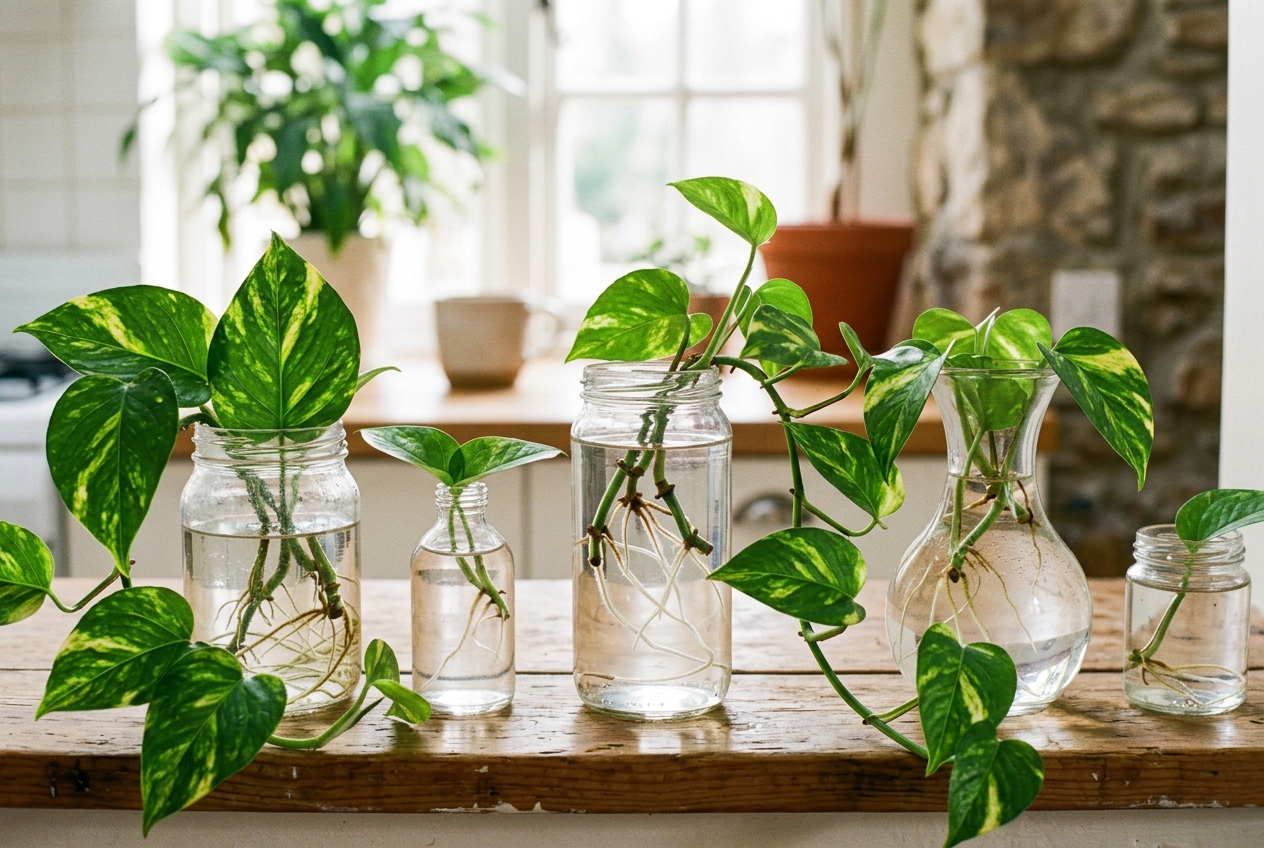
Mastering how to propagate pothos is the single most empowering horticultural milestone you can achieve as an indoor gardener. I am Dennis P. Hansen, an everyday home gardener sharing simple, practical plant care tips based on my day-to-day gardening practice at home. In this comprehensive guide, I will share the exact scientific principles, surgical cutting methods, and rooting protocols you need to multiply healthy pothos cuttings with 100% success.
Table of Contents: Jump to a Section
- 1. The Botanical Science of Pothos Propagation (Stem Anatomy)
- 2. Dennis’s Essential Pothos Propagation Toolkit
- 3. 5 Proven Methods: How to Propagate Pothos
- 4. Water vs. Soil vs. Sphagnum Moss: Complete Comparison
- 5. How to Transition Water Roots to Potting Soil Without Shock
- 6. Cultivar Guide: Golden, Marble Queen, Neon, and Manjula
- 7. Troubleshooting Propagation Mistakes (Rot, Stalled Growth, Wilting)
- 8. Frequently Asked Questions (FAQ)
- 9. Final Verdict & Long-Term Pothos Bushiness Guide
Pothos (Epipremnum aureum), commonly known as Devil’s Ivy, is celebrated across the global horticultural community for its phenomenal cellular vigor, rapid vascular adaptation, and resilient foliar output. In their native equatorial forest habitats throughout French Polynesia and Southeast Asia, these hemiepiphytic lianas ascend towering canopy trees using adventitious aerial root anchors, producing mature, deeply fenestrated leaves that can exceed three feet in length. Indoors, they adapt effortlessly to trailing shelves, hanging macramĂ© baskets, and vertical moss poles. Understanding how to propagate pothos empowers you to tap into this innate biological resilience, turning a single healthy mother vine into dozens of thriving, self-sustaining potted specimens.
Furthermore, regular propagation serves as a vital restorative maintenance practice for mature houseplants. Over extended growth seasons, trailing pothos vines naturally drop older leaves near the base of the pot due to diminished light penetration, leaving behind sparse, leggy runners. By learning how to propagate pothos through strategic stem pruning, you relieve apical dominance and activate dormant axillary buds along the mother vine, stimulating dense basal branching. Concurrently, you generate a bountiful harvest of healthy stem cuttings that can be rooted in water, soil, sphagnum moss, or LECA hydroton. Whether your goal is creating lush housewarming gifts or transforming your living space into an indoor oasis, mastering how to propagate pothos is your foundational roadmap.
The Botanical Science of Pothos Propagation (Stem Anatomy)
To consistently succeed when practicing how to propagate pothos, you must first master the microscopic morphology of the vine. Unlike specific succulent genera that can regenerate complete plants from single detached leaf blades, pothos cannot generate new stems or apical shoots from a solitary petiole. When researching how to propagate pothos, the presence of a viable, uninjured stem node is mandatory:
1. Meristematic Tissue and Node Anatomy
A node is the swollen, ring-like junction along a plant stem where leaves, petioles, and adventitious roots originate. Within this specialized nodal zone lies an abundance of undifferentiated meristematic cells—botanical stem cells capable of rapidly differentiating into functional vascular xylem conduits, phloem sieve tubes, and root apical meristems. Research from leading horticultural extensions, such as the University of New Hampshire Extension, confirms that a stem cutting must retain at least one healthy, viable node to initiate adventitious root primordia and drive new shoot elongation. Understanding this anatomy is the foundation of how to propagate pothos.
2. Aerial Root Nubs and Endogenous Auxin Synthesis
Inspect your pothos vines closely: directly opposite each leaf petiole, you will observe small brown bumps or raised nubs. These are dormant aerial root primordia. Pothos stems naturally synthesize high baseline concentrations of indole-3-acetic acid (IAA), a potent endogenous auxin hormone that regulates cellular elongation and root initiation. When you sever a stem cutting and submerge the node into water or a moist rooting substrate, this natural hormone surge triggers rapid cell division, showing why how to propagate pothos is so remarkably fast. In fact, pothos cuttings produce so much natural auxin that placing a pothos cutting into a rooting jar alongside stubborn, slow-rooting plant species stimulates root emergence across the entire container!
3. Carbohydrate Reserves and Transpirational Balance
Each cutting requires at least one healthy, fully expanded green leaf to produce carbohydrates through photosynthesis while new roots develop. If you remove all leaves, the cutting exhausts its stored starches before root networks can establish. Conversely, retaining too many leaves (more than 3 or 4 per cutting) causes excessive moisture loss through foliar transpiration, wilting the cutting before water uptake pathways develop. Balancing foliar surface area is a fundamental rule of how to propagate pothos successfully.
Dennis’s Essential Pothos Propagation Toolkit
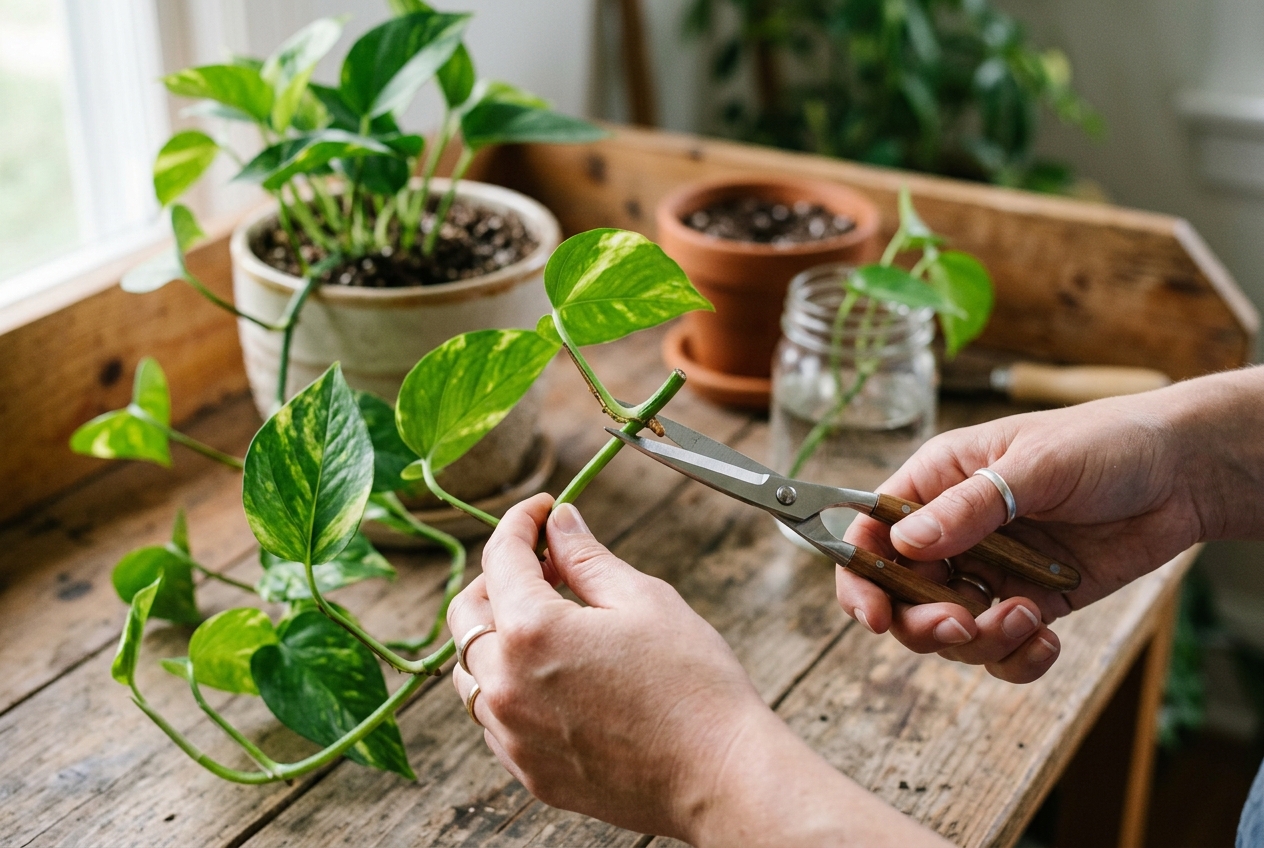
Preparing the proper equipment guarantees clean, pathogen-free cuts and optimal rooting conditions. Here is the exact propagation setup I rely on daily when demonstrating how to propagate pothos:
- Precision Bypass Pruning Shears or Floral Snips: Clean, razor-sharp blades create clean surgical cuts without crushing vascular cambium tissues. Avoid household scissors, which pinch and bruise stem walls, introducing bacterial soft rot when executing how to propagate pothos.
- 70% Isopropyl Alcohol or Bleach Disinfectant: Used to sanitize cutting tools before and between different mother plants to eliminate viral mosaic and bacterial pathogen transmission during how to propagate pothos.
- Clear Glass Rooting Vessels: Mason jars, test-tube propagation stations, or recycled glass bottles allow you to inspect adventitious root emergence visually without disturbing delicate root hairs while learning how to propagate pothos.
- Filtered or Distilled Lukewarm Water: Free of heavy municipal chlorine, chloramines, and excessive mineral scale, providing an unadulterated fluid medium for rapid root initiation when practicing how to propagate pothos.
- Long-Fiber Sphagnum Peat Moss or Horticultural Perlite: Excellent alternative rooting substrates offering high porosity, superior moisture retention, and exceptional airflow around subterranean nodes for how to propagate pothos.
- Custom Aroid Potting Substrate: A lightweight, aerated blend of 40% organic potting soil, 30% chunky perlite, 20% orchid bark, and 10% worm castings for potting rooted cuttings after mastering how to propagate pothos.
- Rooting Water Additives (Optional): A single drop of liquid kelp extract or mild organic fulvic acid can accelerate cell division during how to propagate pothos.
5 Proven Methods: How to Propagate Pothos
Depending on your aesthetic preference, available equipment, and speed requirements, here are the five reliable methods for how to propagate pothos:
Method 1: Water Propagation (The Gold Standard for Beginners)
Water propagation is by far the most popular and visually rewarding technique for how to propagate pothos, offering a 99% success rate and clear visibility:
- Select a vigorous, healthy trailing vine from the mother plant that displays vibrant foliage free of pests or blemishes.
- Locate a healthy node with an aerial root nub. Position your sanitized shears approximately 1/4 to 1/2 inch below the node and make a clean 45-degree angle cut—a foundational step in how to propagate pothos.
- Remove the lowest leaf closest to the cut, leaving 1 to 2 healthy top leaves on the cutting. This ensures the submerged node is bare and will not cause rotting leaf matter in the water.
- Place the cutting into a clean glass jar filled with room-temperature distilled or filtered water, ensuring the node is fully submerged while the remaining leaves stay dry above the rim.
- Position the vessel in bright, indirect sunlight (avoid direct scorching sun). Refresh the water completely every 5 to 7 days to maintain high dissolved oxygen levels, illustrating how to propagate pothos with pristine water care. Adventitious white roots will emerge within 7 to 14 days!
Minimalist Desktop Glass Propagation Terrarium
Vintage wood stand with laboratory-grade glass bulb vases. Ideal for monitoring adventitious root emergence and stem node hydration in water propagation.
Method 2: Direct Soil Propagation (Fastest Route to Bushy Pots)
If you wish to bypass the water-to-soil transition phase and multiply your plants directly in nursery containers, direct soil propagation is an exceptional method for how to propagate pothos:
- Prepare multiple 4- to 6-inch stem cuttings, each containing 1 to 2 nodes and a healthy leaf, demonstrating how to propagate pothos in volume.
- Fill a 4-inch nursery pot with a moist, lightweight rooting mix composed of equal parts perlite and peat moss or coco coir.
- Use a pencil or chopstick to create 2-inch planting holes around the perimeter and center of the pot.
- Insert the cuttings into the holes so that the nodes are buried 1 to 1.5 inches deep, firming the substrate gently around each stem. Plant 6 to 8 cuttings per pot to create an instantly full, bushy container—a pro secret of how to propagate pothos.
- Place a clear plastic bag or humidity dome over the pot to trap ambient moisture, and position in bright indirect light. Keep the substrate consistently moist (like a wrung-out sponge) for 3 to 4 weeks until cuttings resist a gentle upward tug, verifying that how to propagate pothos in soil has succeeded.
Method 3: Sphagnum Moss and Perlite Box Propagation (The High-Yield Commercial Method)
When propagating rare or high-value variegated cultivars (such as Epipremnum ‘Manjula’ or ‘Marble Queen’), greenhouse growers utilize prop boxes to maximize rooting speed and minimize rot when discovering how to propagate pothos:
- Soak long-fiber sphagnum moss in distilled water and squeeze out all excess moisture until damp.
- Line the bottom of a transparent plastic storage container with a 2-inch layer of damp sphagnum moss mixed with 30% coarse perlite.
- Cut single-node stem segments (called “one-leaf single-node cuttings”), leaving a half-inch of stem on either side of the node, showcasing how to propagate pothos with maximum node efficiency.
- Lay the nodes horizontally across the moist moss bed, pressing the aerial root nub gently into contact with the moss fibers.
- Seal the transparent lid to create an ultra-humid 95% microclimate. Open the lid for 10 minutes every three days for air exchange. Nodes will explode with root networks and new apical growth points within two weeks, proving how to propagate pothos in moss boxes!
Method 4: Simple In-Pot Layering (Zero-Cut Bushiness Boost)
If your mother pothos has a long, bare trailing vine and you want to fill in the bald top of the pot without severing stems, simple layering is the ultimate zero-risk technique for how to propagate pothos:
- Take an active, healthy trailing vine that remains attached to the mother plant’s root system.
- Loop the vine back around and lay bare stem nodes directly against the moist potting soil surface at the top of the pot.
- Secure the nodes flush against the substrate using bent floral wire, bobby pins, or small landscape staples, illustrating how to propagate pothos via layering.
- Lightly mist the pinned nodes daily. Because the vine receives continuous water and nutrients from the mother plant, the nodes will root aggressively into the topsoil within 14 days without any risk of wilting, showing how to propagate pothos without severed cuts.
- Once rooted firmly, you can leave the vine permanently attached or snip the connection between nodes to create multiple independent growing points.
Method 5: LECA Hydroton Semi-Hydroponic Propagation
Lightweight Expanded Clay Aggregate (LECA) provides an inert, highly oxygenated rooting medium for growers transitioning to semi-hydroponics. Place prepared pothos cuttings into a glass jar filled with pre-soaked LECA clay pebbles, adding water up to one-third of the vessel’s height. The clay pebbles wick moisture upward through capillary action while maintaining massive oxygen gaps, preventing water rot entirely and illustrating how to propagate pothos in hydroton.
Water vs. Soil vs. Sphagnum Moss: Complete Comparison
Choosing the ideal rooting medium depends on your personal schedule and indoor environment. Below is my detailed comparative analysis of how to propagate pothos across different substrates:
| Rooting Medium | Rooting Speed | Maintenance Effort | Transition Shock Risk | Dennis’s Garden Rating |
|---|---|---|---|---|
| Clear Distilled Water | Fast (7–14 days) | Very Low (Change water weekly) | Moderate (Requires careful potting) | Top Pick for Beginners – Visually rewarding & highly reliable |
| Direct Aerated Soil Mix | Moderate (14–21 days) | Moderate (Maintain even moisture) | Zero (Roots form directly in soil) | Best for Bushy Pots – Eliminates transplant shock completely |
| Damp Sphagnum Moss | Very Fast (7–10 days) | Low (Keep in sealed prop box) | Low (Flexible, robust root hairs) | Best for Rare Cultivars – Highest survival rate per node |
| LECA Clay Pebbles | Fast (10–14 days) | Very Low (Maintain water reservoir) | Low for hydro; High for soil | Best for Semi-Hydro – Zero soil pest vectors |
How to Transition Water Roots to Potting Soil Without Shock

The single most common stumbling block when discovering how to propagate pothos occurs during the transition from water to soil. Roots formed in liquid water develop thin, delicate cell walls adapted to liquid gas exchange. When transferred directly into dry potting soil, these fragile roots collapse, causing the cutting to wilt severely within 48 hours. Here is my foolproof transition protocol:
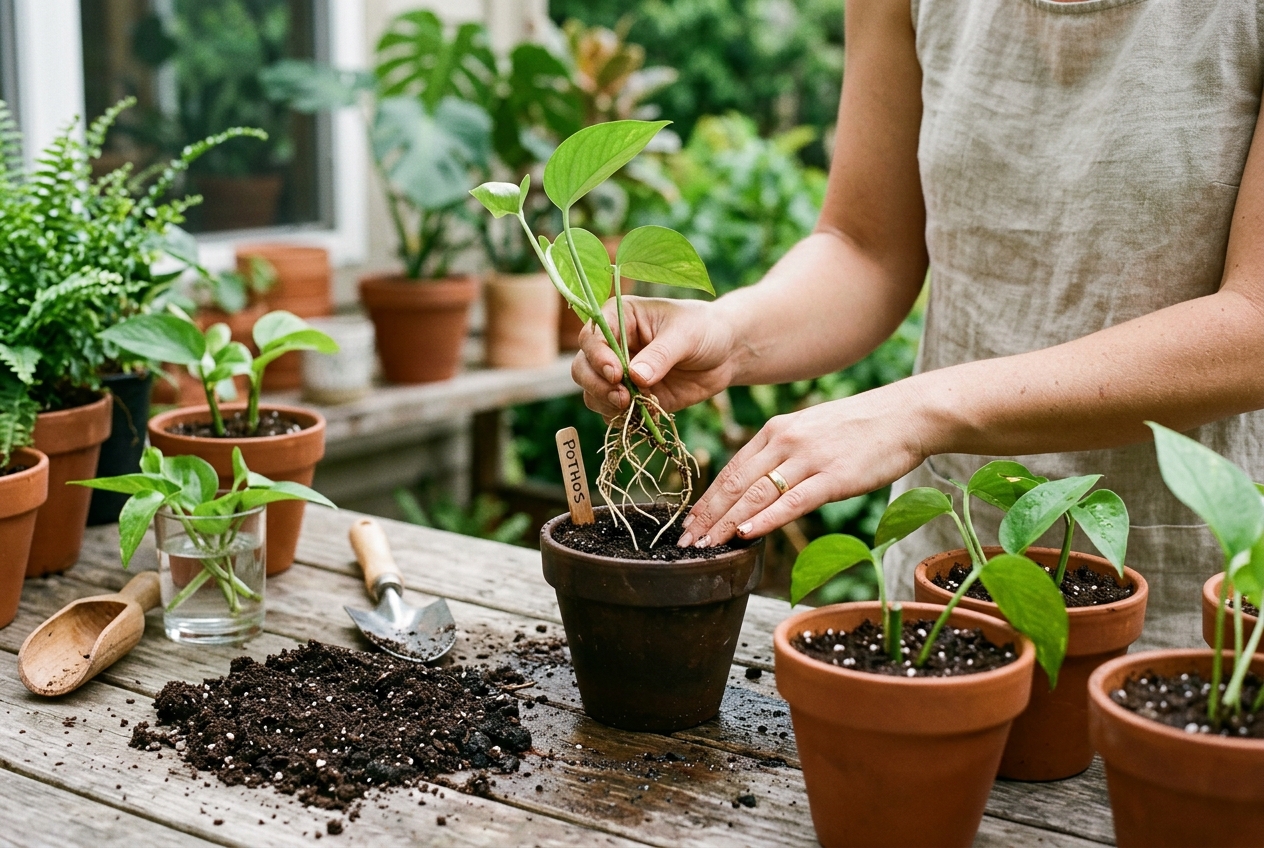
- Time the Transition Perfectly: Pot your cuttings when water roots are between 1 and 2 inches long. Never allow water roots to grow 6 to 10 inches long or form dense water-adapted secondary root mats, as this makes soil acclimation exponentially more difficult when executing how to propagate pothos.
- Pre-Moisten the Potting Substrate: Blend a loose, airy aroid potting mix and dampen it thoroughly before potting. Never plant delicate water-rooted cuttings into bone-dry soil and water afterward.
- Plant in Multiples: Place 6 to 10 rooted cuttings into a 4- or 5-inch pot together, spacing them evenly. This ensures your new pothos grows as a dense, luxurious specimen rather than a solitary, spindly vine, mastering how to propagate pothos for bushy displays.
- Maintain Transition Moisture: For the first 10 to 14 days in potting soil, keep the substrate slightly more moist than normal (comparable to a damp wrung-out cloth). This allows fragile water roots to gradually synthesize sturdier soil root hairs without dehydrating. Gradually taper off watering until you are following our standard 2-inch depth rule detailed in Common Indoor Plant Watering Mistakes.
- Provide Gentle Light and Humidity: Keep freshly potted cuttings in bright, filtered indirect light with high humidity for two weeks while soil root systems anchor firmly. Clean the foliage using our masterclass on How to Clean Indoor Plant Leaves to maximize light absorption.
Cultivar Guide: Golden, Marble Queen, Neon, and Manjula
While the fundamental biology of how to propagate pothos applies across all Epipremnum varieties, distinct cultivars have varying growth velocities and lighting needs:
1. Golden Pothos (Epipremnum aureum)
The classic gold-and-green variegated standard. Possesses the highest chlorophyll content and fastest rooting speed. Roots vigorously in water within 7 to 10 days even in modest indirect light, making it the easiest cultivar when practicing how to propagate pothos.
2. Marble Queen Pothos
Features striking white and cream variegation across up to 70% of the leaf lamina. Because white leaf tissue lacks chlorophyll, Marble Queen cuttings photosynthesize at a slower pace. Provide slightly brighter indirect light and maintain temperatures above 72°F (22°C) to accelerate adventitious rooting during how to propagate pothos.
3. Neon Pothos
Displays electric lime-green foliage. Neon pothos cuttings root with exceptional vigor in both water and sphagnum moss. Keep them in bright indirect sunlight to preserve intense chartreuse coloration in emerging new leaves as you learn how to propagate pothos.
4. Manjula Pothos (Epipremnum ‘Manjula’)
A patented cultivar from the University of Florida featuring wide, heart-shaped leaves with wavy margins and creamy marbling. Manjula grows slightly slower and has thicker stems. Propagating via Method 3 (Sphagnum Moss Box) yields the highest success rates for this premium variety.
Troubleshooting Propagation Mistakes (Rot, Stalled Growth, Wilting)
If your cuttings experience setbacks while practicing how to propagate pothos, consult our clinical troubleshooting guide below:
Mushy Black Stem Bases (Water Rot / Pythium)
If the cut end of your stem turns black, mushy, and foul-smelling, anaerobic bacteria or water mold has infected the wound. Remove the cutting from the water, use a sterile razor blade to excise the blackened tissue back to firm green stem, submerge the node in a 3% hydrogen peroxide rinse (1 part H2O2 to 4 parts water) for 5 minutes, wash the jar thoroughly, and refill with fresh distilled water to rescue how to propagate pothos.
Yellowing Leaves on Cuttings
If a cutting’s solitary leaf turns yellow and drops, inspect whether the leaf blade or petiole was submerged in water. Leaves submerged below the water line rot rapidly. If the yellowing occurs on an older leaf while roots are forming, the cutting is mobilizing nitrogen to build new root structures. For a deeper diagnostic analysis of foliar chlorosis, review our comprehensive breakdown on Why Are My Plant Leaves Turning Yellow.
Cuttings Wilting and Wrinkling
If foliage curls and wilts in water, the cutting was taken with an immature or damaged node that cannot absorb moisture, or the room temperature is too cold (below 65°F / 18°C). Move the rooting vessel to a warmer location with gentle indirect sunlight to restart how to propagate pothos.
Once your cuttings develop healthy roots, follow our complete grower tutorial on Pothos Plant Care for lush trailing vines.
Frequently Asked Questions (FAQ)
How long does it take to propagate pothos in water?
In bright indirect light and room temperatures between 70°F and 78°F (21°C to 26°C), adventitious root nubs will swell and emerge within 7 to 10 days. Full 2-inch root systems ready for soil potting typically develop within 3 to 4 weeks when discovering how to propagate pothos.
Can you propagate a pothos leaf without a node?
No. While a solitary leaf petiole placed in water may occasionally generate a few thin water roots, it lacks the essential meristematic stem cells found in a node. Without a node, the cutting cannot produce a new shoot, vine, or subsequent leaves, which is why how to propagate pothos always requires a stem node.
Can pothos live in water permanently?
Yes. Pothos can thrive in water indefinitely provided you refresh the water regularly to replenish dissolved oxygen and add a few drops of balanced, dilute liquid fertilizer every month to supply essential macro- and micronutrients.
Do I need rooting hormone to propagate pothos?
No. Pothos stems naturally synthesize exceptionally high levels of endogenous auxins (root-stimulating hormones), making commercial synthetic rooting powders completely unnecessary when implementing how to propagate pothos in water or soil.
When should I fertilize newly potted pothos cuttings?
Do not fertilize freshly potted cuttings for the first 4 to 6 weeks. Allow the new root system to establish and acclimate to the soil environment first. Once you observe active new leaf emergence, begin feeding with dilute balanced houseplant fertilizer as detailed in Do You Need Nutrients After Repotting Indoor Plants.
Final Verdict & Long-Term Pothos Bushiness Guide
Learning how to propagate pothos is one of the most rewarding rituals in modern indoor gardening. By understanding the biological power of stem nodes, maintaining clean rooting vessels, and grouping multiple rooted cuttings into single pots, you can transform leggy, sparse vines into breathtaking, cascading centerpieces.
Here is Dennis’s master propagation secret: Make regular seasonal pruning part of your standard plant care routine. Every time you trim an overly long vine to keep your mother plant compact, pop those cuttings into water jars following our guide on how to propagate pothos. Within a single season, you will have dozens of lush potted gifts to share with friends, family, and fellow plant enthusiasts. Happy propagating, and enjoy watching your indoor jungle multiply!
{
“@context”: “https://schema.org”,
“@graph”: [
{
“@type”: “Article”,
“@id”: “https://www.plantingcare.com/how-to-propagate-pothos/#article”,
“isPartOf”: {
“@type”: “WebPage”,
“@id”: “https://www.plantingcare.com/how-to-propagate-pothos/”
},
“headline”: “How to Propagate Pothos: 5 Easy Ways to Multiply Plants”,
“description”: “Learn how to propagate pothos with Dennis P. Hansen’s step-by-step guide. Discover water and soil rooting techniques, node cutting, and care secrets.”,
“image”: “https://www.plantingcare.com/wp-content/uploads/2026/08/repotting_indoor_plants_featured_1787838138600-1.jpg”,
“author”: {
“@type”: “Person”,
“name”: “Dennis P. Hansen”,
“jobTitle”: “Hobby Gardener”,
“worksFor”: {
“@type”: “Organization”,
“name”: “PlantingCare.com”
}
},
“publisher”: {
“@type”: “Organization”,
“name”: “PlantingCare”,
“url”: “https://www.plantingcare.com”
},
“mainEntityOfPage”: “https://www.plantingcare.com/how-to-propagate-pothos/”
},
{
“@type”: “HowTo”,
“name”: “How to Propagate Pothos”,
“description”: “Step-by-step horticultural guide to propagating pothos vines in water and soil.”,
“image”: “https://www.plantingcare.com/wp-content/uploads/2026/08/repotting_indoor_plants_featured_1787838138600-1.jpg”,
“totalTime”: “PT15M”,
“tool”: [
{“@type”: “HowToTool”, “name”: “Sterile Pruning Shears”},
{“@type”: “HowToTool”, “name”: “Glass Rooting Jar”}
],
“supply”: [
{“@type”: “HowToSupply”, “name”: “Pure Distilled Water”},
{“@type”: “HowToSupply”, “name”: “Well-Draining Potting Soil”}
],
“step”: [
{
“@type”: “HowToStep”,
“name”: “Locate Node and Cut”,
“text”: “Locate a healthy stem node with an aerial root nub and make a clean 45-degree cut 1/2 inch below the node.”,
“image”: “https://www.plantingcare.com/wp-content/uploads/2026/08/eucalyptus_pruning_1787730519994-1.jpg”
},
{
“@type”: “HowToStep”,
“name”: “Submerge Node in Water”,
“text”: “Place the cutting into clean water with the node submerged and foliage dry in bright indirect light.”,
“image”: “https://www.plantingcare.com/wp-content/uploads/2026/08/plant_roots_repotting_inspection_1787838157266-1.jpg”
},
{
“@type”: “HowToStep”,
“name”: “Pot Rooted Cuttings in Soil”,
“text”: “When roots reach 2 inches, group 6 to 8 cuttings into a pot with well-draining aroid mix to create a full bushy plant.”,
“image”: “https://www.plantingcare.com/wp-content/uploads/2026/08/healthy_indoor_plant_flourishing_1787838187445-1.jpg”
}
]
},
{
“@type”: “FAQPage”,
“mainEntity”: [
{
“@type”: “Question”,
“name”: “How long does it take to propagate pothos in water?”,
“acceptedAnswer”: {
“@type”: “Answer”,
“text”: “Roots typically emerge within 7 to 10 days, reaching 2 inches ready for soil potting within 3 to 4 weeks.”
}
},
{
“@type”: “Question”,
“name”: “Can you propagate a pothos leaf without a node?”,
“acceptedAnswer”: {
“@type”: “Answer”,
“text”: “No. A solitary leaf petiole lacks meristematic tissue and cannot generate a new shoot or vine without a stem node.”
}
},
{
“@type”: “Question”,
“name”: “Can pothos live in water permanently?”,
“acceptedAnswer”: {
“@type”: “Answer”,
“text”: “Yes. Pothos can thrive in water indefinitely if refreshed weekly and given dilute liquid fertilizer monthly.”
}
},
{
“@type”: “Question”,
“name”: “Do I need rooting hormone to propagate pothos?”,
“acceptedAnswer”: {
“@type”: “Answer”,
“text”: “No. Pothos stems produce high concentrations of natural auxins, making rooting powders unnecessary.”
}
},
{
“@type”: “Question”,
“name”: “When should I fertilize newly potted pothos cuttings?”,
“acceptedAnswer”: {
“@type”: “Answer”,
“text”: “Wait 4 to 6 weeks after potting into soil before feeding with half-strength liquid houseplant fertilizer.”
}
}
]
}
]
}
Dennis P. Hansen
Dennis P. Hansen is a home gardener with a genuine passion for plants and the simple pleasure of growing them. He enjoys caring for houseplants, succulents, and other plants at home while continually learning from everyday gardening experiences. Dennis likes to share practical plant care tips, useful observations, and simple solutions that can help others grow healthier plants. He believes that caring for plants is a rewarding journey and that there is always something new to learn along the way.