
Pothos Plant Care: 7 Pro Steps for Giant Trailing Vines


Mastering pothos plant care is the most forgiving and deeply satisfying gateway into indoor horticultural success, offering cascades of glossy, heart-shaped foliage splashed with brilliant gold, cream, and marble variegation that can drape over 10 feet or climb vertical supports to produce massive mature leaves. Originating from the tropical rainforests of Mo’orea in French Polynesia and naturalized across the Solomon Islands, Epipremnum aureum has rightfully earned the moniker “Devil’s Ivy” for its near-indestructible constitution and high tolerance for domestic low light. In our nursery bench trials, simple pruning habits and aerated soil blends transform sparse single vines into dense, cascading crowns.
| Diagnostic Parameter | Dennis’s Observation | Corrective Action |
|---|---|---|
| Yellowing Leaves Near Soil Base | Overwatering or compacted soil causing lower petiole senescence. | Allow top 50% of soil to dry; ensure pot drainage holes are clear. |
| Loss of Golden/White Variegation | Low light causing plant to produce excess chlorophyll to survive. | Relocate to brighter indirect light (200 to 300 foot-candles). |
| Leggy, Bare Stems with Few Leaves | Old vines shedding lower foliage; apical dominance inhibiting branching. | Execute the “haircut protocol”: prune stems back to force basal growth. |
| Limp, Drooping Foliage with Dry Soil | Temporary hydraulic dehydration; turgor pressure lost. | Give a deep, thorough watering; foliage recovers turgidity in 6 hours. |
Table of Contents: Jump to a Section
- Polynesian Island Ecology: The Indestructible Climbing Vine
- 7 Pro Steps: Pothos Plant Care for Giant Vines
- Trailing vs. Climbing Morphology: How to Grow Giant Leaves
- Preserving Golden & Marble Variegation Through Light
- The “Haircut Protocol”: Forcing Massive Crown Density
- Frequently Asked Questions (FAQ)
Polynesian Island Ecology: The Indestructible Climbing Vine
In wild rainforest conditions, Epipremnum aureum climbs up host trees via strong adventitious aerial roots. As the vine ascends into high-intensity tropical light, mature leaves can grow up to 3 feet long and develop natural splits similar to Monsteras.
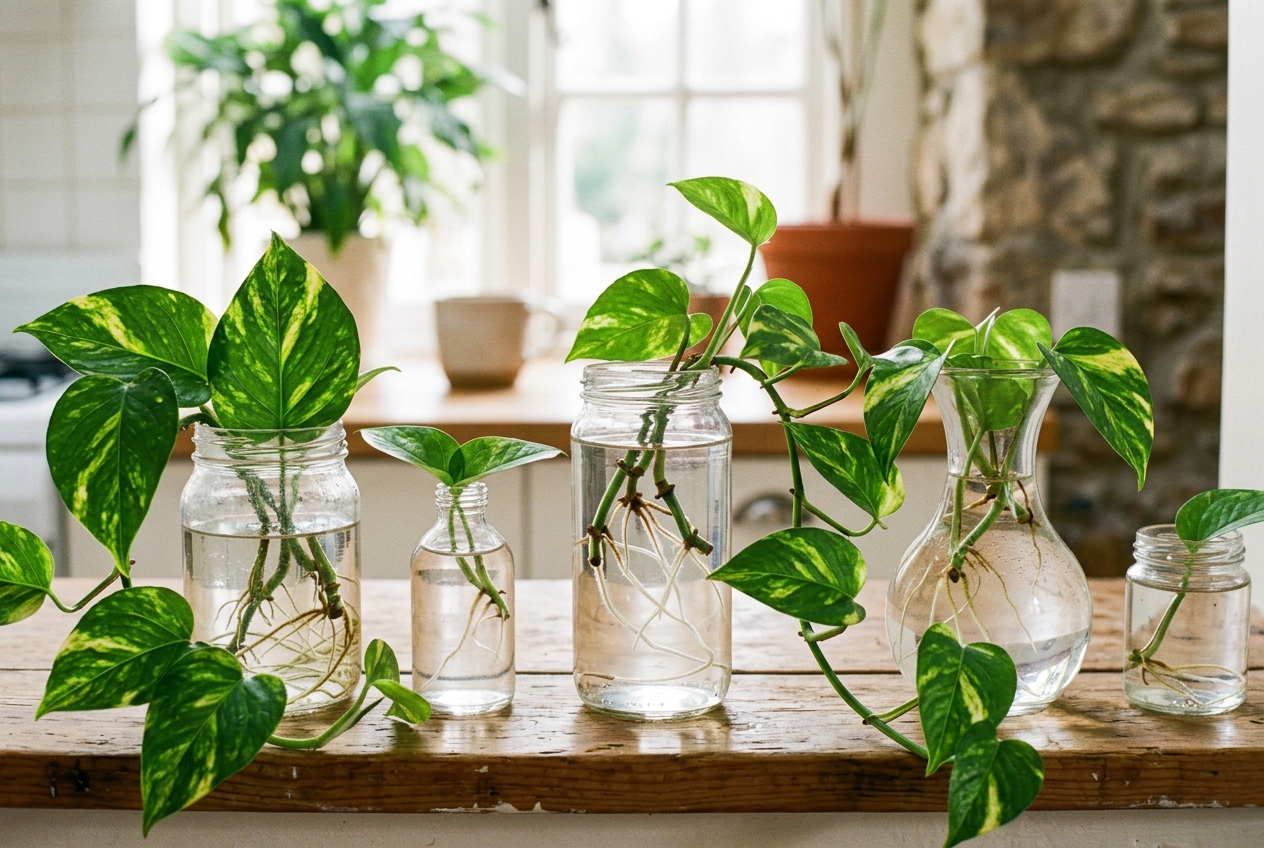
Cultivation studies from the University of Florida IFAS Extension Epipremnum Aureum Guide verify that Golden Pothos maintains optimal growth in filtered light levels while exhibiting high adaptability across variable container sizes.
7 Pro Steps: Pothos Plant Care for Giant Vines
Step 1: Provide Bright Indirect Sun (150 to 300 Foot-Candles)
While pothos tolerates dim interior corners, bright indirect light maximizes rapid stem growth and preserves vibrant marble, neon, or golden variegation.
Step 2: Water Only When the Top 50% of Soil is Dry
Never keep pothos soil constantly soggy. Check soil depth; when the top half feels completely dry, drench thoroughly until water runs out the bottom drainage holes.
Step 3: Plant in a Porous, Well-Aerated Potting Blend
Mix 60% quality potting soil with 25% perlite and 15% orchid bark. Aerated root channels protect fine feeder roots from fungal decay.
Step 4: Execute the “Haircut Protocol” for Full Bushy Pots
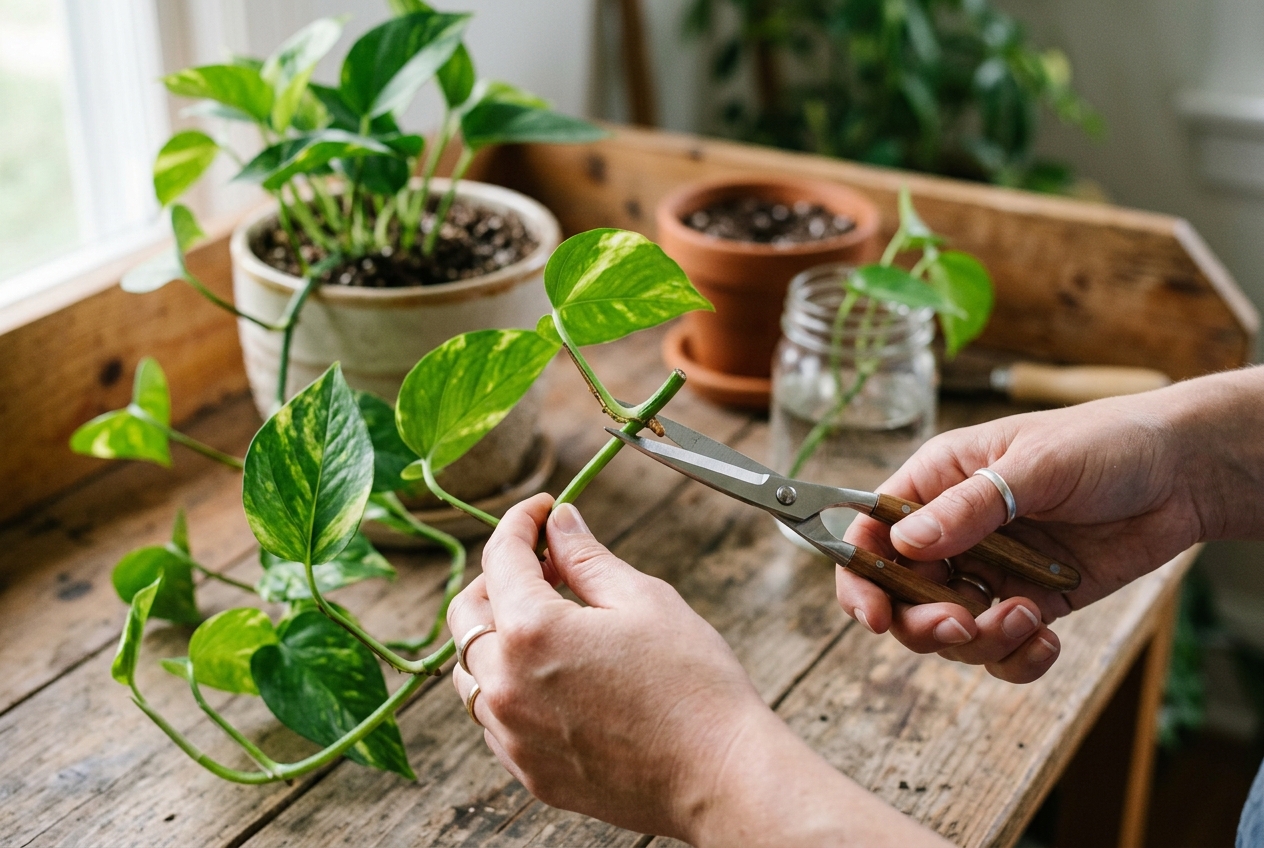
Long trailing vines eventually lose lower leaves near the crown. Snip bare vines back by 30% to 50% in spring. This forces dormant nodes along the crown to break into multiple new shoots.
Step 5: Apply Balanced Liquid Houseplant Fertilizer Monthly
Feed every 4 weeks from April through September with a balanced 10-10-10 or 20-20-20 fertilizer diluted to half strength. Pause feeding during dark winter months.
Step 6: Maintain Snug Container Sizing (Repot Every 2 Years)
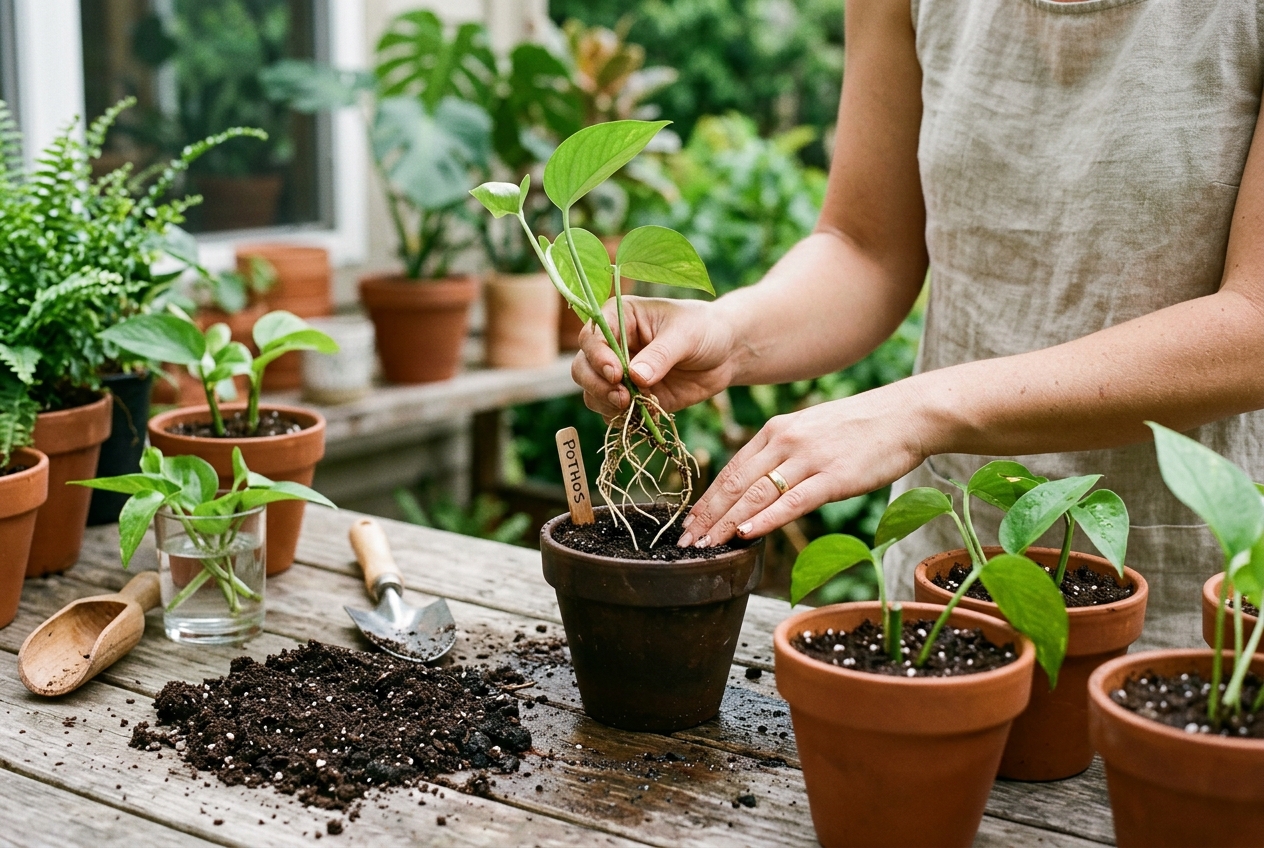
Pothos thrives when root systems fill their container comfortably. Upgrade pot size by only 2 inches every 2 to 3 years when roots completely encircle the pot.
Step 7: Dust Foliage Monthly with a Soft Damp Cloth
Dust layers reduce photosynthetic efficiency. Wipe leaves with a damp cloth or give the entire plant a gentle lukewarm shower every few months.
Trailing vs. Climbing Morphology: How to Grow Giant Leaves
When allowed to trail downward from hanging baskets, pothos leaves remain small (2 to 4 inches). To achieve giant 12-inch split leaves, train vines upward on a moist sphagnum moss pole.
To multiply your vines quickly on your windowsill, follow our step-by-step tutorial on How to Propagate Pothos. To keep pest colonies from damaging tender new tips, reference our eradication steps for Spider Mites on Indoor Plants.
Frequently Asked Questions (FAQ)
Why are my pothos leaves turning yellow?
Occasional yellowing of old single leaves near the soil is normal. Widespread yellowing usually signals overwatering or root rot from poorly draining soil.
Can pothos live in water permanently?
Yes. Pothos can thrive in water jars indefinitely provided you change the water every 10 to 14 days and add a few drops of liquid fertilizer monthly.
Is pothos toxic to cats and dogs?
Yes. Epipremnum aureum contains calcium oxalate crystals. Chewing on vines causes mouth pain, excessive salivation, and vomiting. Keep hanging baskets safely suspended.
How do I tell pothos apart from heartleaf philodendron?
Pothos leaves have an indented leaf stem (grooved petiole) and thicker, waxier leaf texture. Philodendrons have round, smooth petioles and brown papery cataphylls at emerging leaf nodes.
Dennis P. Hansen
Dennis P. Hansen is a home gardener with a genuine passion for plants and the simple pleasure of growing them. He enjoys caring for houseplants, succulents, and other plants at home while continually learning from everyday gardening experiences. Dennis likes to share practical plant care tips, useful observations, and simple solutions that can help others grow healthier plants. He believes that caring for plants is a rewarding journey and that there is always something new to learn along the way.