
Best Soil Mix for Monstera: 5 Pro Recipes for Huge Leaves

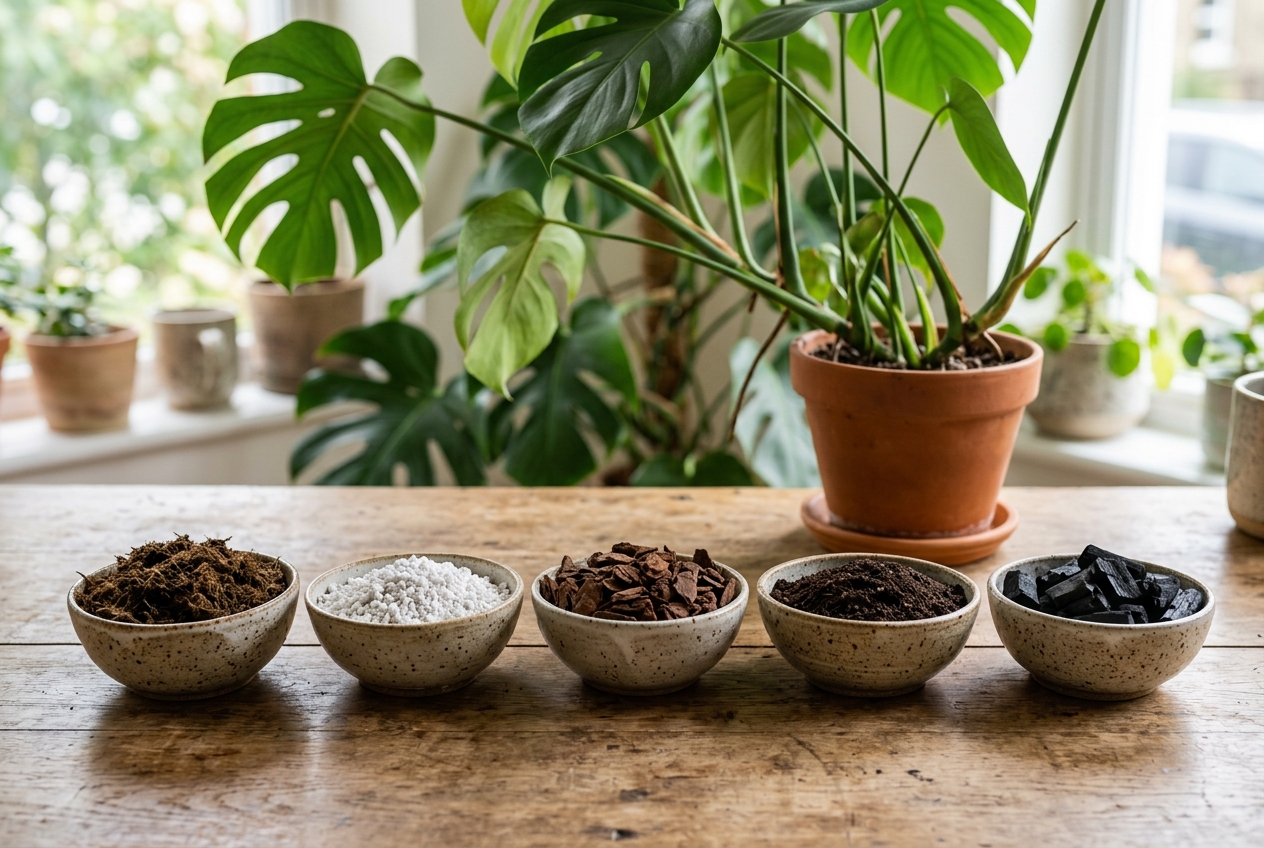
Formulating the best soil mix for monstera is the foundational secret to unlocking giant, deeply fenestrated foliage, preventing catastrophic root rot, and accelerating aerial root vigor. I am Dennis P. Hansen, an everyday home gardener sharing simple, practical plant care tips based on my day-to-day gardening practice at home. In this definitive guide, I will deconstruct hemi-epiphytic root biology, explain why standard potting soil suffocates aroids, and provide my 5 field-tested chunky soil recipes tailored for every indoor microclimate.
Table of Contents: Jump to a Section
- 1. Hemi-Epiphytic Root Biology: Why Monsteras Despise Dense Soil
- 2. Anatomy of the Perfect Aroid Mix (Bark, Perlite, Charcoal, Castings)
- 3. 5 Pro Soil Recipes: Best Soil Mix for Monstera
- 4. Optimal pH Chemistry, Cation Exchange Capacity (CEC), and Nutrients
- 5. Step-by-Step Monstera Repotting Protocol
- 6. Critical Substrate Mistakes That Cause Yellow Leaves and Rot
- 7. Frequently Asked Questions (FAQ)
- 8. Final Verdict & Dennis’s Long-Term Substrate Maintenance Plan
In their native Neotropical habitats spanning southern Mexico to Panama, Monstera deliciosa, Monstera adansonii, and Monstera dubia do not grow buried in heavy, waterlogged ground soil. Instead, they are climbing hemi-epiphytes. They germinate in loose rainforest leaf litter, send exploratory thick adventitious roots down tree bark, and anchor themselves along mossy tree trunks. Their roots are adapted to abundant oxygen, fast-percolating rainwater, and loose decaying organic debris. Blending the best soil mix for monstera replicates this airy canopy environment inside your home.
When potted in standard commercial houseplant soil—which is primarily composed of fine, water-retentive peat moss—the tiny substrate particles collapse and compact after a few waterings. This creates a saturated, anaerobic swamp at the bottom of the container where roots suffocate from lack of oxygen, triggering opportunistic Pythium root rot and severe chlorosis diagnosed in Why Are My Plant Leaves Turning Yellow. By engineering the best soil mix for monstera, you supply continuous oxygen diffusion to the root zone, maximize root surface area, support elevated humidity strategies detailed in How to Increase Humidity for Indoor Plants, and fuel gigantic leaf fenestrations. Utilizing the best soil mix for monstera transforms everyday houseplant care into high-performance tropical horticulture.
Hemi-Epiphytic Root Biology: Why Monsteras Despise Dense Soil
To design the best soil mix for monstera, one must understand how aroid roots breathe. Monstera root systems feature thick, fleshy exterior layers known as the root cortex, surrounding a central vascular stele:
1. Air Porosity and Gas Exchange
Plant roots do not just drink water; they respire by consuming oxygen (O2) and expelling carbon dioxide (CO2). In dense potting soils, all macropores remain clogged with capillary water for days after irrigation, halting gas diffusion. When starved of oxygen for as little as 48 hours, root cortical cells undergo apoptosis (programmed cell death), allowing fungal zoospores to invade. The best soil mix for monstera maintains at least 25% to 35% total air-filled porosity even when fully saturated, establishing why the best soil mix for monstera is non-negotiable for healthy plants.
2. Hemi-Epiphytic Anchorage and Structural Stability
Monstera roots need coarse, chunky substrates that provide physical resistance for root hairs to grip tightly. In fine peat soils, roots slip easily and fail to establish the mechanical tension needed to support heavy, climbing foliage on a moss pole. Chunky aroid substrates provide strong anchor points, signaling the plant to produce larger mature leaves with secondary fenestrations, demonstrating another vital advantage of the best soil mix for monstera.
Anatomy of the Perfect Aroid Mix (Bark, Perlite, Charcoal, Castings)

Every premium ingredient in the best soil mix for monstera serves a precise biological and physical function:
| Ingredient | Physical & Biological Role | Target Particle Size | Key Benefit for Monsteras |
|---|---|---|---|
| Orchid Pine Bark Chips | Coarse organic structure & long-lasting aeration | 1/2″ – 3/4″ medium chips | Creates permanent macropores; resists compaction for 2+ years |
| Horticultural Pumice / Perlite | Inorganic non-decomposing drainage aggregate | #3 coarse or 3/8″ pumice | Ensures instant water percolation; prevents root suffocation |
| Horticultural Charcoal (Biochar) | Toxin adsorption & microbial colonization | 1/4″ – 1/2″ granules | Sweetens soil, prevents anaerobic odors, hosts beneficial mycorrhizae |
| Pure Worm Castings | Organic slow-release nutrient & microbe source | Fine natural granular | High CEC; supplies chelated micronutrients without chemical burn |
| Coco Coir / Peat Base | Moisture buffer & cation exchange foundation | Pre-rinsed pith & fiber | Holds uniform, accessible hydration without waterlogging |
Organic Horticultural Coarse Perlite (#3 Grade)
Coarse horticultural grade perlite engineered for maximum root zone gas exchange and instant drainage. Prevents wet soil compaction and eliminates root rot in all aroid mixes.
5 Pro Soil Recipes: Best Soil Mix for Monstera
Different indoor microclimates, container materials, and Monstera species require customized substrate ratios. Here are my 5 professional recipes for the best soil mix for monstera:
Recipe 1: The Classic “Dennis Hansen Chunky Aroid Master Blend” (Best Overall)
This is my signature all-around formula for Monstera deliciosa, Monstera borsigiana, and large climbing aroids in standard domestic conditions:
- 30% Medium Orchid Pine Bark: Provides coarse chunkiness and mimics rainforest bark.
- 25% Coco Coir / High-Grade Peat: Forms the moisture-retentive base.
- 20% Horticultural Pumice or #3 Coarse Perlite: Guarantees rapid drainage and high oxygen.
- 15% Horticultural Charcoal (Biochar): Absorbs impurities and prevents root rot.
- 10% Organic Worm Castings: Delivers living beneficial biology and natural nitrogen.
Recipe 2: The “High-Humidity Greenhouse & Cabinet Mix”
If you grow rare cultivars (like Monstera obliqua, Monstera esqueleto, or Monstera dubia) inside high-humidity plant cabinets or humidified rooms with 75%+ RH, you must increase drainage in your best soil mix for monstera to prevent stagnant moisture:
- 40% Orchid Bark Chips (Medium-Large)
- 30% Coarse Pumice or LECA Balls
- 15% Long-Fiber Sphagnum Moss (Chopped)
- 10% Horticultural Charcoal
- 5% Worm Castings
Recipe 3: The “Dry Living Room / Low Maintenance Blend”
For homes with low ambient humidity (below 40%) or busy collectors who water infrequently, this formula provides the best soil mix for monstera:
- 40% Coco Coir Pith
- 25% Orchid Pine Bark
- 20% Coarse Perlite
- 10% Worm Castings
- 5% Biochar Charcoal
Recipe 4: The “Semi-Hydroponic (Pon/LECA) Inorganic Blend”
For growers switching to self-watering planters or eliminating fungus gnats entirely:
- 40% Horticultural Pumice
- 40% Expanded Clay Pebbles (LECA)
- 20% Zeolite & Lava Rock Granules
Pair this mix with sub-irrigation practices outlined in Bottom Watering Plants for automated, pest-free moisture control, reinforcing the versatility of the best soil mix for monstera.
Recipe 5: The “Budget-Friendly Big Box Store Upgrade”
If you already have standard potting soil at home and want an affordable upgrade for the best soil mix for monstera:
- 40% Standard Premium Potting Soil
- 30% Orchid Bark Mix (Commercial Bagged)
- 30% Coarse Horticultural Perlite
Optimal pH Chemistry, Cation Exchange Capacity (CEC), and Nutrients
Creating the best soil mix for monstera involves precise chemical balance alongside physical chunkiness:
1. Target Soil pH: 5.5 to 6.5
Monsteras evolved in slightly acidic tropical soils. When soil pH rises above 7.0 (alkaline), essential micronutrients like Iron (Fe), Manganese (Mn), and Zinc (Zn) become chemically locked and unavailable, causing interveinal chlorosis. A slightly acidic pH (5.8 to 6.2) ensures all primary macronutrients (NPK) and micronutrients remain fully bioavailable for maximum cellular expansion in the best soil mix for monstera.
2. Cation Exchange Capacity (CEC)
Cation Exchange Capacity measures the soil’s ability to hold positively charged nutrient ions (Calcium, Magnesium, Potassium) and prevent them from leaching away during watering. Worm castings and biochar provide exceptionally high CEC in the best soil mix for monstera, releasing nutrients gradually to root hairs as the plant demands them.
Step-by-Step Monstera Repotting Protocol

Follow Dennis’s 5-step repotting protocol when applying the best soil mix for monstera:
- Select a Pot with Generous Drainage: Choose a container that is 2 inches wider in diameter than the current root ball, ensuring multiple large bottom drainage holes.
- Gently Loosen Root Ball: Unpot the Monstera and gently massage the outer roots to untangle circling root bound coils. Prune any brown or mushy roots with sterilized shears.
- Install Moss Pole / Trellis Support: Always install climbing poles at the back of the root ball before adding soil to prevent puncturing major roots later.
- Fill with Chunky Aroid Mix: Settle the plant into the center of the pot and pack your freshly blended best soil mix for monstera around the root ball, tapping the pot lightly to eliminate large air voids.
- Thorough Initial Watering: Drench the soil thoroughly until water drains freely from the bottom, then clean the foliage with How to Clean Indoor Plant Leaves to maximize post-repotting photosynthesis. For propagating companion cuttings, reference How to Propagate Pothos and learn succulent hydration via How to Water Succulents.
Critical Substrate Mistakes That Cause Yellow Leaves and Rot

Avoid these common mistakes when formulating the best soil mix for monstera:
- Using Pure Garden Topsoil: Native garden soil contains heavy silt and clay that compacts into concrete-like density in indoor pots, suffocating aroid roots within days.
- Adding Gravel or Sand to the Pot Bottom: Placing a layer of stones or gravel at the bottom of a pot does not improve drainage; it creates a “perched water table” that elevates waterlogged soil closer to root systems. Always mix aggregates uniformly throughout the entire best soil mix for monstera.
- Over-Potting into Huge Containers: Planting a small Monstera in an oversized pot leaves excessive damp soil surrounding roots that cannot absorb moisture quickly, leading directly to anaerobic root rot.
To learn how optimal substrate aeration fuels massive fenestrated foliage, read our in-depth Monstera Deliciosa Care guide.
Frequently Asked Questions (FAQ)
What is the best soil mix for monstera deliciosa?
The best soil mix for monstera is a chunky aroid blend consisting of 30% medium orchid pine bark, 25% coco coir, 20% coarse perlite or pumice, 15% horticultural charcoal, and 10% organic worm castings. This provides optimal aeration, moisture retention, and disease resistance.
Can I use regular indoor potting soil for Monstera?
Standard potting soil is too dense and moisture-retentive for Monsteras on its own. If using standard soil, always amend it by adding at least 50% coarse perlite and orchid bark chips to create the necessary air pockets.
How often should I change or refresh Monstera soil?
Monstera soil should be refreshed every 2 years. Over time, organic bark chips break down into fine humus, reducing drainage porosity and compressing around root systems.
What size pot is best when repotting Monstera?
Select a pot that is only 2 to 3 inches larger in diameter than the current root system. Excessive soil volume stays wet for too long and increases the risk of root rot.
Should I add fertilizer to fresh Monstera soil mix?
If your mix includes 10% worm castings, no chemical fertilizer is needed for the first 6 to 8 weeks. After that, feed with a balanced, urea-free 20-20-20 or 3-1-2 liquid fertilizer diluted to half strength during active spring and summer growth.
Final Verdict & Dennis’s Long-Term Substrate Maintenance Plan
Your Monstera is only as healthy as the root system beneath the surface. By crafting the best soil mix for monstera with coarse orchid bark, volcanic pumice, biochar, and nutrient-rich worm castings, you provide the structural oxygen and rapid drainage that tropical aroids crave.
Here is Dennis’s golden repotting rule: Always prioritize substrate chunkiness over fine peat. Give those hemi-epiphytic roots room to breathe, pair your chunky mix with proper support, and your Monstera will reward you with massive, glossy green leaves full of breathtaking fenestrations!
{
“@context”: “https://schema.org”,
“@graph”: [
{
“@type”: “Article”,
“@id”: “https://www.plantingcare.com/best-soil-mix-for-monstera/#article”,
“isPartOf”: {
“@type”: “WebPage”,
“@id”: “https://www.plantingcare.com/best-soil-mix-for-monstera/”
},
“headline”: “Best Soil Mix for Monstera: 5 Pro Recipes for Huge Leaves”,
“description”: “Discover the best soil mix for monstera with Dennis P. Hansen’s 5 pro recipes. Learn optimal aroid chunkiness, pH levels, and root aeration secrets.”,
“image”: “https://www.plantingcare.com/wp-content/uploads/2026/08/repotting_indoor_plants_featured_1787838138600-2.jpg”,
“author”: {
“@type”: “Person”,
“name”: “Dennis P. Hansen”,
“jobTitle”: “Hobby Gardener”,
“worksFor”: {
“@type”: “Organization”,
“name”: “PlantingCare.com”
}
},
“publisher”: {
“@type”: “Organization”,
“name”: “PlantingCare”,
“url”: “https://www.plantingcare.com”
},
“mainEntityOfPage”: “https://www.plantingcare.com/best-soil-mix-for-monstera/”
},
{
“@type”: “HowTo”,
“name”: “How to Make the Best Soil Mix for Monstera”,
“description”: “Step-by-step horticultural recipe to formulate chunky, free-draining aroid soil for Monstera deliciosa.”,
“image”: “https://www.plantingcare.com/wp-content/uploads/2026/08/repotting_indoor_plants_featured_1787838138600-2.jpg”,
“totalTime”: “PT15M”,
“tool”: [
{“@type”: “HowToTool”, “name”: “5-Gallon Mixing Bucket”},
{“@type”: “HowToTool”, “name”: “Hand Trowel”}
],
“supply”: [
{“@type”: “HowToSupply”, “name”: “Medium Orchid Pine Bark”},
{“@type”: “HowToSupply”, “name”: “Coco Coir Pith”},
{“@type”: “HowToSupply”, “name”: “Horticultural Pumice”},
{“@type”: “HowToSupply”, “name”: “Biochar Charcoal”},
{“@type”: “HowToSupply”, “name”: “Organic Worm Castings”}
],
“step”: [
{
“@type”: “HowToStep”,
“name”: “Combine Pine Bark and Coir Base”,
“text”: “Mix 3 parts medium orchid pine bark chips with 2.5 parts pre-moistened coco coir pith in a clean container.”,
“image”: “https://www.plantingcare.com/wp-content/uploads/2026/08/repotting_indoor_plants_featured_1787838138600-2.jpg”
},
{
“@type”: “HowToStep”,
“name”: “Incorporate Drainage Aggregates”,
“text”: “Add 2 parts coarse pumice or perlite and 1.5 parts horticultural biochar to establish high aeration and drainage.”,
“image”: “https://www.plantingcare.com/wp-content/uploads/2026/08/plant_roots_repotting_inspection_1787838157266-2.jpg”
},
{
“@type”: “HowToStep”,
“name”: “Blend Living Worm Castings”,
“text”: “Fold in 1 part organic worm castings to supply natural slow-release micronutrients and beneficial microbes.”,
“image”: “https://www.plantingcare.com/wp-content/uploads/2026/08/measuring_indoor_plant_fertilizer_1787838173445-2.jpg”
}
]
},
{
“@type”: “FAQPage”,
“mainEntity”: [
{
“@type”: “Question”,
“name”: “What is the best soil mix for monstera deliciosa?”,
“acceptedAnswer”: {
“@type”: “Answer”,
“text”: “A chunky aroid blend of 30% pine bark, 25% coco coir, 20% pumice, 15% charcoal, and 10% worm castings.”
}
},
{
“@type”: “Question”,
“name”: “Can I use regular indoor potting soil for Monstera?”,
“acceptedAnswer”: {
“@type”: “Answer”,
“text”: “Standard potting soil is too dense alone. Always amend it with at least 50% coarse perlite and orchid bark.”
}
},
{
“@type”: “Question”,
“name”: “How often should I change or refresh Monstera soil?”,
“acceptedAnswer”: {
“@type”: “Answer”,
“text”: “Refresh Monstera soil every 2 years as organic bark particles break down and compress over time.”
}
},
{
“@type”: “Question”,
“name”: “What size pot is best when repotting Monstera?”,
“acceptedAnswer”: {
“@type”: “Answer”,
“text”: “Choose a container that is only 2 to 3 inches wider in diameter than the current root system.”
}
},
{
“@type”: “Question”,
“name”: “Should I add fertilizer to fresh Monstera soil mix?”,
“acceptedAnswer”: {
“@type”: “Answer”,
“text”: “If using 10% worm castings, no fertilizer is needed for 6 to 8 weeks, after which dilute liquid feeds can resume.”
}
}
]
}
]
}
Dennis P. Hansen
Dennis P. Hansen is a home gardener with a genuine passion for plants and the simple pleasure of growing them. He enjoys caring for houseplants, succulents, and other plants at home while continually learning from everyday gardening experiences. Dennis likes to share practical plant care tips, useful observations, and simple solutions that can help others grow healthier plants. He believes that caring for plants is a rewarding journey and that there is always something new to learn along the way.