
Fiddle Leaf Fig Care: 7 Secrets for Huge, Glossy Leaves


Mastering fiddle leaf fig care is the defining benchmark of advanced indoor horticulturists, rewarding dedicated growers with monumental, violin-shaped, deep-emerald foliage that transforms ordinary living rooms into lush architectural landscapes. Native to the tropical lowland rainforests of western Africa, Ficus lyrata thrives in warm, humid microclimates with abundant filtered solar irradiance. When cultivated indoors, however, this majestic tree demands strict environmental consistency. In our nursery bench trials, small errors in root zone aeration or erratic watering trigger rapid leaf drop and foliar edema. By applying disciplined botanical principles, you can cultivate a thriving indoor specimen with massive, glossy leaves.
| Diagnostic Parameter | Dennis’s Observation | Corrective Action |
|---|---|---|
| Red Stippling / Spots on New Growth | Physiological foliar edema caused by sudden rapid root hydration. | Stabilize watering rhythm; ensure soil dries 50% between waterings. |
| Lower Leaves Yellowing & Dropping | Root hypoxia and anaerobic decay triggered by dense, compacted soil. | Aerate root zone; repot into chunky 50% pine bark aroid substrate. |
| Crisp Brown Foliar Margins | Ambient humidity below 40% or direct proximity to heating vents. | Relocate away from draft sources; maintain humidity above 50%. |
| Spindly, Weak Trunk | Lack of physical air movement prevents thigmomorphogenesis. | Gently shake trunk for 1 to 2 minutes weekly to build woody lignin. |
Table of Contents: Jump to a Section
- West African Lowland Rainforest Canopy Ecology
- 7 Proven Tips: Fiddle Leaf Fig Care for Huge Leaves
- Trunk Strengthening Through Thigmomorphogenesis
- High-Porosity Aroid Substrates & Root Hypoxia
- The 3-1-2 NPK Nutritional Engine
- Frequently Asked Questions (FAQ)
West African Lowland Rainforest Canopy Ecology
In its native habitat stretching from Cameroon to Sierra Leone, Ficus lyrata frequently begins life as a hemiepiphyte, germinating in the high canopy fork of a host tree before sending strong aerial roots down toward the forest floor. As these roots anchor into the humic woodland soil, the tree expands rapidly, competing for overhead canopy light with enormous, stiffly coriaceous foliage.
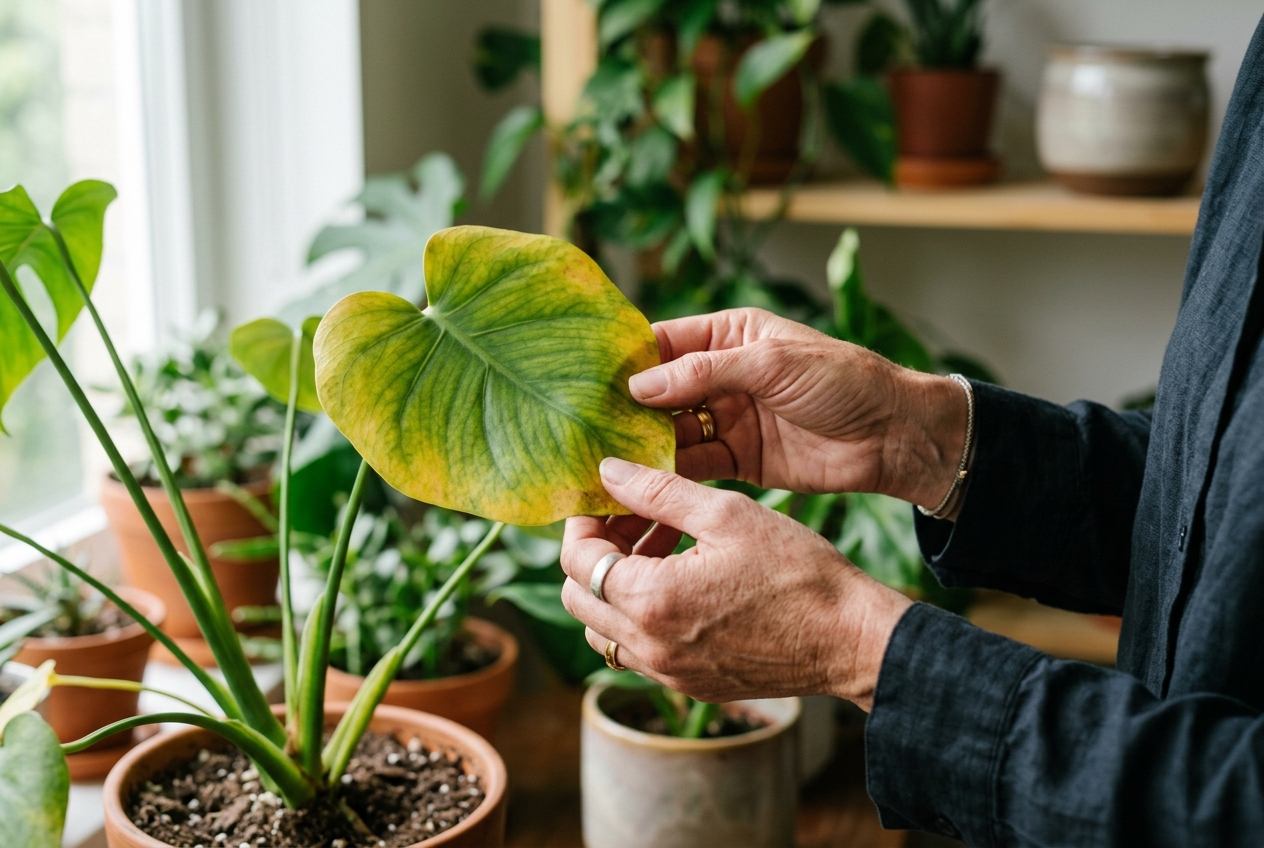
This evolutionary history explains two non-negotiable requirements for indoor growers: massive photon demand and extreme root sensitivity to stagnant water. The large surface area of each violin-shaped leaf functions as an efficient solar solar panel. If light levels fall below 250 foot-candles, the tree sheds its lower canopy to conserve carbohydrate reserves.
According to physiological research published by the University of Florida Extension Ficus Guide, Ficus lyrata responds rapidly to root zone oxygenation and consistent irradiance without abrupt microclimate shifts. Maintaining stable placement halts foliar abscission.
7 Proven Tips: Fiddle Leaf Fig Care for Huge Leaves
Tip 1: Position Directly in Bright Morning Sun (400–600 µmol/m²/s)
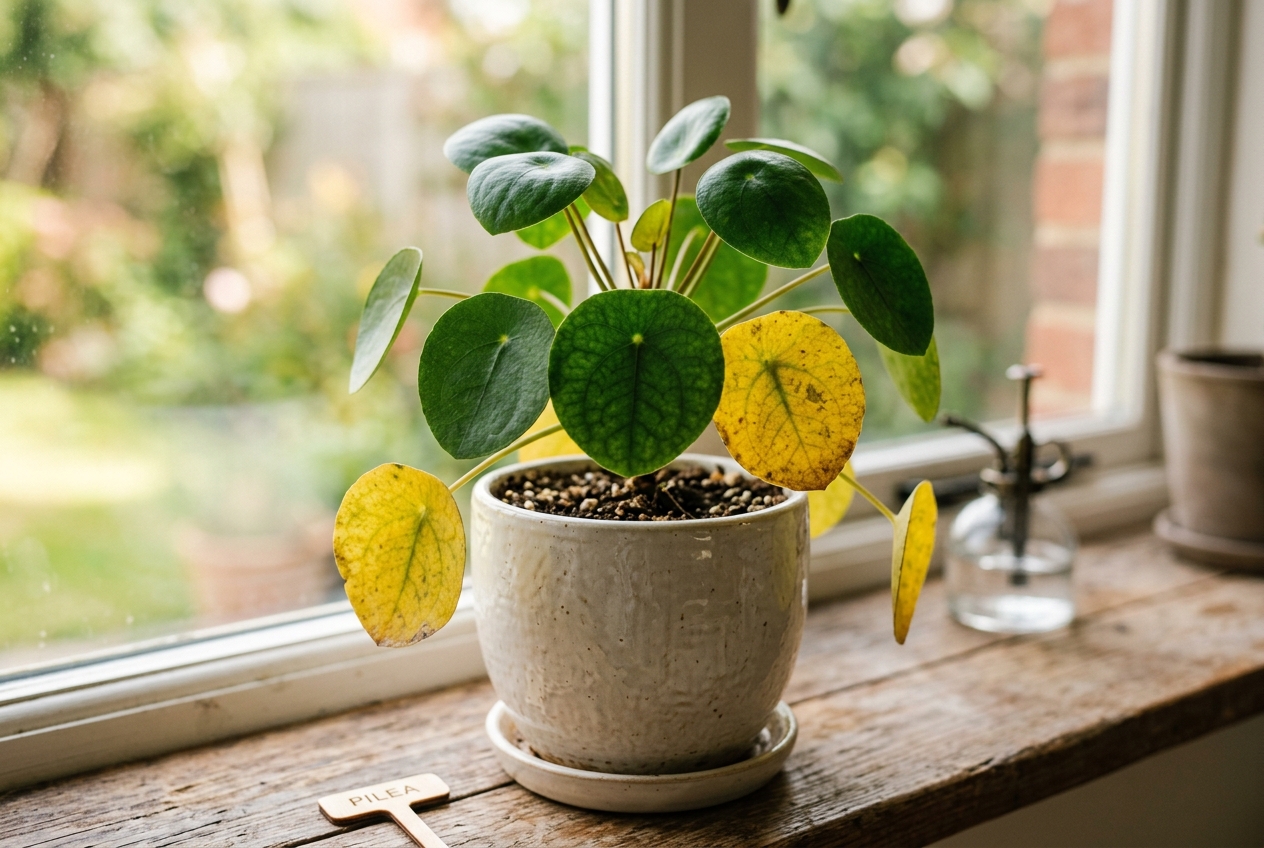
Fiddle leaf figs are sun-loving canopy trees, not low-light houseplants. In our trials, specimens positioned directly in an unobstructed east-facing or south-facing window with light sheer filtering produce leaves nearly double the size of plants kept across the room. Aim for 400 to 600 µmol/m²/s PPFD during peak morning hours.
Tip 2: Plant in 50% Chunky Bark Aroid Substrate
Standard dense nursery soils suffocate Ficus roots indoors. Mix 50% coarse orchid bark, 25% chunky perlite or pumice, and 25% high-quality coco coir. This high-porosity blend creates large air channels (macropores) that allow oxygen to circulate freely around root hairs even immediately after irrigation.
Tip 3: Hydrate with the “Drench-and-Dry” Method
Never give your fiddle leaf fig small, frequent sips of water. Wait until the top 50% of the potting medium is dry to the touch, then thoroughly saturate the container until water runs freely from the bottom drainage holes. Allow the pot to drain completely for 30 minutes before returning it to its decorative saucer.
Tip 4: Clean Giant Leaves with Lukewarm Water Monthly
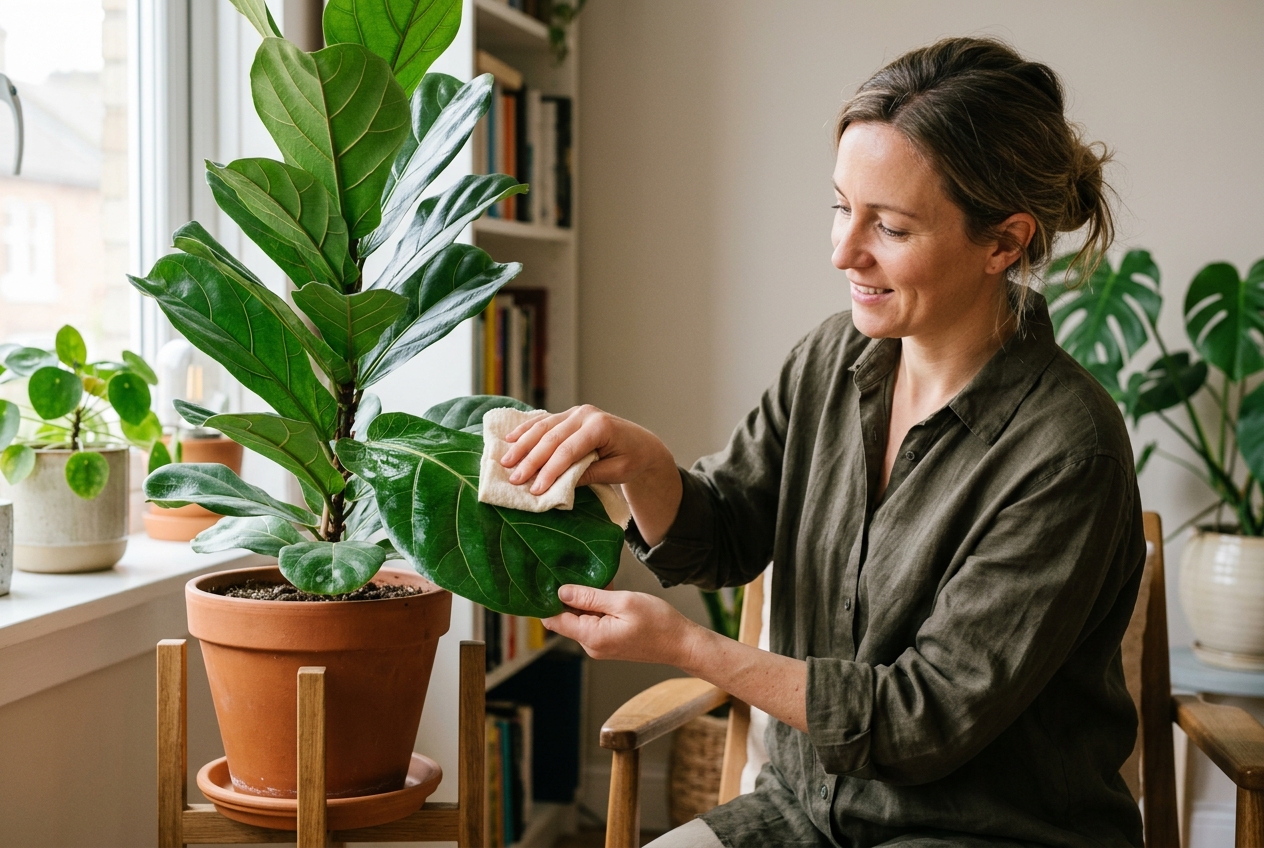
Because fiddle leaf fig leaves are so broad, they collect airborne household dust quickly, forming a film that blocks up to 30% of ambient light. Support the underside of each leaf with your hand and gently wipe the top surface with a damp microfiber cloth moistened with soft, lukewarm water.
Tip 5: Shake the Trunk Weekly to Build Thigmomorphogenesis
In nature, steady outdoor breezes cause micro-stresses in tree trunks, triggering the release of plant hormones that thicken the central stem and deposit strong structural lignin. Indoors, wind is absent. Grasp the main trunk gently and shake it back and forth for 60 to 90 seconds weekly to encourage a sturdy, self-supporting trunk.
Tip 6: Feed with a 3-1-2 NPK Nutritional Engine
During active spring and summer growth, apply a specialized liquid houseplant fertilizer formulated with a 3-1-2 NPK ratio (such as 9-3-6) diluted to half strength with every other watering. Nitrogen fuels massive leaf expansion, while balanced potassium protects against root diseases.
Tip 7: Prune the Apical Meristem for Dense Branching
If your tree has grown into a tall, single-stem pole, use clean pruning shears to snip off the top growing bud (the apical meristem) just above a healthy leaf node in late spring. Removing apical dominance triggers dormant buds along the lower stem to break into 2 to 3 vigorous new branches.
Trunk Strengthening Through Thigmomorphogenesis
Many growers complain that their indoor fiddle leaf figs require staking or droop over under the weight of their own crown. The physiological reality is simple: plants adapt to mechanical stimuli. Incorporating weekly mechanical shaking into your routine fiddle leaf fig care builds internal vascular strength and prevents weak, floppy growth.
High-Porosity Aroid Substrates & Root Hypoxia
When peat moss stays wet in plastic containers, oxygen levels in the root zone plummet within 24 hours. The resulting hypoxia destroys delicate root hairs, making it impossible for the tree to transport water upward. Paradoxically, overwatered trees often exhibit wilted, drooping leaves that resemble severe thirst.
The 3-1-2 NPK Nutritional Engine
Unlike flowering houseplants that require high phosphorus, tropical foliage trees demand high nitrogen for chlorophyll synthesis. A balanced 3-1-2 ratio provides optimal nutrition without accumulating excess mineral salts in the potting mix.
If your tree suffers sudden foliage loss during seasonal shifts, consult our emergency troubleshooting guide on Fiddle Leaf Fig Leaves Dropping. To support vigorous spring flushes, review our feeding protocols in How to Fertilize Indoor Plants.
Frequently Asked Questions (FAQ)
Why do new fiddle leaf fig leaves have tiny red spots?
Small red spots on emerging leaves indicate foliar edema, a condition caused by fluctuating soil moisture where plant cells absorb water faster than they can transpire, causing cell walls to rupture. As the leaf expands, the red spots typically fade away naturally.
How often should I water my fiddle leaf fig?
Most specimens need water every 8 to 12 days in warm, bright summer conditions, and every 14 to 20 days during winter dormancy. Always verify that the top half of the potting soil feels dry before watering.
Can fiddle leaf figs handle direct sunlight?
Yes, but direct midday sun must be introduced gradually. Morning sunlight is gentle and ideal. If moving your tree into direct afternoon exposure, acclimate it slowly over two weeks to avoid bleached or scorched leaves.
Is Fiddle Leaf Fig toxic to cats and dogs?
Yes. Ficus lyrata contains an irritating milky latex sap rich in calcium oxalate crystals. If ingested, it causes oral irritation, excessive drooling, and vomiting. Keep containers elevated or out of reach of household pets.
Dennis P. Hansen
Dennis P. Hansen is a home gardener with a genuine passion for plants and the simple pleasure of growing them. He enjoys caring for houseplants, succulents, and other plants at home while continually learning from everyday gardening experiences. Dennis likes to share practical plant care tips, useful observations, and simple solutions that can help others grow healthier plants. He believes that caring for plants is a rewarding journey and that there is always something new to learn along the way.