
Fiddle Leaf Fig Leaves Dropping: Causes & Urgent Fixes

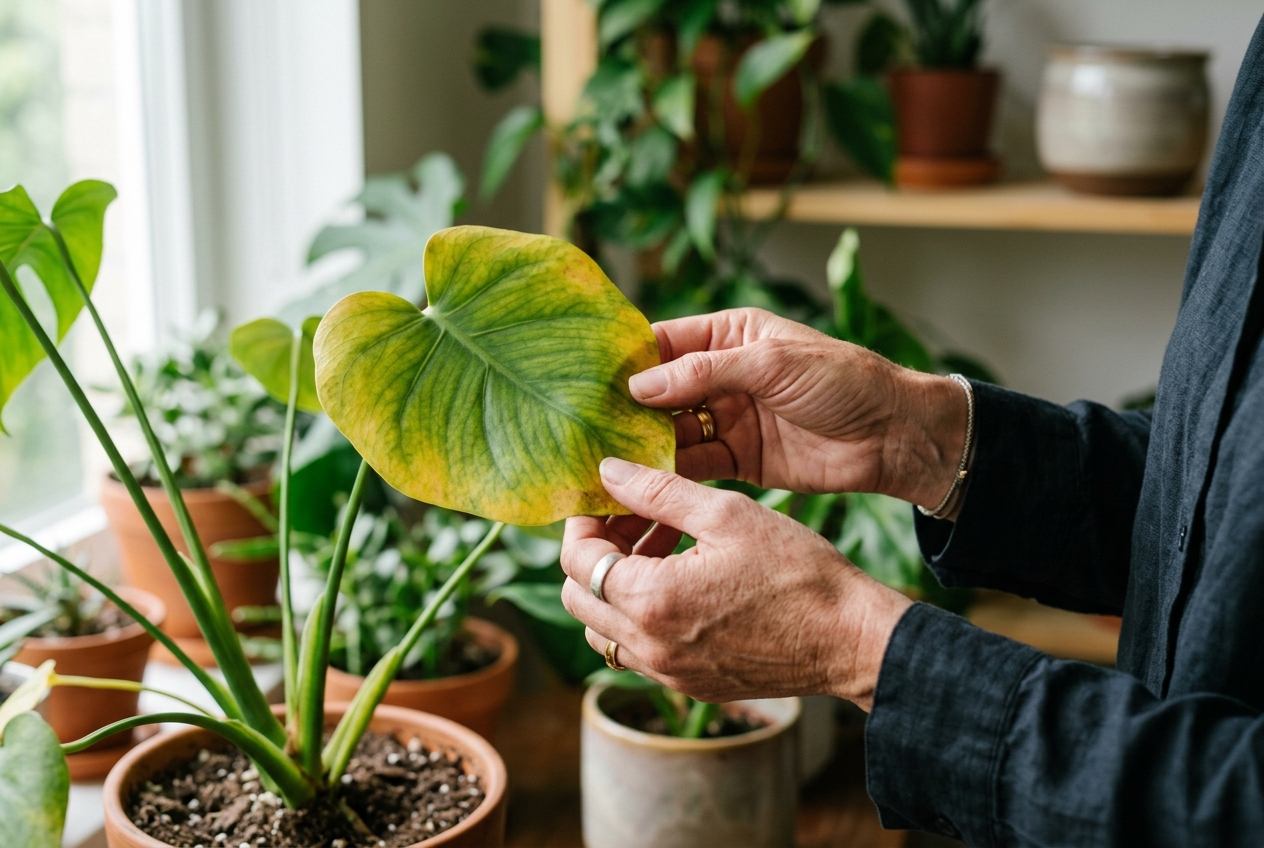
Few indoor gardening sights are more alarming than Fiddle Leaf Fig leaves dropping from your prized indoor specimen tree. Native to the lowland tropical rainforests of West Africa, these trees maintain strict physiological equilibrium regarding light, moisture, and airflow. When environmental conditions fluctuate abruptly, the tree responds by shedding foliage to conserve vascular hydration. Halting leaf drop requires identifying whether the trigger is root-zone hypoxia, draft shock, or light depletion.
| Diagnostic Parameter | Botanical Indicator | Corrective Action |
|---|---|---|
| Bottom Leaf Drop (Yellow/Brown) | Root hypoxia from saturated soil; decaying feeder roots. | Let top 2–3 inches dry; verify pot drainage holes are unobstructed. |
| Middle/Green Leaf Drop | Sudden temperature change, cold draft, or HVAC vent blast. | Relocate away from air conditioning vents and drafty windows. |
| Light Deprivation | Tree sheds interior foliage due to insufficient photosynthetic energy. | Move within 3 feet of an east- or south-facing window with filtered light. |
| Underwatering (Crispy Edges) | Entire branch droops; leaves curl inward before dropping dry. | Provide a deep, thorough soak until water drains freely from the base. |
Diagnosing Fiddle Leaf Fig Leaves Dropping: Primary Causes
Ficus lyrata requires high photosynthetic energy and consistent soil moisture dynamics. When placed in dim household corners receiving fewer than 400 foot-candles of light, the tree cannot support its broad, heavy leaf canopy and systematically sheds lower foliage. Conversely, overwatering saturates the root zone, suffocating root hairs and preventing water uptake, ironically causing the foliage to dehydrate and drop while the soil remains wet.
Step-by-Step Fiddle Leaf Fig Stabilization Protocol
Follow Dennis’s 5-step greenhouse recovery protocol to halt leaf drop and stimulate new vegetative growth:
According to physiological research from the University of Florida Extension Ficus Guide, Ficus lyrata responds to sudden environmental shifts and over-saturation by activating abscission layers at the base of the petiole.
Step 1: Assess Root-Zone Moisture Depth
Insert a moisture probe or clean wooden dowel deep into the lower third of the root ball. If the probe emerges wet and cool while the top feels dry, moisture is trapped at the base. Hold off on watering until the root ball dries down to 20% moisture capacity.
Step 2: Stabilize Ambient Temperature and Eliminate Drafts
Ensure the tree sits in a room with a stable temperature range between 65°F and 78°F (18°C–25°C). Keep the canopy at least 4 feet away from heating vents, AC returns, and exterior doors that open frequently during winter.
Step 3: Maximize Filtered Indirect Sunlight
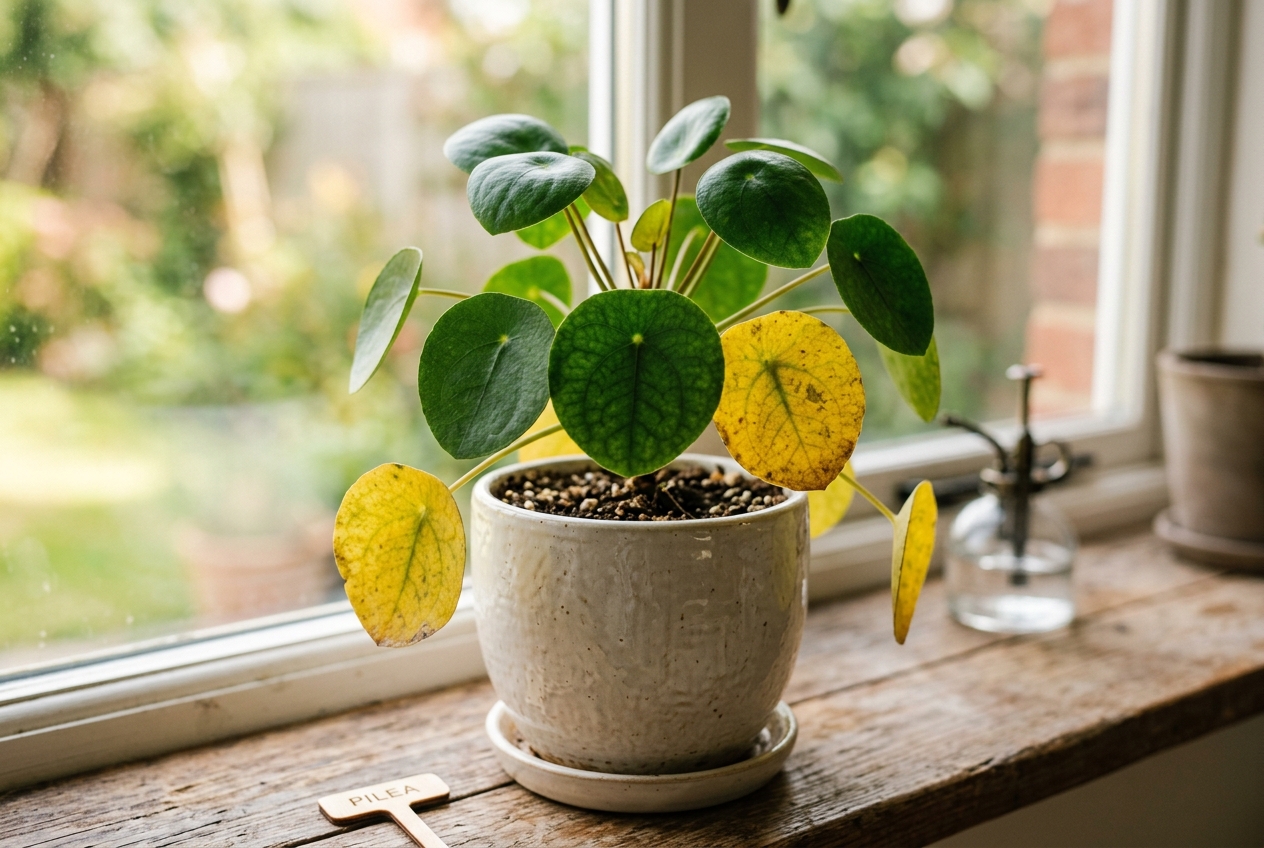
Position the plant where it receives 6 to 8 hours of bright, indirect sunlight daily. An unobstructed eastern exposure or a southern exposure softened with a sheer curtain provides the ideal light intensity (10,000 to 20,000 lux) needed for canopy retention.
Step 4: Aerate Compacted Potting Substrate
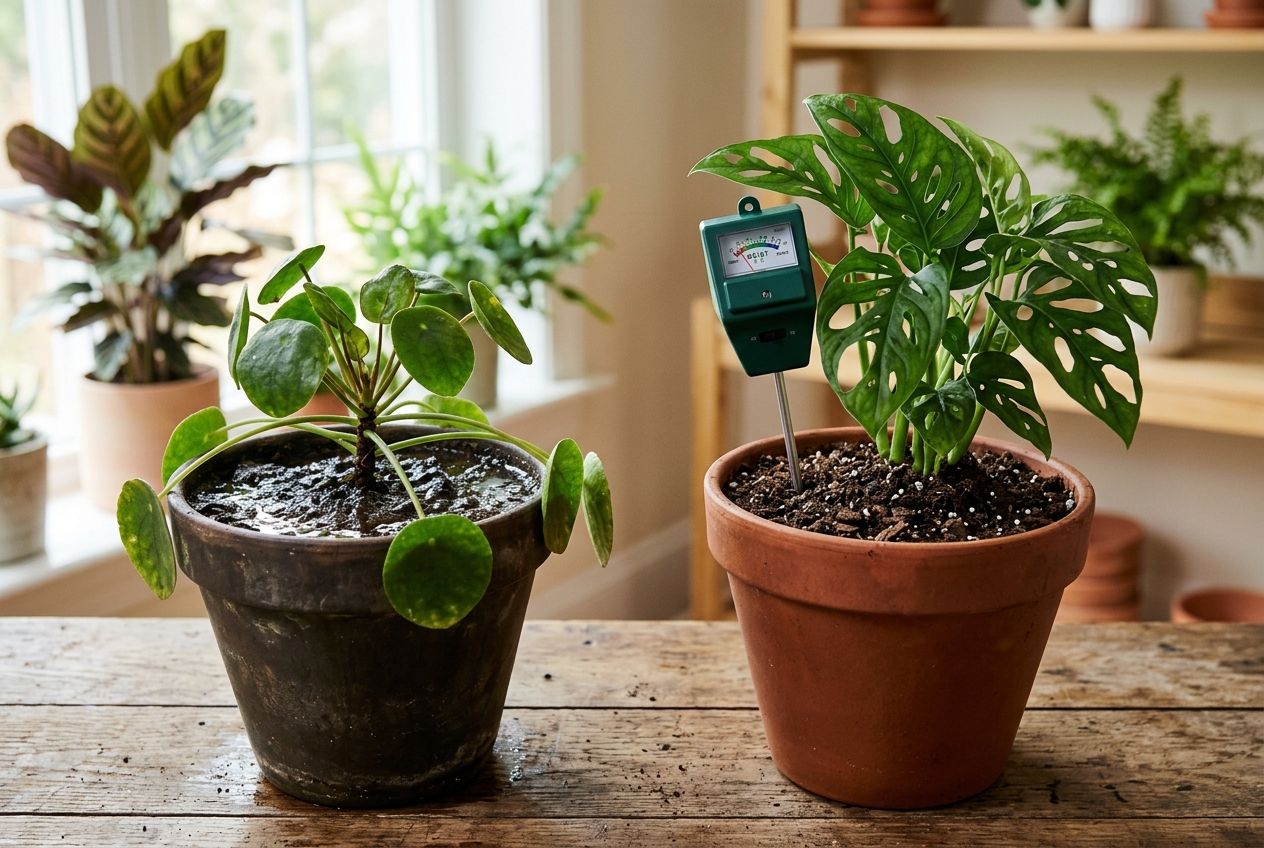
Using a sanitized wooden skewer, gently poke 6 to 8 vertical aeration holes around the root perimeter. This relieves anaerobic pockets, speeds soil drying, and introduces vital oxygen to stressed root hairs without damaging the primary root system.
Step 5: Pause All Fertilizer Applications
Never feed a shedding or stressed Fiddle Leaf Fig. Stressed roots cannot process concentrated mineral salts, which will scorch tender root tips and accelerate leaf drop. Resume feeding with a balanced 3-1-2 ratio fertilizer only after active new leaf buds unfurl.
Aroid & Ficus Chunky Soil Substrate
Coarse pine bark, chunky perlite, and horticultural charcoal provide the drainage and root aeration Fiddle Leaf Figs need to prevent chronic root rot.
Once your tree stabilizes and produces healthy new apical growth, resume gentle nutrition following our seasonal feeding guide on How to Fertilize Indoor Plants.
Frequently Asked Questions About Fiddle Leaf Fig Leaf Drop
Will dropped Fiddle Leaf Fig leaves grow back on the bare stem?
Leaves will not re-emerge from bare lower trunk sections naturally. However, you can trigger new lateral branching along the bare stem by notching the trunk directly above an inactive node with a sterile blade during spring.
How often should I water a recovering Fiddle Leaf Fig?
Water only when the top 2 to 3 inches of substrate have dried completely. Depending on pot size, light levels, and ambient humidity, this typically translates to once every 8 to 14 days.
Does moving a Fiddle Leaf Fig cause it to drop leaves?
Yes. Ficus lyrata is sensitive to shifts in light direction and intensity. Moving a tree to a new location triggers an acclimation period where it may drop 2 to 4 leaves as it adjusts its canopy orientation.
Should I mist the leaves to prevent leaf drop?
No. Foliar misting provides only momentary humidity and leaves standing water on foliage, which increases the risk of bacterial leaf spot. Instead, run an evaporative room humidifier nearby to maintain 50% to 60% ambient humidity.
For foundational lighting, soil, and watering routines, see our complete guide to Fiddle Leaf Fig Care.
Dennis P. Hansen
Dennis P. Hansen is a home gardener with a genuine passion for plants and the simple pleasure of growing them. He enjoys caring for houseplants, succulents, and other plants at home while continually learning from everyday gardening experiences. Dennis likes to share practical plant care tips, useful observations, and simple solutions that can help others grow healthier plants. He believes that caring for plants is a rewarding journey and that there is always something new to learn along the way.