
Fix Your Indoor Plants Banana Tree: 8 Proven Ways


Table of Contents
Introduction:
Your indoor plants banana tree should feel like a slice of the tropics in your home—but if the leaves are yellowing, tearing, or curling, you’re not alone. With a few smart, science-backed tweaks, you can bring back bold, glossy growth and steady new leaves.
Are banana trees good indoor plants? Absolutely—when you get the basics right. How to keep a banana plant alive indoors? Start by aligning light, water, soil, and humidity with what Musa actually needs. How much light does an indoor banana tree need? More than most houseplants, but we’ll make it simple to hit the sweet spot. And are bananas good for plants indoors? We’ll separate myth from method so you feed effectively without pests or odors.
Whether your indoor plants banana tree is drooping after a move, stuck with undersized leaves, or battling gnats, there’s a fix. This guide distills eight proven ways you can act on today—grounded in Banana plant indoor care best practices and clear checkpoints you can follow without guesswork.
You’ll learn how to:
- Dial in lighting—from window placement to when to add a grow light—to drive larger, greener leaves.
- Water with precision and choose an airy mix that prevents root rot while holding just enough moisture.
- Pick Indoor banana plant varieties that match your space, light, and growth goals.
- Style your Banana leaf plant Indoor for impact while keeping it safe from drafts, heat vents, and high-traffic areas.
- Unlock Banana plant indoor benefits—tropical vibes, visual lushness, and a more comfortable, humid microclimate.
By the end, your indoor plants banana tree will have a clear path to recovery and long-term vigor—no overwatering, no guesswork, just practical steps that work.
Are banana trees good indoor plants?
A thriving indoor plants banana tree can transform a room in a way few houseplants can—broad, architectural leaves, a fresh burst of green, and that instant “tropical vacation” vibe. But are they genuinely good houseplants? Yes, when you match their needs to your space. If you can offer bright light, consistent watering, and moderate humidity, your banana will repay you with steady new leaves and statement-level style.
A quick fit check:
- You have a bright window (south or west is ideal) or are open to adding a grow light.
- You can water deeply, let excess drain, and avoid soggy soil.
- You’re comfortable with a plant that grows fast and wants room to spread.
- You’re ready to trim the occasional torn leaf—bananas are bold, not delicate.
If that sounds like you, an indoor plants banana tree is a fantastic pick.
Banana plant indoor benefits: lush looks, humidity boost, happy vibes
Beyond looks, there are real, everyday benefits to a Banana leaf plant Indoor:
- Big design impact: one specimen can anchor a living room or office corner, softening hard lines and filling vertical space.
- Friendlier humidity: those broad leaves transpire, nudging local humidity up—great for nearby plants that hate dry air.
- Fast growth = fast feedback: dial in care and you’ll often see a new leaf every few weeks, which keeps motivation high.
- Natural focal point: bananas invite attention and conversation, making them perfect for entryways, lounges, and creative workspaces.
Pro tip: Place your indoor plants banana tree where you’ll see it often. You’ll catch early signs of thirst or light stress and respond before issues snowball.
Indoor banana plant varieties for small spaces and big impact
Choose from Indoor banana plant varieties that match your ceiling height, light, and style:
- Super Dwarf Cavendish (1.5–3 ft): tiny footprint, thick leaves; ideal for shelves or side tables near strong light.
- Truly Tiny / Little Prince (1–2 ft): ultra-compact and slow to outgrow its spot; great for apartment living.
- Dwarf Cavendish (3–6 ft): the classic look with large, glossy leaves—perfect as a living-room statement plant.
- Musa ‘Zebrina’ / ‘Sumatrana’ (3–5 ft): striking burgundy patterns; wants brighter light to keep that color.
- Musa velutina (2–4 ft): ornamental pink fruits; treat primarily as a foliage plant indoors.
Variety tip: If you’re new to bananas, start small. A compact cultivar lets you learn care fundamentals before committing space to a larger canopy—and your indoor plants banana tree will be easier to place near optimal light.
Banana plant indoor or outdoor: how to choose based on climate and light
“Banana plant indoor or outdoor?” Use climate and sun as your guide:
- Keep it indoors if:
- Night temps dip below 60°F (16°C) regularly.
- You can’t guarantee 6–8 hours of strong outdoor light without harsh wind.
- You prefer a controlled environment for cleaner leaves and fewer tears.
- Move it outdoors (seasonally) if:
- You have warm, stable weather and bright morning sun or dappled light.
- You want faster growth and sturdier leaves during peak season.
If you’re transitioning, acclimate slowly:
- Days 1–3: bright shade outside.
- Days 4–6: introduce 1–2 hours of gentle morning sun.
- Days 7–10: increase to 3–4 hours if leaves look healthy.
- Windy day? Bring it in—wind can shred tender leaves.
Indoors, place your banana within 2–3 feet of a bright window and rotate weekly. Outdoors, give it a heavy pot and sheltered spot to avoid tipping. With the right placement, an indoor plants banana tree delivers year-round style and steady growth, no matter your climate.

How to Keep a Banana Plant Alive Indoors?
Growing a banana plant indoors might seem like bringing the tropics into your living room—and you’re absolutely right! But here’s the thing: while these lush beauties can thrive inside your home, they need specific care to flourish. Have you ever wondered why some indoor banana plants look magazine-worthy while others struggle? The secret lies in understanding their tropical nature and adapting your care routine accordingly.
Banana Plant Indoor Care: Watering Rhythm, Feeding, Pruning for Vigor
Your indoor banana tree craves consistency, especially when it comes to water. Think of it as a thirsty athlete—it needs regular hydration but hates sitting in soggy shoes. Here’s how to nail the perfect watering rhythm:
The Goldilocks Watering Method:
- Check soil moisture 2-3 inches deep before watering
- Water thoroughly until it drains from the bottom holes
- Allow the top inch to dry between waterings
- Increase frequency during active growth (spring/summer)
- Reduce watering in dormant months (fall/winter)
When it comes to feeding your banana plant indoors, timing is everything. During the growing season, feed every 2-4 weeks with a balanced liquid fertilizer diluted to half strength. Your plant will reward you with vibrant green leaves and robust growth.
Pruning isn’t just about aesthetics—it’s about channeling energy where it counts. Remove dead or yellowing leaves at the base, cutting close to the main stem. This redirects nutrients to healthy growth and prevents pest hideouts. If your plant produces pups (baby plants), you can either keep them for a fuller look or separate them to expand your indoor jungle.
Potting Mix and Drainage That Prevent Root Rot and Salt Buildup
The foundation of healthy indoor banana tree care starts beneath the surface. Your plant’s roots need a mix that holds moisture yet drains freely—sounds contradictory, right? Here’s the perfect recipe:
The Ultimate Banana Plant Potting Mix:
- 40% high-quality potting soil
- 30% perlite or pumice for drainage
- 20% coconut coir for moisture retention
- 10% compost for nutrients
This combination prevents the two biggest killers of indoor banana plants: root rot and salt accumulation. Choose a pot with multiple drainage holes—your plant’s roots need to breathe! Consider adding a layer of pebbles at the bottom for extra insurance against waterlogging.
Every 6-8 months, flush the soil with clean water to wash away accumulated salts from fertilizers. You’ll know it’s time when you see white crusty deposits on the soil surface or pot edges.
Humidity and Temperature Targets for Steady, Tropical Growth
Here’s where many indoor gardeners stumble: banana plants are humidity lovers living in our dry, climate-controlled homes. Your target? 50-60% humidity minimum. Don’t have a humidifier? Try these clever hacks:
- Group plants together to create a microclimate
- Place your pot on a pebble tray filled with water
- Mist the leaves (but not excessively to avoid fungal issues)
- Position near a bathroom or kitchen where humidity naturally rises
Temperature-wise, keep your banana plant indoors between 75-85°F (24-29°C) during the day and no lower than 60°F (15°C) at night. Avoid placing it near heating vents, air conditioners, or drafty windows—sudden temperature swings stress the plant more than slightly suboptimal steady temperatures.
Watch for these success indicators: leaves unfurling smoothly, maintaining their bright green color, and new growth appearing regularly. If leaves develop brown edges or curl inward, your humidity needs a boost. Remember, creating the right environment is half the battle in keeping your indoor banana tree thriving.
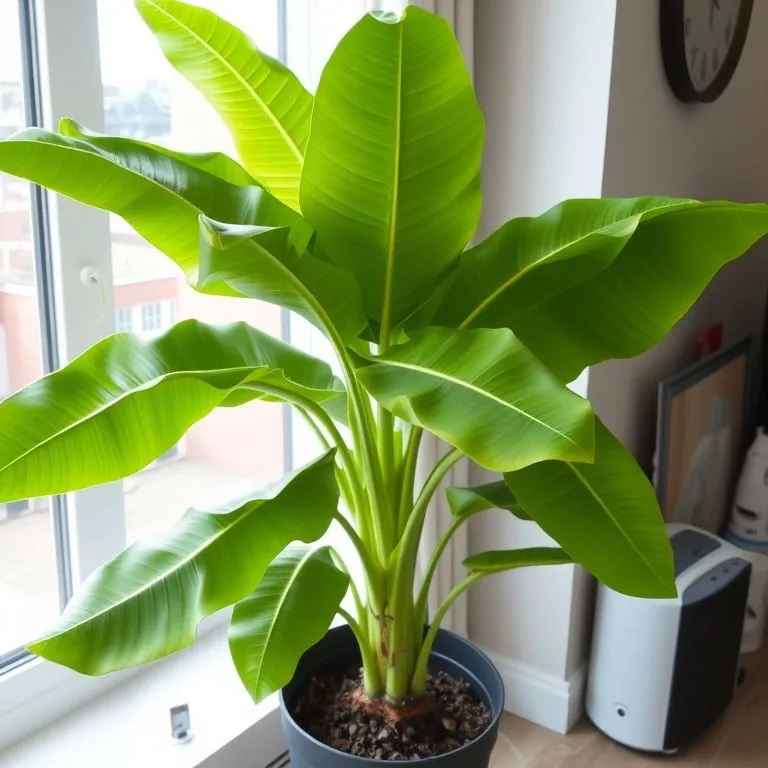
Why Your Indoor Plants Banana Tree Struggles—and How This Guide Helps
Let’s be honest: you didn’t expect your indoor banana tree to look quite so… sad. Those drooping leaves and brown tips weren’t part of the tropical paradise you envisioned, were they? You’re not alone. Most indoor gardeners face challenges with their banana plants because these tropical giants have specific needs that our homes don’t naturally provide.
The good news? Every struggling banana plant tells a story through its leaves, and once you learn to read the signs, recovery becomes straightforward. This guide transforms you from worried plant parent to confident caretaker, equipped with practical solutions that work.
Fast Diagnosis Checklist: Leaves, Stems, Roots, and Soil Cues
Your indoor plants banana tree communicates through visual cues—you just need to know what to look for. Here’s your detective toolkit:
Leaf Symptoms and Their Meanings:
- Brown, crispy edges: Low humidity (most common issue)
- Yellow leaves from bottom up: Natural aging or nitrogen deficiency
- Pale, washed-out color: Insufficient light
- Dark spots with yellow halos: Fungal infection
- Curling or wilting despite moist soil: Root problems
Stem and Growth Indicators:
- Soft, mushy base: Overwatering or crown rot
- Slow or stunted growth: Nutrient deficiency or rootbound condition
- Leaning dramatically: Reaching for light
Root and Soil Red Flags:
- Soil stays wet for over a week: Poor drainage
- White crust on soil surface: Salt buildup
- Musty smell from pot: Root rot developing
- Roots circling the drainage holes: Time to repot
Take five minutes to examine your plant systematically. Start at the newest leaves and work down, checking both sides. Gently probe the soil and sniff for any off odors. This quick assessment reveals 90% of issues affecting indoor banana plants.
Tools and Supplies to Fix Issues Today (Humidifier, Meter, Mix, Spray)
Ready to turn things around? Here’s your emergency kit for banana plant recovery:
Essential Tools for Immediate Action:
- Moisture meter ($10-20): Takes guesswork out of watering
- Humidity gauge ($5-15): Monitors your plant’s comfort zone
- Small humidifier ($25-50): Game-changer for tropical plants
- Quality spray bottle: For emergency misting and treatments
Quick-Fix Supplies to Stock:
- Well-draining potting mix components (perlite, orchid bark)
- Balanced liquid fertilizer (10-10-10 or similar)
- Neem oil spray for pest control
- Epsom salt for magnesium boost
- Clean pebbles for humidity trays
Most of these items are available at your local garden center or online for same-day delivery. Total investment? Under $100 to save your beloved plant and prevent future problems.
Timeline and Results: What Improves First and When to Expect New Leaves
Here’s what many guides won’t tell you: plant recovery follows a predictable pattern. Understanding this timeline keeps you motivated when progress seems slow:
Week 1-2: Stabilization Phase
- Leaves stop declining further
- Soil moisture normalizes
- Plant “perks up” slightly
Week 3-4: Early Recovery Signs
- Existing leaves regain some color
- Stems feel firmer
- Root growth begins (though invisible)
Week 5-8: Visible Improvement
- New leaf spear emerges from center
- Overall plant vigor increases
- Damaged leaves can be removed
Month 3+: Full Recovery Mode
- Regular new leaf production (1-2 per month)
- Robust root system established
- Plant returns to normal growth pattern
Remember, your indoor plants banana tree invested energy in those damaged leaves. It won’t abandon them immediately, even as it heals. Be patient—new growth signals successful recovery, not the instant transformation of old leaves.
The key to success? Consistency. Once you identify and address the core issues, maintain steady care. Your banana plant’s tropical nature means it responds quickly to improved conditions. Within 6-8 weeks, you’ll see dramatic improvement, and by month three, you’ll have the thriving specimen you originally imagined.
Pro tip: Take weekly photos to track progress. Sometimes daily observation makes changes hard to notice, but comparing photos reveals just how far your plant has come. This visual diary also helps you identify what works best for your specific growing conditions.
Styling and Placement for Banana Leaf Plant Indoor
Your banana leaf plant indoor isn’t just another houseplant—it’s a living sculpture that transforms any space into a tropical retreat. But where you place this dramatic beauty matters as much as how you care for it. Have you noticed how some banana plants become stunning focal points while others seem awkwardly positioned? The difference lies in thoughtful placement that considers both aesthetics and plant health.
Banana Leaf Plant Indoor Decor Ideas for Living Rooms, Offices, and Foyers
Let’s explore how to showcase your banana plant as the design statement it deserves to be:
Living Room Transformations:
- Corner spotlight: Position your banana leaf plant indoor in an empty corner near a window, creating instant architectural interest
- Sofa companion: Place beside or behind a sofa to add vertical drama and soften hard furniture lines
- Reading nook accent: Create a tropical reading corner by pairing with a comfortable chair and floor lamp
Office Oasis Setups:
- Position near your desk for improved air quality and stress reduction
- Use as a natural room divider in open-plan offices
- Place in reception areas to create welcoming first impressions
Grand Foyer Statements:
- Flank entryways with matching banana plants for symmetrical elegance
- Create a single dramatic focal point in large, open foyers
- Combine with uplighting for evening drama
The key to successful styling? Let your banana plant’s natural form guide placement. These plants grow asymmetrically, so rotate them monthly to maintain balanced growth and showcase different angles.
Banana Plant Indoor Vastu: Auspicious Directions and Do’s/Don’ts
For those following Vastu principles, your banana plant indoor placement can enhance positive energy flow:
Auspicious Placements:
- East or Northeast: Promotes growth and new beginnings
- North: Attracts prosperity and career advancement
- Living spaces: Encourages family harmony and communication
Vastu Do’s:
- Keep plants healthy and vibrant (sick plants attract negative energy)
- Maintain clean leaves free from dust
- Position where morning sunlight can reach the plant
- Group with other plants for amplified positive energy
Vastu Don’ts:
- Avoid placing in bedrooms (too much active energy for rest)
- Never position in the center of your home
- Don’t keep dried or dying leaves attached
- Avoid Southwest corners (conflicts with earth element)
Remember, Vastu emphasizes the importance of thriving plants. A well-cared-for banana plant radiates positive energy throughout your space.
Safe Placement: Airflow, Traffic Flow, and Pet/Kid Considerations
Creating a safe environment for both your plant and household members requires strategic thinking:
Airflow Essentials:
- Position 2-3 feet from walls for air circulation
- Avoid spots directly under ceiling fans (causes leaf damage)
- Ensure gentle air movement to prevent fungal issues
- Keep away from heating/cooling vents
Traffic Flow Considerations:
Your banana leaf plant indoor has delicate leaves that tear easily. Smart placement prevents accidents:
- Place outside main walkways
- Allow 3-foot clearance around the plant
- Position where leaves won’t brush against passersby
- Consider corner placement in high-traffic areas
Pet and Child Safety:
While banana plants are non-toxic, consider these precautions:
- Elevate smaller plants on sturdy stands
- Secure larger pots to prevent tipping
- Train pets early to respect plant boundaries
- Remove fallen leaves promptly (choking hazard)
- Consider decorative barriers for persistent nibblers
Child-Friendly Tips:
- Involve kids in care routines to build respect
- Place in visible but not play areas
- Use heavy, stable pots that won’t tip
- Keep pruning tools locked away
The perfect placement balances all these factors. Start by identifying your brightest, most humid spot, then adjust for safety and traffic patterns. Your banana plant becomes a beautiful, functional part of your home when positioned thoughtfully.
Pro tip: Before committing to a location, place an empty pot there for a week. This test run reveals any issues with traffic flow, pet interest, or environmental conditions before you move your precious plant. Once you find that sweet spot where style meets function, your banana leaf plant indoor will thrive as both a design element and a healthy, happy addition to your space.
Your Next Steps to Success with Indoor Plants Banana Tree
Ready to transform your struggling banana plant into a thriving tropical showpiece? Success isn’t about perfection—it’s about taking consistent, informed action. Whether you’re rescuing a declining plant or starting fresh, this roadmap guides you from uncertainty to confidence. Let’s turn your indoor plants banana tree journey from overwhelming to achievable, starting today.
7-Day Action Plan to Stabilize and Revive Growth
Think of this week as your plant’s intensive care unit. Each day builds on the previous, creating momentum toward recovery:
Day 1: Assessment and Emergency Care
- Thoroughly examine your banana plant (leaves, stems, soil, roots if needed)
- Remove any dead or severely damaged leaves
- Check soil moisture and water only if bone dry
- Move to brightest available spot without direct sun
Day 2: Environmental Optimization
- Set up humidity solution (humidifier, pebble tray, or grouping)
- Install moisture meter and test soil
- Ensure temperature stays between 65-80°F
- Clear 2-foot radius around plant for airflow
Day 3: Soil and Drainage Check
- Test drainage by watering thoroughly
- If water pools or drains slowly, plan for repotting
- Add perlite to top 2 inches if immediate improvement needed
- Order quality potting mix if repotting necessary
Day 4: Nutrition Boost
- Apply diluted liquid fertilizer (half strength)
- Spray leaves with Epsom salt solution (1 tsp per quart)
- Check for pest signs while leaves are wet
- Document current state with photos
Day 5: Deep Watering Day
- Water thoroughly until drainage runs clear
- Time how long soil takes to drain
- Mist leaves if humidity below 50%
- Rotate plant quarter turn for even growth
Day 6: Structural Support
- Stake any leaning stems
- Prune only critically damaged parts
- Clean remaining leaves with damp cloth
- Arrange leaves for optimal light exposure
Day 7: Establish Routine
- Create care calendar with watering/feeding schedule
- Set phone reminders for weekly checks
- Take progress photos
- Celebrate small improvements!
By day seven, your indoor plants banana tree will show signs of stabilization. New growth might not appear yet, but existing leaves should look perkier and stems feel firmer.
Ongoing Banana Plant Indoor Care Checklist and Schedule
Consistency transforms good intentions into thriving plants. Here’s your sustainable care rhythm:
Daily Quick Checks (30 seconds):
- Visual scan for drooping or color changes
- Touch soil surface for moisture
- Ensure adequate light reaching all leaves
Weekly Tasks (10 minutes):
- Deep moisture check with meter
- Rotate plant quarter turn
- Mist if humidity low
- Remove any yellowing leaves
- Check for pests under leaves
Bi-Weekly Routine:
- Water thoroughly (adjust based on season)
- Apply liquid fertilizer during growing season
- Wipe leaves with damp cloth
- Assess overall health and growth
Monthly Maintenance:
- Flush soil to prevent salt buildup
- Check for root-bound conditions
- Prune dead material completely
- Update care notes and photos
- Adjust placement if needed
Seasonal Adjustments:
Spring/Summer (Active Growth):
- Increase watering frequency
- Feed every 2 weeks
- Watch for rapid growth spurts
- Consider repotting if needed
Fall/Winter (Dormant Period):
- Reduce watering by 30-40%
- Feed monthly or less
- Supplement with grow lights
- Protect from cold drafts
Supplies List and Budget-Friendly Alternatives to Get Started Now
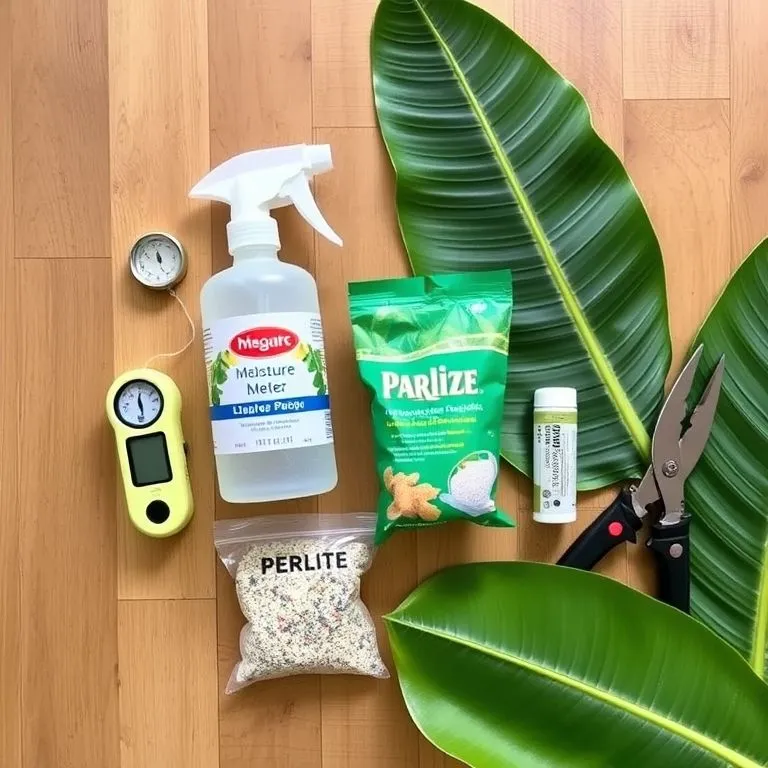
You don’t need to break the bank to succeed with banana plant indoor care. Here’s what you actually need versus nice-to-have items:
Essential Supplies (Budget: $30-50):
- Moisture meter ($10-15) – Alternative: Wooden chopstick test
- Spray bottle ($3-5) – Alternative: Repurpose any spray bottle
- Liquid fertilizer ($8-12) – Alternative: Compost tea
- Perlite ($5-10) – Alternative: Coarse sand
- Pruning shears ($10-15) – Alternative: Clean scissors
Helpful Upgrades (Budget: $50-100):
- Small humidifier ($25-40) – Alternative: Pebble trays
- Grow light ($30-50) – Alternative: Relocate near window
- Quality potting mix ($15-20) – Alternative: Amend existing soil
- Plant stand ($20-40) – Alternative: Stack books or crates
DIY Money-Saving Hacks:
- Create humidity trays using old baking pans and aquarium gravel
- Make plant stakes from bamboo skewers
- Use coffee filters over drainage holes instead of buying mesh
- Repurpose clear plastic bags as temporary humidity domes
Where to Shop Smart:
- Dollar stores: spray bottles, pebbles, basic tools
- Hardware stores: perlite, sand (often cheaper than garden centers)
- Online bulk: fertilizer and potting mix for long-term savings
- Local plant swaps: free cuttings and shared supplies
Remember, your indoor plants banana tree cares more about consistent attention than expensive gadgets. Start with basics, then upgrade as you gain confidence and see results.
The path to a thriving banana plant isn’t complicated—it’s about understanding your plant’s needs and meeting them consistently. With this action plan and checklist in hand, you’re equipped to provide excellent care without overwhelming yourself or your budget. Your tropical beauty is counting on you, and now you have everything needed to help it flourish.
Because indoor banana plants achieve dramatic vertical heights, compare their care requirements with other specimens in our curated overview of tall indoor house plant varieties.
Conclusion: Your Indoor Plants Banana Tree Journey
Caring for your indoor plants banana tree is more than just watering and hoping for the best—it’s about creating a little tropical ecosystem right inside your home. From optimizing light and humidity to repotting with the right soil mix, every step you take builds towards one beautiful goal: a plant that rewards you with big, glossy leaves and steady growth.
Think about it—how many other houseplants bring this much drama, vibrancy, and energy into a room? Your banana plant can be both a stunning décor statement and a deeply rewarding project. Yes, it may demand a bit of extra effort compared to more forgiving plants, but the payoff is unmistakable.
The journey doesn’t end here. In fact, today is just the starting line of a greener routine. By applying these proven methods—balanced watering, smart feeding, timely pruning, and thoughtful placement—you’ll not only rescue your plant but also equip yourself with skills that make all your indoor gardening more successful. Every new leaf your banana plant pushes out will feel like a personal win.
So, here’s the real question: are you ready to turn that struggling greenery into the thriving centerpiece it was meant to be? Remember, consistency is your secret weapon, not perfection. Your indoor plants banana tree doesn’t expect flawless care—it simply needs steady, attentive support.
Stay observant, adjust as the seasons shift, and celebrate progress (no matter how small). Before long, you’ll notice those signs of recovery: perkier leaves, faster growth, and that undeniable sense of tropical energy in your home. And when guests inevitably ask, “How do you keep your banana plant looking so amazing?”—you’ll smile, knowing you hold the 8 proven ways that actually work.
Your lush indoor oasis isn’t a dream waiting for someday. With care, patience, and a touch of consistency, it starts now. Enjoy watching your indoor plants banana tree grow—not just as a plant, but as proof of what happens when knowledge and dedication meet a little tropical ambition.
Dennis P. Hansen
Dennis P. Hansen is a home gardener with a genuine passion for plants and the simple pleasure of growing them. He enjoys caring for houseplants, succulents, and other plants at home while continually learning from everyday gardening experiences. Dennis likes to share practical plant care tips, useful observations, and simple solutions that can help others grow healthier plants. He believes that caring for plants is a rewarding journey and that there is always something new to learn along the way.