
Indoor Ivy Plants Made Easy: Stop Leggy, Droopy Growth

Table of Contents
Introduction:
If your indoor ivy plants look leggy, droopy, or just “meh,” you’re not alone—and you’re not stuck with it. With a few smart tweaks to light, water, soil, and pruning, you can turn stretched vines into dense, glossy growth. Think of this guide as your step-by-step shortcut to happier indoor ivy plants, no guesswork required.
We’ll start by quickly diagnosing what’s really going on: Are your vines reaching toward a dim window? Is the potting mix holding too much water? Are mites quietly stressing new leaves? Then we’ll move into practical Indoor ivy plants care—simple routines you can use right away to strengthen stems, sharpen variegation, and keep leaves perky all week long.
You’ll also learn how to match Indoor ivy plant types to your space and style (from classic English ivy to slower, compact options), plus how to grow ivy indoors on a wall using low-profile grids, clips, and trellises for a clean, architectural look. Along the way, you’ll get quick, confidence-boosting checklists you can revisit season after season.
And if you’ve ever wondered:
- Is ivy a good indoor plant?
- Which ivy is best for indoors?
- Why does my indoor ivy keep dying?
- Does indoor ivy like full sun?
You’ll get crisp, actionable answers—so your indoor ivy plants can thrive in the light you have, on the schedule you actually keep.
By the end, you’ll know how to:
- Set the right light and distance to prevent lanky stems
- Water on a rhythm that avoids both crisping and rot
- Refresh the soil and pot to support steady growth
- Prune and train vines for fuller, denser coverage
- Spot pests early and treat them before they spread
Indoor Ivy Plants: Quick Wins to Stop Leggy, Droopy Growth
Tired of stretched stems and floppy leaves? A few targeted tweaks can reset indoor ivy plants fast. Before you overhaul your routine, let’s pinpoint what the plant is telling you and act on the signals that matter most.
Diagnose fast: light, water, roots, and pests at a glance
Use this 60-second checklist to find the bottleneck that’s making indoor ivy plants leggy or droopy.
- Light (most common cause of legginess)
- What you’ll see: long gaps between leaves, vines leaning toward the window, faded variegation.
- Quick test: stand at midday and do the hand-shadow test. A soft, defined shadow = bright indirect light (ideal). No shadow = too dim. You can also use a phone lux app; aim for roughly 1,000–3,000 lux (100–300 foot-candles).
- Fast fix: move 2–4 feet from an east or bright north window, or 4–6 feet back from a south window with a sheer curtain. Rotate the pot 90° weekly to keep growth even.
- Water
- What you’ll see: droop + heavy pot = overwater; droop + light pot = underwater. Crispy edges signal thirst; yellowing and mushy stems hint at rot.
- Quick test: finger to first knuckle or a calibrated moisture meter. Water when the top 1–2 inches are dry, then fully soak and drain.
- Fast fix: adopt a soak–drain rhythm and always empty the saucer. If the mix stays wet for days, improve drainage or repot.
- Roots
- What you’ll see: roots circling the pot (rootbound) or brown, mushy roots with a sour smell (rot).
- Quick test: slide the plant halfway out. White/tan, springy roots = healthy.
- Fast fix: trim rotten roots, repot into a slightly larger pot with airy mix, and ensure strong drainage.
- Pests
- What you’ll see: tiny webs (spider mites), cottony puffs (mealybugs), glossy sticky leaves (scale).
- Quick test: inspect leaf undersides and nodes with a flashlight. Tap a leaf over white paper; moving specks = mites.
- Fast fix: isolate the plant, rinse foliage in the sink, then spray with insecticidal soap or neem. Repeat every 7 days for 3 cycles.
Pro tip on indoor ivy plant types: variegated English ivy needs brighter light than solid green forms to keep its color. Slower, compact types stretch less but still need bright indirect light to avoid legginess.
7-day revival plan to firm vines and restore lush leaves
Follow this simple week-long reset to help indoor ivy plants bounce back.
- Day 1: Light reset + clean
- Relocate to bright, indirect light (soft shadow; 1,000–3,000 lux).
- Wipe dust from leaves to boost photosynthesis.
- Snip leggy tips just above a leaf node to trigger branching; save cuttings for propagation.
- Day 2: Water rhythm, not guesswork
- Water thoroughly until 15–20% runoff; empty the saucer.
- If the pot stays soggy, plan a repot with an airier mix (see toolkit).
- Day 3: Root health check
- Slip the root ball out. If roots are tight, upsize 1–2 inches. If you find rot, trim to healthy tissue and repot fresh.
- Day 4: Feed—only if not repotted
- If you didn’t repot, apply a balanced, dilute fertilizer (¼–½ strength). If you repotted, skip feeding for 3–4 weeks.
- Day 5: Train and tame
- Pinch new growth to keep vines compact.
- Start gentle training—clips or a mini trellis prevent droop and support denser foliage. Curious about how to grow ivy indoors on a wall? Guide a few pliable vines onto a simple grid and clip loosely; fill in over time.
- Day 6: Air + hygiene
- Improve airflow (small fan on low, not directly at leaves).
- Inspect for pests; spot-treat with soap or alcohol swabs on mealybugs.
- Day 7: Evaluate and schedule
- Check firmness of new leaves and internode spacing. Set a weekly routine: rotate, test moisture, inspect undersides, and pinch selectively.
Indoor ivy plants care toolkit: soil mix, pot, meter, sprayer
A small, smart toolkit turns good intentions into consistent results.
- Airy soil mix (prevents droop from water stress)
- Blend: 2 parts high-quality, peat-free potting mix + 1 part perlite or pumice + 1 part fine orchid bark. Optional: a tablespoon of horticultural charcoal per 6-inch pot.
- Why it works: better oxygen to roots = sturdier stems and less root rot.
- Right pot, right size
- Terra-cotta wicks excess moisture; plastic retains it—choose based on your watering style.
- Always use drainage holes; upsize just 1–2 inches to avoid soggy soil.
- Moisture + light meters (guide, not gospel)
- Moisture meter: Calibrate with your finger test; water when the top zone reads on the dry side.
- Phone lux app: Aim for bright indirect; reposition until you hit the 1,000–3,000 lux range.
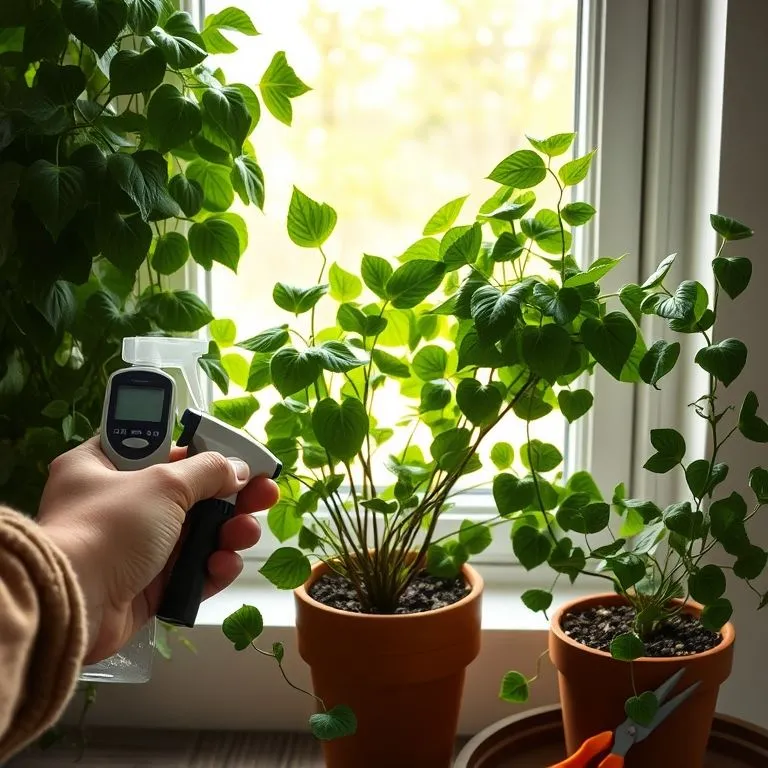
- Fine-mist sprayer (for treatments, not humidity)
- Use for insecticidal soap or neem on leaf undersides. Spray in the evening to prevent leaf burn.
- For gentle training, pair with soft plant clips and a slim trellis to encourage compact growth.
- Clean, sharp shears + hygiene
- Sterilize blades with alcohol before pruning.
- Yellow sticky cards near the plant help you catch early pest activity.
With these quick wins and tools, indoor ivy plants respond fast—firmer leaves, tighter nodes, and a fuller silhouette that actually stays that way.
Indoor ivy plant types: choose the right vine for your space
Not all indoor ivy plants behave the same. Pick the right species and cultivar for your light, temperature, and style, and those vines stay dense instead of stringy. In this guide, we’ll match indoor ivy plants to real-life rooms—and your goals (including how to grow ivy indoors on a wall)—so you spend less time troubleshooting and more time enjoying lush foliage. Bonus: we’ll touch on English ivy indoor benefits that go beyond the classic look.
English, Algerian, Persian, Irish: growth habits and looks
- English ivy (Hedera helix)
- Look: Small to medium, lobed leaves; huge range of shapes and colors.
- Habit: Dense, branching growth with tighter internodes—great for topiaries and compact trellises.
- Indoors sweet spot: Bright, indirect light and cooler nights.
- Popular picks: ‘Ivalace’ (curly, glossy), ‘Needlepoint’ (fine-lobed), ‘Glacier’ (silver variegation), ‘Gold Child’ (golden edges).
- Why choose it: Versatile, tons of forms; easy to train. English ivy indoor benefits include simple shaping and classic, refined texture.
- Algerian ivy (Hedera algeriensis / canariensis)
- Look: Big, bold leaves; glossy and dramatic.
- Habit: Faster, more vigorous; longer internodes—needs strong light to avoid legginess.
- Indoors sweet spot: Warm, bright rooms; appreciates extra humidity.
- Popular pick: ‘Gloire de Marengo’ (cream-and-gray variegation).
- Why choose it: Quick coverage and a statement look; excellent for larger trellises.
- Persian ivy (Hedera colchica)
- Look: Very large, leathery leaves; substantial presence.
- Habit: Moderate to fast; sturdy stems that handle training well.
- Indoors sweet spot: Bright, indirect light; tolerates drier air better than fine-leaved types.
- Popular pick: ‘Dentata Variegata’ (aka ‘Sulphur Heart’) with broad cream margins.
- Why choose it: Thick leaves resist wilting; ideal for bold, architectural displays.
- Irish ivy (Hedera hibernica)
- Look: Similar to English but typically larger leaves and bolder growth.
- Habit: Vigorous climber; can look leggy if light is weak.
- Indoors sweet spot: Bright, cool locations; needs structure to shine.
- Why choose it: Fast vertical greening when you have the light and space.
Tip for stylists: Planning how to grow ivy indoors on a wall? English ivy delivers crisp, compact patterns on grids, while Algerian and Persian cover area faster on sturdy supports.
Best indoor varieties by light and humidity
Match the plant to the room, and indoor ivy plants reward you with tighter nodes and richer color.
- Bright, indirect light (east window; south/west with sheer)
- Variegated English: ‘Glacier’, ‘Gold Child’, ‘Eva’—hold color and stay compact.
- Bold statement: Algerian ‘Gloire de Marengo’ or Persian ‘Dentata Variegata’ for larger leaves and faster coverage.
- Medium light (bright north window; a few feet back from east)
- Solid green English: ‘Needlepoint’, ‘Ivalace’, ‘Shamrock’—more chlorophyll means better performance and less stretch.
- Pro move: Add a small trellis or moss pole to guide growth and prevent flopping.
- Warm, drier apartments
- Thick-leafed options (Persian, Algerian) shrug off dry air better. Increase airflow and inspect weekly to deter spider mites.
- Cooler rooms or seasonal swings
- English ivy thrives with cooler nights (around 50–60°F/10–16°C). Rotate weekly to keep growth even.
Quick design note: If vertical greening is the goal, choose sturdier-stemmed Algerian or Persian for quick coverage; if you want intricate patterns and petite leaves, go with compact English cultivars.
Variegated vs. green leaves: vigor, light needs, and color
- Variegated forms (cream, gold, or silver patterns)
- Light needs: Brighter conditions to prevent fading or reversion.
- Growth: Slightly slower due to less chlorophyll—expect tighter maintenance pruning.
- Color care: In low light, variegation can dull; in hot direct sun, edges may scorch behind glass.
- Solid green forms
- Light needs: More forgiving in medium light (still aim for bright indirect).
- Growth: Typically more vigorous; easier to fill a trellis or topiary quickly.
- Maintenance: Prune tips often to keep internodes short and the silhouette full.
Bottom line: If your space is bright and you love pattern, variegated English cultivars shine. If light is modest or you want faster fill, solid green types deliver. With the right match, indoor ivy plants stay lush, compact, and camera-ready.
Benefits and trade-offs of keeping indoor ivy plants
Indoor ivy plants bring a lot to the table—texture, movement, and that timeless “living architecture” vibe. But they also come with responsibilities. If you understand both sides, you can style confidently, protect pets, and keep your vines lush without surprises.
English ivy indoor benefits: air, style, and wellness claims
- Air and freshness (with nuance)
- You’ve probably seen the “plants clean air” headlines. Lab studies suggest foliage can capture some pollutants, but in real homes the effect is modest. Good ventilation and regular dusting do more. Still, clean leaves plus steady airflow can make indoor ivy plants feel fresher in lived-in spaces.
- Style that works anywhere
- Trailing strands soften hard lines on shelves, mantels, and bookcases. For vertical drama, explore how to grow ivy indoors on a wall using a slim trellis or grid. The result reads like a living art piece—great in small apartments where floor space is tight.
- Micro-wellness and focus
- Greenery can support calm, focus, and visual comfort. English ivy’s tidy leaf shapes read “orderly,” which pairs well with minimalist rooms and home offices.
- Low-input, high-impact
- With consistent Indoor ivy plants care—bright, indirect light and a soak–drain watering rhythm—ivy offers big visual payoff without daily fuss.
Bonus tip: Among indoor ivy plant types, variegated English cultivars bring sparkle to neutral rooms but need brighter light to hold their color.
Allergens, toxicity, and pet safety—how to place ivy wisely
- Toxicity
- Hedera (ivy) contains saponins; ingestion can cause GI upset in pets and people. Wear gloves when pruning if you have sensitive skin.
- Pet and child safety
- Keep trailing vines out of reach: use hanging planters, high shelves, or wall grids mounted above grab level. Secure loose strands with soft clips so nothing dangles temptingly.
- Allergens and dust
- Ivy rarely flowers indoors, but leaves can collect dust and harbor mites if neglected. Wipe foliage monthly and ensure airflow to reduce triggers for sensitive folks.
- Surfaces and walls
- Don’t let aerial rootlets stick directly to painted walls. Train vines on a removable trellis or command hooks to protect finishes while you explore how to grow ivy indoors on a wall.
- Pest pressure
- Dry air favors spider mites. A weekly leaf rinse and quick inspections (especially under leaves) are simple Indoor ivy plants care habits that prevent flare-ups.
Placement protocol (quick checklist):
- Out of reach of pets/kids
- Not brushing high-traffic areas
- Mounted on supports, not directly on walls
- Easy access for watering and pruning
Best rooms and placements where indoor ivy plants thrive
Match the room to the plant’s needs and you’ll get compact, healthy growth.
- Bright bathrooms
- Natural humidity keeps leaves perky. Use an east- or bright north-facing window and a small trellis to train vines vertically.
- Kitchens with gentle morning light
- Place 2–4 feet from an east window; avoid hot, greasy zones near the stove. A narrow wall grid turns backsplash-adjacent space into living decor.
- Home offices and living rooms
- Great sightline plant. Position 3–6 feet from a south/west window behind a sheer curtain, or closer to a bright north window. Rotate the pot weekly for even growth.
- Bedrooms
- If you’re dust-sensitive, choose a placement you can reach easily for monthly leaf-wiping. A compact trellis above a nightstand keeps vines tidy and off bedding.
- Hallways and stair landings
- Use supplemental grow lights if natural light is weak. Wall-mounted planters keep footpaths clear.
Light reality check: Does indoor ivy like full sun? Not really. It thrives in bright, indirect light. Gentle morning sun is fine; strong midday or afternoon sun behind glass can scorch, especially on variegated leaves. Aim for soft, defined shadows and keep a sheer curtain between ivy and intense rays.
When you balance these benefits and trade-offs, indoor ivy plants become low-maintenance showpieces—safe, stylish, and tailored to your space.

Light that prevents lanky stems and leaf drop
Light is the lever that changes everything. Give indoor ivy plants the right intensity and duration, and those stretched internodes tighten, leaves hold their color, and drop slows to a crawl. Miss the mark, and vines chase windows, variegation fades, and tips crisp. Let’s dial in a simple, repeatable setup you can maintain without guesswork.
Bright-indirect sweet spot: foot-candles and quick tests
Indoor ivy plants are shade-tolerant, not shade-loving. They thrive in bright, indirect light—plenty of photons, but softened before they hit the leaves.
- Targets to aim for
- 100–300 foot-candles (≈1,000–3,000 lux) for 8–12 hours daily.
- Variegated Indoor ivy plant types: stay on the higher end to keep color crisp.
- Solid-green types: perform well in the mid-range and stretch less in moderate light.
- Two quick tests you can do right now
- Hand-shadow test: At midday, hold your hand above the plant. A soft, defined shadow = bright indirect. Fuzzy/no shadow = too dim; sharp, high-contrast shadow = direct sun.
- Phone lux app: Take readings at leaf height across the day. Average 1,500–2,500 lux and you’re in the sweet spot.
- Signs you’re off-target (and fast fixes)
- Too dim: long gaps between leaves, vines lean toward the window.
- Fix: move 1–3 feet closer, swap to a lighter curtain, or add a mirror/white wall behind the plant to bounce light.
- Too intense: crispy edges or bleached patches, especially on variegated foliage.
- Fix: pull back 2–4 feet, add a sheer, or shift off-axis from the window so leaves don’t meet direct rays.
- Too dim: long gaps between leaves, vines lean toward the window.
- Small setup details that pay off
- Rotate the pot 90° weekly for even growth.
- Keep leaves dust-free to maximize usable light.
- Place the plant so the top foliage sees light—not just the trailing ends.
Pro tip: If you’re exploring how to grow ivy indoors on a wall, ensure the entire trellis plane receives similar light. A single window often lights one side; consider two light sources or a reflective backing for even coverage.
Window orientation guide: north, east, south, west
Your windows set the baseline. Match placement to orientation and season, and indoor ivy plants will reward you with compact, healthy growth. (In the southern hemisphere, flip north/south guidance.)
- North-facing
- Light profile: Soft and steady, but weaker—great for maintenance, not recovery.
- Placement: 0–2 feet from the window; choose solid-green English ivy for best results.
- Seasonal note: In winter, supplement with a grow light to prevent legginess.
- East-facing
- Light profile: Gentle morning sun, then bright indirect—ideal for most Indoor ivy plants care routines.
- Placement: 1–3 feet back with a sheer if you get strong summer glare.
- Best for: Variegated English cultivars that need extra brightness without harsh heat.
- South-facing
- Light profile: Strongest, longest sun—powerful but can scorch behind glass.
- Placement: 3–6 feet back, or to the side of the window; always use a sheer curtain.
- Tactic: Raise the plant so the foliage sits just below the sunbeam path, catching reflected light rather than direct rays.
- West-facing
- Light profile: Hot afternoon sun—short, intense bursts.
- Placement: 4–6 feet back with a sheer; watch for leaf-edge scorch in summer.
- Tip: Move closer in winter when intensity drops.
Micro-adjusters that matter
- Wall color: White and light neutrals bounce light; dark walls absorb it.
- Window treatments: Sheers reduce intensity by ~30–50% without killing brightness.
- Obstructions: Exterior awnings, trees, or deep sills cut light—measure lux at leaf height to confirm.
Does indoor ivy like full sun? Brief, gentle morning sun is fine, but sustained midday or afternoon sun will stress most indoor ivy plants. Aim for consistent bright-indirect, and you’ll prevent both lanky stems and leaf drop.
When to add grow lights for indoor ivy plants
If your readings stay below target or your schedule doesn’t match daylight hours, grow lights make results predictable—and they’re easier than you think.
- How to know it’s time
- Lux averages below ~1,000 at leaf height for most of the day.
- Persistent stretch between nodes, fading variegation, or slow recovery after pruning.
- North windows in winter, or deep rooms where sunlight never reaches the foliage plane.
- Simple, effective setup
- Light type: Full-spectrum LED (4,000–6,500K).
- Intensity: Position 12–18 inches above the top leaves for compact growth.
- Duration: 12–14 hours daily on a timer; shorten to 10–12 in high-summer.
- Coverage: For wall-trained displays, run a bar light parallel to the trellis or use two fixtures for even spread.
- Placement playbook
- Measure your current lux at leaf height.
- Mount the fixture, then recheck—tweak height until you hit 1,500–2,500 lux.
- Set a timer and keep the routine steady for 3–4 weeks before judging results.
- Common mistakes to avoid
- Lights too close: bleached tips or heat stress. Raise or dim.
- Inconsistent schedule: growth gets leggy again. Use a timer.
- Lighting only the top: lower vines stall. Angle the light or add a second bar for even coverage.
With the right light profile—tailored to your windows and supported by LEDs when needed—indoor ivy plants stay compact, hold their variegation, and resist leaf drop. Pair this with consistent Indoor ivy plants care (smart watering and regular pruning), and you’ll keep those vines dense and photogenic year-round.
Watering and humidity that keep leaves perky
If watering feels like guesswork, you’re not alone. The right rhythm keeps indoor ivy plants firm, glossy, and resilient—no crispy tips, no mushy stems. Let’s make moisture predictable.
Soak–drain–dry rhythm to avoid rot and crisping
Indoor ivy plants prefer a full drink followed by a clear dry-down—not constant dampness.
- What to do
- Water thoroughly until 15–20% runoff.
- Always empty the saucer within 10 minutes.
- Wait until the top 1–2 inches of soil are dry before watering again.
- How to read the plant (fast cues)
- Droopy + pot feels heavy = likely overwatered.
- Droopy + pot feels very light = likely underwatered.
- Crispy edges and curling leaves = thirst; yellowing, mushy stems = too wet.
- Tools that help
- Finger test to first knuckle, then confirm with pot weight.
- Moisture meter as a second opinion—calibrate it against your finger test for a week.
Pro tip: Bottom-water hydrophobic soil (when it shrinks from the pot) by resting the pot in a tray for 10–15 minutes, then drain. This rehydrates evenly without overdoing it.
Humidity targets and easy boosts (trays, grouping, meters)
Most indoor ivy plants look their best at 40–60% RH. Variegated cultivars appreciate the higher end.
- Quick wins
- Group plants to create a microclimate.
- Use a wide pebble tray filled with water (pot sitting on the pebbles, not in the water).
- Run a small cool-mist humidifier to maintain 45–50% RH in dry seasons.
- What to skip
- Constant misting doesn’t raise room humidity meaningfully and can invite mildew. Use a fine sprayer mainly for pest treatments, not daily misting.
- Measure, don’t guess
- Place an inexpensive hygrometer near leaf height and adjust placements until readings stabilize.
Seasonal adjustments: how to read soil moisture correctly
Your watering cadence should follow light and temperature.
- Spring–summer
- Brighter days = faster drying. Expect to water more often.
- Feed lightly (details below) only when the mix is drying on schedule.
- Fall–winter
- Shorter days = slower drying. Stretch intervals; don’t follow a fixed calendar.
- Keep ivy off cold drafts and away from heaters that desiccate leaves.
- Smart baselines
- After a thorough soak, note how many days it takes until the top inch dries. That’s your starting interval. Re-check whenever light or room conditions change.
Soil, pots, and repotting to support sturdy indoor ivy plants
Roots breathe. Give them air and steady drainage, and indoor ivy plants respond with tighter internodes and upright leaves.
Fast-draining mix recipe and why it stops droopy growth
Aim for structure that holds moisture without staying soggy.
- Recipe (by volume)
- 2 parts high-quality, peat-free potting mix
- 1 part perlite or pumice
- 1 part fine orchid bark (or coarse pine bark)
- Optional: a tablespoon of horticultural charcoal per 6-inch pot
- Why it works
- Air pockets prevent root suffocation (a common cause of droop).
- Bark resists compaction; perlite speeds drainage.
- Target pH: roughly 6.0–7.0 for steady nutrient uptake.
Pot size/materials that prevent waterlogging and stress
Choose containers that match your watering style.
- Terra-cotta: Wicks moisture—great if you tend to overwater.
- Plastic/ceramic (with drainage): Retains moisture—use if you underwater.
- Size up only 1–2 inches when repotting. Oversized pots hold too much water.
- Use a nursery pot inside a cachepot for easy watering and mess-free draining.
Repot timing and root health checkpoints
- When to repot
- Roots circling the bottom or pushing through the drain holes
- Soil dries either in a day (too rootbound) or never (compacted)
- Best season: late winter through early spring
- Health check
- Healthy roots: white/tan, firm, earthy smell.
- Rot: brown/black, mushy, sour smell—trim to clean tissue and refresh the mix.
- Repot steps
- Water lightly the day before.
- Tease roots; prune up to 10–15% if tightly circling.
- Replant at the same depth in fresh, airy mix; water to settle.
Feeding, pruning, and training for dense indoor ivy plants
Nutrition and shape control work together. Feed for steady growth, then prune and train to keep indoor ivy plants compact and lush.
Fertilizer timing and dosage to build compact growth
- What to use
- Balanced liquid fertilizer with a gentle NPK (e.g., 3-1-2 or 10-10-10), plus micros.
- When and how
- Spring–summer: 1/4–1/2 strength every 4–6 weeks.
- Fall–winter: hold fertilizer unless using grow lights and seeing active growth.
- After repotting: wait 3–4 weeks before feeding.
- Salt management
- Flush the pot with plain water every 6–8 weeks to prevent buildup and tip burn.
Pruning and pinching to stop leggy stems and boost branching
- Technique
- Pinch soft tips right above a leaf node to break apical dominance and spark side shoots.
- Stagger cuts across vines for a layered, natural silhouette.
- Hygiene
- Sterilize shears with alcohol before and after use.
- Bonus
- Propagate healthy cuttings in water or a perlite/peat-free mix to thicken the pot.
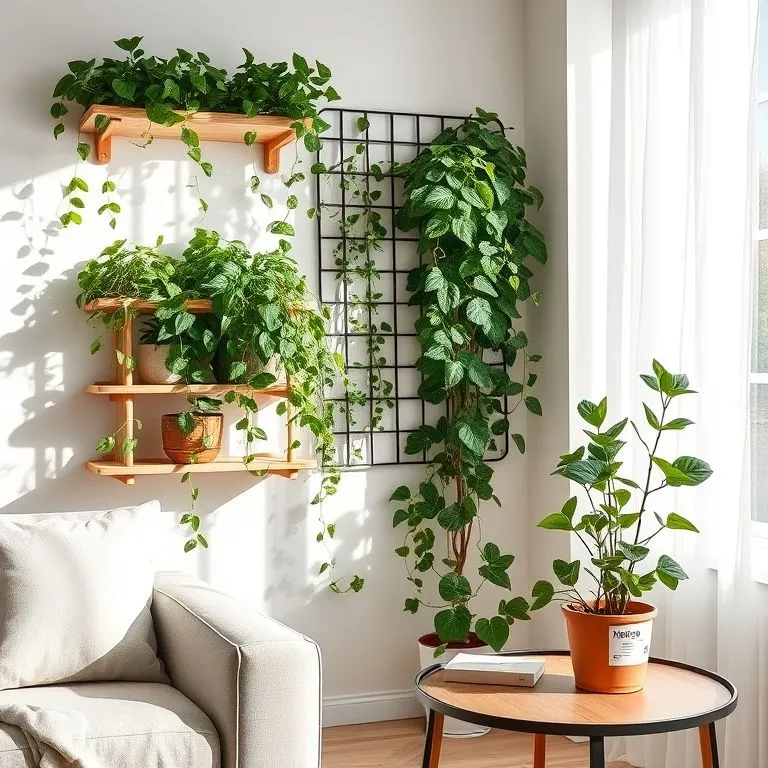
How to grow ivy indoors on a wall: trellises, clips, and grids
Turn your ivy into living art without risking your paintwork.
- Choose your support
- Removable wall grid, thin wire trellis, or a set of Command hooks with soft plant ties.
- Mount and map
- Install supports a few inches off the wall for airflow.
- Plan a simple pattern (zigzags or vertical lanes) to guide even coverage.
- Train gently
- Clip vines loosely; never force a bend. Add new clips every 4–6 inches of growth.
- Ensure the entire trellis plane sits in bright, indirect light for compact nodes.
- Maintenance
- Wipe leaves monthly, prune strays, and re-clip as vines lengthen.
Pests and diseases: prevent, spot, and treat fast
Consistency beats emergencies. A weekly 60-second check keeps indoor ivy plants clean and resilient.
Spider mites, scale, mealybugs: early signs and safe treatments
- Spot the problem
- Spider mites: fine webbing, speckled leaves.
- Scale: brown bumps; sticky honeydew.
- Mealybugs: cottony clusters in leaf axils.
- Immediate actions
- Isolate the plant and rinse foliage (especially undersides).
- Spray insecticidal soap or 1–2% neem oil, hitting nodes and leaf backs.
- Repeat every 7 days for 3 rounds; rotate products if needed.
- Prevention
- Boost airflow, keep leaves dust-free, and use yellow sticky cards nearby for early alerts.
Mildew and leaf spot: airflow, spacing, and sanitation
- Telltale signs
- Powdery mildew: white, dusty film on leaves.
- Leaf spot: tan/brown lesions with yellow halos.
- What to do
- Remove affected leaves; sterilize shears between cuts.
- Increase spacing and airflow (small fan on low, indirect).
- Water the soil, not the foliage; avoid late-evening splashes.
- If needed, apply a houseplant-safe bio-fungicide (e.g., Bacillus-based) per label.
Root rot vs. drought stress: how to tell and recover
- Root rot (too wet)
- Symptoms: yellowing, wilting despite wet soil; sour smell; mushy roots.
- Fix: unpot, trim to healthy roots, repot in airy mix, and resume a soak–drain–dry rhythm.
- Drought stress (too dry)
- Symptoms: crispy edges, leaf curl, very light pot.
- Fix: bottom-water to rehydrate, then water thoroughly and adjust interval.
With a clear watering rhythm, breathable soil, and simple training, indoor ivy plants stay dense and photo-ready. Layer these habits into your Indoor ivy plants care routine, and your vines will reward you with steady growth and fewer surprises year-round.
Buying guide: Indoor Ivy Plants for sale and what to look for
Shopping smart saves you months of frustration. Whether you’re browsing Indoor Ivy Plants for sale in-store or online, a quick health check ensures you bring home vigorous, pest-free vines that adapt quickly to your space.
Healthy-plant checklist in-store and online
- Foliage
- Even color with no widespread yellowing or limp leaves.
- Minimal damage: skip plants with large brown patches or distorted growth.
- Variegated types should show crisp patterning (not faded or reverting to green).
- New growth
- Look for small, firm new leaves at vine tips—signs the plant is actively growing.
- Pests and disease
- Inspect leaf undersides and nodes for webbing (mites) or cottony clusters (mealybugs).
- Sticky residue (honeydew) can indicate scale—pass on those.
- Roots and soil
- If possible, slide the nursery pot up: white/tan roots = healthy. Sour smell = trouble.
- Soil should be slightly moist, not soupy; no algae crust on top.
- Online orders
- Check seller photos for multiple angles and close-ups.
- Read reviews for packaging quality and live-arrival guarantees.
- Avoid extreme-weather shipping; request heat/cold packs when needed.
Tip: If you’re choosing among Indoor ivy plant types, compact English cultivars typically adapt best to low-draft, bright‑indirect spots.
Quarantine and acclimation to avoid pests and shock
Give your new plant a soft landing—even the healthiest ivy needs time to adjust.
- Quarantine for 10–14 days in a bright, separate area away from other plants.
- Inspect twice weekly; rinse foliage in the sink to remove dust and hitchhiking pests.
- Hold off on repotting for 2–3 weeks unless the soil is clearly compacted or the roots are rotting.
- Gradually align light with the final placement (move closer to the window in small steps).
- Resume your regular Indoor ivy plants care routine only after growth looks steady.
Value vs. premium cultivars and where to buy
- Value options
- Chain garden centers and big-box stores: budget-friendly, common cultivars, variable care.
- Best pick: sturdy, solid-green English ivy in 4–6″ pots—reliable and easy to shape.
- Premium options
- Specialty nurseries or reputable online shops: well-rooted, named cultivars; better cultural notes.
- You’ll find tighter growth, unique variegation, and plants trained on quality trellises.
- Where to buy
- Local nurseries (inspect in person), trusted online sellers with healthy return policies, or plant swaps for mature, acclimated cuttings.
Styling ideas to showcase indoor ivy plants at home
Design is half the fun. With a few thoughtful placements and supports, indoor ivy plants become living architecture—clean lines, soft texture, and movement that draws the eye.
Hanging baskets, shelves, and wall displays that thrive
- Hanging baskets
- Place near bright, indirect light (east window or a few feet back from south/west behind a sheer).
- Use lightweight, airy soil so the basket dries evenly between waterings.
- Shelves and mantels
- Let vines cascade, but keep the top foliage near the light source—rotate weekly for symmetry.
- Add a narrow trellis or discreet clips behind the pot to prevent droop.
- Wall displays
- Curious about how to grow ivy indoors on a wall? Mount a removable grid or wire trellis 1–2 inches off the wall for airflow, then guide vines with soft clips.
- Light evenly across the display—two light sources or a reflective backdrop stop one-sided growth.
Companion plant pairings for texture and contrast
- Contrast shapes
- Pair ivy’s lobed leaves with upright Sansevieria for structure or with round-leaved Pilea for softness.
- Shareable conditions
- Peperomia, ferns, and pothos enjoy similar bright-indirect light and moderate humidity.
- Color cues
- Variegated ivy pops beside deep-green ZZ or burgundy rubber plants—classic, modern palette.
Design note: Use odd-number groupings (3s and 5s) and mix pot textures (matte ceramic, terra-cotta) for a curated look.
Pet-safe placement and simple supports
- Safety first
- Ivy can be toxic if ingested. Keep trailing vines out of reach using high shelves, hanging planters, or wall grids above grab height.
- Smart supports
- Choose soft plant ties and gentle clips; avoid adhesives directly on leaves or painted walls.
- Practical access
- Place where you can easily water, prune, and dust leaves—routine care keeps styling crisp and maintenance low.
Quick FAQ & cheat sheet for Indoor ivy plants care
A fast-reference you can screenshot. If you master these basics, indoor ivy plants stay compact and resilient.
Is ivy a good indoor plant?
Yes—when you offer bright, indirect light, breathable soil, and consistent watering. Ivy is easy to train, responds well to pruning, and shines in small spaces. Do note the toxicity to pets and the need for regular pest checks.
Which ivy is best for indoors?
- Most forgiving: compact English ivy cultivars (small leaves, tight internodes).
- For brighter rooms: Algerian or Persian ivy give bold, large leaves with quick coverage.
- For medium light: solid-green English forms outperform variegated ones.
Match your pick to light first—among Indoor ivy plant types, light fit predicts success.
Why does my indoor ivy keep dying?
Top culprits:
- Low light leading to leggy, weak growth
- Overwatering in dense soil (root rot) or underwatering in hot, dry rooms
- Chronic dry air and poor airflow (mites love this)
- Heat blasts or cold drafts near doors, vents, or radiators
Quick fix: improve light (100–300 foot-candles), switch to an airy mix, adopt a soak–drain–dry rhythm, increase airflow, and prune to encourage branching.
Does indoor ivy like full sun?
Not for long periods. Gentle morning sun is fine, but sustained midday or afternoon sun behind glass can scorch. Aim for bright-indirect light across the day.
Cheat sheet (copy this)
- Light: bright-indirect, 100–300 fc (≈1,000–3,000 lux), 8–12 hours/day
- Water: soak, drain, then wait until top 1–2″ are dry
- Humidity: 40–60% RH; rinse leaves monthly; boost airflow
- Soil: fast-draining mix with perlite/pumice and bark; pot with drainage
- Feed: 1/4–1/2 strength in spring–summer; pause after repotting
- Train: prune tips, guide vines on a trellis; rotate weekly
With these habits in place, indoor ivy plants become reliable, design-forward companions—easy to style, easier to keep healthy.
Conclusion: Make indoor ivy plants thrive year‑round
If you’ve made it this far, you know leggy, droopy vines aren’t a life sentence. With a few consistent habits—bright, indirect light, a soak–drain–dry watering rhythm, breathable soil, and gentle training—indoor ivy plants respond quickly: tighter nodes, firmer leaves, richer color.
Think back through the playbook you’ve built here. You learned how to read light (and your plant’s shadows), how to reset moisture without guesswork, and how an airy mix plus the right pot keeps roots vigorous. You matched indoor ivy plant types to real rooms and routines, then explored how to grow ivy indoors on a wall for a clean, architectural display. You even set up simple guardrails for pests and drafts, so indoor ivy plants don’t slip backward.
Ready to lock it in? Use this 5‑minute weekly routine:
- Rotate the pot 90° and dust the leaves.
- Test the top inch of soil; water only when it’s truly dry, then drain completely.
- Pinch a few tips to spark branching; re-clip vines to their support.
- Scan leaf undersides for mites or mealybugs and spot-treat early.
- Recheck light at leaf height; adjust distance or add a timer‑controlled grow light if needed.
As your setup stabilizes, you can get creative. Prefer crisp patterns and compact growth? English ivy indoor benefits include classic form and easy shaping on small trellises. Want fast coverage and bold texture? Choose sturdier cultivars and give them even light across the whole display. And if you’re craving that statement wall, plan your grid, map the vines, and keep the entire plane in the bright‑indirect sweet spot—this is Indoor ivy plants care that turns design ideas into living art.
So, what’s your next move—refresh the soil, remap the light, or start training a few vines up a slim grid? Whichever step you choose, you’re one small tweak away from healthier indoor ivy plants and a home that feels instantly greener.
Dennis P. Hansen
Dennis P. Hansen is a home gardener with a genuine passion for plants and the simple pleasure of growing them. He enjoys caring for houseplants, succulents, and other plants at home while continually learning from everyday gardening experiences. Dennis likes to share practical plant care tips, useful observations, and simple solutions that can help others grow healthier plants. He believes that caring for plants is a rewarding journey and that there is always something new to learn along the way.