
Flower Garlic Plant: Care Guide & Growing Tips


Table of Contents
Garlic’s striking blooms offer more than visual appeal-they signal a plant ready to deliver both flavor and health advantages. Understanding its botanical profile, from distinctive leaves and flowering heads to underground bulbs, helps gardeners optimize soil, light, and moisture conditions for robust growth. This overview examines propagation techniques, routine care practices, and harvest timing that safeguard quality, while highlighting popular cultivars prized for culinary zest and medicinal properties.
Introduction to Flower Garlic Plant

Flower garlic (Allium sativum) produces both edible scapes and ornamental blooms from the same plant, making it a dual-purpose crop for culinary and landscape use. A single garlic plant produces 1 scape and 1 umbel per season. This predictable output helps gardeners plan both their harvest schedule and their garden design with confidence.
These plants thrive across USDA zones 3 through 9. Hardneck varieties like German Red perform well in Colorado where cool nights encourage strong scape development. Softneck types such as Inchelium Red adapt beautifully to California conditions that favor larger bulb formation.
Scapes reach their prime for cutting at 6 to 8 weeks after spring growth begins. Bulbs require a longer cycle and reach full size at 16 to 20 weeks. This staggered timeline allows gardeners to enjoy fresh garlic flavor early in the season while waiting for mature heads to develop underground.
The plant combines practical kitchen uses with visual appeal. Garlic scapes add mild flavor to stir-fry dishes and pesto recipes. Concurrently, the umbel opens into clusters of small flowers that attract pollinators to garden beds. Both hardneck and softneck types fit into mixed plantings where edible crops and ornamentals share space.
Botanical Classification
Allium sativum sits in family Amaryllidaceae (formerly Liliaceae), a reclassification based on 2009 APG III system. This placement reflects current botanical understanding of how the garlic plant relates to other flowering species. Garlic shares close relationships with many other plants in this family.
The genus Allium contains the garlic plant, while the specific species is sativum. The subfamily Allioideae further defines its botanical position. Current accepted taxonomy from the Royal Botanic Gardens Kew confirms these classifications for all Allium species.
Garlic shares tribe Allieae with onions, leeks, and chives. This grouping helps gardeners understand how different plants share growth patterns and care needs. Flowering garlic belongs to this same botanical tribe.
These relationships explain why garlic plants display similar leaf structures and flower forms as their relatives. The classification system continues to evolve as scientists study plant genetics more closely. Understanding this taxonomy helps with proper garden planning and species identification.
Scientific Name and Family
The accepted binomial is Allium sativum L., published by Carl Linnaeus in Species Plantarum 1753. The authority L. indicates Linnaeus as the original describer of this species. Garlic plant carries this scientific name across all botanical references and garden catalogs.
Current family placement remains Amaryllidaceae for the garlic plant. The 2016 World Checklist of Selected Plant Families confirms approximately 260 Allium species exist worldwide. This comprehensive listing helps gardeners track diversity within the genus.
One synonym for hardneck types is Allium ophioscorodon. Different garlic varieties may carry additional common names in various regions. Garlic bulb and garlic clove represent the common terms most gardeners recognize.
These scientific designations remain consistent in botanical literature and research publications. Proper naming helps distinguish garlic from similar looking plants in the same family. Gardeners benefit from understanding these classifications when selecting specific varieties for their growing conditions.
Distinguishing Features
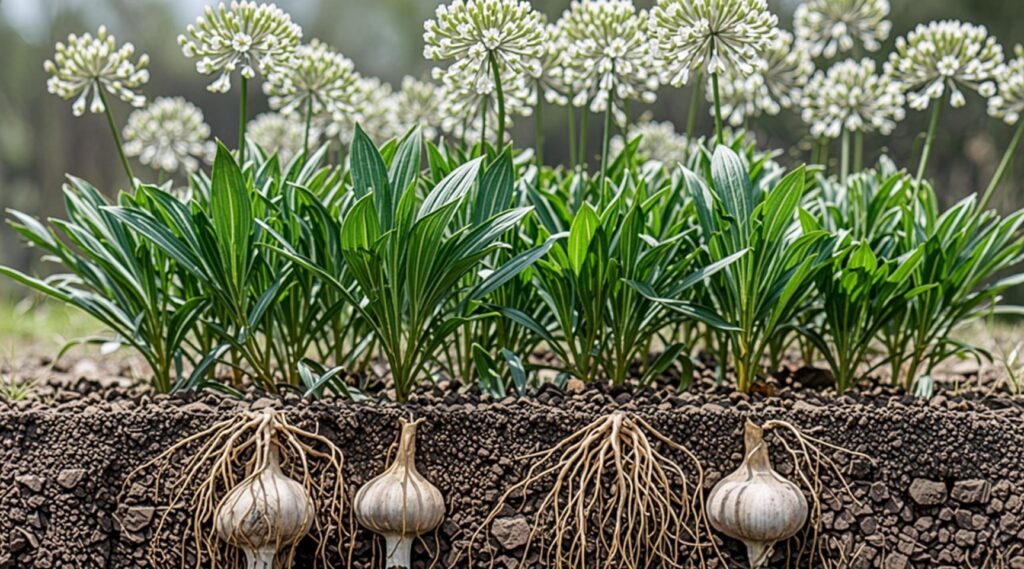
Garlic is identified by its single hollow scape that curls before straightening and terminates in a 2-3 inch spherical umbel containing 50-200 flowers. This structure sets garlic apart from many other garden plants. Garlic scape remains one of the most recognizable features during the growing season.
Three concrete identifiers help distinguish this species from others. Scape length reaches 24-36 inches in hardnecks only. Umbel diameter measures 1.5-3 inches with a papery spathe that splits open. Flowers appear star-shaped with six tepals ranging from white to pinkish-purple.
Unlike onions, garlic rarely produces viable seed. Garlic umbel typically contains bulbils instead of fertile seeds in most varieties. This characteristic affects how gardeners propagate their plants over multiple seasons.
These features help identify garlic throughout its growth cycle from early spring through harvest time. The combination of hollow scapes and distinctive flower clusters makes species recognition straightforward for most gardeners. Proper identification supports successful cultivation and variety selection in home gardens.
Plant Morphology
Garlic morphology is divided into three distinct sections: foliage, reproductive stem, and storage bulb, each with specific measurable traits. The garlic plant represents a herbaceous perennial monocot that develops distinct structures throughout one complete growth cycle.
Height typically ranges from 12 to 36 inches depending on variety and growing conditions. Three main structures define the plant architecture at maturity.
Flat or keeled leaves emerge from the base while a central scape or pseudostem supports the reproductive phase. The compound bulb forms underground as the primary storage organ.
Each plant produces one bulb per season through vegetative processes. This single storage structure contains all cloves that will serve as next season planting material.
Leaves and Stem
Garlic produces 6-12 linear leaves per plant, each 8-24 inches long and 0.5-1 inch wide with a distinct midrib. These narrow foliage structures maximize light capture while minimizing water loss.
Leaf arrangement is alternate and basal with each new leaf emerging from within the previous one. Cross-section characteristics vary by type with flat profiles in softnecks and keeled shapes in hardnecks.
The stem is actually a pseudostem formed by overlapping leaf sheaths until flowering occurs. This structure provides support without a true woody trunk.
Chlorophyll content drops noticeably two weeks before harvest as the plant redirects energy into bulb development. This natural decline signals optimal timing for lifting the crop.
Flowers and Inflorescence
The garlic inflorescence is a terminal umbel 1.5-3 inches across containing 20-200 individual flowers on pedicels 0.2-0.8 inches long. This compact arrangement protects developing reproductive structures efficiently.
Four specific floral parts characterize each bloom. Tepals measure 0.1-0.2 inches while stamens display purple anthers. The pistil features a superior ovary and nectar glands appear at the tepal base.
Flowering occurs 60-80 days after emergence in plants allowed to reach reproductive maturity. Most cultivated garlic remains sterile and produces bulbils instead of seed through this process.
The scape flower or garlic bloom serves primarily as an ornamental feature in modern varieties. Hardneck types develop more pronounced garlic scapes compared to softneck selections.
Bulbs and Roots
A mature garlic bulb consists of 4-20 cloves arranged around a central basal plate, each clove a modified axillary bud. This structure represents the edible storage organ harvested for culinary use.
Bulb diameter reaches 1.5-3 inches with individual clove weight ranging from 2-8 grams. Dry matter content falls between 35 and 42 percent in properly cured specimens.
The root system consists of fibrous adventitious roots 4-8 inches long emerging from the basal plate. These fine roots absorb nutrients and anchor the plant during active growth.
Sulfur compounds concentrate in the clove interior creating the characteristic pungent aroma. These compounds contribute to both flavor development and the medicinal properties associated with garlic.
Growing Conditions
Garlic requires specific environmental parameters: soil pH 6.0-7.5, minimum 6 hours direct sun, and 30-60 days vernalization below 50 degrees Fahrenheit. This cool-season crop is typically planted in autumn months for a summer harvest cycle. The garlic plant develops best when all environmental factors align properly from the start.
Three critical factors determine successful outcomes for any garlic variety. Soil texture and nutrient levels set the foundation for root development. Light duration and temperature range control bulb formation and size. Moisture consistency maintains steady growth without creating stress conditions.
The garlic plant responds directly to these growing conditions throughout its life cycle. Proper preparation before planting prevents common issues later in the season. Each factor works together to support healthy foliage and strong bulb development.
Understanding these requirements helps gardeners select appropriate varieties for their location. Different garlic types have varying tolerance levels for temperature fluctuations. Meeting these basic needs produces better yields and larger individual bulbs.
Soil Requirements
Optimal garlic soil is a well-drained sandy loam with 3-5 percent organic matter and available sulfur above 20 ppm. This texture allows roots to penetrate easily while preventing water accumulation around the garlic bulb. Good drainage protects against rot issues that can destroy entire crops.
Four specific nutrient targets support vigorous growth in the garlic plant. Target soil pH between 6.2 and 6.8 for best nutrient uptake. Apply nitrogen at 80 to 120 pounds per acre before planting. Potassium levels should reach 150 to 200 pounds per acre. Sulfur content needs 20 to 40 pounds per acre for proper flavor development.
Adding two inches of compost or aged manure improves soil structure and nutrient availability. Complete a soil test 4 to 6 weeks before planting to determine current nutrient levels. An example application uses 10-10-10 fertilizer at 300 pounds per acre where tests indicate need.
These amendments create fertile conditions that support the garlic root system throughout the growing period. Organic matter helps retain moisture while allowing excess water to drain. The right soil balance leads to larger garlic heads at harvest time.
Light and Temperature
Garlic requires full sun (minimum 6-8 hours) and a cold period of 30-60 days at 32-50 degrees Fahrenheit for proper bulb formation. These conditions trigger the biological processes that convert foliage growth into bulb development. Without adequate cold exposure, bulbs remain small and underdeveloped.
Three measurable ranges guide successful cultivation of the garlic plant. Daylight hours between 12 and 16 promote bulbing during spring months. Vernalization temperatures stay within 35 to 45 degrees Fahrenheit for the required duration. Heat stress begins when temperatures exceed 85 degrees Fahrenheit consistently.
Northern varieties such as Music need extended cold periods to initiate proper growth cycles. Southern varieties like Inchelium Red require fewer cold hours and adapt better to milder winter conditions. Selecting the right type for your climate zone improves success rates significantly.
Bolting risk increases if spring temperatures rise above 60 degrees Fahrenheit too quickly after winter. This stress response diverts energy from bulb growth to flower stalk production. Gradual warming allows the garlic plant to focus resources on developing larger cloves instead.
Watering Needs
Garlic needs 1 inch of water per week during active growth, reduced to 0.5 inch during the final 3 weeks before harvest. Consistent moisture supports steady foliage development and bulb expansion. The garlic plant shows stress quickly when water becomes inconsistent.
Three irrigation guidelines help maintain proper soil conditions around the garlic bulb. Keep even moisture available to a 6-inch soil depth throughout the growing season. Drip irrigation with 0.5 gallon per hour emitters delivers water directly to the root zone. Stop watering completely once 50 percent of the leaves begin to yellow.
A soil moisture meter provides accurate readings at 60 to 70 percent field capacity for optimal conditions. This tool removes guesswork from watering decisions and prevents both overwatering and underwatering. Regular monitoring helps maintain the right balance for healthy development.
Overwatering causes bulb rot that can destroy an entire garlic crop in short time. Under-watering reduces clove size and overall yield at harvest. The right moisture approach produces firm, well-developed garlic heads ready for storage.
Planting and Propagation
Commercial garlic is propagated vegetatively from cloves. Sexual propagation via seed is rare due to sterility in most cultivars.
The two main approaches include division of cloves as the standard method and true seed as an experimental option. Separation of cloves from the bulb must occur 24 to 48 hours before planting to maintain dormancy break.
Gardeners often work with Allium sativum varieties that suit their local climate. Hardneck garlic and softneck garlic each offer distinct traits for different growing conditions.
Selecting healthy stock supports vigorous growth throughout the season. Proper timing helps establish strong roots before temperature shifts occur.
Methods of Propagation
Standard propagation uses individual cloves planted 2 inches deep and 4 to 6 inches apart in rows 12 inches wide.
Three concrete methods exist for expanding stock. Clove division requires selecting 1.5 to 2 inch outer cloves and planting the basal plate down in prepared soil.
Bulbil planting occurs at 0.25 inch depth and serves virus cleaning purposes, though plants take 2 seasons to reach full size. Tissue culture remains a lab method used to produce disease-free stock.
Spacing at 9 cloves per square foot supports steady growth across garden beds. This arrangement allows each garlic plant adequate room to develop.
Seasonal Planting Guide
Garlic is planted October-November in zones 5-7 and February-March in zones 8-9, with harvest 90-120 days later.
Zone-based schedules help gardeners time their work correctly. Zones 3-5 plant September 15 to October 15, zones 6-7 plant October 1 to November 15, and zones 8-9 plant February 1 to March 15.
Depth stays at 2 inches with spacing of 4 to 6 inches between plants. Apply 3 to 4 inches of straw mulch after planting to protect emerging shoots.
The German Extra Hardy variety planted October 10 in Minnesota reaches harvest around July 15. This example shows how regional timing aligns with each climate zone.
Care and Maintenance
Garlic requires two targeted fertilizer applications and integrated pest management focused on four primary threats. Nutrient timing plays an essential role for both fall and spring growth stages. Proper care supports healthy garlic bulb formation throughout the season.
Weeding remains critical during the first six weeks after planting. The garlic plant does not compete well with surrounding weeds during early development. Consistent removal prevents competition for water and soil nutrients.
Scout regularly for early signs of damage on garlic leaf and garlic foliage. Threshold levels help determine when intervention becomes necessary. Timely action protects overall plant health and final bulb quality.
Monitor soil moisture and air circulation around each garlic stalk. Good airflow reduces humidity that favors disease development. These practices support strong root systems and productive garlic head formation.
Fertilization
Apply 1-1.5 lbs nitrogen per 1000 sq ft split between fall (30%) and early spring (70%) growth stages. The garlic plant benefits from precise timing of each application. This approach supplies nutrients when the crop needs them most.
Fall application requires 20-30 lbs N per acre before winter dormancy. Spring application delivers 50-80 lbs N per acre once plants reach 4-6 inches of growth. Both rates support development of strong garlic bulb structures.
Sulfate of ammonia (21-0-0-24S) provides needed sulfur along with nitrogen. This choice suits garlic varieties that thrive in sulfur-rich conditions. Organic growers can use fish emulsion 5-1-1 instead.
Mix fish emulsion at 1 oz per gallon and apply every two weeks until scape formation. Stop all nitrogen applications four weeks before harvest. This cutoff allows proper bulb maturation and storage quality.
Pest and Disease Control
Four main pests threaten garlic: onion thrips, garlic bloat nematode, white rot (Sclerotium cepivorum), and leek rust (Puccinia allii). Early detection on garlic leaf surfaces allows quick response. Each threat requires specific management strategies.
Thrips reach damage threshold at three insects per leaf. Control with insecticidal soap at 2% solution when numbers exceed this level. Consistent monitoring protects garlic foliage from feeding damage.
Nematode management involves four-year crop rotation and use of clean seed cloves. White rot requires soil solarization for four weeks at 104 degrees Fahrenheit. Both practices reduce soil-borne pathogen populations.
Rust control starts with resistant varieties such as Chesnok Red. Apply copper fungicide every seven to ten days during active growth. Carrots planted nearby help repel leek moth through natural companion planting effects.
Harvesting and Storage
Garlic harvest timing is determined by leaf senescence and bulb size. Improper curing leads to 15-25 percent post-harvest loss. Proper timing protects the garlic bulb and maintains its quality during the entire process.
Harvest occurs when lower leaves turn brown while upper foliage stays green. This balance indicates the garlic plant has reached maturity. The bulb size should measure between 1.5 and 2 inches across.
Curing requires shade with temperatures around 70 degrees Fahrenheit. Maintain 60 to 70 percent relative humidity for two to three weeks. Good airflow during this stage helps preserve the garlic head integrity.
Trim the necks after curing completes. Long-term storage keeps cured bulbs cool and dry for months of use. Seed garlic receives separate treatment to ensure successful replanting.
When to Harvest
Harvest when 50 percent of lower leaves have turned brown but 5-6 green leaves remain. This timing typically occurs 90 to 120 days after planting. The garlic foliage provides clear signals about bulb readiness.
Watch for three specific indicators before pulling the crop. Lower leaves reach 50 percent yellow color. Scapes straighten in hardneck types. The bulb wrapper stays intact without splitting.
Measure the garlic bulb to confirm proper size. The diameter should reach 1.5 to 2 inches. This measurement ensures the cloves have developed fully inside.
The Music variety planted October 15 in zone 5 reaches harvest between July 10 and 20. This calendar example helps gardeners plan their schedule. Different garlic variety types may vary slightly in their timing.
Storage Techniques
Cure garlic 14 to 21 days at 60 to 75 degrees Fahrenheit with 60 percent humidity and good airflow. Then store at 32 to 40 degrees with 60 to 70 percent relative humidity for 6 to 8 months. The garlic stem and neck require proper drying before long-term keeping.
Softneck varieties benefit from braiding and hanging in a pantry. Keep temperatures between 55 and 65 degrees with 50 percent humidity. This method works well for 4 to 5 months of storage.
Hardneck types store loose in mesh bags inside a refrigerator crisper. This approach extends usability for 8 to 10 months. Never store garlic at 45 to 55 degrees as this range causes sprouting.
Storage duration varies by type. Silverskin stores for 12 months. Rocambole keeps for 5 to 6 months. Choose the right method based on your garlic variety and expected use period.
Culinary and Medicinal Uses
Garlic is used fresh, cooked, and processed. Its primary bioactive compound allicin forms when alliin is enzymatically converted upon crushing. The flower garlic plant offers both edible parts and medicinal compounds that support daily cooking and wellness routines.
Edible parts include bulbs, scapes, and leaves. Scapes are harvested three weeks before bulbs and used like green garlic in many dishes. Medicinal compounds such as allicin, ajoene, and diallyl disulfide provide distinct health properties when consumed regularly.
Research suggests consistent intake supports cardiovascular function and immune response. These compounds work best when garlic is crushed or chopped before cooking. Fresh preparation preserves the highest levels of active sulfur compounds.
Both culinary applications and therapeutic benefits depend on proper timing of harvest. Scapes deliver milder flavor while bulbs concentrate stronger compounds. Understanding these distinctions helps maximize value from each plant section.
Edible Parts
Four plant parts are culinary: cloves, scapes, flowers, and young leaves, each with distinct flavor intensity and texture. Cloves serve as the primary bulb portion used across countless recipes worldwide. Each section contributes unique qualities to meals.
Cloves work raw in pesto, roasted at 400 degrees for forty minutes, or fermented into black garlic at 140 degrees over three weeks. Three roasted cloves equal one teaspoon of paste. Scapes stir-fry in two minutes or replace basil in pesto preparations.
Scapes also pickle well in five percent brine solutions. Flowers provide edible garnish with milder taste than cloves. Young leaves, cut at six inches, function as garlic chives in salads and cooked dishes.
Each part requires different preparation methods to highlight its best qualities. Timing harvest correctly affects both flavor and texture. Proper handling preserves beneficial compounds throughout cooking processes.
Health Benefits
Daily consumption of one to two raw cloves provides five to ten milligrams of allicin. This amount links to LDL reduction shown in meta-analyses. The flower garlic plant delivers these compounds through multiple plant sections.
Research from Ried and colleagues in 2016 examined nine hundred seventy participants and found an average systolic drop of eight point three millimeters of mercury. A University of Florida trial in 2016 with fifty two participants noted thirty three percent fewer colds among those using aged garlic extract. Lawson and Wang quantified allicin yield at three point one milligrams per gram of fresh garlic in 2005.
Enteric-coated tablets at six hundred milligrams twice daily, standardized to one point three percent allicin, offer consistent dosing. Avoid garlic supplements with warfarin due to increased bleeding risk. Always consult healthcare providers before starting new regimens.
These findings support garlic as part of balanced nutrition strategies. Fresh preparation and proper storage maintain compound integrity. Individual responses vary based on overall diet and health status.
Common Varieties
Garlic is classified into two horticultural groups: hardneck (produces scape) and softneck (no scape, longer storage), with 10+ named cultivars per group. This classification helps gardeners select the right garlic variety for their climate and culinary needs.
Hardneck types produce a garlic scape that can develop into a garlic flower or garlic bloom. Softneck types focus energy on garlic bulb production without the flowering stalk.
Four hardneck cultivars offer distinct flavors and shorter storage periods. Two softneck cultivars provide milder taste and extended keeping quality.
Elephant garlic is actually Allium ampeloprasum, not true garlic. This distinction matters when selecting Allium sativum for authentic flavor profiles in the kitchen.
Popular Cultivars
Six widely available cultivars represent different flavor profiles, storage lengths, and climate adaptations. Each type suits specific growing zones and cooking preferences.
| Cultivar | Type | Cloves/Bulb | Flavor | Storage | Zone |
|---|---|---|---|---|---|
| Music | Hardneck/Porcelain | 4-6 | Hot, spicy | 5-6 mo | 3-7 |
| German Red | Hardneck/Rocambole | 8-12 | Rich, earthy | 4-5 mo | 4-8 |
| Chesnok Red | Hardneck/Purple Stripe | 8-10 | Sweet when roasted | 5-6 mo | 4-8 |
| Inchelium Red | Softneck/Artichoke | 12-20 | Mild | 8-10 mo | 5-9 |
| Silverwhite | Softneck/Silverskin | 12-18 | Pungent | 10-12 mo | 6-10 |
| Spanish Roja | Hardneck/Rocambole | 6-10 | Complex | 4-6 mo | 4-8 |
Order cloves by September 1 for October planting from certified suppliers such as Keene Organics or Filaree Farm. This timing ensures healthy garlic clove stock for the next season.
Frequently Asked Questions
What is a flower garlic plant and how does it differ from regular garlic?
A flower garlic plant is a variety of garlic that produces attractive blooms in addition to its edible bulbs, offering both culinary and ornamental value in the garden.
How do you grow a flower garlic plant successfully at home?
To grow a flower garlic plant, plant individual cloves in well-drained soil during fall or early spring, ensure full sun exposure, and water consistently while avoiding waterlogged conditions.
When should you harvest the bulbs from a flower garlic plant?
Harvest the bulbs from a flower garlic plant when the lower leaves begin to turn yellow and dry, typically in mid to late summer, taking care not to damage the bulbs during removal.
Can the flowers of a flower garlic plant be eaten or used?
The flowers of a flower garlic plant are edible and can be used fresh in salads or as garnishes, adding a mild garlic flavor and decorative touch to dishes.
How do you care for a flower garlic plant during winter?
Protect a flower garlic plant in winter by applying mulch over the planting area to insulate the bulbs against freezing temperatures and excessive moisture.
What pests commonly affect the flower garlic plant?
Common pests that may affect the flower garlic plant include aphids and onion thrips, which can be managed through regular inspection and the use of organic insecticidal soaps when necessary.
Dennis P. Hansen
Dennis P. Hansen is a home gardener with a genuine passion for plants and the simple pleasure of growing them. He enjoys caring for houseplants, succulents, and other plants at home while continually learning from everyday gardening experiences. Dennis likes to share practical plant care tips, useful observations, and simple solutions that can help others grow healthier plants. He believes that caring for plants is a rewarding journey and that there is always something new to learn along the way.