
Jade Succulent Care: 5 Mistakes That Kill Your Plant

Table of Contents
Introduction:
Have you ever watched your once-thriving jade succulent slowly wither away, despite your best efforts? You’re not alone. Even experienced plant parents struggle with jade succulent care, often making critical mistakes that can spell disaster for these otherwise resilient plants. The truth is, while jade plants (Crassula ovata) are known for their hardiness, they’re surprisingly sensitive to certain care errors that can quickly turn your green beauty into a struggling survivor.
Picture this: you bring home a gorgeous jade plant with its thick, glossy leaves and tree-like structure, excited to add this symbol of prosperity to your collection. Fast forward a few months, and you’re desperately googling “why is my jade plant dying?” The frustration is real, and the guilt can be overwhelming. But here’s the good news – most jade plant failures come down to just five common mistakes that, once identified, are completely preventable.
In my years of helping fellow plant enthusiasts master jade succulent care, I’ve seen these same patterns repeat themselves countless times. Whether it’s the well-meaning overwaterer who loves their plant to death, or the busy professional who forgets their jade exists for weeks on end, these mistakes are more common than you might think. The difference between a thriving jade plant and a dying one often comes down to understanding these critical care points.
What makes jade succulent care particularly tricky is that these plants won’t immediately show signs of distress. By the time you notice yellowing leaves, soft stems, or stunted growth, the damage may already be significant. That’s why understanding and avoiding these five deadly mistakes is crucial for anyone who wants to enjoy the beauty and longevity these remarkable succulents can offer. Ready to transform your struggling jade into a showpiece? Let’s dive into the mistakes that might be sabotaging your success.
The 5 Deadly Mistakes in Jade Succulent Care
Overwatering: The 1 Killer of Jade Plants
Let me share a secret that might surprise you: more jade plants die from too much love than neglect. Yes, you read that right. Overwatering is the silent assassin in jade succulent care, responsible for more plant casualties than all other mistakes combined. Why? Because we often equate caring with watering, and jade plants simply don’t play by those rules.
Think about where jade plants naturally thrive – the arid regions of South Africa where rainfall is scarce and soil drains faster than you can say “succulent.” These plants have evolved to store water in their thick, fleshy leaves, making them drought-tolerant champions. When we bring them into our homes and shower them with frequent watering, we’re essentially drowning them with kindness.
The problem with overwatering isn’t just about quantity; it’s about what happens beneath the soil surface. Excess moisture creates the perfect breeding ground for root rot, a fungal disease that attacks your jade plant’s foundation. Once root rot sets in, your plant’s ability to absorb nutrients and water becomes compromised, leading to a slow but certain decline. The irony? By the time you notice symptoms above ground, the damage below is often irreversible.
Underwatering vs. Overwatering: Finding the Balance
So how do you strike that perfect balance in your watering schedule? Understanding the signs of both extremes is crucial for successful jade succulent care. Let’s break down what each looks like:
Overwatering symptoms:
- Soft, mushy leaves that fall off easily
- Yellowing leaves, especially lower ones
- Black or brown spots on leaves
- Stem rot at the base
- Soil that stays wet for days
- A musty smell from the potting mix
Underwatering symptoms:
- Wrinkled, shriveled leaves
- Dry, crispy leaf edges
- Leaves feeling thin and papery
- Slow or stunted growth
- Leaves dropping but remaining firm
- Soil pulling away from pot edges
Here’s where it gets tricky: both conditions can cause leaf drop, which is why so many plant parents get confused. The key difference? Overwatered leaves feel soft and mushy before falling, while underwatered leaves remain firm but wrinkled. Touch is your best diagnostic tool here.
Signs Your Watering Schedule is Wrong
Your jade plant is constantly communicating with you – you just need to learn its language. Beyond the obvious symptoms mentioned above, there are subtle signs that your watering routine needs adjustment:
Watch for these early warning signals:
- Leaves losing their glossy sheen
- New growth appearing pale or stretched
- Aerial roots sprouting from the stem
- Soil developing a white, crusty surface
- Leaves feeling unusually heavy or light
- Changes in leaf color intensity
Remember, jade plants are masters of survival. They’ll tolerate imperfect conditions for quite some time before showing dramatic symptoms. This resilience is both a blessing and a curse – it means you have time to correct course, but it also means problems can develop silently.
Creating the Perfect Watering Routine
Now for the part you’ve been waiting for: how to establish a watering schedule that keeps your jade plant thriving. Forget the “once a week” rule you might have heard – successful jade succulent care requires a more nuanced approach.
The “Soak and Dry” Method:
This is your golden ticket to healthy jade plants. Water thoroughly until you see drainage from the bottom holes, then wait until the soil is completely dry before watering again. In practice, this might mean:
- Summer: Every 10-14 days
- Winter: Every 3-4 weeks
- Spring/Fall: Every 2-3 weeks
But here’s the crucial part: these are just guidelines. Your specific environment matters enormously. Factors affecting your watering frequency include:
- Light exposure: More light = more frequent watering
- Temperature: Higher temps = faster soil drying
- Humidity: Low humidity = quicker moisture loss
- Pot type: Terra cotta dries faster than plastic
- Plant size: Larger plants need more water
- Season: Growth periods require more moisture
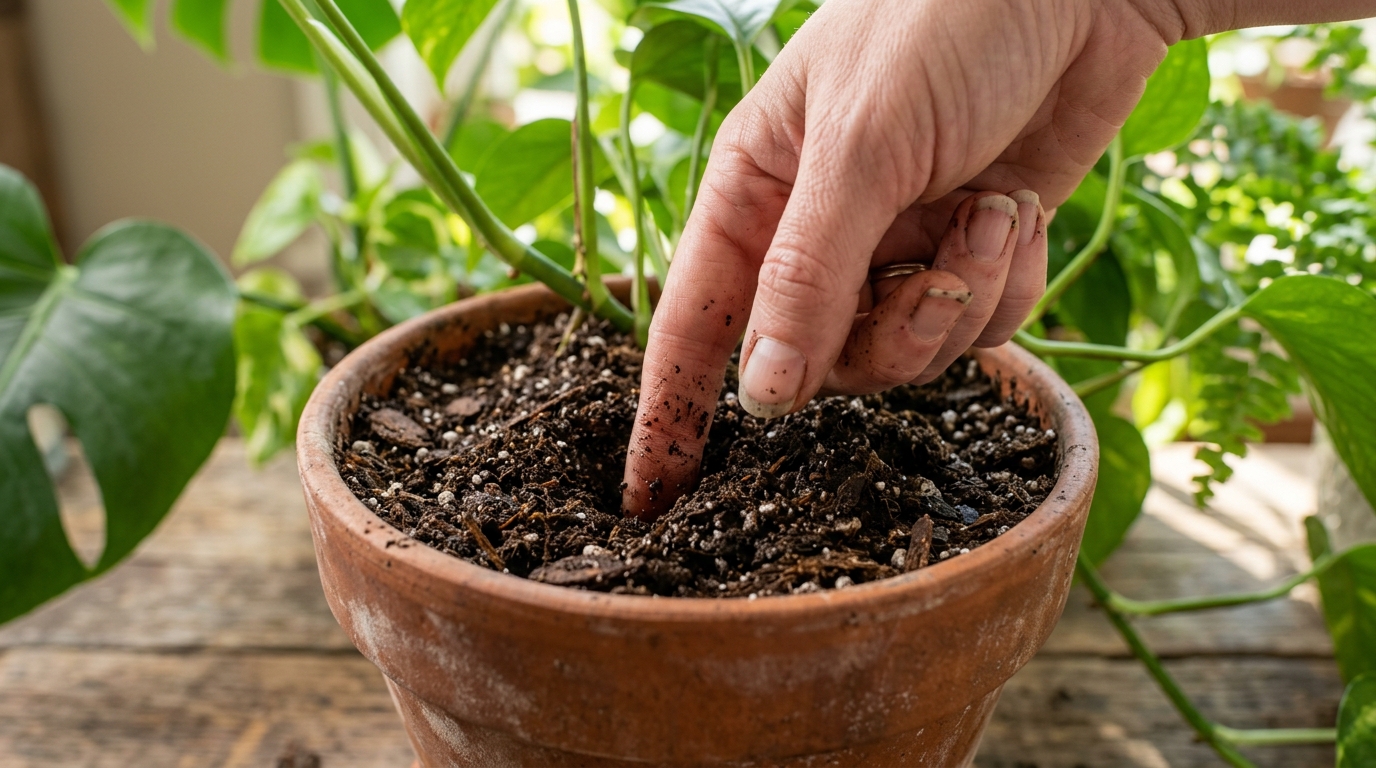
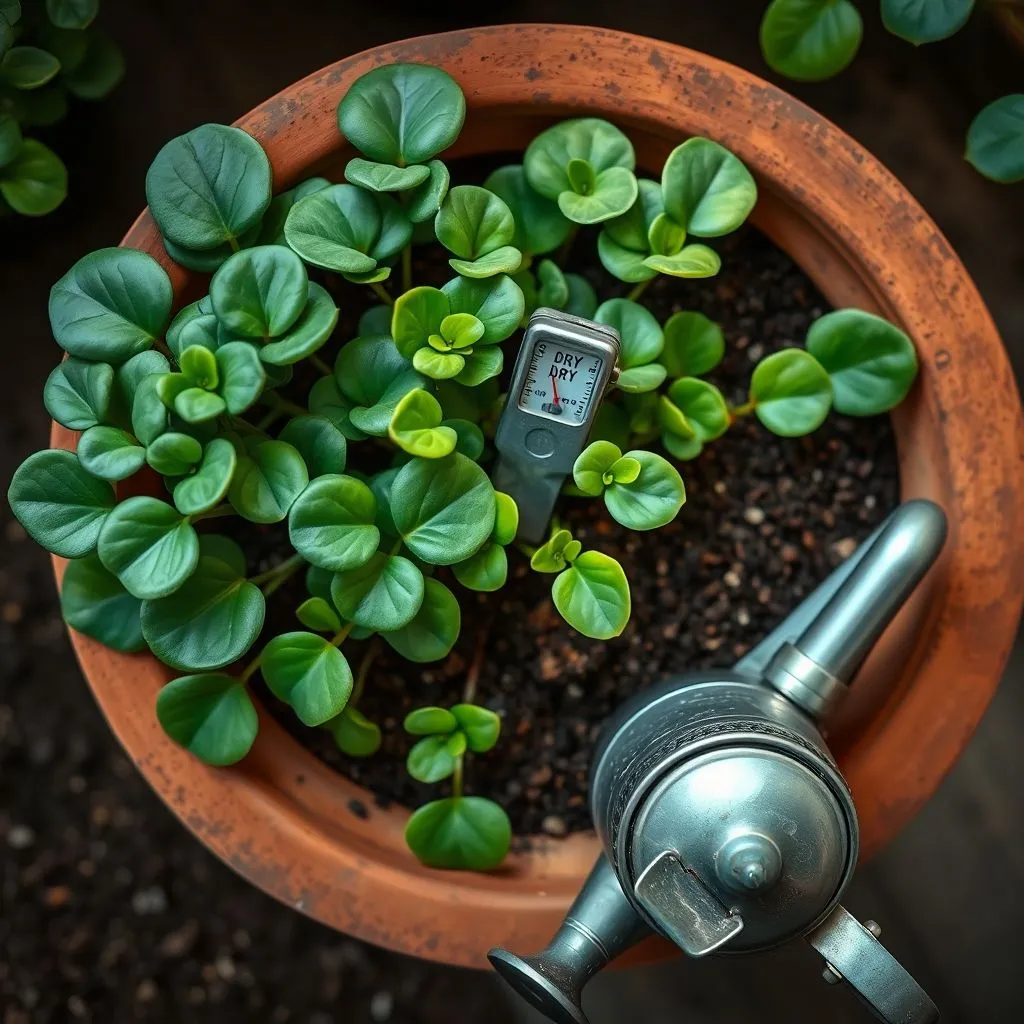
Pro tip: Invest in a moisture meter or use the “finger test” – stick your finger 2-3 inches into the soil. If it’s dry at that depth, it’s time to water. If you feel any moisture, wait a few more days.
The best time to water? Early morning allows your jade plant to absorb moisture before the day’s heat. Avoid evening watering, which can leave moisture sitting overnight and increase disease risk.
Light Requirements That Make or Break Your Jade Plant
Understanding Jade Plant Light Needs
Light is the lifeblood of your jade plant. Get it wrong, and you’ll watch your prized succulent either stretch desperately toward a light source or shrink back with sunburned leaves. But get it right? That’s when the magic happens—vibrant growth, compact form, and that distinctive red tinge along the leaf edges that makes jade plants so captivating.
Let’s clear up a common misconception about jade succulent care: despite being desert plants, jades don’t actually crave scorching, direct sunlight all day long. What they do need is bright, indirect light for the majority of the day, with some direct morning sun as a bonus. Think of light as your jade’s nutrition—too little and it starves, too much and it burns.
In their natural habitat, jade plants (Crassula ovata) often grow under the dappled shade of larger plants, receiving protection from the harshest midday rays. Your goal is to recreate this balance in your home or garden. Most jade plants thrive with 4-6 hours of bright light daily, preferably morning sun followed by bright indirect light.
Indoor vs. Outdoor Light Conditions
Indoor Jade Succulent Care:
Have you noticed your indoor jade plant leaning dramatically toward the window? That’s its way of telling you it’s hungry for more light. When growing jades indoors, placement is everything:
- South-facing windows are typically ideal in the Northern Hemisphere, providing bright light throughout the day
- East-facing windows offer gentle morning sun that jades love
- West-facing windows can work but may require monitoring for afternoon heat
- North-facing windows generally don’t provide enough light without supplementation
If your home doesn’t offer ideal natural lighting, don’t despair! Modern grow lights have revolutionized indoor jade succulent care. LED grow lights with both red and blue spectrum light can provide exactly what your plant needs without excessive heat or energy consumption. Position them 12-18 inches above your plant and run them for 12-14 hours daily for optimal results.
Outdoor Jade Plant Considerations:
Taking your jade outdoors introduces a whole new set of variables. Outdoor light is significantly more intense than indoor light—what seems like “partial shade” to your eyes might actually be “full sun” compared to your brightest indoor spot.
For successful outdoor jade succulent care:
- Acclimate gradually – Introduce your indoor jade to outdoor conditions over 1-2 weeks
- Provide morning sun with afternoon shade – Eastern exposures are often perfect
- Watch for seasonal changes – What works in spring might burn in summer
- Consider filtered light options – Shade cloth or placement under taller plants works well
Remember that containers heat up much faster than the ground, so potted outdoor jades may need more protection from intense afternoon sun than those planted directly in the garden.
Recognizing Light Stress Symptoms
Your jade plant won’t send you a text message when it’s unhappy with its lighting, but it does communicate through physical changes. Learning to read these signals is a crucial aspect of jade succulent care.
Signs of insufficient light:
- Long, thin stems with increased space between leaves (etiolation)
- Smaller new leaves compared to existing growth
- Overall pale green color instead of rich jade tone
- Leaning or growing toward the light source
- Slow or minimal new growth
- Failure to develop red leaf edges (which require adequate light)
Signs of excessive light:
- Brown or white scorch marks, typically on the edges of leaves
- Red or yellow discoloration that looks like sunburn
- Dry, crispy leaf edges
- Leaves that curl inward to reduce surface area
- Dropping of healthy-looking leaves as a stress response
- Wrinkled appearance even after proper watering
The tricky part? Some stress responses can look similar to watering issues. The key difference is timing and pattern—light stress typically affects the sides facing the light source first, while watering issues usually progress from the bottom up or affect the entire plant evenly.
Seasonal Light Adjustments for Healthy Growth
Just when you think you’ve mastered jade succulent care, the seasons change and throw you a curveball. Your plant’s light needs will fluctuate throughout the year, requiring adjustments to maintain optimal growth.
Summer Light Management:
During summer months, even jades that normally enjoy direct light may need additional protection. The sun is more intense, days are longer, and temperatures are higher—a triple threat that can stress your plant. Consider:
- Moving indoor plants back from south-facing windows by a few feet
- Adding a sheer curtain during peak afternoon hours
- Relocating outdoor jades to spots with more afternoon shade
- Increasing watering frequency (but still allowing soil to dry between waterings)
Winter Light Strategies:
Winter presents the opposite challenge—shorter days and less intense light. Your jade plant growth will naturally slow during this period, but it still needs adequate light to maintain health:
- Relocate to your brightest window (usually south-facing)
- Clean your windows—you’d be surprised how much light dust blocks
- Rotate your plant weekly to ensure even growth
- Consider supplemental grow lights during particularly dark months
- Reduce watering to match the reduced light and slower growth
Spring and Fall Transitions:
These shoulder seasons require vigilance and gradual transitions. As the sun’s angle and intensity change, your jade succulent care routine should adapt accordingly:
- Pay attention to changing shadow patterns in your home
- Gradually reposition plants as seasonal light shifts
- Watch for signs of stress during transition periods
- Be especially careful during spring, when plants are sensitive after winter dormancy
The perfect jade plant doesn’t happen by accident—it’s the result of attentive care and responsive adjustments. By learning to “read” your plant’s light needs and adjusting accordingly, you’ll develop a thriving relationship with your jade that results in a beautiful, healthy specimen that can live for decades.
Soil and Drainage Disasters to Avoid
Choosing the Wrong Potting Mix
Have you ever wondered why your jade plant isn’t thriving despite regular watering and adequate light? The culprit might be hiding beneath the surface—literally. The foundation of successful jade succulent care starts with the soil, and using the wrong potting mix is like building a house on sand.
Standard houseplant potting soil is the silent killer of jade plants everywhere. These moisture-retentive mixes hold water like a sponge—perfect for tropical plants but disastrous for desert natives like your jade. Traditional potting soils stay wet far too long, leading to the dreaded root rot that can destroy your plant before you even realize there’s a problem.
What makes a potting mix wrong for jade plants? Here are the red flags to watch for:
- High peat moss content – This common ingredient retains water and becomes hydrophobic when dry
- Water-retaining crystals – These are sometimes added to commercial mixes and are completely inappropriate for succulents
- Fine particle size – When particles are too small, air pockets disappear and roots suffocate
- Dark, rich appearance – This often indicates high organic content that holds moisture
- “Moisture control” labeling – These mixes are designed to stay wet—the opposite of what your jade needs
Many novice growers make the mistake of using leftover potting soil from their other houseplants, not realizing they’re setting their jade up for failure. Remember that jade succulents evolved in environments where water is scarce and drains quickly. Your soil choice should reflect these natural conditions.
The Importance of Proper Drainage Holes
Let’s talk about one of the most fundamental yet overlooked aspects of jade succulent care: drainage holes. No matter how perfect your watering technique or soil mix, without proper drainage, your jade plant is living in a bathtub rather than a home.
I’ve rescued countless jade plants from decorative containers with no drainage holes. These “pretty prisons” trap water at the bottom, creating a death zone for roots. Even if the top inch of soil feels dry, that hidden reservoir of water below is silently rotting your plant’s foundation.
Proper drainage isn’t just about having holes—it’s about having the right holes:
- Number matters – A single small hole may not be enough for larger pots
- Size counts – Holes should be at least ¼-inch in diameter, with larger pots needing larger or multiple holes
- Position is critical – Holes should be at the very bottom of the container, not up the sides
- Keep them clear – Regularly check that drainage holes haven’t become blocked with soil or roots
“But what about my beautiful decorative pot that has no holes?” I hear you ask. The solution is simple: double-potting. Keep your jade planted in a plain nursery pot with excellent drainage, then place this inside your decorative container. For watering, simply remove the inner pot, water thoroughly allowing excess to drain, then return it to its decorative home.
Best Soil Composition for Jade Succulents
Creating the perfect soil mix is an art form in jade succulent care. The ideal mix strikes a delicate balance—retaining just enough moisture to hydrate your plant while allowing excess water to drain rapidly. Your jade plant’s soil should be primarily inorganic with just enough organic matter to provide nutrients.
The perfect jade plant soil recipe:
- 50-60% mineral components (pumice, perlite, coarse sand, or small gravel)
- 40-50% high-quality cactus/succulent soil
- Optional: A small handful of worm castings for slow-release nutrition
This ratio achieves several critical functions: the mineral components create essential air pockets and drainage pathways, while the cactus soil provides the minimal organic matter needed for nutrition. The result is a gritty, fast-draining mix that allows roots to breathe while still accessing the moisture they need.
Commercial cactus/succulent soils can work as a base, but most benefit from additional drainage amendments. Examine any pre-mixed soil carefully—if it feels soft and spongy rather than gritty, mix in additional minerals until you achieve a coarse texture.
Pro tip: To test your soil mix before planting, fill a small pot with your prepared soil and water it. The water should drain through within seconds, not minutes. If it takes longer than 5-10 seconds for water to flow through, add more mineral components.
When and How to Repot Your Jade Plant
Even with perfect soil, your jade plant will eventually outgrow its home or deplete its soil nutrients. Knowing when and how to repot is a critical skill in long-term jade succulent care. Unlike many houseplants that benefit from annual repotting, jades prefer to be slightly root-bound and typically only need repotting every 2-3 years.
Signs it’s time to repot your jade plant:
- Roots visibly growing through drainage holes
- Water running straight through the pot without being absorbed
- Top-heavy plant that keeps tipping over
- Significantly slowed growth despite proper care
- Soil that doesn’t dry out as quickly as it used to
- Plant that has been in the same pot and soil for more than 2-3 years
The best time to repot is during the growing season (spring or early summer) when your jade is actively growing and can quickly recover from the stress. Avoid repotting during winter dormancy unless absolutely necessary.
Step-by-step jade repotting guide:
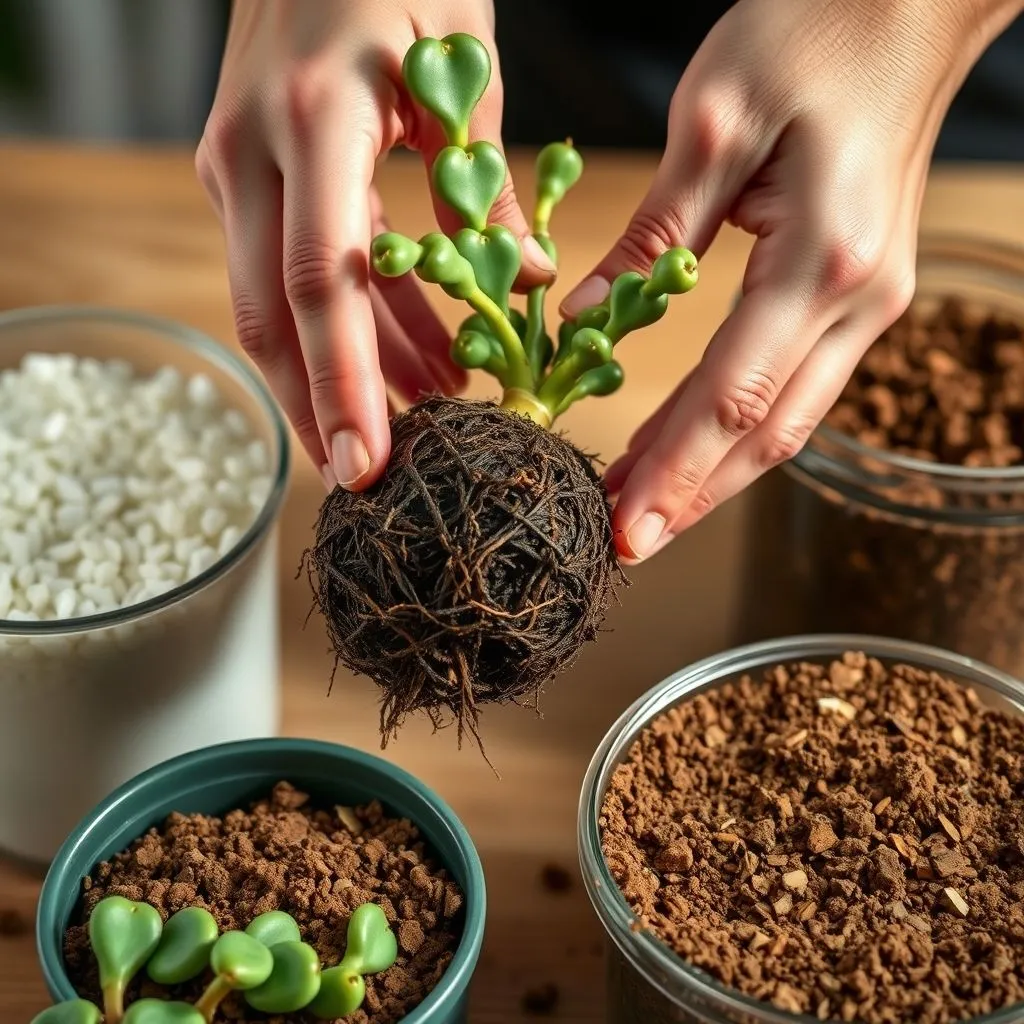
- Prepare your workspace – Gather fresh soil mix, a clean pot 1-2 inches larger than the current one, and lay out newspaper or a tarp for easy cleanup
- Carefully remove the plant – Turn the pot sideways and gently slide out the root ball, supporting the plant at the soil line rather than pulling on stems
- Inspect and prune roots – Gently remove old soil and examine roots for any dark, soft, or mushy sections which should be trimmed with clean scissors
- Let the roots dry – Allow freshly trimmed roots to callous for 1-2 days if you found any rot
- Prepare the new pot – Cover drainage holes with mesh or a coffee filter (not rocks, which actually reduce drainage), then add a layer of fresh soil
- Center and position – Place your jade in the center of the new pot at the same depth it was previously growing
- Add soil and settle – Fill around the roots with fresh soil mix, tapping the pot gently to eliminate air pockets
- Wait to water – Hold off watering for 5-7 days to allow any damaged roots to heal and prevent rot
- Resume normal care – After the waiting period, return to your regular jade succulent care routine
Remember that jade plants can be quite heavy, especially larger specimens. For substantial plants, consider using a terracotta pot for stability, as the weight helps prevent toppling. While plastic pots are lighter and can work, they retain moisture longer, so you’ll need to adjust your watering schedule accordingly.
Temperature and Humidity Mistakes
Ideal Temperature Ranges for Jade Succulent Care
Did you know that temperature fluctuations can stress your jade plant more than almost any other environmental factor? While these succulents have a reputation for being tough, they’re surprisingly particular about their thermal comfort zone. Mastering temperature management is a critical component of successful jade succulent care that many plant parents overlook.
Jade plants thrive when temperatures stay between 65-75°F (18-24°C) during the day and no lower than 50-55°F (10-13°C) at night. This moderate range mirrors their native South African habitat, where days are warm but not scorching, and nights cool but rarely freezing. Within this sweet spot, your jade plant’s metabolism functions optimally—allowing for steady growth, proper water absorption, and nutrient processing.
What makes temperature particularly tricky is that it often changes without our notice. You might maintain perfect jade succulent care in all other aspects, but if your plant sits near a drafty window in winter or above a heating vent, it could be experiencing temperature stress without showing immediate symptoms. The effects are often cumulative and slow to appear, making the cause difficult to identify.
Remember this fundamental principle: jades prefer consistency. Gradual seasonal changes are tolerable, but sudden fluctuations can trigger stress responses that take weeks or months to resolve. If you’re moving your plant to a new location, try to ensure the temperature conditions are similar to its previous spot.
Common Temperature Shock Scenarios
Temperature shock occurs when your jade plant experiences a sudden, dramatic change in its environment. Unlike humans who can quickly adapt to temperature changes, plants have no internal heating or cooling mechanisms—they’re entirely at the mercy of their surroundings. Let’s explore the most common temperature shock scenarios that might be sabotaging your jade succulent care efforts:
The Forgotten Winter Windowsill
Picture this: your jade plant has been happily growing on a sunny windowsill all summer. As winter approaches, you maintain the same location, not realizing that the glass surface now radiates cold air at night, potentially dropping to 40°F (4°C) or lower when in contact with the window. This cold shock can cause leaf drop and susceptibility to rot, especially if combined with excess moisture.
The Blast of Artificial Heat
When you turn on your heating system for the first time in fall, the sudden drop in humidity and increase in temperature can stress your jade plant. Even worse are oscillating or direct heating sources that create hot-cold cycles throughout the day. This inconsistency confuses your plant’s natural rhythms and can lead to water stress and stunted growth.
The Well-Intentioned Summer Vacation
Many jade plant owners move their indoor plants outside for summer, which can be beneficial when done correctly. However, the transition itself can be traumatic if not handled gradually. Taking a jade from a stable 70°F (21°C) indoor environment directly into 90°F (32°C) summer heat can cause sunburn, dehydration, and shock, even if the plant would normally tolerate those temperatures after acclimatization.
The Unexpected Cold Snap
If you keep your jade outdoors, an unexpected frost can be devastating. Jade plants can suffer permanent damage when exposed to temperatures below 40°F (4°C), with tissue damage beginning at the cellular level. What makes this particularly dangerous is that damage may not be immediately visible—the effects sometimes take days to appear, by which time it’s too late for preventive action.
Managing Indoor Humidity Levels
Contrary to popular belief, humidity plays a significant role in jade succulent care, even though these plants are drought-tolerant. The relationship between temperature and humidity creates the microclimate your jade experiences, and getting this balance right can be the difference between a thriving plant and one that merely survives.
Jade plants prefer moderate to low humidity levels, typically between 30-50%. This range allows for:
- Proper transpiration (plant “breathing”)
- Appropriate drying of soil between waterings
- Reduced risk of fungal and bacterial issues
- Healthy development of the protective waxy cuticle on leaves
The challenge comes with seasonal changes in indoor environments. During winter, heating systems can drop humidity to desert-like levels below 20%, while summer air conditioning can create similar conditions. At the other extreme, naturally humid environments or densely packed plant collections can create excessive moisture around your jade.
Signs your jade is struggling with humidity issues:
- Too dry: Leaf edges may brown or crisp, growth slows, and soil dries extremely quickly
- Too humid: Soft spots may develop on leaves, fungal issues appear, and soil remains damp for too long
Finding the middle ground doesn’t require expensive equipment. Here are practical strategies for managing humidity for optimal jade succulent care:
- Avoid placement in naturally humid areas like bathrooms or directly above dishwashers
- Maintain good air circulation without direct drafts from fans or vents
- Group plants strategically – placing jade plants near other succulents rather than tropical plants that require misting
- Use appropriate pot materials – unglazed terracotta naturally wicks away excess moisture
- Consider seasonal adjustments – move plants further from humidifiers in winter or away from air conditioners in summer
Remember that humidity and temperature work together—higher temperatures increase the plant’s need for moisture, while cooler temperatures reduce it. This relationship explains why jade plants can tolerate drier conditions in winter when they’re semi-dormant and temperatures are lower.
Protecting from Extreme Weather Conditions
Whether you grow your jade indoors with occasional outdoor vacations or maintain it outside year-round in mild climates, knowing how to shield your plant from extreme weather is essential for long-term jade succulent care success.
Heat Wave Protection Strategy
When temperatures climb above 90°F (32°C), your jade plant needs extra attention:
- Increase shade provision – Move to an area with bright indirect light rather than direct sun
- Adjust watering frequency – Check soil moisture more often, but still allow complete drying between waterings
- Monitor for sunburn – Look for white or brown patches on leaves exposed to intense light
- Consider temporary relocation – During extreme heat events, a cooler indoor location may be necessary
- Avoid fertilizing – High temperatures increase the risk of fertilizer burn
Cold Weather Survival Guide
When temperatures threaten to drop below 50°F (10°C), take these protective measures:
- Bring potted plants indoors before the first frost threat
- Reduce watering significantly – Cold, wet soil is a death sentence for jade plants
- Provide maximum light – Winter sunlight is less intense and shorter in duration
- Keep away from drafts – Cold air leaking from windows or doors can create damaging microclimates
- Avoid placement near heaters – The dry heat can dehydrate plants rapidly
For jade plants that must remain outdoors during marginal temperatures, temporary protection can save your plant:
- Cover with frost cloth or horticultural fleece (never plastic) during overnight freezes
- Create windbreaks to prevent cold damage from winter winds
- Elevate pots off cold surfaces to prevent soil temperature drops
- Consider heat sources like outdoor-rated heating cables for serious cold snaps
The most crucial aspect of weather protection is anticipation. Weather apps make it easier than ever to prepare for temperature extremes, giving you time to implement protective measures before damage occurs. Remember that prevention is infinitely more effective than rehabilitation when it comes to jade succulent care.
As seasons change, gradually acclimatize your jade plant to new conditions rather than subjecting it to abrupt transitions. Moving a plant from indoors to outdoors or vice versa should be a process taking 1-2 weeks, with increasing exposure to the new environment each day. This thoughtful transition period allows your jade to adjust its physiological processes to new temperature and humidity conditions, significantly reducing stress.
By understanding how temperature and humidity affect your jade plant and taking proactive steps to maintain optimal conditions, you’ll avoid one of the most common yet least understood aspects of jade succulent care. Your plant will reward your attention with robust growth, vibrant color, and the potential to become a long-lived botanical companion.
Fertilizing Errors That Stunt Growth
Over-fertilizing vs. Under-fertilizing
When it comes to jade succulent care, fertilizing is where many plant enthusiasts go wrong. Have you ever heard the saying “less is more”? Nowhere is this more true than in the world of succulent fertilization. Unlike hungry plants like tomatoes or roses, jade plants evolved in nutrient-poor soils, developing remarkable efficiency at extracting and utilizing even minimal nutrients.
The most common mistake? Over-fertilizing with the misguided notion that more nutrients will produce faster growth. In reality, excess fertilizer creates a high-concentration soil environment that can burn roots, prevent proper water uptake, and even kill your precious plant. Think of it like force-feeding a person who needs just a light snack—it causes more harm than good.
Under-fertilizing, on the other hand, rarely causes immediate problems in jade plants. These resilient succulents can thrive for months or even years on the nutrients already present in their potting mix. However, prolonged nutrient deficiency eventually catches up, resulting in smaller leaves, paler coloration, and significantly slower growth.
Let’s compare the telltale signs:
Over-fertilization symptoms:
- White crust forming on soil surface
- Leaf edges turning brown or appearing burned
- Abnormally dark green foliage that looks almost artificial
- Soft, floppy new growth
- Leaves dropping despite otherwise ideal conditions
- Salt buildup visible on the pot or soil
Under-fertilization symptoms:
- Smaller-than-normal new leaves
- Pale, yellowish leaf color
- Extremely slow growth over extended periods
- Thin stems that struggle to support the plant
- Reduced resistance to pests and diseases
- Lack of the characteristic red leaf edges even in bright light
The damage from over-fertilizing happens quickly and can be difficult to reverse, while the effects of under-fertilizing develop slowly and are easily corrected. When in doubt, it’s always safer to err on the side of less fertilizer in your jade succulent care routine.
Choosing the Right Fertilizer Type
Not all fertilizers are created equal, especially when it comes to jade plants. The fertilizer that helps your vegetables thrive might be completely wrong for your succulents. Understanding what makes a fertilizer appropriate for jade succulent care is crucial for avoiding common pitfalls.
Fertilizers come with three main numbers (like 10-10-10 or 2-7-7) that represent the N-P-K ratio—nitrogen, phosphorus, and potassium. For jade plants, the ideal ratio is lower in nitrogen (the first number) and higher in phosphorus and potassium. Why? Nitrogen promotes rapid, soft growth that’s actually undesirable in succulents, making them vulnerable to pests and diseases.
Best fertilizer options for jade plants:
- Specialized succulent/cactus fertilizers – These are formulated specifically with the right nutrient balance for succulents (typically 2-7-7 or similar low-nitrogen ratios)
- Diluted balanced fertilizers – Regular houseplant fertilizers can work if diluted to quarter-strength or less
- Organic options – Worm castings, compost tea, or fish emulsion (very diluted) provide gentle, slow-release nutrition
- Specialized micronutrient supplements – Products containing calcium, magnesium, and trace minerals can complement primary fertilizers
What you should absolutely avoid are:
- High-nitrogen fertilizers marketed for “green growth”
- “Bloom booster” formulas with extremely high phosphorus
- Time-release fertilizer pellets that can’t be controlled once applied
- Fertilizer stakes or spikes that create concentrated nutrient zones
Always remember that jade plants are not heavy feeders. They prefer their nutrients delivered in small, infrequent doses rather than constant availability. Your fertilizer choice should reflect this preference for moderation.
Proper Fertilizing Schedule and Techniques
Timing is everything when it comes to fertilizing jade plants. Unlike some houseplants that benefit from regular feeding throughout the year, jade succulent care requires a seasonal approach that respects the plant’s natural growth cycles.
The ideal jade plant fertilizing schedule:
Spring (March-May):
This is the primary growing season when jade plants can best utilize nutrients. Apply diluted fertilizer once a month during this period, stopping before summer heat intensifies.
Summer (June-August):
High temperatures often trigger a slight dormancy in jade plants. Reduce fertilizing to once every 6-8 weeks, and only when temperatures are moderate.
Fall (September-October):
As temperatures cool, jade plants often experience a second growth spurt. You can provide one or two light feedings during this period.
Winter (November-February):
This is the dormant season for jade plants. No fertilizer should be applied, as the plant’s metabolism slows significantly and cannot process additional nutrients.
Application techniques that make a difference:
- Always apply to moist soil – Never fertilize a dry plant as this increases the risk of root burn
- Dilute more than you think necessary – For jade succulent care, quarter-strength is often strong enough
- Apply evenly throughout the pot – Avoid concentration in one area
- Water thoroughly after application – This helps distribute nutrients evenly and prevents buildup
- Consider foliar feeding – Very dilute solutions can sometimes be sprayed on leaves for gentle supplementation
An often overlooked aspect of fertilizing is water quality. If you’re using heavily chlorinated or mineral-laden tap water, you may be inadvertently adding elements that interact with fertilizers. Consider collecting rainwater or using filtered water, especially when applying fertilizer.
Signs of Nutrient Deficiency or Excess
Your jade plant communicates its nutritional status through visual cues—if you know how to interpret them. Being able to recognize these signals is a valuable skill in jade succulent care, allowing you to correct issues before they become serious problems.
Common nutrient deficiencies and their symptoms:
Nitrogen deficiency:
- Overall light green or yellowish appearance
- Older leaves yellowing first, starting from the bottom of the plant
- Slow, stunted growth
- Smaller leaf size overall
Phosphorus deficiency:
- Dark green leaves that may develop purplish undersides
- Poor root development
- Delayed or absent flowering in mature plants
- Thin, weak stems
Potassium deficiency:
- Yellow or brown leaf margins
- Weak stems that break easily
- Increased susceptibility to disease
- Poor drought tolerance
Calcium deficiency:
- Distorted new growth
- Black spots on leaves that aren’t related to pests
- Soft stem tips
- Die-back of growing points
Recognizing nutrient excess:
Excess nutrients often manifest as what appears to be drought damage, even when the plant is properly watered. This happens because high salt concentrations in the soil prevent proper water uptake—a condition called “fertilizer burn” or “salt stress.”
Watch for these warning signs:
- Leaf edges turning brown and crispy
- Slowed growth despite regular fertilizing
- Wilting that doesn’t respond to watering
- White crust forming on soil or around drainage holes
- Roots appearing brown and dry rather than white and firm
If you suspect fertilizer buildup, the solution is a thorough soil flush. Water your plant deeply several times in succession, allowing all water to drain completely between applications. This leaches excess salts from the soil. In severe cases, repotting with fresh soil may be necessary.
Remember that stress from other factors—improper light, temperature extremes, or pest infestations—can mimic nutrient problems. Before adjusting your fertilizer regimen, ensure all other aspects of jade succulent care are optimized.
The key to successful jade plant fertilization is subtlety. These plants evolved to thrive in challenging conditions with minimal nutritional input. By respecting their natural preferences—providing just enough nutrients during active growth periods and withholding fertilizer during dormancy—you’ll support healthy development without pushing for unnatural growth rates that ultimately weaken the plant.
When in doubt, remember this fundamental principle of jade succulent care: it’s always easier to correct under-fertilizing than to repair the damage from over-fertilizing. Your jade plant would rather be a little hungry than suffering from nutrient toxicity.
Essential Jade Succulent Care Best Practices
Proper Propagation Methods
Have you ever wanted to multiply your jade plant collection without spending a dime? Propagation is one of the most rewarding aspects of jade succulent care, allowing you to create new plants from your existing one. What’s more, jade plants are among the easiest succulents to propagate, making this the perfect project even for beginners.
There are two primary methods for jade plant propagation, each with its own advantages:
Leaf Propagation:
This method is perfect if you want to create multiple small plants or if you’re working with limited space. Here’s how to succeed:
- Select the perfect leaf – Choose a healthy, plump leaf from your jade plant. Gently twist it from the stem using a side-to-side motion until it comes off cleanly.
- Allow callusing time – Place your leaf on a dry surface away from direct sunlight for 3-7 days. This crucial drying period allows the wound to heal and prevents rot.
- Prepare your propagation surface – Fill a shallow container with well-draining succulent soil, or place the leaf on top of slightly moistened soil.
- Wait patiently – This is where most propagators fail! Jade leaf propagation requires patience. You’ll typically see tiny roots appearing after 2-3 weeks, followed by a miniature plant forming at the leaf base.
- Begin gentle care – Once roots have formed, you can mist the soil surface occasionally, but avoid soaking. Direct morning sunlight helps strengthen your developing plantlets.
Stem Cutting Propagation:
For faster results and more substantial plants, stem cuttings are your best option:
- Select and cut – Using clean, sharp scissors, cut a healthy stem segment 3-4 inches long. Remove lower leaves, leaving 2-3 pairs at the top.
- Cure the cutting – Allow the cut end to dry and callus for 5-7 days in a warm, dry location.
- Plant in proper medium – Insert the calloused end about 1 inch into well-draining succulent soil.
- Support establishment – Unlike leaf propagation, stem cuttings benefit from light moisture. Water sparingly around (not on) the cutting once the soil is completely dry.
- Monitor for growth – New root establishment typically takes 3-4 weeks, indicated by the cutting standing firmly in the soil and possibly showing new growth.
Pro tip: While many sources suggest placing cuttings directly in water, this actually increases the risk of rot for jade plants. Dry propagation methods align better with their natural growing conditions and result in stronger root systems.
Pruning for Shape and Health
Pruning might seem counterintuitive—why cut parts off a healthy plant? But strategic pruning is actually one of the most powerful tools in your jade succulent care arsenal. Beyond aesthetics, pruning serves several vital functions: it prevents top-heaviness, encourages branching, removes damaged areas, and can transform a leggy specimen into a compact, tree-like beauty.
The best times for jade plant pruning:
Spring and early summer are ideal for major pruning, as the plant is actively growing and can quickly recover. Avoid heavy pruning during winter dormancy, when healing is slower and the stress may be too much for your plant.
Essential pruning techniques:
- Heading cuts – Trimming the end of a branch or stem encourages branching below the cut, creating a fuller plant. Make cuts just above a leaf node (where leaves emerge from the stem) for best results.
- Thinning cuts – Removing entire branches back to their origin point improves air circulation and light penetration. This is especially useful for congested plants.
- Maintenance pruning – Regularly removing dead or damaged leaves and stems keeps your plant healthy and prevents disease spread.
When pruning jade plants, always use clean, sharp tools to make precise cuts. I prefer bypass pruners for thicker stems and small scissors for delicate work. After each significant cut, allow the wound to dry for several days before watering to prevent potential infection.
Don’t discard those pruned pieces! Every cutting is a potential new plant through the propagation methods we just discussed. This makes pruning a two-for-one benefit in jade succulent care.
Pest Prevention and Treatment
Even the healthiest jade plants can occasionally fall victim to pests. The key to successful jade succulent care is catching these invaders early, before they can cause significant damage. Regular inspection should become part of your routine—simply check your plant while watering, paying special attention to leaf joints, stem crevices, and the soil surface.
Common jade plant pests and their solutions:
Mealybugs: These white, cottony pests love to hide in leaf axils and can quickly infest an entire plant.
- Prevention: Avoid overwatering and overfertilizing, which create soft growth that attracts mealybugs.
- Treatment: For small infestations, dab each bug with a cotton swab dipped in 70% isopropyl alcohol. For larger problems, spray with insecticidal soap or neem oil.
Spider Mites: These tiny arachnids cause stippling on leaves and create fine webbing between stems.
- Prevention: Maintain adequate humidity and good air circulation.
- Treatment: Spray the entire plant with water to dislodge mites, then apply neem oil or insecticidal soap. Repeat weekly until resolved.
Scale Insects: These appear as small, brown bumps along stems and leaf undersides, often mistaken for part of the plant.
- Prevention: Regular plant inspections and quarantining new plants before introducing them to your collection.
- Treatment: Scrape off visible scale with a soft toothbrush, then treat with horticultural oil which suffocates the insects.
Fungus Gnats: While these small flying insects are more annoying than harmful to jade plants, their larvae can damage roots.
- Prevention: Allow soil to dry completely between waterings and consider adding a layer of sand on top of the soil.
- Treatment: Yellow sticky traps capture adults, while hydrogen peroxide solution (1 part 3% H₂O₂ to 4 parts water) kills larvae when used as a soil drench.
No matter which pest you’re battling, quarantine affected plants immediately to prevent spread. After treatment, monitor closely for at least a month, as eggs may hatch and create new infestations. Remember that stressed plants are more susceptible to pests, so maintaining optimal jade succulent care practices is your best preventive measure.
Creating Optimal Growing Conditions
Bringing together everything we’ve discussed so far, let’s talk about creating the perfect environment for your jade plant to thrive. This holistic approach to jade succulent care combines all the individual elements into a comprehensive system that supports robust growth.
The jade plant growth trifecta:
- Light + Temperature Balance
The perfect jade plant location provides:
- 4-6 hours of bright, filtered light (morning sun is ideal)
- Protection from scorching afternoon rays
- Temperatures between 65-75°F (18-24°C) during the day
- Nighttime temperatures no lower than 50°F (10°C)
- Protection from cold drafts and hot air vents
- Water + Soil Harmony
The ideal watering relationship includes:
- Well-draining soil with 50-60% mineral content
- Complete soil drying between waterings
- Reduced water frequency in winter
- Increased water frequency during active growth
- Attention to environmental factors that affect evaporation
- Growth + Maintenance Rhythm
A sustainable care routine follows:
- Fertilization only during growth periods
- Regular pruning to maintain shape and health
- Seasonal adjustments to care based on plant’s natural cycles
- Consistent pest monitoring
- Repotting every 2-3 years or when necessary
What does success look like? A thriving jade plant displays:
- Compact growth with minimal space between leaves
- Thick, sturdy stems that support the plant without staking
- Plump, firm leaves with vibrant color
- Slight reddish tinge on leaf edges when exposed to adequate light
- Steady, consistent growth during spring and summer
- Occasional flowering in mature specimens (typically after experiencing slight stress)
Creating a maintenance calendar can help you remember seasonal adjustments in your jade succulent care routine. I recommend setting calendar reminders for:
- Spring fertilizing
- Summer heat protection
- Fall growth evaluation and pruning
- Winter watering reduction
Remember that jade plants are remarkably communicative if you know how to listen. Leaves wrinkle when thirsty, stretch when seeking light, and drop when stressed. By observing these signals and responding appropriately, you develop an intuitive understanding that transcends generic care guidelines.
The beauty of mastering jade succulent care is that these plants can become lifelong companions. With proper attention to these best practices, your jade plant can thrive for decades, potentially growing from a small cutting into a magnificent specimen plant that becomes a living heirloom. The key is consistency, observation, and respecting the plant’s natural adaptations to its native environment.
Troubleshooting Common Jade Plant Problems
Yellowing or Dropping Leaves
Is your once-vibrant jade plant suddenly shedding leaves or turning an alarming shade of yellow? Before you panic, understand that jade plants are surprisingly communicative—these symptoms are your plant’s way of signaling distress. The key to successful jade succulent care is learning to interpret these signals correctly.
Leaf drop and yellowing are symptoms, not diseases themselves, and can stem from multiple causes. Let’s decode what your plant might be telling you:
Overwatering signals:
- Leaves feel soft, mushy, or translucent before falling
- Yellowing is widespread and affects multiple areas simultaneously
- Lower leaves yellow first, often with a water-soaked appearance
- Soil remains wet for days after watering
- Leaf drop occurs even when leaves appear plump
Underwatering signals:
- Leaves appear wrinkled or shriveled before yellowing
- Plant drops otherwise healthy-looking leaves
- Leaves feel thin and papery to the touch
- Soil is bone dry and pulling away from pot edges
- Dropped leaves are often firm rather than mushy
Environmental stress signals:
- Leaf drop follows a recent relocation or temperature change
- Yellowing appears on the side facing a window or heat source
- Leaf loss is gradual rather than sudden
- New growth continues despite some leaf drop
- Affected leaves show sunburn marks or dark spots
The most common cause of yellowing leaves in jade succulent care is incorrect watering—specifically overwatering. Jade plants store water in their leaves, so they’ll sacrifice older leaves during drought rather than show immediate distress. However, too much water prevents proper oxygen absorption through roots, effectively drowning your plant from below.
How to address yellowing and leaf drop:
- Assess soil moisture first – Check deep in the soil, not just the surface. If it’s wet or soggy, withhold water until completely dry. If bone dry, water thoroughly but ensure good drainage.
- Examine your watering pattern – Create a watering log to spot patterns. Many jade owners are surprised to discover they’re actually overwatering despite thinking their plant is thirsty.
- Remove affected leaves – Gently remove any yellow or soft leaves as they won’t recover and can spread issues to healthy tissue.
- Check light conditions – Insufficient light combined with excess water accelerates decline. Move your plant to a brighter location if leaves are yellowing and your soil stays wet for long periods.
- Be patient during recovery – Jade plants don’t bounce back overnight. Once you’ve corrected the underlying issue, expect a recovery period of several weeks before new growth resumes.
Remember that some seasonal leaf drop is normal, particularly in fall and winter when growth slows. The occasional yellow leaf isn’t cause for alarm, but a sudden cascade of yellowing foliage demands prompt attention in your jade succulent care routine.
Root Rot Recovery Strategies
Root rot—the dreaded nemesis of jade plant enthusiasts everywhere. This insidious condition destroys your plant from below, often progressing significantly before above-ground symptoms appear. But here’s the good news: with swift action and proper jade succulent care techniques, even severely affected plants can often be saved.
Identifying root rot in jade plants:
- Soft, darkened stems near the soil line
- Leaves that yellow and fall despite appropriate watering
- Foul smell emanating from the pot or soil
- Plant that seems unstable or wobbly in its pot
- Roots that appear brown, mushy, or slimy rather than firm and white
- Unusually slow growth despite ideal conditions
Root rot occurs when fungi or bacteria attack roots that have been weakened by oxygen deprivation—almost always caused by overwatering or poor drainage. These pathogens destroy the plant’s vascular system, preventing proper nutrient and water transport.
Your emergency root rot recovery plan:
- Stop watering immediately – This seems obvious, but many plant owners continue normal watering while trying other solutions, compounding the problem.
- Unpot and inspect – Gently remove your jade plant from its container and brush away soil to expose the root system. Healthy roots should be firm and light-colored.
- Surgical intervention – Using clean, sharp scissors, remove all affected roots. Be ruthless here—any diseased tissue left behind can restart the infection. Cut until you reach healthy tissue, which will be firm and white or light tan.
- Stem check – If rot has progressed into the stems, cut back until you reach clean, green tissue with no dark spots or discoloration.
- Clean slate – Discard all old soil and either sterilize the original pot (using a 10% bleach solution) or use a new container. Never reuse soil from a root rot situation.
- Dry healing period – Allow cut surfaces on both roots and stems to callus for 2-3 days in a dry, warm place with good air circulation and indirect light.
- Fresh start – Repot in completely fresh, well-draining succulent soil. Consider adding extra perlite or pumice (up to 50% of the mix) to improve drainage.
- Rehabilitation watering – Wait 7-10 days before the first watering, then water sparingly only when soil is completely dry. Gradually return to normal jade succulent care once new growth appears.
If your jade plant has lost significant root mass, consider taking healthy stem cuttings as insurance. These can be propagated following standard methods, giving you backup plants should the mother plant fail to recover.
The road to recovery after root rot is slow and requires patience. Your plant may look worse before it looks better as it sheds damaged tissue and redirects energy to new growth. Expect at least 2-3 months before your jade shows clear signs of recovery through new leaf or root development.
Dealing with Leggy Growth
Have you ever watched your once-compact jade plant transform into a lanky, stretched-out version of its former self? This common condition, known as etiolation or “legginess,” is one of the most frequent challenges in jade succulent care. While not immediately life-threatening, legginess compromises both the aesthetic appeal and structural integrity of your plant.
What causes leggy jade plants?
The primary culprit is insufficient light. Jade plants need bright, direct light for at least 4-6 hours daily to maintain their compact form. When light-starved, they stretch toward the nearest light source, resulting in elongated stems with widely spaced leaves—essentially reaching desperately for more light.
Secondary contributors include:
- Improper fertilizing (too much nitrogen)
- Excessively warm temperatures
- Genetic factors in some varieties
- Seasonal light changes
The good news? This condition is completely reversible with proper intervention and patience. Here’s your action plan for transforming a leggy jade back into a compact, attractive specimen:
Immediate interventions:
- Relocate for maximum light – Move your plant to your brightest available window, ideally south-facing (in the Northern Hemisphere). Even a few hours of direct morning sun can make a dramatic difference.
- Consider supplemental lighting – If natural light is limited, invest in a grow light. For jade plants, full-spectrum LED lights positioned 12-18 inches above the plant for 12-14 hours daily can work wonders.
- Rotate regularly – Turn your plant a quarter turn weekly to ensure all sides receive equal light, preventing lopsided growth.
- Assess temperature – Move your jade away from heat sources, as excessive warmth can contribute to elongated growth even with adequate light.
Corrective pruning strategy:
Sometimes, despite improved conditions, a severely leggy jade plant won’t return to its compact form without intervention. This is where strategic pruning becomes your best tool in jade succulent care:
- Plan before cutting – Visualize your desired plant shape and identify key cutting points. I recommend drawing a simple sketch before making any cuts.
- Make strategic cuts – Using clean, sharp scissors, cut stems back to just above a leaf node. Focus on the tallest, leggiest stems first.
- Stagger your pruning – For severely overgrown plants, spread major pruning over several sessions 3-4 weeks apart rather than removing too much at once.
- Save the cuttings – Those pruned pieces are perfect propagation material! Allow them to callus, then plant in well-draining soil to create new, compact plants.
- Support during transition – Very top-heavy plants may need temporary staking until they develop stronger, more compact growth.
The wonderful thing about jade plants is their remarkable ability to branch from pruning points. Each cut stem will typically produce two or more new growing points, creating a naturally fuller plant over time. Within 3-6 months of implementing these changes, your once-leggy jade can transform into a more compact, attractive specimen.
Remember that preventing legginess is easier than correcting it. Make light assessment a regular part of your jade succulent care routine, especially during seasonal changes when sunlight angles and duration shift significantly.
Reviving a Dying Jade Plant
Have you inherited a neglected jade plant that looks more like a bare stick than a thriving succulent? Or perhaps your own beloved jade has taken a dramatic turn for the worse? Don’t lose hope—jade plants possess remarkable resilience and can often be brought back from the brink with dedicated jade succulent care.
First, let’s determine if your plant is truly “dying” or just dramatically expressing its displeasure. A jade plant that’s genuinely on its last legs will show multiple severe symptoms simultaneously:
Signs of a critically distressed jade plant:
- Stems that are shriveled and dry or soft and mushy
- Complete or near-complete leaf loss
- Black or dark brown discoloration spreading through the plant
- Extremely loose in the pot due to root loss
- Foul odor from the soil or plant base
- No response to basic care improvements over several weeks
Even with these severe symptoms, jade plants often retain living tissue somewhere within their structure. Your revival mission is to find and nurture those remaining viable cells.
The jade plant revival protocol:
- Emergency assessment – Carefully remove the plant from its pot and examine the root system and stems. You’re looking for any firm, living tissue—even a small segment can be enough to regenerate a plant.
- Surgical removal of dead tissue – Using clean, sharp scissors or pruning shears, cut away all dead, diseased, or rotting portions. Keep cutting until you reach healthy tissue, which will be green inside the stems and firm rather than soft or brittle.
- Root evaluation – If roots are completely gone or rotted, don’t panic. Jade plants can regenerate roots from stems. If even a small portion of healthy root remains, preserve it carefully.
- Sterilization step – After trimming, consider treating cut surfaces with ground cinnamon (a natural fungicide) or allowing all cut surfaces to callus in a dry environment for 3-7 days.
- Fresh foundation – Discard old soil and either thoroughly clean and disinfect the original pot or use a new container. Always use fresh, well-draining succulent soil.
- Minimal moisture approach – For the first 2-3 weeks after repotting, water very sparingly—just enough to provide minimal moisture around any remaining roots. For rootless stem sections, wait until you see signs of root development before watering.
- Ideal recovery environment – Place your revival patient in bright, indirect light rather than harsh direct sun. Maintain warm but not hot temperatures (65-75°F/18-24°C) and good air circulation.
- Patience and observation – Check daily for signs of deterioration or improvement, but avoid disturbing the plant unnecessarily. Recovery can take weeks or even months.
Revival through propagation:
If your main plant is too far gone but you find even a single healthy leaf or small stem section, propagation becomes your best option:
- For healthy leaves: Place them on barely moist succulent soil, and wait for roots and tiny plants to form at the leaf base.
- For stem sections: Allow callusing time, then place the cut end in or on succulent soil, providing minimal moisture until roots develop.
The most important aspect of jade succulent care during revival is patience. Jade plants operate on their own timeline, and recovery is rarely quick. I’ve seen plants that appeared dead suddenly push out new growth months after intervention—proof of their incredible survival instinct.
What makes jade plants particularly well-suited for revival is their modular growth habit. Unlike some plants that depend on a single growing point, jades can activate dormant growth nodes almost anywhere along their stems. This means that even a severely compromised plant can regenerate if given the right conditions and enough time.
Remember that a revived jade plant may never look exactly like it did before its decline. The new growth pattern might create an entirely different plant shape. Rather than fighting this natural process, embrace it as part of your plant’s unique story—a testament to its resilience and your dedicated care.
Advanced Care Tips for Thriving Jade Plants
Encouraging Blooming in Mature Plants
Have you ever seen a jade plant in bloom? Many jade owners have tended their plants for years without witnessing this spectacular but elusive event. The truth is, flowering is relatively rare in indoor jade plants—but it’s not impossible. With the right advanced jade succulent care techniques, you can coax your mature specimen into producing delicate star-shaped white or pink blooms that typically appear in late winter.
The first secret to jade plant flowering is age—most plants won’t bloom until they’re at least 5-6 years old. But maturity alone isn’t enough; jades typically flower in response to specific environmental conditions that mimic their native habitat’s seasonal stresses:
Essential conditions for jade blooming:
- Night length matters – Jade plants are photoperiodic, meaning they respond to longer nights. During fall and winter, ensure your plant receives 12-14 hours of complete darkness.
- Cool night temperatures – Maintain nighttime temperatures between 50-55°F (10-13°C) for at least 4-6 weeks during the winter, while keeping daytime temperatures below 65°F (18°C).
- Drought stress – Slightly reduce watering in late fall, allowing the soil to remain dry for longer periods. Be careful not to overdo this—we want mild stress, not dehydration.
- Bright winter light – While reducing water and temperature, maintain as much bright, direct light as possible during shorter winter days.
- No fertilizer – Suspend all fertilizing from late fall through winter to encourage the plant to focus on flowering rather than foliage growth.
What makes this challenging for most indoor growers is the conflicting nature of these requirements—cool temperatures but bright sunlight, drought stress but not too much. If you’re serious about encouraging blooms, consider moving your jade to an unheated sunroom or enclosed porch during winter months where these conditions occur naturally.
Remember that blooming requires energy, so only attempt to induce flowering in robust, healthy specimens. A jade plant struggling with basic survival won’t have resources to spare for flower production. Perfect your fundamental jade succulent care first, then pursue flowering as an advanced goal.
Winter Care Adjustments
Winter presents unique challenges for jade plants, requiring significant adjustments to your care routine. Understanding these seasonal shifts is crucial for advanced jade succulent care, as many plant losses occur during winter months when owners fail to adapt their approach.
During winter, jade plants enter a semi-dormant state—they don’t completely shut down, but their growth slows dramatically as they respond to reduced light and cooler temperatures. This dormancy period is actually beneficial for long-term health, allowing the plant to rest and consolidate energy reserves.
Winter watering protocol:
The most critical winter adjustment concerns watering frequency. Overwatering during dormancy is the leading cause of winter jade plant deaths. Follow these guidelines for proper moisture management:
- Reduce watering by at least 50% – Where you might water every 2-3 weeks in summer, extend this to 4-6 weeks in winter
- Pay attention to environmental factors – Homes with dry heating systems may cause faster soil drying than humid environments
- Never water cold soil – If your plant is kept in a cool location, bring it to room temperature before watering, then allow excess to drain completely before returning it
- Morning watering only – This gives moisture time to be absorbed or evaporate before cooler nighttime temperatures set in
Temperature management:
Jades are surprisingly sensitive to cold, with damage possible at temperatures below 50°F (10°C). However, they benefit from cooler temperatures during winter dormancy, creating a delicate balance:
- Ideal winter temperature range: 55-65°F (13-18°C) during day, no lower than 50°F (10°C) at night
- Critical danger zone: Extended exposure below 40°F (4°C) can cause permanent damage
- Watch for hidden cold spots: Windows can create much colder microclimates than your general room temperature
- Protect from drafts: Keep plants away from exterior doors, drafty windows, and heating vents
Winter light considerations:
As days shorten, your jade plant receives significantly less light energy. To compensate:
- Relocate to your brightest available window (typically south-facing in the Northern Hemisphere)
- Clean windows inside and out to maximize light transmission
- Rotate plants weekly to ensure even light exposure
- Consider supplemental grow lights for locations with particularly dark winters
One often overlooked aspect of winter jade succulent care is humidity. While these plants prefer drier conditions generally, extremely low humidity from heating systems can stress even drought-tolerant species. Consider using a humidity tray (water-filled tray with pebbles that the pot sits on, not in) to moderate the air around your jade without increasing soil moisture.
Companion Planting Options
Creating a harmonious plant community that includes your jade plant can enhance both aesthetics and growing conditions. Thoughtful companion planting is an advanced jade succulent care strategy that leverages plant relationships to create micro-environments where all participants thrive.
When selecting companions for jade plants, compatibility in terms of care requirements is paramount. Ideal companions share similar needs for:
- Light intensity and duration
- Watering frequency and volume
- Temperature preferences
- Growth rate and mature size
- Soil type and drainage requirements
Succulent companions that pair beautifully with jade plants:
- Echeverias – Their rosette form provides textural contrast to jade’s branching habit, and they share nearly identical care needs.
- Haworthias – These compact succulents appreciate slightly more shade than most succulents, making them perfect for positioning on the north side of larger jade plants.
- Sedums – Trailing varieties like burro’s tail (Sedum morganianum) create visual interest at different heights and fill empty spaces with their cascading growth.
- Kalanchoes – Particularly flowering varieties add seasonal color while matching jade plants’ water and light requirements almost perfectly.
Non-succulent options for mixed plantings:
Expanding beyond the succulent family can create striking displays if you select plants with compatible needs:
- Air plants (Tillandsia) – These can be nestled among jade branches without competing for soil resources
- Certain herbs – Rosemary and thyme can work well, as they prefer dry conditions between waterings
- Sansevierias – These structurally dramatic plants tolerate similar conditions and add vertical interest
When creating mixed containers, position your jade plant first, considering its eventual size and growth habit. Allow adequate space between specimens—crowding leads to poor air circulation and competition for resources. A good rule of thumb is to space plants at approximately half their expected mature width.
Beyond aesthetics, companion planting can serve practical purposes in jade succulent care. Strategic groupings create microclimates that benefit all participants—taller plants provide partial shade for those that burn easily, while ground-covering species reduce soil temperature and evaporation rates.
Remember that while companion planting is rewarding, it also introduces complexity to your care routine. Start with just 2-3 compatible species until you’re confident in managing the community’s needs. Monitor all plants carefully during the adjustment period, as one struggling specimen can affect the health of the entire arrangement.
Long-term Maintenance Strategies
Unlike disposable seasonal plants, jade plants are living investments that can thrive for decades—even generations—with proper care. I’ve personally seen jade specimens that are over 50 years old, having been passed down through families as living heirlooms. Developing a long-term maintenance strategy is essential for advanced jade succulent care that ensures your plant not only survives but continues to improve with age.
The aging jade plant lifecycle:
As jade plants mature, their care needs evolve. Understanding these changes helps you adapt your approach:
- Years 1-3: Rapid growth phase requiring regular repotting and structural pruning to establish form
- Years 3-10: Moderate growth with increasing wood development at the base and main branches
- Years 10+: Slower growth focused on thickening and maturing, with potential bonsai-like development
Repotting strategies for mature specimens:
While young jades benefit from frequent repotting, mature plants require a different approach:
- Extended intervals – Older jades may only need repotting every 3-5 years or when clearly root-bound
- Root pruning – For plants you wish to keep in the same size container, gentle root pruning (removing 1/3 of the root mass) allows refreshing the soil without increasing pot size
- Stability considerations – Top-heavy older specimens benefit from broader, heavier containers that prevent tipping
- Soil quality over quantity – With limited repotting, soil quality becomes crucial—use the highest quality components you can afford
Long-term pruning philosophy:
Pruning mature jade plants is both science and art. Your approach should evolve as your plant ages:
- Structural pruning (years 1-5): Focus on creating strong branching patterns and balanced growth
- Maintenance pruning (ongoing): Remove dead or crossing branches, and maintain desired size and shape
- Rejuvenation pruning (as needed): More dramatic cutting back to encourage fresh growth from woody sections
- Artistic pruning (mature plants): Optional shaping to create bonsai-like forms or unique character
The most successful long-term jade succulent care involves consistency with seasonal adjustments. Create a maintenance calendar that reminds you of critical care transitions throughout the year. For example:
Annual jade maintenance calendar:
- Late winter: Assess overall health, perform major pruning if needed
- Early spring: Resume regular watering and begin fertilization as new growth appears
- Late spring: Monitor for pests as growth accelerates
- Summer: Provide heat protection and adjust watering as needed
- Early fall: Last fertilizer application, begin transition to winter care
- Late fall: Reduce watering frequency, protect from temperature drops
- Winter: Minimal watering, monitor for light adequacy
Perhaps the most valuable long-term strategy is documentation. Keep a simple journal of your jade plant’s development, noting significant events like repotting, major pruning, flowering, or problem resolution. This record becomes invaluable over time, helping you identify patterns and refine your approach to jade succulent care.
As your jade plant matures, its increasing size and woodiness actually make it more resilient and forgiving. The substantial energy reserves stored in thick stems and established root systems provide a buffer against occasional care mistakes. This doesn’t mean neglect is acceptable, but rather that your margin for error widens as your plant establishes itself—a rewarding development in your growing relationship with this remarkable succulent.
With thoughtful, consistent care and these advanced strategies, your jade plant can become not just a houseplant but a living legacy—a botanical companion that grows more characterful and valuable with each passing year.
Conclusion: Your Journey to Jade Plant Mastery
As we’ve explored throughout this guide, jade succulent care isn’t particularly complicated—but it does require attention to the right details. Those five critical mistakes we discussed—overwatering, improper light exposure, poor soil and drainage, temperature mismanagement, and fertilizing errors—represent the most common pitfalls that transform thriving plants into struggling specimens. By understanding and avoiding these key mistakes, you’ve already positioned yourself for success.
Have you noticed how all these care aspects interconnect? The right soil allows proper watering, which works in harmony with appropriate light levels, which in turn affects how your plant utilizes nutrients. This holistic understanding of jade plant needs is what separates casual owners from those who develop truly spectacular specimens.
Remember when you first brought home your jade plant, perhaps uncertain if you could provide the right care? Look how far you’ve come! You now understand not just basic maintenance but advanced techniques for propagation, troubleshooting, and even encouraging those elusive blooms. That knowledge transforms your relationship with your plant from one of anxiety to one of confidence.
What I find most rewarding about jade succulent care is the plant’s responsiveness. Make a positive change in your care routine, and you’ll often see visible improvement within weeks. There’s something deeply satisfying about watching a once-struggling plant transform under your attentive care, knowing that your understanding made all the difference.
As you apply these principles, be patient with both your plant and yourself. Even experienced growers occasionally make mistakes—what matters is recognizing issues early and adjusting course. Your jade plant is remarkably resilient and will likely forgive the occasional lapse in perfect care.
I encourage you to start implementing these strategies today, beginning with an honest assessment of your current jade succulent care routine. Which of the five deadly mistakes might be affecting your plant? What simple change could you make this week to improve its environment? Take that step, however small, and watch as your jade responds with renewed vigor.
With time, your jade plant can become more than just another houseplant—it can become a living heirloom, potentially thriving for decades and perhaps even outliving you. Isn’t that a remarkable legacy from such a modest investment of care and attention? Your journey toward jade plant mastery starts now, armed with knowledge that turns common mistakes into opportunities for success.
What will your jade plant look like a year from now, when these care principles have had time to work their magic? I can’t wait for you to find out.
Dennis P. Hansen
Dennis P. Hansen is a home gardener with a genuine passion for plants and the simple pleasure of growing them. He enjoys caring for houseplants, succulents, and other plants at home while continually learning from everyday gardening experiences. Dennis likes to share practical plant care tips, useful observations, and simple solutions that can help others grow healthier plants. He believes that caring for plants is a rewarding journey and that there is always something new to learn along the way.