
Cyclamen Indoor Care: 7 Pro Steps for Nonstop Blooms


Mastering cyclamen indoor care is the ultimate winter gardening achievement, rewarding indoor growers with sculpted reflexed blossoms, marbled silver foliage, and continuous blooming throughout the darkest months of the year. I am Dennis P. Hansen, an everyday home gardener sharing simple, practical plant care tips based on my day-to-day gardening practice at home. In this definitive guide, I will deconstruct the inverted winter-growth phenology of Persian cyclamen (Cyclamen persicum), explain why warm domestic rooms trigger premature collapse, and detail my 7 pro steps to keep your cyclamen blooming vigorously year after year.
Table of Contents: Jump to a Section
- 1. Mediterranean Phenology: The Inverted Winter Growth Cycle
- 2. The Cool Temperature Imperative (Why 60°F / 15°C Is Magic)
- 3. 7 Pro Steps: Cyclamen Indoor Care
- 4. Sub-Irrigation & Corm Anatomy: Preventing Fatal Crown Rot
- 5. Summer Dormancy Management & Autumn Reblooming Protocol
- 6. Disease & Pest Defense: Stopping Botrytis Mold and Cyclamen Mites
- 7. Frequently Asked Questions (FAQ)
- 8. Final Verdict & Dennis’s Annual Cyclamen Calendar
Unlike standard tropical houseplants that originate in warm equatorial rainforests, Persian cyclamen are native to the rocky hillsides, scrublands, and open woodlands of the eastern Mediterranean basin (Greece, Turkey, Israel, and Jordan). In these regions, summers are searingly hot and bone-dry, while winters are cool, rainy, and bright. Consequently, cyclamen evolved an “inverted” lifecycle: they grow, produce lush patterned leaves, and bloom prolifically during the cool winter months, then shed their foliage and enter a resting dormancy during the heat of summer. Understanding cyclamen indoor care means aligning your domestic care with this Mediterranean clock.
When well-meaning plant owners place a blooming cyclamen in a heated 75°F (24°C) living room next to a furnace register, the high ambient heat signals to the plant’s underground corm that summer has arrived. The plant immediately begins yellowing its lower foliage, dropping its flower buds, and collapsing—a misdiagnosed crisis explored in Why Are My Plant Leaves Turning Yellow. By mastering cyclamen indoor care, providing brisk temperatures, executing sub-irrigation described in Bottom Watering Plants, and managing seasonal dormancy, you transform a disposable seasonal gift into a cherished perennial heirloom. Successful cyclamen indoor care turns winter into a season of continuous blossoms.
Mediterranean Phenology: The Inverted Winter Growth Cycle
To succeed with cyclamen indoor care, growers must understand the biological storage organ known as the corm. A cyclamen corm is a swollen, flattened perennial hypocotyl that stores starches, water, and dormant vegetative meristems:
1. Vegetative and Floral Induction (Autumn & Winter)
As autumn temperatures drop below 65°F (18°C) and day length shortens, the dormant corm absorbs soil moisture and pushes up a dense rosette of heart-shaped leaves adorned with intricate silver variegation. Shortly thereafter, hundreds of floral buds arise from the corm crown, opening into reflexed petals that resemble flying butterflies, proving how cyclamen indoor care aligns with natural rhythms.
2. The Summer Quiescence Phase
When spring temperatures consistently exceed 70°F (21°C), the plant naturally halts flower production. The leaves turn yellow and wither into dry husks as the plant pulls all mobile carbohydrates and moisture back into the protective corm. In cyclamen indoor care, recognizing dormancy prevents panic and accidental overwatering, preserving the corm for future seasons.
The Cool Temperature Imperative (Why 60°F / 15°C Is Magic)

Temperature is the master switch governing cyclamen indoor care:
| Temperature Range | Physiological Plant Response | Floral Impact | Dennis’s Cultivation Action |
|---|---|---|---|
| Optimal Range 55°F – 65°F (13°C – 18°C) Days 45°F – 50°F (7°C – 10°C) Nights | High photosynthetic rate, crisp firm petioles, slow cellular aging | Continuous blooming for 3–5 consecutive months | Position near cool window glass or in unheated sunrooms |
| Marginal Warmth 68°F – 72°F (20°C – 22°C) | Accelerated respiration, floppy weak stems, increased water demand | Flowers fade quickly; buds open prematurely | Move to a cooler bedroom at night; use pebble hydration trays |
| Heat Stress / Dormancy Trigger Above 75°F (24°C) | Enforced dormancy trigger; stomatal closure; leaf yellowing | Flower buds abort and dry up; complete bloom shutdown | Move immediately away from heat vents and radiator heaters |
7 Pro Steps: Cyclamen Indoor Care
Follow Dennis’s 7 field-tested rules to achieve continuous blooming and long-term health in cyclamen indoor care:
Step 1: Locate the Coolest, Brightest Room in Your Home
Position your potted cyclamen in an east-facing or north-facing windowsill that receives bright indirect sunlight without direct afternoon solar heat. An unheated guest room, bright enclosed porch, or cool entryway where temperatures stay around 60°F (15°C) is ideal for cyclamen indoor care.
Step 2: Master the Sub-Irrigation (Bottom Watering) Technique
Never pour water directly into the center of the cyclamen rosette. The top concave surface of the corm has delicate growth buds that rot instantly when exposed to standing water. Set the pot in a shallow bowl of room-temperature water for 15 to 20 minutes, allowing capillary action to moisten the roots from the bottom up, adhering to our principles in Bottom Watering Plants.
Step 3: Water Only When the Top 1 Inch Dries Out
Cyclamen enjoy uniform, moderate soil moisture while actively flowering, but despise waterlogged substrate. Feel the soil surface: if it feels damp, wait. When the top inch is dry and the foliage feels slightly less rigid, execute a bottom watering session in your cyclamen indoor care routine.
Step 4: Provide Gentle, High Relative Humidity Without Misting
Cyclamen thrive in 50% to 60% relative humidity. However, you must never mist cyclamen leaves with a spray bottle, as wet foliage triggers destructive Botrytis fungal rot. Instead, set the pot on an expanded clay pebble tray as taught in How to Increase Humidity for Indoor Plants, reinforcing proper cyclamen indoor care.
Step 5: Practice the “Tug and Twist” Deadheading Technique
When spent flowers fade or older leaves yellow, do not cut the stem with scissors leaving a stub behind. A leftover stem stub rots back into the corm, causing infection. Instead, grip the base of the spent flower stalk near the corm surface, give a sharp twist, and pull upward cleanly. The entire stem will snap off cleanly at the corm socket, a fundamental practice in cyclamen indoor care.
Step 6: Apply Low-Nitrogen, High-Potassium Liquid Feeds
During active winter blooming, feed every 3 to 4 weeks using a half-strength, low-nitrogen liquid fertilizer (such as a 4-8-12 or African violet fertilizer). High nitrogen creates excessive leafy growth at the expense of flower buds. Follow our feeding guidelines in How to Fertilize Indoor Plants to master cyclamen indoor care nutrition.
Step 7: Clean Leaves and Maintain Air Movement
Dusty leaves reduce photosynthetic light capture. Keep the marbled foliage clean by following How to Clean Indoor Plant Leaves with a soft dry makeup brush, and maintain gentle air circulation to prevent fungal spore stagnation, elevating your cyclamen indoor care standards.
Sub-Irrigation & Corm Anatomy: Preventing Fatal Crown Rot
The unique anatomical structure of the cyclamen corm dictates how it must be watered in cyclamen indoor care:
- The Exposed Corm Shoulder: When potting cyclamen, the top 1/3 to 1/2 of the corm should always sit above the soil line. Burying the entire corm deep in soil traps moisture around the apical meristems, causing crown rot.
- Drainage Dynamics: Use a fast-draining, airy potting mix consisting of 50% peat/coir, 30% perlite, and 20% composted bark to prevent water retention around the lower root zone during cyclamen indoor care.
Summer Dormancy Management & Autumn Reblooming Protocol
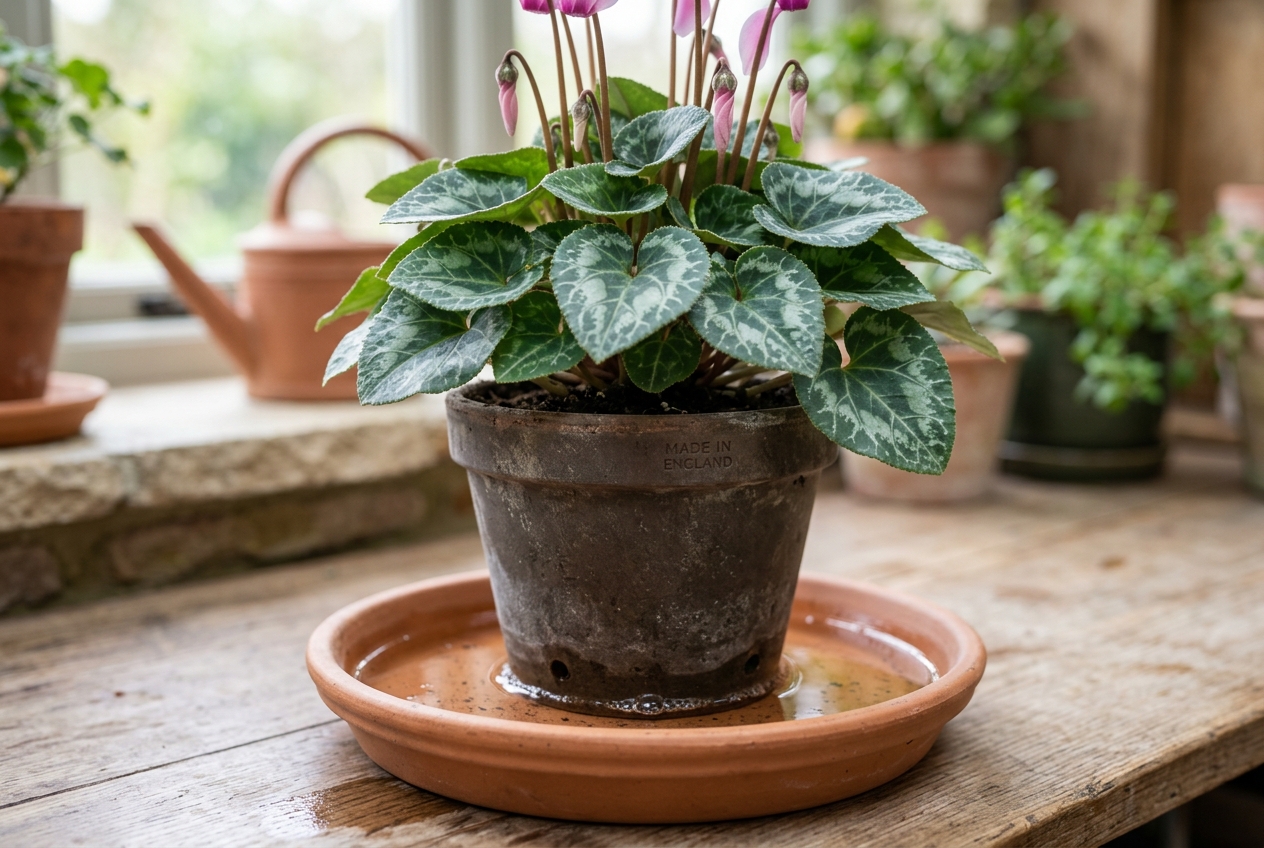
When your cyclamen stops blooming in April or May and its leaves turn yellow, do not throw it away! Follow Dennis’s summer dormancy reactivation protocol for cyclamen indoor care:
- Cease Watering Gradually: As leaves yellow in late spring, reduce watering. When all leaves are dry, stop watering completely and remove all dried foliage.
- Store in a Cool, Dark Location: Place the pot containing the bare corm in a cool, shaded basement, closet, or north-facing garage (ideal temperature 50°F to 60°F / 10°C to 15°C) for 2 to 3 months. Keep the soil almost completely dry, adding just a tablespoon of water once a month to prevent the corm from shriveling.
- Wake Up in September: In late August or early September, bring the pot back into bright indirect light. Repot into fresh soil if needed, leaving the corm shoulder exposed. Soak the pot thoroughly from the bottom. Within 2 to 3 weeks, fresh silver-patterned leaves will emerge, followed by a new flush of winter blooms, celebrating the ultimate triumph of cyclamen indoor care!
Disease & Pest Defense: Stopping Botrytis Mold and Cyclamen Mites
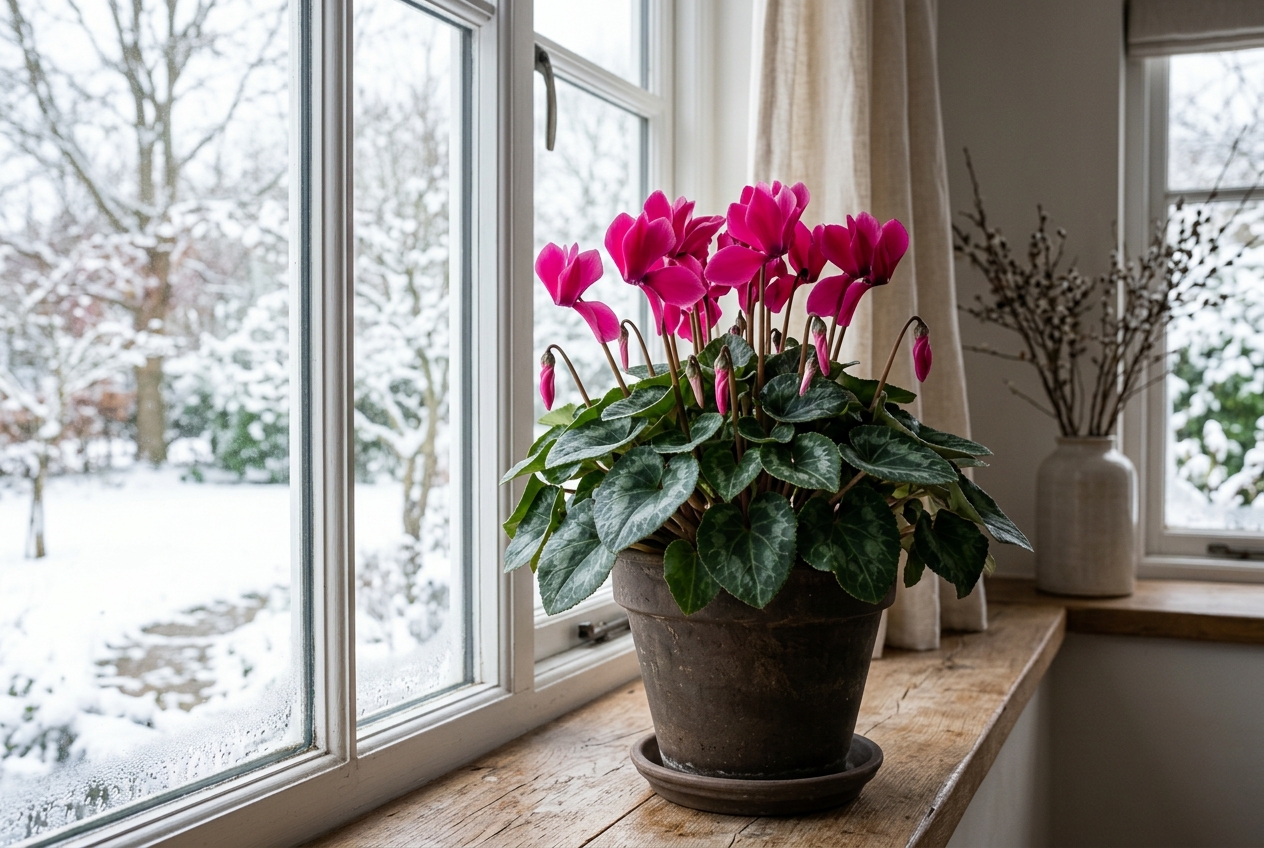
Protecting cyclamen against specific fungal and microscopic pests ensures long-term vigor in cyclamen indoor care:
- Botrytis Blight (Gray Mold): Thrives in cool, damp, stagnant conditions when water is splashed on foliage. Prevent it by bottom watering and running an oscillating fan during cyclamen indoor care.
- Cyclamen Mites (Phytonemus pallidus): Microscopic pests that feed inside leaf buds, causing distorted, stunted, curled leaves. Treat with insecticidal soap or neem sprays detailed in our Houseplant Pest Control Guide.
Frequently Asked Questions (FAQ)
Why is my indoor cyclamen drooping and falling over?
Drooping stems are almost always caused by excessive heat (above 68°F/20°C) or underwatering. Move the plant to a cooler room (around 60°F/15°C) and bottom water for 20 minutes; stems will firm up within hours.
How long do cyclamen flowers last indoors?
In cool room temperatures (55°F–65°F), individual cyclamen flowers remain fresh for 3 to 4 weeks, and a healthy plant produces successive blooms continuously for 3 to 5 months from November to March.
Is cyclamen toxic to pets?
Yes. Cyclamen contains triterpenoid saponins, with the highest concentration found in the underground corm. Ingesting cyclamen can cause severe gastrointestinal distress in cats and dogs. Keep containers out of reach.
How do I deadhead cyclamen properly?
Never cut flower stalks with scissors. Grasp the spent stem near the corm base, twist firmly, and pull straight up so the entire stem detaches cleanly from the corm socket without leaving decaying stubs.
Can cyclamen rebloom every year indoors?
Yes! By honoring its summer dormancy (keeping the bare corm cool and dry from June to August) and resuming watering in September, a cyclamen will rebloom every winter for decades.
Final Verdict & Dennis’s Annual Cyclamen Calendar
Persian cyclamen are not disposable holiday bouquets; they are magnificent Mediterranean botanical treasures. By providing crisp cool room temperatures, practicing careful bottom watering, executing clean deadheading, and respecting summer dormancy, you will master cyclamen indoor care and enjoy breathtaking floral displays every winter.
Here is Dennis’s golden cyclamen rule: Keep it cool, water from below, and let it rest in summer! Provide crisp air and bright indirect light, and your cyclamen will reward you with an explosion of radiant winter color year after year!
{
“@context”: “https://schema.org”,
“@graph”: [
{
“@type”: “Article”,
“@id”: “https://www.plantingcare.com/cyclamen-indoor-care/#article”,
“isPartOf”: {
“@type”: “WebPage”,
“@id”: “https://www.plantingcare.com/cyclamen-indoor-care/”
},
“headline”: “Cyclamen Indoor Care: 7 Pro Steps for Nonstop Blooms”,
“description”: “Master cyclamen indoor care with Dennis P. Hansen’s 7 pro steps. Discover cool temperature needs, summer dormancy revival, and bottom watering secrets.”,
“image”: “https://www.plantingcare.com/wp-content/uploads/2026/08/cyclamen_hero_featured_1787665843318.jpg”,
“author”: {
“@type”: “Person”,
“name”: “Dennis P. Hansen”,
“jobTitle”: “Hobby Gardener”,
“worksFor”: {
“@type”: “Organization”,
“name”: “PlantingCare.com”
}
},
“publisher”: {
“@type”: “Organization”,
“name”: “PlantingCare”,
“url”: “https://www.plantingcare.com”
},
“mainEntityOfPage”: “https://www.plantingcare.com/cyclamen-indoor-care/”
},
{
“@type”: “HowTo”,
“name”: “How to Care for Cyclamen Indoors”,
“description”: “Step-by-step guide to keeping Persian cyclamen blooming indoors and managing annual dormancy.”,
“image”: “https://www.plantingcare.com/wp-content/uploads/2026/08/cyclamen_hero_featured_1787665843318.jpg”,
“totalTime”: “PT15M”,
“tool”: [
{“@type”: “HowToTool”, “name”: “Shallow Bottom Watering Tray”},
{“@type”: “HowToTool”, “name”: “Digital Room Thermometer”}
],
“supply”: [
{“@type”: “HowToSupply”, “name”: “Low-Nitrogen Potassium Fertilizer”},
{“@type”: “HowToSupply”, “name”: “Room Temperature Water”}
],
“step”: [
{
“@type”: “HowToStep”,
“name”: “Maintain Cool Ambient Temperatures”,
“text”: “Keep cyclamen in a bright room where temperatures stay between 55°F and 65°F (13°C to 18°C) to prevent premature dormancy.”,
“image”: “https://www.plantingcare.com/wp-content/uploads/2026/08/cyclamen_hero_featured_1787665843318.jpg”
},
{
“@type”: “HowToStep”,
“name”: “Bottom Water the Corm”,
“text”: “Place the pot in a shallow saucer of water for 20 minutes to saturate the roots while keeping the top corm crown dry.”,
“image”: “https://www.plantingcare.com/wp-content/uploads/2026/08/cyclamen_bottom_watering_1787665854329.jpg”
},
{
“@type”: “HowToStep”,
“name”: “Tug and Twist Spent Stems”,
“text”: “Grasp faded flower stalks at the corm base, twist, and pull upward cleanly to prevent decaying stubs.”,
“image”: “https://www.plantingcare.com/wp-content/uploads/2026/08/cyclamen_dormancy_phase_1787665878155.jpg”
}
]
},
{
“@type”: “FAQPage”,
“mainEntity”: [
{
“@type”: “Question”,
“name”: “Why is my indoor cyclamen drooping and falling over?”,
“acceptedAnswer”: {
“@type”: “Answer”,
“text”: “Drooping stems are caused by temperatures above 68°F or dry soil. Move to a cool room and bottom water.”
}
},
{
“@type”: “Question”,
“name”: “How long do cyclamen flowers last indoors?”,
“acceptedAnswer”: {
“@type”: “Answer”,
“text”: “Individual flowers last 3 to 4 weeks, with continuous reblooming for 3 to 5 months in cool rooms.”
}
},
{
“@type”: “Question”,
“name”: “Is cyclamen toxic to pets?”,
“acceptedAnswer”: {
“@type”: “Answer”,
“text”: “Yes, cyclamen contains toxic saponins concentrated in the underground corm. Keep away from cats and dogs.”
}
},
{
“@type”: “Question”,
“name”: “How do I deadhead cyclamen properly?”,
“acceptedAnswer”: {
“@type”: “Answer”,
“text”: “Twist and tug the spent stem at the corm base to snap it off cleanly without leaving decaying stubs.”
}
},
{
“@type”: “Question”,
“name”: “Can cyclamen rebloom every year indoors?”,
“acceptedAnswer”: {
“@type”: “Answer”,
“text”: “Yes, keep the bare corm dry and cool in summer, resume watering in September, and it will rebloom for decades.”
}
}
]
}
]
}
Dennis P. Hansen
Dennis P. Hansen is a home gardener with a genuine passion for plants and the simple pleasure of growing them. He enjoys caring for houseplants, succulents, and other plants at home while continually learning from everyday gardening experiences. Dennis likes to share practical plant care tips, useful observations, and simple solutions that can help others grow healthier plants. He believes that caring for plants is a rewarding journey and that there is always something new to learn along the way.