
6 Mistakes to Avoid with Your Strelitzia Indoor Plant


Table of Contents
Introduction:
Is your strelitzia indoor plant looking a little tired—leaning toward the window, edges crisping, or new leaves staying small? You’re not alone. This Bird of Paradise is a bold statement plant, but indoors it needs a few non‑negotiables to truly shine. The good news: most issues trace back to a handful of fixable missteps, and once you dial them in, growth becomes steady, leaves stay glossy, and blooms become possible.
In this guide, we’ll unpack six common mistakes and show you how to avoid them with simple, proven tweaks. You’ll learn how to give your strelitzia indoor plant the right light, water, and nutrition—without guesswork—so it can deliver that lush, architectural look year‑round.
What we’ll cover (and the levers that matter):
- Lighting and placement: nail light requirements, choose the right window, and use filtered sun to prevent scorch and legginess.
- Water and humidity: set a reliable watering schedule, improve drainage, and target healthy humidity to stop curl and browning.
- Soil, potting, and feeding: pick the best soil mix, repot at the right cadence, and use a balanced fertilizer for strong roots and bigger leaves.
- Health and growth: spot pests and diseases early, prune and clean leaves for better airflow, and guide upright growth as your plant matures.
By the end, you’ll know exactly how to tune your environment—and your routine—so your strelitzia indoor plant thrives, not just survives. Ready to sidestep the six pitfalls and grow a dramatic, long‑lived centerpiece? Let’s begin.
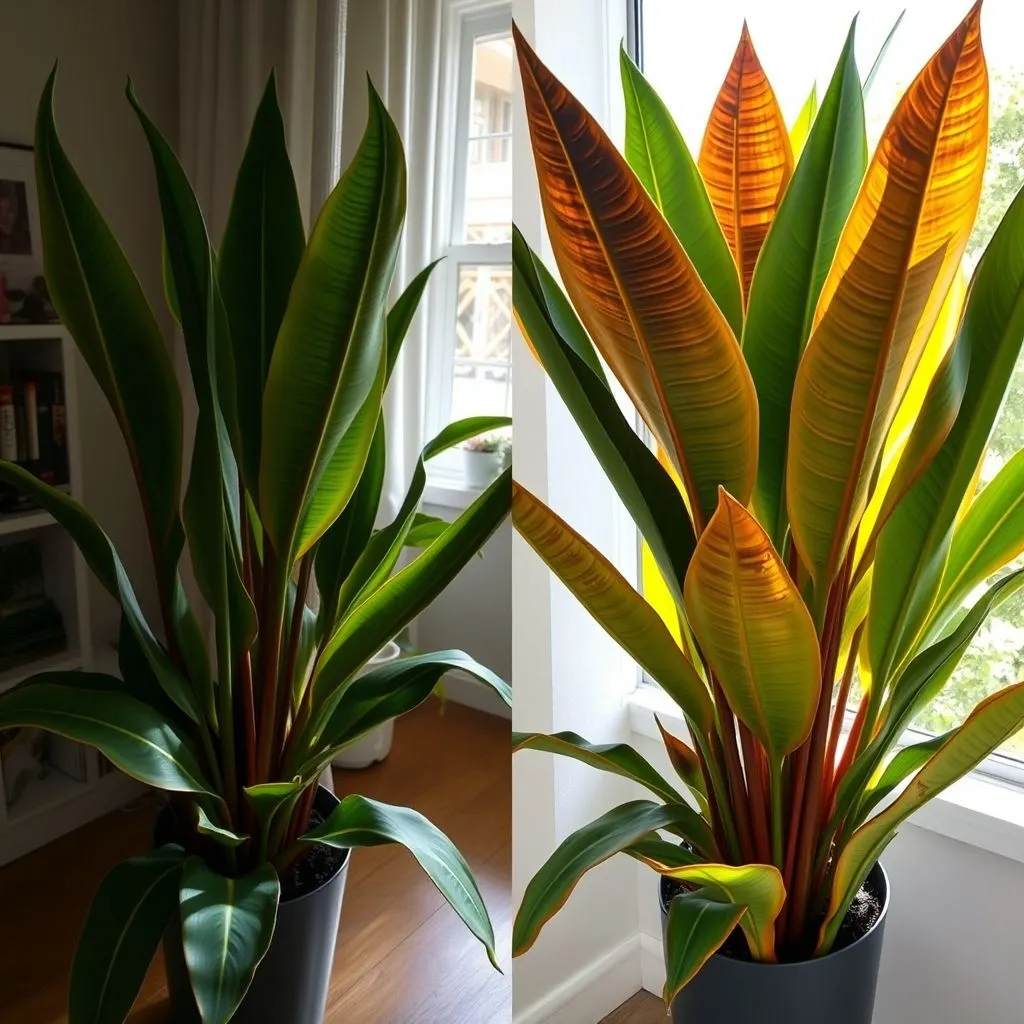
Lighting and placement mistakes that stunt your strelitzia indoor plant
If there’s one factor that makes or breaks a strelitzia indoor plant, it’s light. Are you noticing long, leaning stems, smaller leaves, or faded color? Those are placement problems in disguise. Let’s fine‑tune your setup so your Bird of Paradise plant gets the energy it craves without the burn.
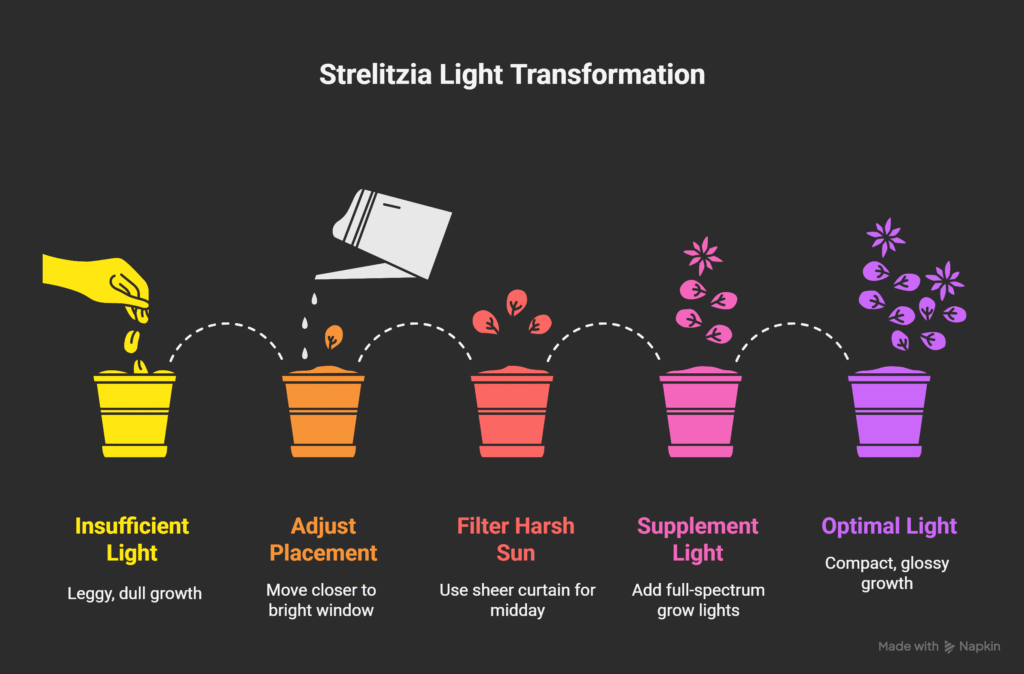
Mistake 1: Too little light makes your strelitzia indoor plant leggy and dull
Strelitzia are sun‑seekers. When they don’t get enough light, they stretch toward the nearest source and dilute their color to conserve energy. The result? Leggy growth, floppy leaves, and a plant that never quite looks “full.”
What too little light looks like:
- Leaning stems and petioles that angle sharply toward the window
- New leaves emerging noticeably smaller and thinner than the old ones
- Duller, washed‑out green with little sheen
- Soil staying wet for too long (slow photosynthesis = slow drinking)
Why it happens:
- Your plant is too far from a bright window (light drops off dramatically a few feet from glass)
- It’s parked behind heavy curtains or in a north‑facing room with limited sun
- Short winter days reduce intensity and duration
What to do:
- Move closer to an east‑facing window for gentle morning sun and bright indirect light all day
- In a south‑facing room, place the pot 2–5 feet back or use a sheer to diffuse the rays
- Supplement with full‑spectrum grow lights if natural light is limited (12–14 hours/day)
Tip: A simple light meter (or a reliable app) can help you meet Strelitzia light requirements consistently.
Mistake 2: Harsh midday sun scorches leaves and stalls growth
On the other end of the spectrum, too much direct midday sun can cook leaves behind glass. You’ll see bleached, crispy patches (leaf scorch) and slowed growth as the plant diverts energy to repair.
What too much sun looks like:
- Tan or white papery spots on the upper leaf surfaces
- Brown, crunchy edges, especially on leaves facing the window
- Potting mix drying out in a day, causing droop between waterings
- New leaves emerging with scorched tips
Why it happens:
- Summer, west‑facing exposure with intense afternoon rays
- Unfiltered south windows at noon, especially in hot climates
- Recently moved plant that hasn’t been acclimated to higher light
What to do:
- Filter midday sun with a sheer curtain or move a few feet back from the window
- Allow gentle direct light in the morning or late afternoon; avoid peak hours (roughly 11 a.m.–3 p.m.)
- Acclimate gradually: increase light over 1–2 weeks to toughen new leaves
Fix it: Best light range and smart placement for steady, compact growth
Your goal is bright indirect light with a little soft sun. Think “vivid but gentle.”
How to dial in the sweet spot:
- Placement cheat sheet
- East‑facing window: ideal. 2–4 hours of morning sun + bright indirect light = steady growth.
- South‑facing window: excellent with a sheer; keep your strelitzia indoor plant 2–5 feet back.
- West‑facing window: use filtered light in summer; late‑day rays can be intense.
- North‑facing window: usually too dim; pair with grow lights for reliable results.
- Target intensity and duration
- Aim for long daylight exposure: 8–12 hours of brightness indoors
- If you use instruments, look for bright indirect ranges; if not, use the hand‑shadow test:
- Crisp shadow with soft edges = just right
- No shadow = too dim
- Razor‑sharp shadow at noon = likely too intense without diffusion
- Use the distance advantage
- Light intensity drops steeply as you move away from the window—often more than half within a few feet
- Tiny adjustments matter: shifting the pot 1–2 feet can turn a “meh” corner into a growth zone
- Grow lights as a booster
- Choose a full‑spectrum LED (4,000–6,500K) positioned 12–24 inches above the canopy
- Run 12–14 hours daily to extend winter days and maintain compact, upright growth
- Aim for even coverage across all leaves to prevent one‑sided stretching
- Seasonal and room cues
- Summer: filter or step back from south and west sun to prevent scorch
- Winter: slide closer to the brightest window and clean glass (dust can cut light noticeably)
- Rotate the pot a quarter turn weekly to keep your strelitzia indoor plant symmetrical
Pro tip: Combine a sheer curtain with a reflective light wall (white paint) opposite the window to bounce brightness back into the foliage. It’s a simple way to intensify light without adding heat.
Note: If you’re in the Southern Hemisphere, reverse the window guidance (north is brightest).
Quick diagnostics: leaning stems, small new leaves, faded color
Use this rapid checklist to troubleshoot in seconds:
- Leaning plant? Increase light from that direction or rotate weekly; consider moving closer to the window.
- Smaller, paler new leaves? You’re under the threshold—boost to bright indirect light or add grow lights.
- Crispy edges or bleached patches? You’re getting leaf scorch—diffuse midday rays and adjust distance.
- Uneven canopy? Rotate and ensure light reaches all sides; check for obstructions like shelves or blinds.
- Still unsure? Snap a photo at noon and run a light meter app; adjust placement until readings are consistently “bright.”
When you hit the balance—ample brightness without the burn—your strelitzia indoor plant rewards you with thicker petioles, larger glossy leaves, and a compact, architectural silhouette that looks intentional in every room.
Watering and humidity pitfalls that trigger stress in your strelitzia indoor plant
Water and air work together for Strelitzia roots. When one is off, the other can’t compensate. If your strelitzia indoor plant has yellowing leaves, crispy edges, or curls that won’t relax, the culprit is often a watering rhythm or humidity level that doesn’t match its needs. Let’s decode the signs and set up a simple, sustainable routine.
Mistake 3: Overwatering and poor drainage cause root rot and yellowing
Your Bird of Paradise plant likes a thorough drink—then time to breathe. Constantly wet soil starves roots of oxygen and invites rot.
Spot the problem fast:
- Lower leaves yellow first; petioles feel soft or mushy
- Soil stays wet for 5–7+ days, sometimes with a sour smell
- Fungus gnats hover over the potting mix
- Growth slows despite “regular” watering
Why it happens:
- No drainage holes or a cachepot trapping runoff
- Dense, compacted mix with little bark or perlite
- Calendar-based watering (e.g., “every Sunday”) instead of soil moisture checks
- Low light or cool rooms where your strelitzia indoor plant drinks slowly
What to do now:
- Check roots: firm and white = healthy; brown/black and slimy = rot
- Trim mushy roots with sterilized shears and repot in a fresh, airy mix
- After repotting, water thoroughly once, then let the top 2–3 inches dry before watering again
- Increase light and airflow to speed recovery
Mistake 4: Underwatering and dry air brown the edges and curl leaves
Underwatering doesn’t just stunt growth; it combines with low humidity to crisp leaf margins.
Telltale signs:
- Brown, crispy edges and leaf tips
- Leaves curl inward or fold along the midrib
- Potting mix pulls away from the pot and resists absorbing water
- The plant perks up right after watering, then droops again within a day or two
Why it happens:
- Long gaps between waterings during warm, bright periods
- Small pot or very fast-draining mix in a hot spot
- Indoor heating or AC dropping humidity below 35%
What to do now:
- Rehydrate a hydrophobic mix by bottom-watering: soak the pot in a basin for 15–20 minutes, then drain fully
- Water more deeply but less often—until excess flows from the drainage holes
- Raise ambient humidity to 45–60% so edges stop crisping
Fix it: Simple watering rhythm, drainage setup, and humidity targets that work
A reliable routine beats guesswork. Here’s a practical, plant-first approach to Strelitzia care indoors.
- Set a responsive watering schedule
- Check, don’t guess: insert a finger or moisture meter to mid-depth
- Water when the top 2–3 inches are dry (3–4 inches for large containers)
- In bright, warm rooms: expect more frequent watering; in winter or low light: slow down
- Always empty saucers after watering
- Build in drainage from the start
- Pot with large drainage holes; add pot feet to prevent water pooling
- Use an airy, well-draining mix: roughly 40% high-quality potting soil, 30% orchid bark, 20% perlite, 10% coco coir or compost
- Choose breathable pots (terracotta) if you tend to overwater; glazed ceramic if you underwater
- Dial in humidity and environment
- Target 45–60% RH for smooth margins and unfurled leaves
- Place away from heating/AC vents and drafty doors
- Group plants, use a pebble tray under (not touching) the pot, or run a cool-mist humidifier
- Keep temps in the 65–80°F (18–27°C) range with gentle airflow
- Mind your water quality
- If leaf tips brown despite good humidity, try filtered or dechlorinated water
- Avoid softened water (it can add salts)
- Flush the pot with plain water monthly to reduce fertilizer salts
With these tweaks, your strelitzia indoor plant will drink steadily, resist edge-browning, and push out larger, glossier leaves.
Tools that help: moisture meter, breathable pots, pebble trays, humidifier
- Moisture meter: Use as a second opinion with the finger test. Probe 2–3 spots to mid-root zone and water only when readings are trending dry.
- Breathable pots: Terracotta wicks excess moisture, protecting against overwatering and supporting oxygen flow to roots.
- Pebble tray: Elevates local humidity near the foliage. Keep the pot above the water line so roots don’t sit wet.
- Humidifier: A small, cool-mist unit with a built-in hygrometer keeps levels near 50–60%. Clean weekly and use distilled water to avoid mineral dust.
Get these basics right, and your strelitzia indoor plant will move from stress to consistent, vigorous growth—no drama, just healthy rhythm.
Soil, potting, and feeding missteps that limit vigor
If light and water are dialed in but growth is still sluggish, it’s time to look below the surface. Soil structure, pot size, and nutrition determine how much energy your strelitzia indoor plant can actually use. Think of this section as tuning the engine so those big, architectural leaves keep coming.
Mistake 5: Heavy soil and wrong pot size suffocate roots and slow growth
Strelitzia roots are thick, hungry, and oxygen-loving. Dense mixes and oversized pots trap water, displace air, and create a “perched water table” that leads to stress.
How to spot the issue:
- Soil stays wet for days, smells earthy-sour, or compacts into a brick
- White crust (salts) on the surface but leaves still look pale
- The plant rocks in the pot or leans because roots can’t anchor
- In a too-large pot, the outer soil remains wet while the root ball stays soggy-cool
Why it happens:
- All-purpose soil with little bark or perlite
- Pebbles at the bottom (myth!) causing water to perch higher in the pot
- Pot diameter jumped more than 2 inches at once
- Crowded, rootbound core that was never loosened at repotting
Fix the pot/soil mismatch:
- Choose a pot only 1–2 inches wider than the current one (heavier pots stabilize tall foliage)
- Prioritize drainage holes; skip cachepots or empty them immediately
- Break up circling roots gently and remove dead, brown tissue
- Use an aerated, chunky mix that holds moisture but drains fast (recipe below)
Pro tip: Plant the crown level—burying the base invites rot; planting high dries too quickly.
Mistake 6: Irregular or salty fertilizers burn roots and reduce blooms
Your Bird of Paradise plant is a steady feeder, not a feast-or-famine one. Skipping for months, then blasting with strong fertilizer, is a fast track to tip burn and weak growth.
Red flags:
- Brown leaf tips/edges despite good humidity and watering
- Pale, slow new leaves even in bright conditions
- White crust on soil or pot rims (salt buildup)
- Roots look tan and dry at the tips after a heavy feed
What’s going wrong:
- Overconcentrated mixes (full-strength) or frequent feeding in low light
- Hard or softened water compounding salts
- Single-nutrient “bloom boosters” creating imbalances
- Feeding right after repotting when fresh media already contains nutrients
Fix it: Aerated soil mix and repotting cadence for a strelitzia indoor plant
Give roots air, structure, and space—without drowning them. Here’s a reliable, indoor-friendly setup for strong, even growth.
Recommended “best soil mix” (by volume):
- 40% high-quality potting soil (peat or coco base)
- 30% fine orchid bark (pine bark fines)
- 20% perlite or pumice (for drainage and oxygen)
- 10% coco coir or compost (moisture and nutrients)
Optional: a handful of horticultural charcoal for odor control and minor purification.
Repotting cadence and steps:
- Timing: Late winter to early spring is ideal. Young plants: every 12–18 months; mature clumps: every 2–3 years.
- Size: Up-pot by just 1–2 inches. Oversizing slows drying and risks root rot.
- Prep: Hydrate the old root ball the day before for easier handling.
- Root work: Tease apart circling roots; trim dead/brown strands with sterilized shears.
- Planting depth: Set the crown at the soil line; firm the mix around roots without crushing structure.
- First watering: Soak thoroughly until water runs clear; empty the saucer. Then let the top 2–3 inches dry before the next watering.
- Aftercare: Bright indirect light, gentle airflow, and no fertilizer for 4–6 weeks while fine roots re-establish.
Avoid:
- “Drainage layers” of rocks (they raise the perched water table)
- Burying the crown
- Frequent soil poking that collapses air pockets
Feeding plan: balanced NPK, proper dilution, seasonal timing, flushing salts
Nutrients should be consistent, complete, and gentle. For Strelitzia care indoors, aim for a balanced formula with micros.
Your easy, repeatable schedule:
- Spring–summer: Use a balanced liquid fertilizer (e.g., 9-3-6, 10-10-10, or 12-4-8) at 1/4–1/2 strength every 2–4 weeks.
- Late summer–early fall: Shift to monthly feeds at 1/4 strength.
- Winter: Pause or feed lightly every 6–8 weeks only if your strelitzia indoor plant is actively growing under strong light.
- After repotting: Wait 4–6 weeks before resuming fertilizer.
Bloom considerations:
- Indoors, flowers are light-limited. If light is excellent, a slight bump in potassium (K) during peak growth can support bud formation—but avoid extreme “bloom booster” ratios.
Salt management and water quality:
- Flush the pot monthly with plain water (2–3x pot volume) to remove salts
- If tips keep browning, switch to filtered or rainwater; avoid softened water
- Watch for white crusts; if they return quickly, reduce strength or frequency
- Target pH near 6.0–6.5 for optimal nutrient uptake
Nice-to-haves (not mandatory):
- Slow-release prills (3–4 month) mixed into the top layer for baseline nutrition
- Occasional seaweed/kelp extract for root resilience and trace minerals
- Chelated iron if new leaves yellow between veins (true chlorosis)
Set up the right substrate, size the pot thoughtfully, and feed with a light, steady hand. With these tweaks, your strelitzia indoor plant will channel energy into thicker petioles, larger glossy leaves, and sustained vigor—season after season.
Health upkeep, pests, and growth management for lasting results
You’ve dialed in light, water, and soil—now let’s protect that progress. When did you last dust the leaves, check for tiny crawlers, or guide new stems? A little routine goes a long way. With a smart maintenance plan, your strelitzia indoor plant will keep its striking silhouette and push bigger, glossier leaves month after month.
Preventive care: dusting leaves, pruning, and airflow for a healthier strelitzia indoor plant
Clean leaves and moving air are your quiet power-ups. Dust blocks light, traps pests, and slows photosynthesis.
Do this monthly (and after any big watering day):
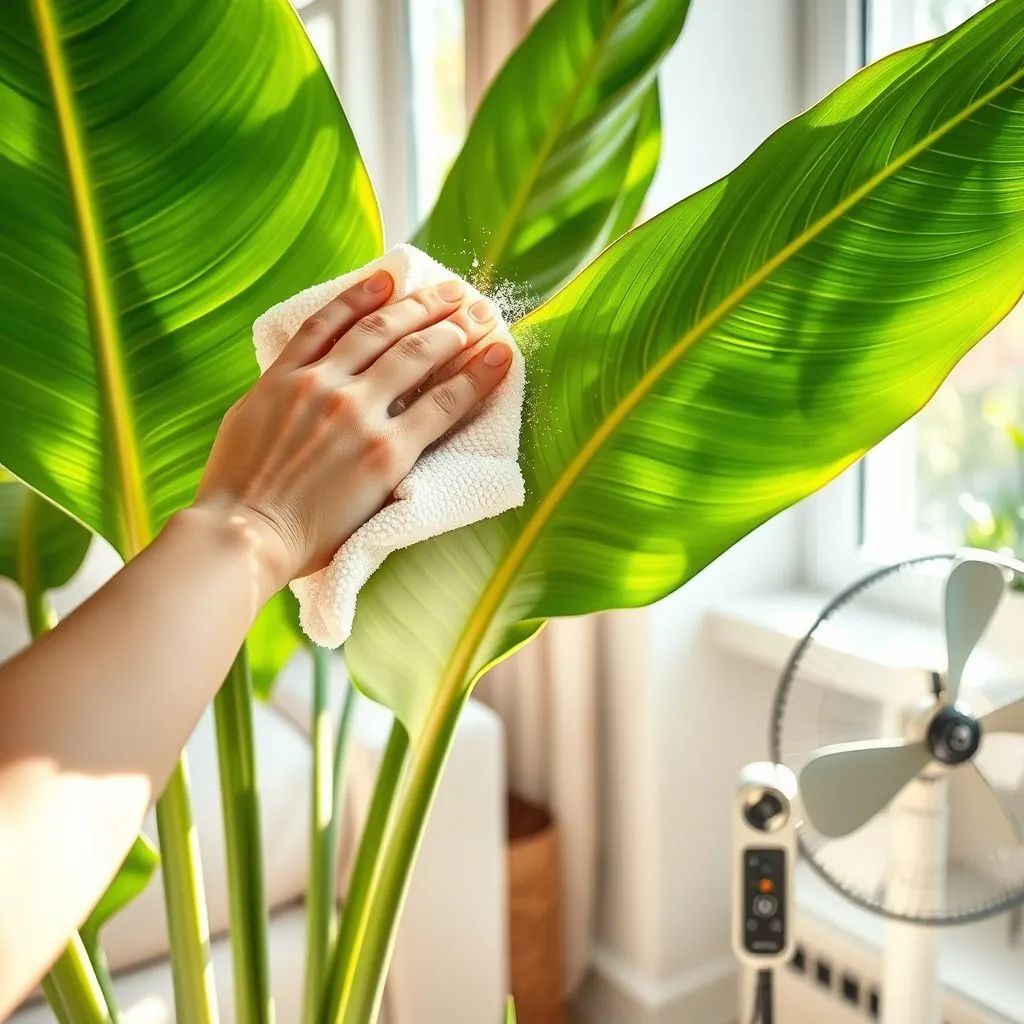
- Leaf dusting: Wipe both sides with a barely damp microfiber cloth; support the leaf from beneath. Skip leaf-shine sprays—they clog pores.
- Shower rinse: A lukewarm rinse every 6–8 weeks dislodges mites and grime. Let water drain fully.
- Pruning basics: Remove yellowed or torn leaves at the base with sterilized shears (70% isopropyl). Cut spent flower stalks flush with the rhizome.
- Airflow: Use gentle, indirect airflow (small oscillating fan) and avoid stagnant corners. Better airflow = fewer pests and diseases.
- Rotation: Quarter‑turn the pot weekly so your strelitzia indoor plant grows evenly and doesn’t lean toward one window.
Quick health checklist:
- Leaves feel dusty or look dull? Clean now to boost Strelitzia care indoors.
- Petioles rubbing against a wall? Reposition for space and light.
- Water stains on leaves? Wipe off minerals to restore shine.
Pest watch: spider mites, mealybugs, and scale—how to spot and treat safely
Catch pests early and they’re easy to evict. Miss them, and they multiply fast.
Know the signs:
- Spider mites: Tiny speckling (stippling), fine webbing, leaves feel gritty.
- Mealybugs: Cottony clusters in leaf axils and along leaf bases; sticky honeydew.
- Scale: Brown or tan “bumps” that don’t brush off easily; shiny leaf surfaces from honeydew.
Integrated treatment plan:
- Isolate and inspect
- Move the plant away from others. Check undersides, petiole bases, and midribs with a flashlight.
- Mechanical removal
- Rinse leaves (top and underside) in the shower.
- Dab mealybugs and young scale with 70% isopropyl on a cotton swab.
- Soap or oil (label‑safe for indoor use)
- Insecticidal soap or horticultural oil at 1–2% solution; test on one leaf and wait 24 hours.
- Coat all leaf surfaces and stems. Reapply every 7–10 days for 3 cycles to break life stages.
- Environment tweaks
- Raise humidity to 45–60% to slow spider mites.
- Increase airflow and avoid hot, dry spots near vents.
- Monitor
- Use yellow sticky traps to track flying pests (and your progress).
- Keep new plants in quarantine for 2–3 weeks before joining the collection.
Tip: Persistent, heavy infestations may require a targeted miticide or systemic treatment labeled for indoor plants—follow directions carefully and keep pets/children away until dry.
Growth guidance: rotation, staking, and division as plants mature
As your Bird of Paradise plant bulks up, guide its form for safety and style.
Shape and support:
- Rotation rhythm: Turn 90° weekly for a balanced canopy; slow to biweekly once growth is even.
- Staking tall stems: Use bamboo stakes or a slim moss pole outside the root zone; secure with soft, flexible ties. Goal: support, not straitjacket.
- Pot stability: Heavy pots reduce tipping in high-traffic rooms.
Division, step by step (best in spring):
- When to divide
- Clump is crowding the pot, leaves are smaller, or the container is warping.
- Lift and prep
- Water the day before. Gently remove the plant and loosen the root mass.
- Make the cut
- With a sterilized knife, separate sections of rhizome—each with 2–3 healthy leaves and robust roots.
- Dust and plant
- Optionally dust cuts with cinnamon or sulfur. Pot each division in an airy mix and keep the crown at soil level.
- Aftercare
- Bright, indirect light; steady humidity; no fertilizer for 4–6 weeks. Water when the top 2–3 inches dry.
With consistent guidance, your strelitzia indoor plant will grow upright, resist pests, and keep that sculptural, intentional look.
Helpful links to include (add these as contextual, dofollow references)
- External authority: Royal Horticultural Society care pages; university extension articles on Strelitzia, indoor plant pruning, and integrated pest management.
- Internal how‑tos: link to your watering guide, soil mix recipe, pruning tutorial, and repotting/division walkthrough.
Conclusion:
Your strelitzia indoor plant doesn’t need complicated routines—just consistent basics done well. Now that you know the six pitfalls, which one will you tackle first: refining light requirements, resetting your watering schedule, or refreshing the best soil mix? Small tweaks add up fast, and within a few weeks you’ll see steadier growth, richer color, and fewer issues with pests and diseases.
Here’s your quick-win checklist:
- Light requirements: Bright, indirect light with gentle morning sun. Rotate weekly to keep your Bird of Paradise plant balanced and compact.
- Watering schedule: Water deeply, then allow the top 2–3 inches to dry. Empty saucers and slow down in low light.
- Best soil mix: Use an airy blend with bark and perlite; avoid “drainage layers.” Up-pot only 1–2 inches when repotting.
- Fertilizer rhythm: Balanced feed at low strength during active growth; flush salts monthly to prevent tip burn.
- Humidity and airflow: Aim for 45–60% humidity and gentle air movement to keep edges smooth and deter mites.
- Pest checks: Inspect undersides weekly; treat early with insecticidal soap or horticultural oil if you spot trouble.
Your 7-day tune-up:
- Move the pot to your brightest safe spot and set a reminder to rotate it on the same day each week.
- Calibrate watering by checking soil moisture at mid-depth before every drink.
- Dust leaves, clean the window, and note a target date for your next repotting.
When you keep these habits on repeat, Strelitzia care indoors becomes effortless. You’ll spend less time troubleshooting and more time enjoying bold, architectural foliage—and maybe even blooms if conditions allow. Most importantly, your strelitzia indoor plant will reward you with thicker petioles, glossier leaves, and a sculptural silhouette that looks intentional in any room.
Ready to turn insight into action? Bookmark this checklist, share it with a plant‑loving friend, and revisit it when you feed, prune, or repot. With a few consistent habits, your strelitzia indoor plant will go from “surviving” to a long‑lived centerpiece you’re genuinely proud of.
Dennis P. Hansen
Dennis P. Hansen is a home gardener with a genuine passion for plants and the simple pleasure of growing them. He enjoys caring for houseplants, succulents, and other plants at home while continually learning from everyday gardening experiences. Dennis likes to share practical plant care tips, useful observations, and simple solutions that can help others grow healthier plants. He believes that caring for plants is a rewarding journey and that there is always something new to learn along the way.