
5 Proven Tips to Grow a Monstera Indoor Plant


Table of Contents
Introduction:
Have you ever walked into someone’s home and been absolutely mesmerized by their massive, glossy monstera indoor plant with those iconic split leaves? You’re not alone—the Monstera deliciosa, affectionately known as the Swiss cheese plant, has become the crown jewel of indoor gardening enthusiasts everywhere. But here’s the thing: while these tropical beauties look effortlessly stunning on Instagram, many plant parents struggle to recreate that lush, jungle-like growth at home. Maybe you’ve noticed your monstera indoor plant isn’t developing those signature fenestrations, or perhaps it’s looking a bit droopy despite your best efforts. Sound familiar?
The truth is, growing a thriving Monstera indoor plant isn’t about having a magical green thumb – it’s about understanding what these tropical houseplants actually need to flourish in our homes. After years of trial and error (and yes, a few crispy leaves along the way), I’ve discovered that success comes down to mastering just a few key elements.
In this comprehensive guide, we’ll dive deep into the five proven strategies that will transform your Monstera from surviving to absolutely thriving. Whether you’re a new plant parent who just brought home your first Swiss cheese plant or you’re looking to level up your existing houseplant care routine, these tips will help you create the perfect environment for spectacular growth.
From finding that sweet spot of bright, indirect light to understanding when those aerial roots need support, we’ll cover everything you need to know. By the end of this article, you’ll have the confidence and knowledge to grow a Monstera indoor plant that’ll have your friends asking for your secret. Ready to unlock the full potential of your tropical companion? Let’s get growing!
Master the Light Requirements for Your Monstera Indoor Plant
Let’s talk about the single most important factor that determines whether your Monstera indoor plant becomes a showstopper or a sad, leggy disappointment: light. Get this right, and you’re already 80% of the way to growing a magazine-worthy tropical houseplant.
Understanding Monstera’s Natural Habitat Light Conditions
Picture this: deep in the rainforests of Central America, wild Monsteras start their journey on the forest floor, where dappled sunlight filters through a dense canopy above. As these clever climbers mature, they use their aerial roots to scale tree trunks, gradually reaching toward brighter light zones – but never into direct, scorching sun.
This natural behavior tells us everything we need to know about caring for our Monstera indoor plant. These aren’t desert dwellers that crave intense sunshine, nor are they cave plants that thrive in darkness. They’re perfectly adapted to that sweet middle ground of bright, filtered light that mimics their jungle home.
Finding the Perfect Spot: Bright, Indirect Light Zones
So where exactly should you place your Swiss cheese plant for optimal growth? Here’s what works best:
Prime Real Estate:
- 3-6 feet from an east-facing window
- Near a south or west window with sheer curtains
- In a bright room with plenty of ambient light
- Close to a north window in particularly sunny climates
The key is finding spots where your hand casts a soft, fuzzy shadow rather than a sharp, dark one. If you can comfortably read a book without squinting in that location during midday, your Monstera will likely thrive there.
Signs Your Swiss Cheese Plant Needs More or Less Light
Your Monstera deliciosa is constantly communicating with you – you just need to know how to listen. Here’s what those leaves are trying to tell you:
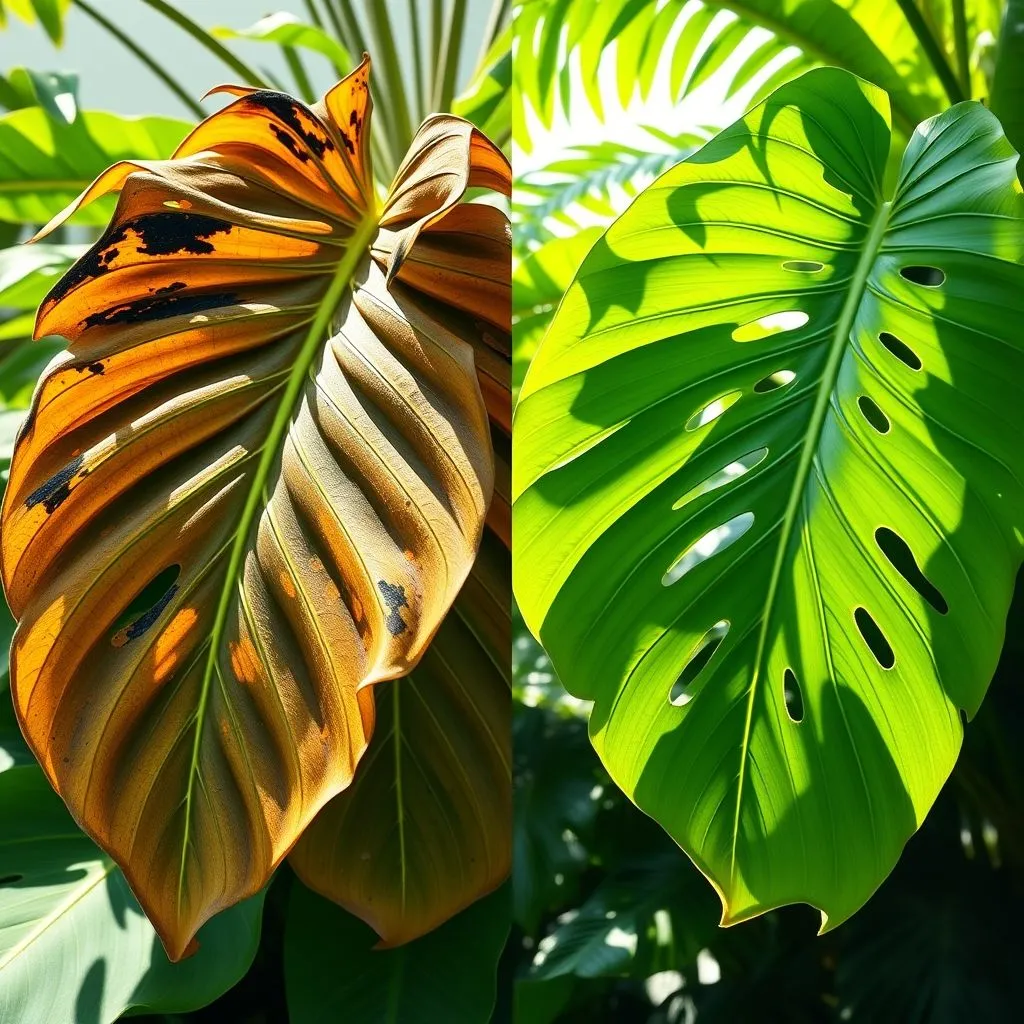
Too Much Light:
- Yellowing or bleached patches on leaves
- Brown, crispy edges that look burnt
- Leaves curling away from the light source
- Soil drying out unusually fast
Too Little Light:
- Smaller new leaves without fenestrations
- Leggy growth with long spaces between leaves
- Leaves turning toward the nearest light source
- Slow or stunted growth despite proper care
Remember, those iconic split leaves only develop when your plant receives adequate light. No splits? That’s your Monstera’s way of saying, “Hey, I need more brightness over here!”
Using Grow Lights for Optimal Monstera Growth
What if your home doesn’t have that perfect bright spot? Don’t worry – modern grow lights have revolutionized indoor gardening, and your Monstera indoor plant can absolutely thrive under artificial lighting.
For best results, look for full-spectrum LED grow lights that mimic natural sunlight. Position them 12-24 inches above your plant and run them for 12-14 hours daily. I’ve seen remarkable transformations in Monsteras that went from struggling in dark corners to producing massive, fenestrated leaves under proper grow lights.
Pro tip: Use a timer to maintain consistent lighting schedules. Your tropical houseplant will appreciate the predictable routine, just like it would experience in nature.
Watering Techniques That Keep Your Monstera Thriving
Watering can make or break your monstera indoor plant. Too much and you risk root rot; too little and you’ll see droopy leaves and crispy edges. Let’s dial in a simple, reliable routine that keeps your Monstera deliciosa hydrated, oxygenated, and actively growing.
The Finger Test: When to Water Your Tropical Houseplant
Before you pick up the watering can, train yourself to “listen” to your plant and soil.
- The 2-inch rule: Insert a clean finger (or a wooden chopstick) 2 inches into the potting mix. If it’s dry at that depth, it’s time to water. If it’s cool or slightly damp, wait 2–3 days and recheck.
- Lift test: Pick up the pot. A light pot indicates the root zone has dried sufficiently; a heavy pot means there’s still water lower down.
- Visual clues: Soil pulling away from the pot edges = too dry. A persistently glossy, dark surface = still wet.
How to water for best results:
- Use room-temperature water (65–75°F) to avoid shocking roots.
- Water slowly around the entire surface until 15–25% drains from the bottom.
- Empty the saucer after 10 minutes so roots aren’t sitting in runoff.
- Once a month, do a thorough flush to reduce mineral buildup.
Pro tip: If you rely on a moisture meter, calibrate it by cross-checking with the finger test for a few weeks. Meters can misread chunky mixes used in aroid potting mix.
Proper Drainage and Pot Selection for Healthy Roots
Great watering habits need the right container. Proper drainage keeps a monstera indoor plant safe from root rot and ensures consistent oxygen around roots.
- Drainage holes are non-negotiable: No holes, no go. If using a decorative cachepot, keep the grow pot separate and remove it to water.
- Pot material matters:
- Terracotta breathes and helps mix dry faster—great for heavy waterers or lower-light spaces.
- Plastic/ceramic retain moisture longer—ideal if your home is warm, bright, or dry.
- Size with intention: Choose a pot only 2–3 inches wider than the current root ball. Overpotting leaves too much wet soil around roots.
- The right mix: A chunky aroid potting mix (think bark, perlite/pumice, and peat/coco) lets water flow freely while holding just enough moisture for steady uptake.
- Self-watering pots: They can work, but err on the dry side and keep the reservoir small. Refill only when the top third of the mix is dry.
Quick check for trouble:
- Sour smell, mushy stems, black or translucent roots = overwatering/root rot.
- Hydrophobic soil (water runs straight down the sides) = rehydrate by bottom-watering for 20–30 minutes, then resume normal top-watering.
Seasonal Watering Adjustments for Indoor Monsteras
Your plant’s thirst changes with light, temperature, and growth rate. Adjust the cadence—not just the quantity.
- Spring–Summer (active growth):
- Expect to water every 5–10 days in bright, indirect light.
- Warmer temps and longer days increase transpiration.
- Consider slightly larger, thorough waterings to support new leaves and roots.
- Fall–Winter (resting phase):
- Stretch intervals to 10–21 days, depending on light and humidity.
- Watch for heaters and dry air; they can dry the top layer while the lower mix stays wet—always check at depth.
- Keep water volumes moderate; bright windows or grow lights may still warrant more frequent watering.
Environmental nudges that change your schedule:
- Brighter light = faster drying. Low light = slower drying.
- Terracotta dries faster than plastic.
- Bigger leaves and a fuller root system mean quicker water use.
Remember: In winter, your monstera indoor plant slows down; in spring, it ramps up. Let the soil—not the calendar—lead you.
Common Watering Mistakes That Damage Monstera Leaves
Avoid these pitfalls to keep your Swiss cheese plant lush and glossy:
- Sipping instead of soaking: Light sprinkles leave dry pockets and salt buildup. Solution: Water thoroughly until you see runoff.
- Letting the plant sit in water: Standing water suffocates roots. Solution: Empty saucers and cachepots promptly.
- Watering on a fixed schedule: Your home’s conditions change. Solution: Use the finger and lift tests every time.
- Overpotting: Too much wet soil around a small root ball leads to rot. Solution: Right-size the pot and upgrade gradually.
- Cold, chlorinated, or hard water: Can stress leaves and roots. Solution: Use filtered, rested, or rainwater when possible.
- Mistaking humidity for watering: Misting helps humidity briefly but doesn’t hydrate roots. Solution: Maintain ambient humidity separately (40–60%) and water the soil correctly.
- Ignoring post-repot shifts: Fresh, airy mix dries differently. Solution: Relearn your plant’s rhythm after repotting.
Diagnostic cheatsheet:
- Too wet? Yellowing lower leaves, droopy yet heavy pot, musty smell.
- Too dry? Curling or crispy edges, soil pulling from the sides, very light pot.
With a few mindful habits and the right container, your monstera indoor plant will reward you with larger, more fenestrated leaves—and a thriving presence in your indoor gardening space. That’s houseplant care done right for Monstera deliciosa.
Creating the Ideal Soil Mix and Fertilizing Schedule
If light and water are the steering wheel and brakes, the soil and nutrients are the engine of your monstera indoor plant. Get the mix and feeding right, and you’ll see stronger roots, thicker stems, and those coveted splits on new leaves.
DIY Aroid Potting Mix Recipe for Monstera Plants
Monsteras are hemi-epiphytes in nature, so they prefer a chunky, airy medium that drains fast yet holds gentle, even moisture. Try this easy, high-performance aroid potting mix by volume:
- 40% orchid bark (medium/fine mix for structure and airflow)
- 25% coco coir or peat moss (light moisture retention)
- 20% perlite or pumice (drainage and oxygen)
- 10% horticultural charcoal (odor control and pore space)
- 5% worm castings (slow, gentle nutrition)
How to assemble:
- Pre-moisten the coir/peat until it feels like a wrung-out sponge.
- Blend all components evenly; you want a mix that feels light and springy.
- Optional: Add a small dose of slow-release fertilizer (per label) to support steady growth.
- Do the squeeze test: Grab a handful and squeeze hard. It should clump lightly, then fall apart—never stay soggy.
Quick swaps if you can’t find ingredients:
- No orchid bark? Mix extra perlite with coco chips.
- No charcoal? Increase bark by 5% and perlite by 5%.
- Prefer pre-mix? Buy an “aroid” blend and fold in 20–30% extra bark.
Why this works for Monstera deliciosa:
- Large pores keep roots oxygenated, reducing rot risk.
- Chunky texture guides new roots and aerial roots to anchor securely.
- Gentle moisture lets the plant drink steadily between waterings.
Understanding NPK Ratios for Lush Foliage Growth
NPK stands for nitrogen (N), phosphorus (P), and potassium (K)—the primary macronutrients your Swiss cheese plant uses to power growth.
- Foliage-first formula: A 3-1-2 or 5-2-3 ratio supports leafy, vigorous growth without pushing weak, leggy stems.
- Don’t forget micros: Calcium and magnesium support sturdy cell walls and chlorophyll; iron keeps new leaves from yellowing.
- Liquid vs. slow-release: Liquids offer quick adjustments and are great for indoor gardening; slow-release granules provide a steady baseline.
Pro tips:
- Fertilize “weakly, weekly” or “half-strength, biweekly” rather than one strong monthly dose.
- Occasionally flush the pot with plain water to prevent salt buildup.
Monthly Feeding Schedule During Growing Season
Feed according to light and growth, not just the calendar. Use this as a flexible framework for your monstera indoor plant:
- Early spring (ramp-up): 1/4-strength balanced fertilizer every 2 weeks.
- Late spring to summer (peak growth): 1/2-strength every 2–3 weeks. Under strong grow lights, you can do 1/4-strength weekly.
- Fall (slowdown): Reduce to 1/4-strength monthly as growth eases.
- Winter (rest): Pause feeding, or offer 1/8-strength monthly only if you have warm temps and bright light.
Good to know:
- Organic options like fish/seaweed blends are gentle but can smell; use indoors with good ventilation.
- If your water is very hard, consider filtered or rainwater—excess salts can lock out nutrients.
Signs of Nutrient Deficiency in Your Monstera Indoor Plant
Diagnose fast so you can adjust your houseplant care instead of guessing.
- Nitrogen (N): Older leaves turn pale uniformly; growth slows. Fix: Balanced feed with slightly higher N.
- Potassium (K): Brown, crispy edges on older leaves; weak stems. Fix: Use a formula with moderate K, ensure consistent watering.
- Phosphorus (P): Stunted root development; dull, bluish-green leaves. Fix: Balanced feed and warm soil.
- Magnesium (Mg): Interveinal yellowing on older leaves (veins stay green). Fix: Add Cal-Mag or a light Epsom salt solution.
- Iron (Fe): New leaves yellow between veins. Fix: Use chelated iron; keep pH slightly acidic (5.8–6.5) to avoid lockout.
- Calcium (Ca): Misshapen, crinkled new growth. Fix: Cal-Mag supplement and steadier moisture.
If multiple issues appear at once:
- Check pH (target 5.8–6.5 in soilless mixes).
- Flush with plain water, then resume a lighter, consistent feeding schedule.
Support Systems and Pruning for Stunning Growth
A monstera indoor plant is a natural climbing plant. Give it something to scale and a bit of thoughtful pruning, and you’ll unlock taller stems, bigger leaves, and dramatic fenestrations.
Installing Moss Poles for Natural Climbing Behavior
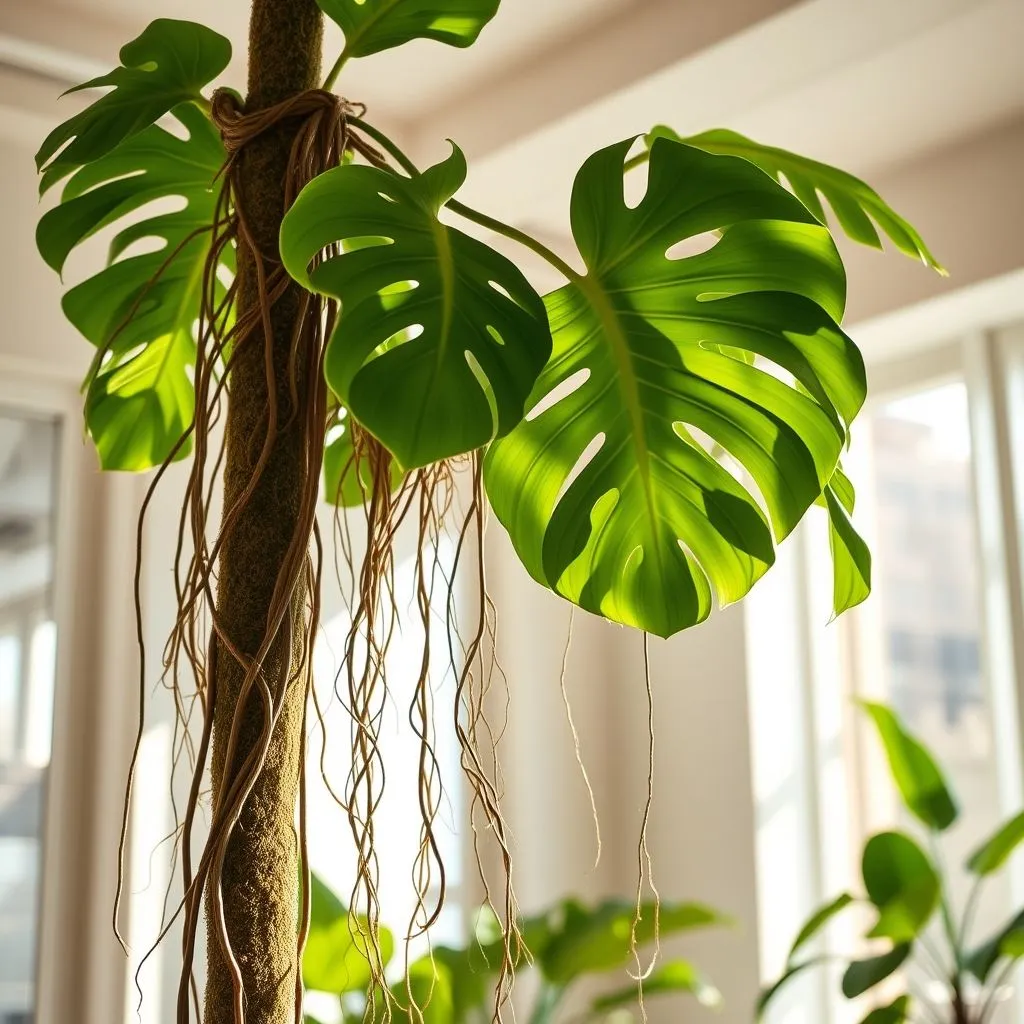
Monsteras climb toward light in the wild, using aerial roots to grab onto trees. Mimic that indoors with a moss or coco coir pole.
- Choose your support:
- Moss/coir pole: Holds moisture, inviting aerial roots to attach.
- Wood plank or cedar totem: Encourages mature “shingling” and thick stems.
- Secure the pole:
- Insert the pole deep into the pot, touching the bottom for stability.
- Backfill with your aroid potting mix and press firmly around the base.
- Train the vines:
- Face nodes and aerial roots toward the pole.
- Use soft plant ties or Velcro; spiral stems upward as they grow.
- Keep it moist (not soggy):
- Lightly mist the pole or use a wick/humidifier so roots have a reason to attach.
- Avoid soaking the crown of the plant.
- Extend as needed:
- Add a second pole on top or replace with a taller one when you’re near the top of the support.
Result: Stronger attachment = thicker petioles and more impressive leaves on Monstera deliciosa.
Handmade Natural Coco Coir Moss Pole (30-Inch)
Stackable breathable coco coir moss pole that gives climbing Monstera aerial roots moisture and physical support, stimulating giant fenestrated leaves.
Proper Pruning Techniques for Bushier Growth
Pruning isn’t punishment—it’s strategy. A few smart cuts can transform a lanky plant into a full, architectural statement.
- Tools and timing:
- Use sharp, sterilized shears; wear gloves (sap can irritate).
- Prune in late spring or early summer for fastest recovery.
- Where to cut:
- Make cuts just above a node (where a leaf and aerial root emerge).
- Heading cuts (shortening a stem) encourage branching below the cut.
- What to remove:
- Leggy, weak stems that shade vigorous growth.
- Yellowing or damaged leaves to redirect energy.
- Tangled vines to improve light and airflow.
- Aftercare:
- Provide bright, indirect light and steady moisture.
- Avoid heavy feeding for 1–2 weeks post-prune.
Bonus: Save those pruned sections with nodes—perfect material for Monstera propagation.
Training Aerial Roots for Enhanced Stability
Those long, adventurous roots aren’t just for show.
- Encourage attachment:
- Gently pin aerial roots to the moss pole using ties or clips.
- Wrap roots lightly with damp sphagnum to stimulate adhesion.
- Soil or water? Both can work:
- Guide a few aerial roots into the soil for extra anchoring.
- Or place them in a small vial of water attached to the pole to hydrate the node area.
- Tidy vs. trim:
- Tuck stray roots back toward the support for a cleaner look.
- You can trim overly long aerial roots, but keeping them often yields bigger leaves.
When and How to Propagate Your Monstera Deliciosa
Propagation is both backup plan and expansion pack for your collection.
- Best time: Spring through mid-summer when growth and root activity are highest.
- You must have a node:
- A single leaf without a node won’t root into a new plant.
- Step-by-step:
- Identify a segment with at least one node (bonus if there’s a small aerial root).
- Cut 1/2 inch below the node with sterilized shears.
- Optional: Let the cut end dry for 1–2 hours.
- Root in water, perlite, or damp sphagnum in bright, indirect light (70–80°F).
- Pot up once roots are 2–3 inches long into your airy aroid mix.
- Aftercare for cuttings:
- Keep humidity 60–70%.
- Start with gentle watering; don’t compact the mix.
- Expect juvenile leaves at first; fenestrations return as the plant matures and climbs.
With the right support, pruning rhythm, and propagation strategy, your monstera indoor plant will evolve from “nice houseplant” to a sculptural, living centerpiece.

To support massive fenestrated foliage during the active spring and summer growth cycles, apply balanced nutrition following our expert rules on fertilizer for indoor plants.
Conclusion:
Ready to turn good intentions into real growth? With the five levers—light, watering, soil, feeding, and support—you now have a reliable blueprint for a thriving monstera indoor plant that delivers bigger, more fenestrated leaves and a sculptural presence in your space.
Here’s what to keep top of mind:
- Light: Bright, indirect light fuels photosynthesis without scorch. Rotate the pot weekly to balance growth.
- Watering: Let the mix dry down to 2 inches before a thorough soak. Consistency beats quantity.
- Soil: A chunky aroid potting mix keeps roots oxygenated and resilient.
- Feeding: A gentle, foliage-forward fertilizer schedule supports steady growth without salt stress.
- Support: Give those aerial roots a purpose—moss poles or totems unlock mature growth on Monstera deliciosa.
Watch the signals your plant sends:
- Wider spacing between leaves? Increase light or add a grow light.
- Pale new leaves or sluggish growth? Revisit your fertilizer strength and micronutrients.
- Droop with a heavy pot? You’re overwatering; check drainage.
- New aerial roots exploring the air? It’s asking for a climb—tie them to the support and lightly hydrate the pole.
- Fenestrated leaves slowing down? Improve light, humidity, or vertical support to “tell” your Swiss cheese plant it’s safe to size up.
Your 7-day action plan:
- Audit light: Move the pot 3–6 feet from a bright window or set a full-spectrum grow light on a timer (12–14 hours).
- Reset watering: Use the finger and lift tests; water only when the root zone says it’s time.
- Refresh the mix: Top-dress with fresh, airy substrate—or plan a repot into a true aroid blend if roots are circling.
- Start feeding smart: Use a balanced, dilute fertilizer (think 3-1-2 style) every 2–3 weeks during active growth.
- Add support: Install a moss or coir pole and train stems; secure aerial roots for stability and larger leaves.
If you implement even two of these steps, your monstera indoor plant will respond quickly—glossier foliage, stronger petioles, and more confident new growth. And if you go all in? Expect a centerpiece that anchors your indoor gardening style.
So, what will you tweak first—light, watering, or support? Whichever lever you pull today, keep observing, adjusting, and enjoying the process. With mindful houseplant care and a bit of patience, your monstera indoor plant won’t just survive; it will thrive—and your home will look all the better for it.
Dennis P. Hansen
Dennis P. Hansen is a home gardener with a genuine passion for plants and the simple pleasure of growing them. He enjoys caring for houseplants, succulents, and other plants at home while continually learning from everyday gardening experiences. Dennis likes to share practical plant care tips, useful observations, and simple solutions that can help others grow healthier plants. He believes that caring for plants is a rewarding journey and that there is always something new to learn along the way.