
Snake Plant Care: 7 Easy Secrets for Thriving Growth

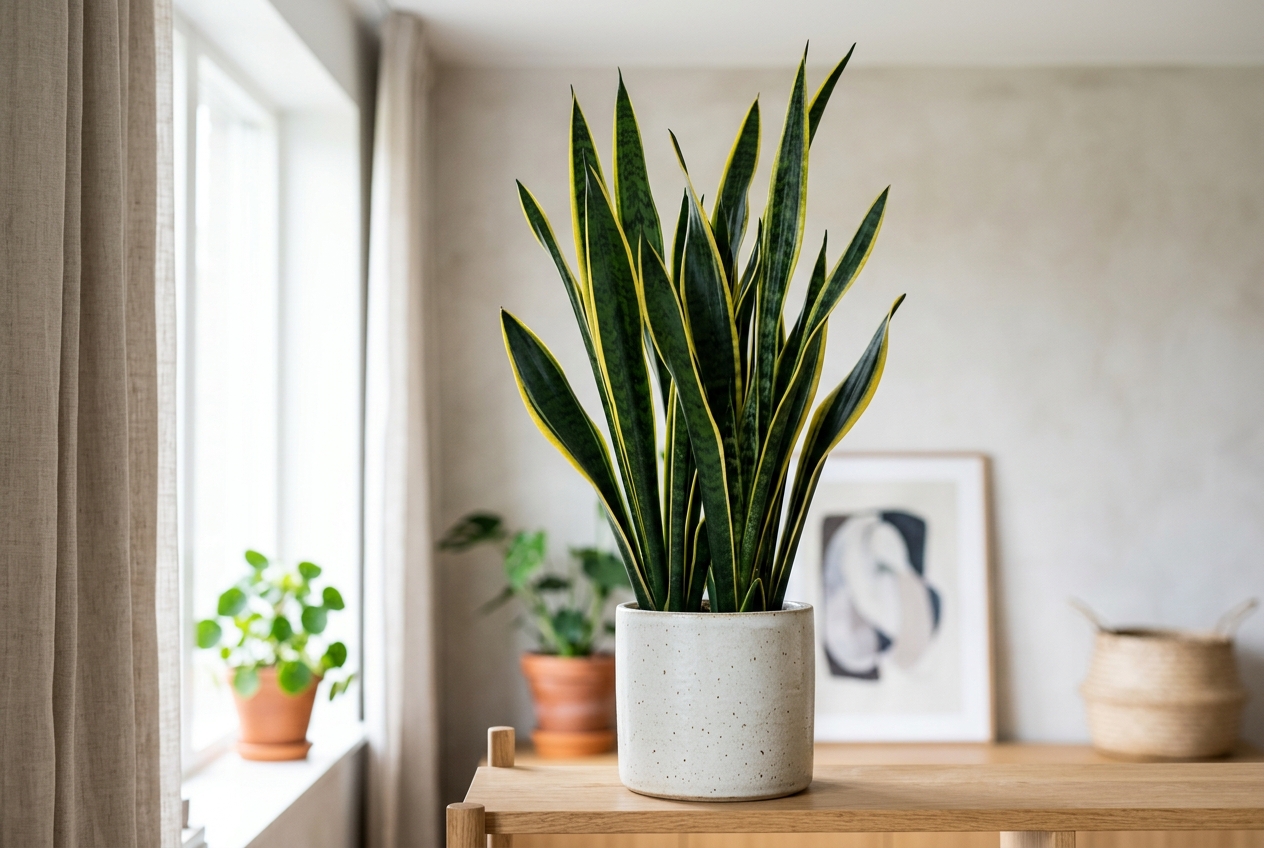
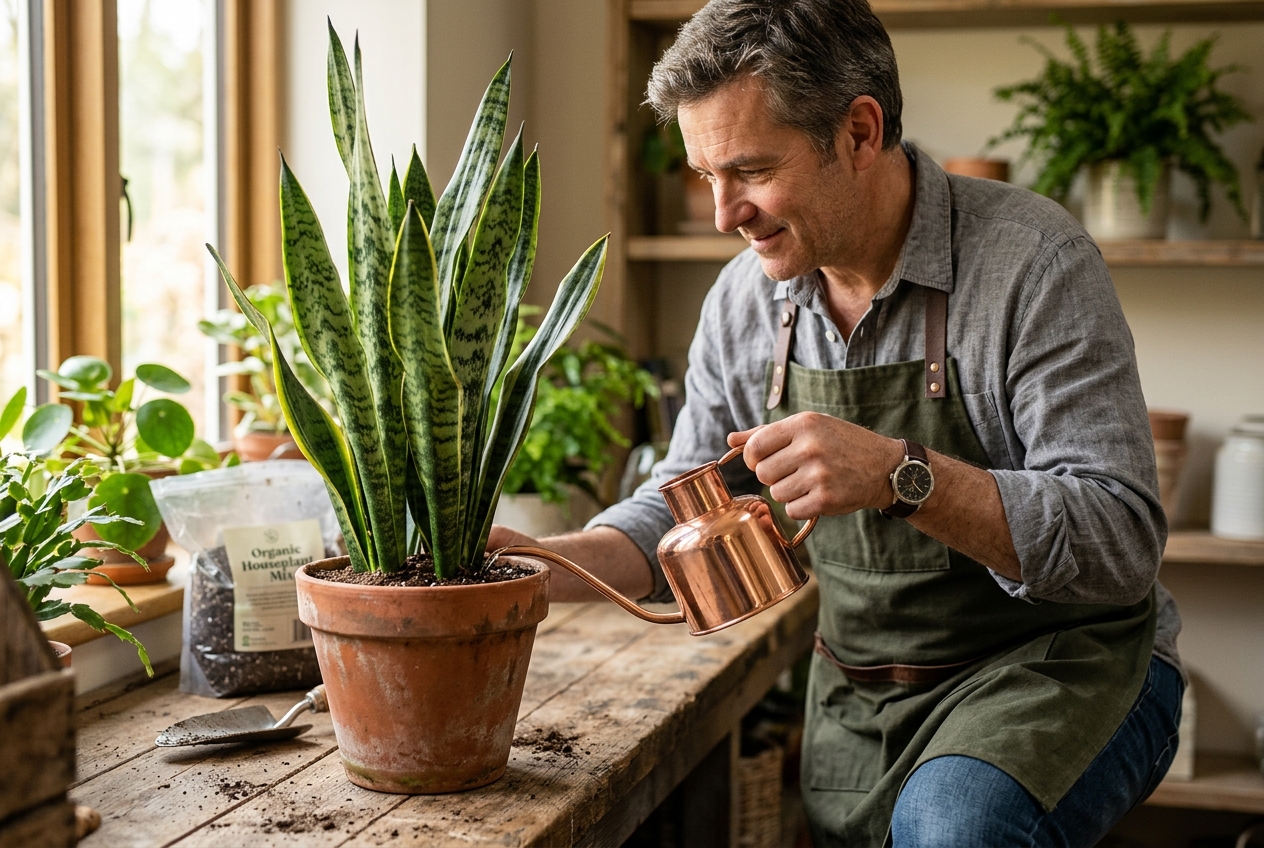


Mastering snake plant care is the cornerstone of successful indoor gardening, unlocking architectural elegance, unmatched resilience, and natural indoor air filtration. I am Dennis P. Hansen, an everyday home gardener sharing simple, practical plant care tips based on my day-to-day gardening practice at home. In this definitive guide, I will deconstruct the unique Crassulacean Acid Metabolism (CAM) physiology of Dracaena trifasciata (formerly Sansevieria trifasciata), debunk low-light myths, and share my 7 field-tested secrets to keep your snake plant thriving for decades.
Table of Contents: Jump to a Section
- 1. CAM Physiology & Anatomy: Why Snake Plants Are Built to Survive
- 2. Debunking the “Low Light” Myth: Survival vs. Thriving
- 3. 7 Easy Secrets: Snake Plant Care
- 4. Underground Rhizome Architecture & Division Propagation
- 5. Custom Gritty Soil Formulations: Stopping Root Rot Forever
- 6. Top Cultivars: Laurentii, Moonshine, Zeylanica & Cylindrica
- 7. Frequently Asked Questions (FAQ)
- 8. Final Verdict & Dennis’s Sansevieria Maintenance Checklist
Native to the arid, rocky tropical regions of West Africa (from Nigeria east to the Congo), snake plants evolved under extreme climatic selective pressure. They endure prolonged periods of scorching drought punctuated by torrential monsoon downpours. To survive these harsh environmental swings, snake plants developed dense fibrous root systems connected by thick underground starch-storing rhizomes and stiff, succulent, sword-like leaves coated with a thick waxy cuticle layer. Proper snake plant care honors these arid adaptations within the home environment.
The single greatest threat to snake plants indoors is over-attentive care. When well-meaning owners keep the soil constantly damp in dim corners, the subterranean rhizomes rapidly rot, causing leaves to collapse into mush—a classic chlorosis issue analyzed in Why Are My Plant Leaves Turning Yellow. By understanding snake plant care, practicing the “soak and dry” watering rhythm in How to Water Succulents, wiping leaves with How to Clean Indoor Plant Leaves, and providing adequate light as outlined in Best Grow Lights for Indoor Plants, you transform this indestructible plant into a stunning sculptural centerpiece. Dedicated snake plant care ensures structural vitality all year long.
CAM Physiology & Anatomy: Why Snake Plants Are Built to Survive
To master snake plant care, one must appreciate the biological genius of Crassulacean Acid Metabolism:
1. Nocturnal Stomatal Gas Exchange
Unlike standard C3 houseplants that open their leaf pores (stomata) during the day, snake plants keep their stomata tightly sealed during daylight hours to eliminate evaporative transpirational water loss. At night, when temperatures cool, they open their stomata, absorb carbon dioxide ($CO_2$), and store it as malic acid. During the following day, they use sunlight to convert this stored acid into carbohydrates, demonstrating how snake plant care aligns with natural cycles.
2. Structural Water Storage
A cross-section of a snake plant leaf reveals thick parenchymal water-storage cells enclosed by robust lignified vascular fibers. These water reservoirs allow the plant to endure 6 to 8 weeks without a drop of water with zero cellular collapse, proving why snake plant care requires minimal intervention and disciplined patience.
Debunking the “Low Light” Myth: Survival vs. Thriving
While snake plants are marketed as “indestructible low-light plants,” low light merely keeps them alive—it does not allow them to thrive in snake plant care:
| Light Level | PPFD Intensity | Growth & Foliar Behavior | Watering Frequency |
|---|---|---|---|
| Deep Low Light (Dark hallways, windowless offices) | 20 – 50 $mutext{mol}$ | Zero new growth; fading variegation; weak floppy leaves | Every 4 to 6 weeks only |
| Moderate Indirect Light (East/North window, 6ft from South window) | 100 – 200 $mutext{mol}$ | Steady healthy growth; rich green banding; firm upright habit | Every 2 to 3 weeks |
| Bright Indirect to Direct Sun (Direct morning sun, South/West window) | 250 – 500 $mutext{mol}$ | Rapid pupping; intense gold/silver variegation; occasional blooming | Every 10 to 14 days in summer |
7 Easy Secrets: Snake Plant Care
Follow Dennis’s 7 field-tested rules to achieve indestructible, thriving growth in snake plant care:
Secret 1: Water Only When 100% Bone-Dry
The golden rule of snake plant care is: when in doubt, do not water! Insert a wooden moisture probe to the very bottom of the container. If you detect any moisture, wait another week. In winter, watering once every 4 to 6 weeks is more than sufficient.
Secret 2: Plant in Porous Unglazed Terracotta Pots
Terracotta is porous clay that wicks moisture through its sidewalls, speeding up substrate dry-out and supplying critical oxygen to roots. Always ensure the pot has ample bottom drainage holes, following guidelines in How to Repot Houseplants as part of snake plant care.
Secret 3: Use a Gritty 50/50 Mineral Substrate Mix
Never plant snake plants in standard moisture-retentive peat potting soil. Blend 50% premium potting soil or coco coir with 50% coarse mineral grit (pumice, perlite, and coarse horticultural sand). Water should drain through in seconds in effective snake plant care.
Secret 4: Provide Bright Indirect Sunlight for Maximum Pups
While snake plants tolerate shade, placing them in bright indirect sunlight (or gentle morning direct sun) stimulates the production of vigorous new underground rhizomes (“pups”) and enhances vibrant yellow edge variegation in snake plant care.
Secret 5: Feed Sparingly with Low-Nitrogen Fertilizer
Snake plants are light feeders. Apply a balanced, low-nitrogen liquid succulent fertilizer (such as 2-4-6 or 3-3-3) at half-strength only 2 to 3 times per year during active spring and summer growth. Follow How to Fertilize Indoor Plants to master snake plant care nutrition.
Secret 6: Clean Foliage to Maximize Photosynthesis
Broad vertical leaves collect indoor dust rapidly, blocking light absorption. Wipe both sides of the leaves every month using a damp microfiber cloth as demonstrated in How to Clean Indoor Plant Leaves, elevating your snake plant care routines.
Secret 7: Keep in Warm Ambient Temperatures (Above 55°F / 13°C)
Snake plants thrive in temperatures between 70°F and 90°F (21°C to 32°C). Exposure to cold drafts or temperatures below 50°F (10°C) damages cell walls and induces bacterial soft rot, which must be avoided in snake plant care.
Underground Rhizome Architecture & Division Propagation
Snake plants reproduce via vigorous underground rhizomes in snake plant care:
- Rhizome Division (Preserves Variegation): Unpot the plant and use sterile shears to slice the thick connecting orange rhizome between a mature rosette and a pup. Ensure the pup has attached roots. Repot directly into dry gritty mix. This method 100% preserves gold-edge variegation (like in ‘Laurentii’).
- Leaf Cuttings (Reverts to Solid Green): Cut a healthy leaf into 3-inch horizontal sections, let the cut edges callus for 3 days, and plant cut-side-down in moist perlite. Note: Leaf cuttings of variegated snake plants produce all-green non-variegated offspring due to chimera cell separation. For pest prevention, consult our Houseplant Pest Control Guide.
Custom Gritty Soil Formulations: Stopping Root Rot Forever
Dennis’s signature snake plant substrate recipe for snake plant care:
- 40% Coarse Pumice / Perlite: Ensures massive macropore aeration.
- 30% Organic Coco Coir / Peat: Provides base cation exchange capacity.
- 20% Coarse Horticultural Sand: Adds ballast and mineral drainage.
- 10% Biochar & Worm Castings: Sustains natural biological fertility in snake plant care.
Bonsai Jack Gritty Mix #111 (Fast-Draining Substrate)
An ultra-porous 100% gritty mix engineered with pine bark, calcined clay, and Monto clay. Provides instantaneous drainage to permanently prevent root rot in Sansevieria.
Top Cultivars: Laurentii, Moonshine, Zeylanica & Cylindrica
Expand your collection with these distinctive cultivars in snake plant care:
- Dracaena trifasciata ‘Laurentii’: Classic vertical sword leaves with brilliant golden-yellow margins.
- Dracaena trifasciata ‘Moonshine’: Stunning pale silvery-mint broad leaves that glow in bright light.
- Dracaena trifasciata ‘Zeylanica’: Dark forest-green leaves with intricate silver-gray horizontal banding.
- Dracaena angolensis (Cylindrica): Round, smooth, arching spear-like succulent foliage.
For another drought-tolerant architectural foliage option, explore our grower guide on ZZ Plant Care.
Frequently Asked Questions (FAQ)
Why are my snake plant leaves turning yellow and mushy?
Yellow mushy leaves are a classic symptom of overwatering and rhizome rot. Unpot the plant immediately, prune rotted tissue, let the plant dry for 24 hours, and repot in dry gritty soil.
How often should I water my snake plant?
In spring and summer, water every 2 to 3 weeks when the soil is 100% dry. In autumn and winter, reduce watering to once every 4 to 6 weeks.
Why are my snake plant leaves wrinkling and puckering?
Wrinkled leaves indicate severe dehydration. The plant has consumed all internal water reserves stored in its leaves. Give the soil a thorough soak.
Is the snake plant toxic to dogs and cats?
Yes. Snake plants contain saponins, which cause salivation, nausea, vomiting, and diarrhea if chewed or ingested by pets. Place pots on elevated stands.
Do snake plants purify indoor air?
Yes, NASA Clean Air studies demonstrated that snake plants absorb airborne toxins like formaldehyde, benzene, and trichloroethylene while producing oxygen at night via CAM photosynthesis.
Final Verdict & Dennis’s Sansevieria Maintenance Checklist
Snake plants are the undisputed champions of indoor botanical architecture. By respecting their CAM desert biology, utilizing fast-draining gritty soil, and erring on the side of neglect when watering, you will master snake plant care and enjoy decades of sculptural beauty.
Here is Dennis’s golden rule: Give it bright light, gritty soil, and leave it alone! Let the soil dry completely, and your snake plant will reward you with steadfast, indestructible vigor for a lifetime!
Dennis P. Hansen
Dennis P. Hansen is a home gardener with a genuine passion for plants and the simple pleasure of growing them. He enjoys caring for houseplants, succulents, and other plants at home while continually learning from everyday gardening experiences. Dennis likes to share practical plant care tips, useful observations, and simple solutions that can help others grow healthier plants. He believes that caring for plants is a rewarding journey and that there is always something new to learn along the way.