
Big Houseplants: 7 Proven Giants for Dramatic Living Rooms

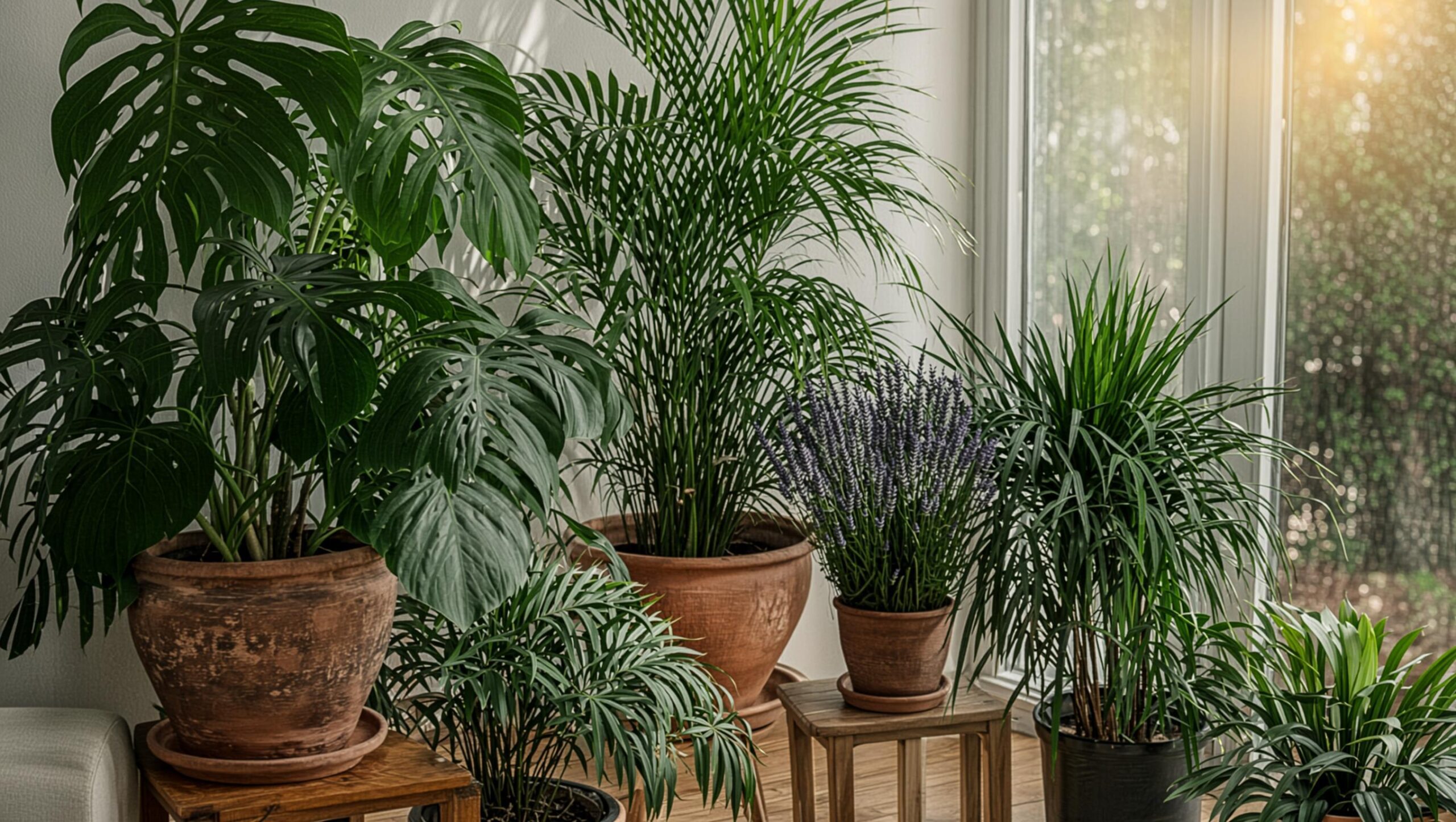
Introducing a floor-standing indoor tree into your living space fundamentally alters room proportions, absorbs ambient sound, and anchors interior decor with commanding natural presence. Big houseplants create immediate architectural impact that dozens of small tabletop pots scattered on shelves simply cannot replicate. A six-foot weeping fig, a broad-leaved bird of paradise, or an expansive split-leaf philodendron commands attention, turning unused corners into tranquil green sanctuaries.
Cultivating specimens that reach six, eight, or ten feet in height involves physical considerations and maintenance routines that small indoor plants never require. Large containers hold fifty to one hundred pounds of wet potting soil, making moving them for routine sink watering impossible. Heavy canopies catch air currents and lean toward windows, requiring structural staking, balanced container ballasts, and systematic rotation to prevent toppling. In addition, a large plant transpires gallons of moisture each month, making root aeration and deep, thorough irrigation essential to long-term vitality.
Dennis Hansen has managed, pruned, and maintained large indoor trees and floor plants for over thirty years in home living rooms and open-plan spaces. Successfully growing big houseplants requires selecting species suited to your ceiling heights, constructing heavy-duty potting mixes that resist compaction over multiple years, and mastering structural support techniques that keep massive stems upright and balanced.
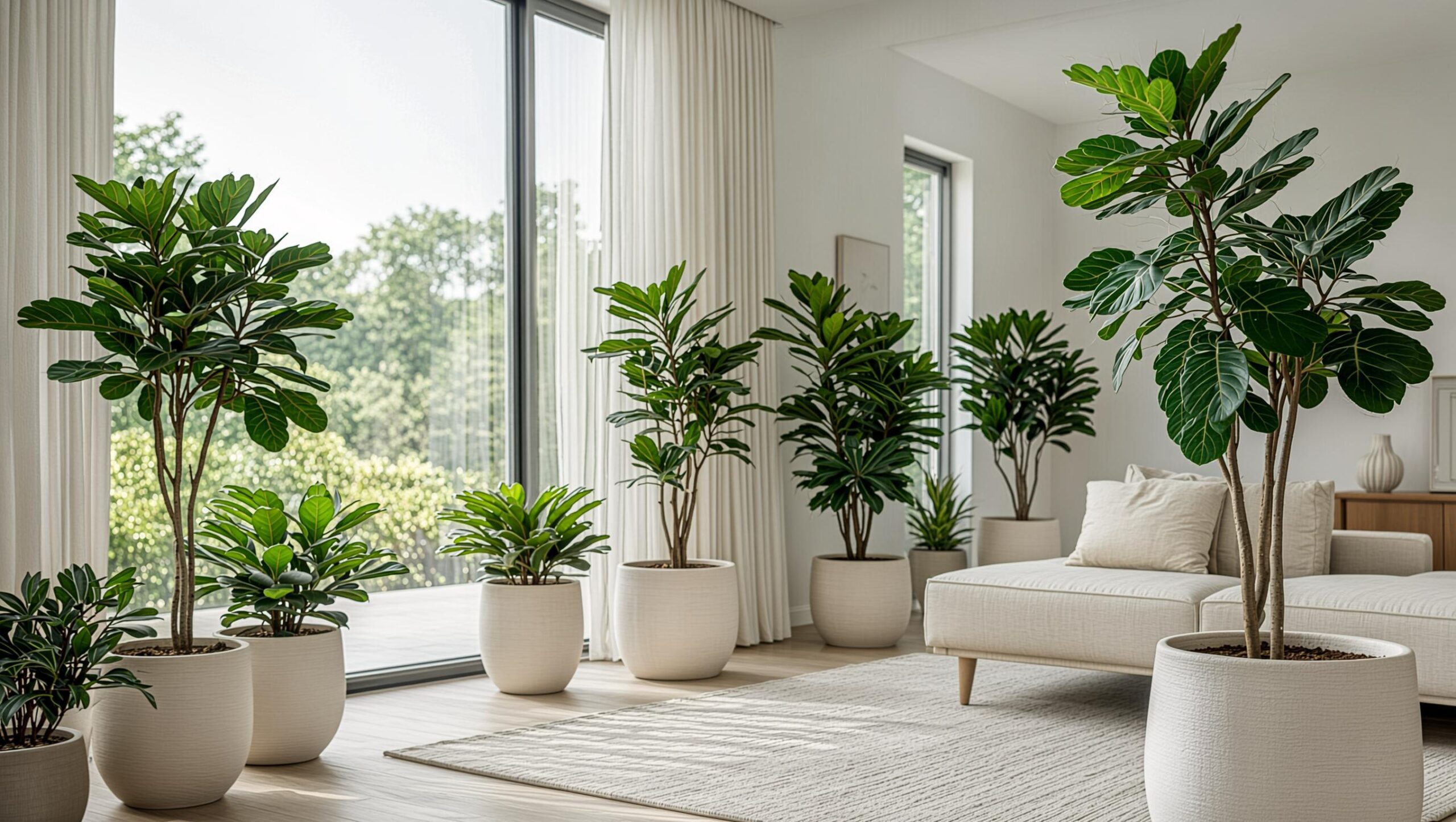
7 Impressive Big Houseplants for Indoor Spaces
Selecting a large indoor plant requires assessing not just its vertical reach, but also its horizontal canopy spread. Some varieties grow straight upward in narrow columns, while others expand outward several feet on all sides. These seven proven indoor giants offer dependable growth and stunning presence in residential spaces.
1. Fiddle Leaf Fig (Ficus lyrata)
Ficus lyrata remains the premier architectural indoor statement tree. Its massive, violin-shaped, leathery leaves feature prominent pale veins and glossy dark green surfaces that can measure up to eighteen inches long and twelve inches wide. Grown as a single upright standard tree or a multi-stemmed bush, the fiddle leaf fig can easily reach eight to ten feet indoors when provided with optimal light.
Fiddle leaf figs demand intense, filtered daylight and hate cold drafts or sudden relocations. Placing them directly in front of east-facing or unobstructed south-facing windows with sheer curtains ensures vigorous branch development. Water deeply only when the top three inches of soil dry to the touch, and clean the broad leaves monthly to prevent dust buildup. Review our detailed recommendations on fiddle leaf fig care and branch development to encourage sturdy trunk thickening.
2. Giant White Bird of Paradise (Strelitzia nicolai)
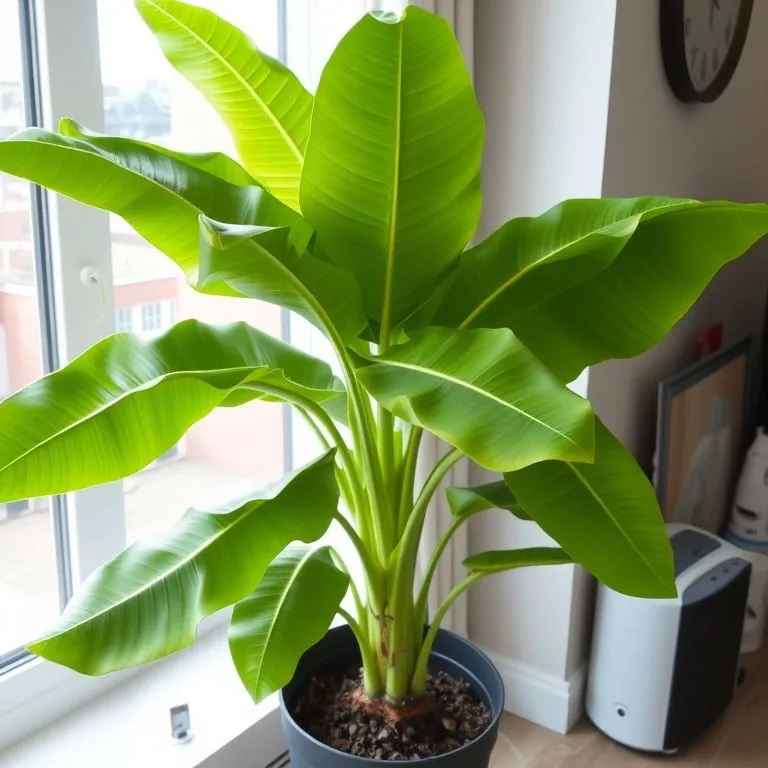
For indoor gardeners seeking dramatic tropical elegance, Strelitzia nicolai provides peerless scale. Native to coastal forests of southern Africa, this fast-growing plant produces massive, banana-like paddles arranged in a clean, fan-like crown atop thick upright stalks. In tall rooms and double-height lofts, Strelitzia nicolai can reach heights of ten to twelve feet with a six-foot canopy spread.
The broad leaves of Strelitzia nicolai naturally develop lateral splits along their veins as they mature. This splitting is an evolutionary adaptation that prevents strong winds from snapping the stems in nature, and indoor growers should welcome these splits as signs of natural maturity. Provide at least four to five hours of bright light daily, keep the soil evenly moist during spring and summer, and mist the canopy weekly to support clean leaf unfurling.
3. Monstera Deliciosa (Swiss Cheese Plant)
While often sold as small tabletop specimens, a mature Monstera deliciosa is a true jungle giant capable of spreading six feet wide and climbing ten feet high indoors. Its expansive, heart-shaped leaves develop dramatic fenestrations and holes that allow lower foliage to receive light in crowded tropical understories.
Because Monstera deliciosa is a climbing hemiepiphyte, it produces thick, aerial roots that seek moisture and physical support. Allowing a large monstera to scramble unsupported across floorboards results in sprawling, untidy growth that occupies valuable walking space. Training mature stems onto thick, sturdy moss poles keeps the plant growing vertically while encouraging massive leaf development. Discover advanced support methods in our comprehensive guide to monstera deliciosa moss pole staking.
4. Kentia Palm (Howea forsteriana)
Originally hailing from Lord Howe Island in the South Pacific, the Kentia palm has been the classic choice for graceful indoor height since Victorian times. It features slender, clean green canes topped with arching, feather-like fronds that create an airy, architectural canopy without blocking sightlines or cluttering living room pathways. A mature Kentia palm can reach eight to ten feet indoors over a decade.
Kentia palms are remarkably forgiving of lower light levels, dry winter heating, and moderate neglect compared to delicate areca or majesty palms. They grow at a deliberate, steady pace and prefer slightly tight root zones. Water thoroughly when the top two inches of soil feel dry, and ensure the container possesses free-flowing bottom drainage holes to prevent root suffocation.
5. Rubber Tree (Ficus elastica)
Ficus elastica combines bold architectural form with thick, durable foliage that tolerates living room environments with ease. Its broad, oblong leaves have a high-gloss sheen and emerge from colorful red sheath coverings that drop away as the new blade expands. Popular cultivars like Burgundy display near-black foliage, while Tineke offers marbling in cream, sage green, and soft pink.
Rubber trees can be pruned into single-stem trees or allowed to form multi-trunked indoor specimens reaching eight feet tall. They prefer bright, indirect sunlight and tolerate periods of drought far better than the fiddle leaf fig. Allow the top half of the potting soil to dry between waterings, and prune the upper growing tips in spring to encourage lower trunk branching.
6. Money Tree (Pachira aquatica)
Famous for its braided woody trunks and umbrella-like crowns of bright green palmate leaves, Pachira aquatica is a vigorous, adaptable indoor tree capable of reaching six to eight feet in height. Native to Central and South American wetlands, the money tree adapts readily to container life indoors, handling moderate light levels and fluctuating humidity without dropping leaves.
Despite its native swamp origins, a potted money tree indoors will rot quickly if allowed to sit in standing water. Plant it in a rich, porous substrate containing perlite and coarse bark. Water thoroughly once the top two to three inches dry out, and rotate the heavy pot ninety degrees every month to ensure even trunk development on all sides.
7. Dragon Tree (Dracaena marginata)
Dracaena marginata provides narrow, vertical elegance that fits effortlessly into tight living room corners, beside media consoles, or flanking tall entryways. It features slender, sculptural woody stems topped with dense rosettes of narrow, ribbon-like leaves edged in thin ribbons of red or maroon. Commercial growers often plant three to four staggered canes of varying heights into a single pot, creating a dramatic layered display reaching six to eight feet.
Dragon trees are exceptionally drought-tolerant and handle low to moderate indoor light gracefully. Their root systems are compact, making them well suited for tall, slender decorative planters. Water only when the potting mix is nearly dry throughout the top half of the pot, and protect the foliage from fluoridated tap water to prevent brown leaf tips.
Managing Container Weight, Mobility, and Root Room
One of the greatest operational hurdles in cultivating big houseplants is managing the immense weight of large containers. A mature indoor tree housed in a sixteen-inch or eighteen-inch planter can weigh between eighty and one hundred and thirty pounds after a thorough watering. This weight makes traditional sink watering impossible and turns repotting into a multi-person project.
Heavy-Duty Rolling Plant Caddies
Never place a large container directly onto hardwood floors, carpet, or stone tiles without a high-capacity rolling plant caddy underneath. Quality caddies constructed from cast aluminum, heavy-duty polypropylene, or welded steel equipped with locking polyurethane casters allow a single person to glide a hundred-pound tree smoothly across the floor. This mobility is invaluable for rotating the plant toward sunlight, rolling it onto a patio for seasonal deep cleaning, and cleaning floors underneath.
Double-Potting Large Indoor Trees
Dennis Hansen strongly recommends using the nested container method for all big houseplants. Plant the tree directly into a heavy-duty, flexible black plastic nursery liner with abundant drainage holes. Place this liner inside an oversized decorative ceramic, fiberglass, or timber planter that has no drainage holes.
Elevate the inner plastic container on two-inch plastic pot risers or flat bricks placed inside the bottom of the decorative outer planter. This creates a hollow reservoir where excess irrigation water can drain freely without touching the bottom of the root ball. You can monitor the bottom reservoir with an inexpensive dipstick or suction siphon, keeping your floors completely dry without suffocating the lower roots.
Container Stability and Counter-Balancing
Tall indoor trees with broad canopies, such as fiddle leaf figs and white birds of paradise, create substantial top-heavy leverage. A bump from a pet or a sudden draft from an open patio door can tip a top-heavy container over. When potting large specimens, add a two-inch layer of clean river gravel or washed drainage rocks to the very bottom of the pot before adding your soil mix. This concentrated bottom ballast lowers the center of gravity, preventing accidental toppling.
| Plant Species | Mature Indoor Height | Canopy Spread | Light Requirement | Container Size Needed |
|---|---|---|---|---|
| Fiddle Leaf Fig | 7 to 10 feet | 3 to 5 feet | Bright indirect to filtered sun | 14 to 18 inches |
| Giant Bird of Paradise | 8 to 12 feet | 4 to 6 feet | Direct morning sun to bright light | 16 to 22 inches |
| Monstera Deliciosa | 6 to 10 feet | 4 to 6 feet | Moderate to bright indirect light | 14 to 20 inches |
| Kentia Palm | 7 to 10 feet | 3 to 5 feet | Low to bright indirect light | 12 to 16 inches |
| Rubber Tree | 6 to 9 feet | 3 to 4 feet | Bright indirect daylight | 14 to 18 inches |
| Money Tree | 6 to 8 feet | 3 to 4 feet | Moderate to bright light | 12 to 16 inches |
| Dragon Tree | 6 to 8 feet | 2 to 3 feet | Low to medium indirect light | 10 to 14 inches |

Structural Staking and Training Large Indoor Trees
In outdoor forests, trees develop thick, tapered trunks in response to wind mechanical stress, which triggers the production of strengthening reaction wood. Indoors, where air is still, big houseplants often produce slender, flexible trunks that bow under the weight of their own expanding canopies. Proper staking and structural training provide the support plants need while they develop trunk caliper.
Installing Sturdy Support Stakes
Avoid thin green bamboo skewers that bend under light pressure. Large indoor trees require heavy-gauge natural hardwood stakes, thick cedar poles, or galvanized steel rods measuring one-half to three-quarters of an inch in diameter. Insert the stake deep into the container during initial planting or repotting, pushing it all the way to the bottom of the pot along the backside of the main stem to avoid tearing major lateral roots.
Using Flexible Horticultural Ties
Never bind tree trunks tightly with metal wire, fishing line, or coarse twine that can cut into soft bark tissues as the trunk expands. Use wide, flexible hook-and-loop plant tape, soft green vinyl garden ribbon, or strips of cotton fabric. Fasten ties in a figure-eight pattern between the trunk and the stake; the crossover loop cushions the stem and prevents bark rubbing during room movement.
Leave a small amount of slack in the upper ties. Allowing the upper trunk to sway slightly in room air currents stimulates the plant to produce internal lignin, gradually thickening the lower trunk until the tree stands independently.
Trunk Pruning and Branch Induction
Many indoor trees, particularly fiddle leaf figs and rubber trees, tend to grow as single unbranched poles until they bump into the ceiling. To encourage a full, branching tree canopy, use a clean pruning saw or bypass shears to prune off the terminal growing tip in early spring when the tree reaches roughly two-thirds of your desired final height. This simple heading cut removes apical dominance, forcing two to four dormant lateral buds below the cut to break into vigorous side branches.
Building Long-Lasting Potting Soils for Massive Pots
Small houseplants can easily be repotted every spring, but repotting an eight-foot indoor tree in a fifty-pound ceramic pot is physically demanding and disruptive to the root system. Consequently, the potting medium used for big houseplants must be engineered to resist decomposition, compaction, and souring for three to four years without replacement.
Standard peat-based potting soils break down into fine silt after eighteen to twenty-four months of warm indoor watering. When peat decomposes, the air voids in the lower half of a deep container collapse, creating an anaerobic, soggy swamp that rots bottom feeder roots. Dennis Hansen uses a long-lasting structured blend that maintains root aeration for years:
- Three parts medium-grade Douglas fir or pine bark nuggets (one-half inch size) to create a permanent, non-compacting structural matrix.
- Two parts coarse horticultural pumice or large perlite to ensure rapid gravity drainage and perpetual root oxygenation.
- Two parts coarse coconut husk chips or fibrous long-strand peat to retain moisture reserves without collapsing into silt.
- One part clean horticultural charcoal to absorb impurities, buffer soil acidity, and deter anaerobic bacteria in deep root zones.
- One-half part composted worm castings to provide gentle organic microbiology and steady micronutrients.
This substrate drains rapidly when water is poured across the surface, yet holds a reservoir of moisture within the bark and husk chunks. Because fir bark and pumice resist physical breakdown, the root ball remains loose and aerated for years. Research published by the University of Florida IFAS Extension on large containerized indoor trees and palms confirms that coarse, bark-dominant potting mixes prevent root hypoxia and chronic dieback in deep indoor planters.
Irrigation Protocols for Deep Root Zones
Watering a small four-inch pot is straightforward; watering a twenty-inch deep container housing an eight-foot tree requires careful observation and calibrated volume. Surface soil in large pots can dry out rapidly from room air currents while the bottom eight inches of the pot remain saturated.
The Deep Probe Moisture Inspection
Never water a big houseplant based on the appearance of the top inch of soil. Use a ten-inch wooden dowel or a long electronic moisture meter inserted deep into the root ball. Push the probe down at least two-thirds of the pot’s total depth in two different spots. Only water when the probe indicates that moisture has dropped to the lower third of the root system.
Slow, Measured Deep Soaking
When watering day arrives, do not dump a bucket of water over the pot all at once. Water poured quickly finds localized fissures in dry soil and rushes straight down the sides of the pot into the saucer, leaving the core root ball completely dry. Instead, apply water slowly in three separate passes over thirty minutes using a watering can with a rose breaker spout. This gives the coarse bark chips time to absorb moisture through capillary action.
For a sixteen-inch container, Dennis Hansen typically applies one to two gallons of water per session during peak summer growth. In winter, when light levels drop and indoor growth slows, reduce watering volume and extend intervals between waterings significantly.
Nutritional Care for Sustained Canopy Health
Big houseplants require consistent nutrition to maintain meters of lush foliar canopy, but over-fertilizing indoor trees is a serious mistake. Excess chemical fertilizer encourages rapid, weak, leggy growth that bends under its own weight and leads to leaf edge burn from accumulated mineral salts.
Feed large indoor trees with a balanced liquid fertilizer containing micronutrients diluted to one-half strength once every three weeks from April through September. Withhold fertilizer entirely during late autumn and winter when trees enter semi-dormancy. Review our complete guide to building a seasonal indoor houseplant fertilizer schedule to support balanced root and canopy development without burning delicate root hairs.
Every six months, flush the potting container thoroughly with fresh water to dissolve accumulated fertilizer salts. If a white, crusty mineral deposit appears on the surface of the soil or the rim of the pot, scrape it away and top-dress the container with two inches of fresh, clean potting mix.
Troubleshooting Common Big Houseplant Issues
Because big houseplants represent significant financial and personal investments, catching health declines early is essential. Use these practical solutions to resolve common problems:
1. Sudden Lower Leaf Drop
When a large indoor tree drops multiple lower leaves within a week, the most common causes are environmental shock, low light at the base, or overwatering. If the tree was recently purchased or moved to a new room, allow three weeks for acclimation. Ensure the lower half of the plant receives ambient light, and check bottom soil moisture before applying more water.
2. Leaning Trunks and Lopsided Growth
Houseplants naturally grow toward the primary source of light, a phenomenon known as phototropism. In a living room where light comes from a single window, a large tree will bow its entire trunk toward the glass over several months. Rotate the container ninety degrees clockwise every time you water. This ensures all sides of the canopy receive balanced illumination, keeping the trunk growing straight and symmetrical.
3. Brown Leaf Margins and Crispy Tips
Dry, brown leaf edges on big indoor plants typically indicate dry air from heating vents, irregular watering cycles, or tap water mineral accumulation. Relocate the plant at least six feet away from active furnace registers or air conditioning units. Use a cool-mist room humidifier to maintain ambient humidity above 45 percent, and water thoroughly whenever the deep root zone becomes dry.
4. Pest Outbreaks in Dense Upper Canopies
Spider mites, mealybugs, and scale insects love the warm, sheltered microclimate inside large plant canopies. Inspect the undersides of upper leaves and branch crotches monthly. If pests are detected, wipe the foliage with a soft cloth soaked in diluted insecticidal soap or horticultural neem oil. For massive trees that are difficult to wipe by hand, apply systemic insecticide granules to the soil for comprehensive internal protection. Extension publications from Clemson Cooperative Extension on managing large indoor plants provide detailed strategies for chemical and biological pest management on tall containerized specimens.
Seasonal Care Routine for Floor Plants
Maintain your large indoor specimens through the year by adapting care to seasonal daylight shifts:
- Spring Rejuvenation: As daylight increases in March, top-dress large containers by scraping away the top two inches of old soil and replacing it with fresh, organic-rich potting mix. Prune wayward branches to shape the canopy, and resume dilute liquid feeding.
- Summer Vitality: Windows let in intense midday heat. Protect leaves from direct glass contact to prevent solar scorching. Rotate containers weekly and check deep moisture levels regularly.
- Autumn Transition: As heating systems kick on in October, ceiling temperatures rise while air humidity drops. Reduce fertilizer applications and monitor soil moisture carefully as warm rising air can dry containers unexpectedly fast.
- Winter Protection: Shorter daylight slows vegetative growth. Water only when the deep root zone registers dry on a moisture meter. Wipe accumulated dust off broad leaves monthly to maximize photosynthetic efficiency in low winter light.
Cultivating big houseplants elevates your home into an inspiring botanical retreat. By selecting proven architectural species, securing structural stakes, crafting porous long-lasting potting media, and mastering deep measured watering, you can enjoy stunning living trees that flourish for decades. Consult comprehensive recommendations from UGA Extension on indoor foliage trees to stay informed on advanced indoor tree management.
Dennis P. Hansen
Dennis P. Hansen is a home gardener with a genuine passion for plants and the simple pleasure of growing them. He enjoys caring for houseplants, succulents, and other plants at home while continually learning from everyday gardening experiences. Dennis likes to share practical plant care tips, useful observations, and simple solutions that can help others grow healthier plants. He believes that caring for plants is a rewarding journey and that there is always something new to learn along the way.