
Houseplant Insects How to Get Rid of: 7 Proven Safe Methods


Discovering tiny crawling bugs, cottony white clusters, or fine silken webs on your indoor foliage is one of the most frustrating experiences in container gardening. Indoor heating, lack of natural rain showers, and the complete absence of beneficial predatory insects turn living rooms into ideal breeding grounds for pests. A minor population of three or four hitchhiking bugs can explode into an overwhelming infestation within two to three weeks, draining sap from leaves, distorting fresh shoots, and coating your furniture in sticky honeydew.
Eliminating pests from indoor plants requires an organized, biological approach rather than panicked spraying with harsh synthetic chemicals. Aerosol bug sprays designed for flies or roaches burn tender plant cuticle layers, causing irreversible leaf scarring without resolving root-dwelling larvae or microscopic mite eggs. To protect your home environment and keep your greenery thriving, you need targeted remedies that break the reproductive lifecycle of each specific pest species.
Dennis Hansen has tested and refined practical mechanical, organic, and cultural eradication techniques across hundreds of indoor houseplant collections. Whether you are dealing with persistent fungus gnats rising from damp soil, armored scale insects clamped onto woody stems, or powdery mealybugs hiding deep inside leaf joints, understanding houseplant insects how to get rid of safely preserves your plants without introducing toxic residues into your living spaces.
7 Common Houseplant Insects and How to Identify Them
Effective pest eradication begins with accurate identification. Different insect families feed on distinct plant tissues, reproduce under different physical conditions, and respond to specific treatment mechanisms. Misidentifying a microscopic spider mite infestation as a bacterial fungal leaf spot leads to ineffective treatments while the pests multiply unchecked.
1. Fungus Gnats (Bradysia Species)
Fungus gnats are tiny, dark, delicate-bodied flies measuring approximately one-eighth of an inch long that flutter erratically around the surface of potting soil and nearby windows. While adult gnats do not bite humans or feed directly on plant foliage, their presence signals an active colony beneath the soil surface. Adult females deposit hundreds of microscopic eggs into damp, organic-rich potting mixes.
The real damage is caused by the translucent, black-headed larvae living in the top two inches of moist medium. These larvae consume fungal spores, decaying organic matter, and tender young feeder roots. In severe infestations, larval root feeding stunts plant growth, causes lower leaves to drop, and introduces opportunistic fungal pathogens into root wounds.
2. Spider Mites (Tetranychidae Family)
Spider mites are not true insects; they are eight-legged arachnids closely related to ticks and spiders. Measuring less than one-fiftieth of an inch across, individual mites appear as microscopic moving specks of red, yellow, or pale brown on the undersides of leaves. Because of their tiny size, growers usually notice their damage long before spotting the mites themselves.
Spider mites pierce individual plant epidermal cells with sharp stylets to suck out chlorophyll and cell fluids. This feeding produces a characteristic pale, speckled stippling pattern across the upper leaf surface. As the colony grows, mites construct fine, silky webbing across leaf axils and stem tips. Mites thrive in warm, dry indoor air, multiplying with astonishing speed during winter when central heating lowers indoor humidity below 30 percent.
3. Mealybugs (Pseudococcidae Family)
Mealybugs are soft-bodied, unarmored scale insects covered in a protective white, waxy, powdery secretion that makes them resemble miniature bits of cotton. Adult females grow up to one-quarter inch in length and congregate in sheltered plant crevices, such as where leaf petioles join stems, beneath leaf sheaths, and along root crowns. Some subterranean species even attack root systems below the soil line.
Mealybugs feed by inserting piercing-sucking mouthparts into vascular plant tissue, draining nutrient-rich phloem sap. Heavy infestations cause new foliage to emerge twisted, yellow, and stunted. As they feed, mealybugs excrete large quantities of clear, sticky liquid known as honeydew, which coats lower leaves and provides a growth substrate for unsightly black sooty mold fungus.
4. Scale Insects (Coccidae and Diaspididae Families)
Scale insects present one of the most stubborn indoor pest challenges because mature adults look like immobile brown, tan, or black bumps rather than living bugs. Soft scales produce a protective waxy secretion integrated into their bodies, while armored scales construct a hard, separate protective shield over their soft tissue. They clamp tightly onto woody stems, leaf ribs, and the undersides of foliage, feeding continuously on sap.
Because their protective shells shield them from contact sprays, adult scales cannot be eliminated by casual misting. You must physically scrape them free, dissolve their shells with alcohol, or utilize systemic controls that move through the plant’s internal sap stream. If left unchecked on indoor ficus, palms, or citrus, scale insects cause systemic leaf yellowing and eventual branch dieback.
5. Thrips (Thysanoptera Order)
Thrips are minute, slender, cigar-shaped insects measuring roughly one-sixteenth of an inch in length, ranging from translucent white in the nymph stage to dark brown or black as adults. They are fast-moving pests that leap or fly when disturbed, making them difficult to track. Thrips possess unique rasping-sucking mouthparts that scrape open the outer leaf surface before siphoning up leaking plant sap.
Thrip feeding damage leaves behind silvery, bleached, or metallic patches on foliage speckled with tiny, black droplets of tar-like fecal matter. Fresh leaf buds attacked by thrips emerge distorted, scarred, and brown-edged. Female thrips insert their eggs directly inside living plant tissue, making egg clusters completely immune to surface contact insecticides.
6. Aphids (Aphidoidea Superfamily)
Aphids are small, pear-shaped, soft-bodied insects that congregate in dense colonies on fresh, succulent growing tips, flower buds, and tender young stems. They occur in shades of green, black, brown, yellow, or pink, and are easily identified by two small tube-like structures called cornicles protruding from the rear of their abdomen.
Aphids multiply rapidly indoors through parthenogenesis, meaning females produce live young without mating. A few stray aphids can generate a massive colony within days. Their sap-sucking feeding stunts fresh shoots and curls leaf margins. Like mealybugs, aphids secrete copious honeydew that attracts ants and fosters black sooty mold growth.
7. Whiteflies (Aleyrodidae Family)
Whiteflies resemble tiny, powdery white moths measuring approximately one-sixteenth of an inch long. When you brush against an infested plant, dozens of tiny white adults flutter up into the air in a cloud before settling back onto the undersides of the foliage. While adults fly actively, their scale-like nymphs remain stationary on the lower leaf surface, feeding continuously on plant juices.
Whitefly infestations cause widespread chlorosis, leaf dropping, and general plant decline. The insects prefer plants with soft, broad leaves like hibiscus, poinsettia, and flowering indoor varieties. Their rapid reproductive cycle requires immediate, sustained intervention to prevent spread to neighboring containers.

Step-by-Step Eradication Protocol for Infested Plants
Discovering pests requires immediate, methodical execution. Relying on sporadic, half-hearted treatments allows surviving eggs and pupae to mature, resulting in recurring infestations that wear down your plants. Follow this four-stage containment and elimination protocol developed by Dennis Hansen:
Stage 1: Immediate Quarantine and Isolation
The moment you observe insect activity or characteristic feeding damage on any indoor plant, remove that specimen from your living room, plant shelf, or windowsill immediately. Move the infested container into a separate room, such as a bathroom, laundry room, or spare bedroom with moderate light, at least fifteen feet away from any other houseplants.
Pests like spider mites crawl across shelves, thrips fly across rooms, and fungus gnats follow airflow from ceiling fans. Quarantining the host plant prevents an isolated problem from becoming a room-wide epidemic. Keep the affected plant in quarantine for a minimum of four weeks, releasing it back to the general collection only after two consecutive weeks of zero detected pests.
Stage 2: Physical Removal and Foliar Washing
Before mixing any sprays or treatments, reduce the pest population mechanically. Take the quarantined plant to a shower stall, bathtub, or outdoor hose bib. Cover the potting soil with a plastic bag tied loosely around the stem base to prevent soil from washing away and keep dislodged pests from dropping into the root ball.
Use a steady, lukewarm stream of water to spray down the entire plant, focusing pressure on the undersides of leaves, stem crotches, and petiole junctions. The physical force of running water dislodges adult aphids, washes away spider mite webbing, flushes out thrip nymphs, and cleans away sticky honeydew. For stubborn mealybugs and armored scale, dip a cotton swab in 70 percent isopropyl rubbing alcohol and dab individual bugs directly. The alcohol dissolves their waxy protective coating on contact, killing them instantly.
Stage 3: Targeted Foliar and Soil Treatments
Once the foliage dries, apply targeted treatments suited to the specific pest. For foliar pests like mites, aphids, thrips, and whiteflies, spray thoroughly with organic insecticidal soap or cold-pressed neem oil, coating every leaf surface until liquid drips from the tips. For soil-dwelling fungus gnat larvae, apply a soil drench of biological controls or specialized treatments.
If insect damage has caused widespread yellowing across your collection, read our diagnostic guide on why plant leaves turn yellow from insect damage to distinguish nutrient deficiencies from pest feeding wounds.
Stage 4: Post-Treatment Monitoring and Retreatment Cycles
No single treatment eliminates 100 percent of an insect population because most contact sprays do not penetrate hard insect egg casings. Mite eggs hatch after three to five days; thrip pupae emerge from the soil after a week; scale crawlers disperse from underneath dead parent shells. To achieve permanent eradication, repeat foliar sprays every five to seven days for three consecutive cycles. This timed schedule kills newly emerged nymphs before they reach reproductive maturity.
| Pest Species | Primary Location on Plant | Key Symptoms | Most Effective Treatment | Retreatment Interval |
|---|---|---|---|---|
| Fungus Gnats | Soil surface and upper 2 inches | Adults flying around pot; root rot | BTI soil drench + yellow sticky traps | Every 7 days for 3 weeks |
| Spider Mites | Undersides of foliage | Fine silken webbing; leaf stippling | Insecticidal soap or horticultural oil | Every 4 to 5 days for 3 cycles |
| Mealybugs | Leaf axils, stems, root crowns | White cottony spots; sticky honeydew | Alcohol swab dab + systemic drench | Weekly for 4 weeks |
| Scale Insects | Woody stems, main leaf veins | Hard brown bumps; leaf yellowing | Manual scraping + systemic granules | Monthly inspection |
| Thrips | Fresh leaves and flower buds | Silvery leaf sheen; black tar specks | Spinosad spray + systemic insecticide | Every 5 to 7 days for 3 cycles |
| Aphids | Tender growing tips and buds | Curled leaves; dense soft colonies | Water blast + insecticidal soap spray | Every 5 days for 2 cycles |
| Whiteflies | Undersides of broad leaves | White flying clouds; yellow foliage | Yellow sticky cards + insecticidal soap | Every 5 days for 3 cycles |

7 Proven Safe Methods to Eliminate Houseplant Pests
Selecting the right treatment depends on the severity of the infestation, the sensitivity of the plant species, and your personal comfort with organic versus synthetic options. These seven methods provide reliable control across all major houseplant pest categories.
1. Potassium Salts of Fatty Acids (Horticultural Insecticidal Soap)
Commercial insecticidal soaps are formulated from potassium salts of naturally derived fatty acids. Unlike harsh household dish detergents that contain chemical surfactants and fragrances that strip protective plant waxes, horticultural soaps are designed specifically for delicate plant tissue. When sprayed directly onto soft-bodied pests like aphids, mealybug crawlers, spider mites, and whiteflies, the soap penetrates their thin cuticles, causing their cellular membranes to rupture and dehydrate.
Insecticidal soap works strictly through direct contact; it leaves no residual toxic barrier once dry. Mix the soap according to product instructions using distilled or soft water, as hard water minerals bind to soap salts and reduce efficacy. Spray infested plants in the early morning or evening when foliage is cool, avoiding direct sunlight which can cause temporary phytotoxicity.
2. Cold-Pressed Pure Neem Oil and Horticultural Oils
Cold-pressed neem oil extracted from the seeds of the Azadirachta indica tree acts as both a contact suffocant and a biological growth disruptor. Neem contains azadirachtin, a natural compound that interferes with insect hormone systems, preventing larvae from molting into reproductive adults and discouraging feeding. Clarified hydrophobic neem oil works primarily by coating adult insects and egg clusters in a microscopic oil film that blocks their respiratory spiracles.
To prepare a fresh neem spray, emulsify one teaspoon of pure cold-pressed neem oil and one-half teaspoon of mild unscented liquid soap into one quart of warm water. Shake vigorously and spray the entire plant. Horticultural mineral oils work similarly by suffocating overwintering scale insects and mite eggs on sturdy houseplants like ficus, rubber trees, and citrus.
3. Rubbing Alcohol Spot Treatments (70 Percent Isopropyl)
For low-level mealybug and scale infestations, standard 70 percent isopropyl rubbing alcohol is an exceptionally precise and fast-acting remedy. Dip a clean cotton swab or small artist’s paintbrush directly into undiluted alcohol and press it firmly against individual mealybug clusters or scale shells. The alcohol dissolves the protective waxy coating within seconds, killing the insect instantly without harming surrounding woody bark or tough leaf tissue.
For broader coverage on sturdy foliage, you can prepare a diluted alcohol spray combining one part 70 percent rubbing alcohol with three parts water and a few drops of liquid soap. Test this spray on one leaf first and wait twenty-four hours to confirm your plant does not develop leaf spotting, as thin-leaved varieties like ferns and begonias can be sensitive to alcohol solutions.
4. Biological Bacillus Thuringiensis Israelensis (BTI)
Fungus gnats cannot be controlled effectively with foliar sprays because 90 percent of their population exists as larvae beneath the potting soil. Bacillus thuringiensis israelensis (BTI) is a naturally occurring soil bacterium that produces crystal proteins toxic specifically to the digestive systems of dipteran insect larvae, including fungus gnats and mosquitoes. It is completely harmless to humans, pets, plants, and earthworms.
BTI is sold widely as dry granules, floating dunks, or liquid concentrates. Soak a portion of a BTI dunk or granules in your watering can for several hours to release the active bacterial spores, then drench the potting soil thoroughly during your regular watering cycle. As gnat larvae consume the bacteria in the soil, they die within twenty-four to forty-eight hours. Repeat applications every seven days for three weeks to intercept newly hatching eggs.
5. Yellow Sticky Traps for Adult Population Suppression
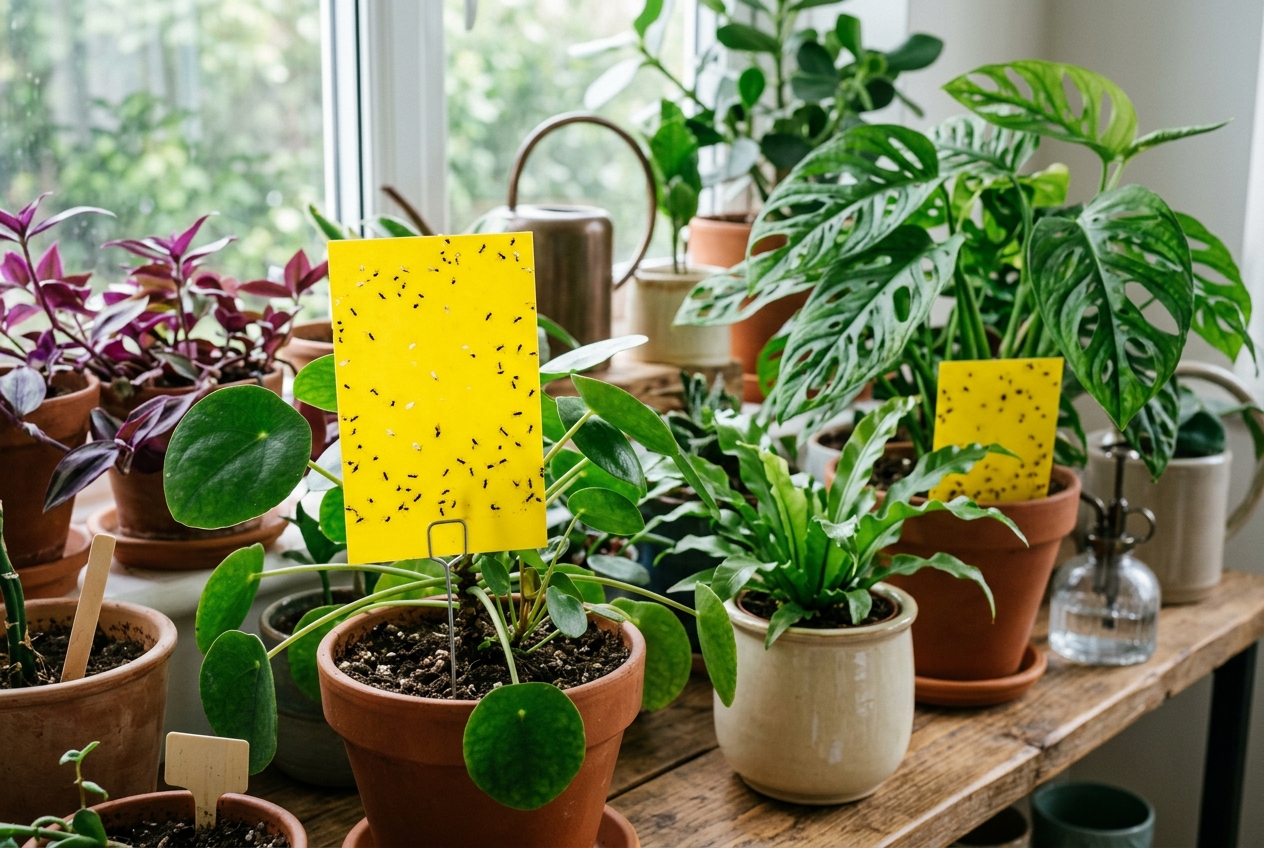
Yellow sticky cards are non-toxic, glue-coated monitoring tools that exploit the natural visual attraction many flying insects have toward bright yellow wavelengths. Adult fungus gnats, winged aphids, thrips, and whiteflies fly toward the cards and become permanently trapped on the adhesive surface. While sticky traps do not eliminate subterranean larvae or hidden eggs, they serve two invaluable functions:
First, they act as an early warning diagnostic tool, alerting you to the arrival of flying pests before visible damage appears on leaves. Second, by capturing hundreds of adult females before they can mate and deposit eggs into your potting mix, sticky cards drastically slow down reproductive cycles. Cut sticky cards into small two-inch squares and mount them on small wooden skewers placed directly above the soil surface.
6. Beneficial Predatory Insects (Indoor Biological Control)
For extensive plant collections, indoor greenhouses, and plant rooms, introducing beneficial predatory mites and insects offers an elegant, self-sustaining biological solution. Predatory mites like Phytoseiulus persimilis and Neoseiulus californicus consume hundreds of pest spider mites daily, actively hunting through foliage cracks where chemical sprays cannot reach. Beneficial nematodes (Steinernema feltiae) applied to soil seek out and destroy fungus gnat larvae beneath the surface.
Predatory insects require stable environmental conditions, preferring temperatures between 65 and 80 degrees Fahrenheit and relative humidity above 50 percent. When using beneficial predators, never apply chemical pesticides or horticultural oils, as these will kill your predatory allies alongside the target pests. Horticultural specialists at Colorado State University Extension on managing houseplant pests document how biological controls maintain natural equilibrium in closed indoor environments without chemical resistance issues.
7. Systemic Insecticides for Stubborn Infestations
When severe infestations of armored scale, entrenched mealybugs, or elusive thrips threaten to kill valuable specimen plants, topical sprays often prove inadequate. Systemic insecticides, typically containing active ingredients like imidacloprid or acetamiprid, provide comprehensive internal plant protection. Formulated as dry granules or liquid drenches, systemic compounds are absorbed by the plant’s root system and transported upward through vascular xylem vessels into every leaf, stem, and fresh shoot.
When sap-sucking insects pierce any part of the plant to feed, they ingest the systemic compound and die rapidly. A single soil application provides continuous internal protection for eight to twelve weeks, eliminating consecutive generations of hidden pests. Learn proper application safety protocols in our comprehensive overview of systemic houseplant insect control methods to ensure safe indoor use around pets and children.
Preventing Re-Infestation: Cultural Management Rules
Long-term freedom from indoor plant pests depends on proactive cultural defense rather than reactive treatments. Pests do not spontaneously generate in potting soil; they enter homes on new plant purchases, ride in on outdoor garden tools, drift through unscreened windows, or hitchhike on fresh cut flowers. Implementing strict cultural rules keeps your indoor botanical collection protected.
The Four-Week New Plant Quarantine Rule
Never place a newly purchased houseplant directly alongside your established indoor collection, regardless of how clean and healthy it appeared at the retail garden center. Commercial greenhouses frequently use regular pesticide sprays that suppress pests temporarily without eliminating egg clutches. Two weeks after arriving in your home, those surviving eggs hatch into an active colony.
Keep every new plant in a separate room for four full weeks. Inspect leaf undersides, stem nodes, and the top layer of soil with a magnifying glass every four to five days. Wipe the foliage down with a damp cloth or apply a preventative neem spray before introducing the newcomer to your primary living area. Performing routine foliage checks on popular indoor specimens, as outlined in our peace lily foliage pest inspections, ensures that common flowering houseplants remain completely clean.
Watering and Soil Hygiene Practices
Overwatering is the single greatest environmental catalyst for indoor pest outbreaks, particularly fungus gnats. Constantly saturated potting soil decomposes rapidly, creating an ideal nursery for fungal spores and root-feeding larvae. Allow the top two inches of potting medium to dry out thoroughly between waterings for tropical foliage plants, and allow desert succulents to dry completely.
Remove fallen dead leaves, spent flower petals, and plant debris from the surface of the potting soil immediately. Decaying plant litter provides food and shelter for pests and fungal pathogens. Always pot indoor plants into fresh, sterile, commercial potting mixes rather than digging unsterilized soil from outdoor garden beds, which contains wild weed seeds, nematode worms, and dormant insect pupae.
Air Circulation and Humidity Management
Stagnant, dry indoor air provides ideal conditions for rapid spider mite colonization. Maintain gentle air circulation in plant rooms by running a small oscillating fan on low speed several hours each day. Gentle air movement prevents localized pockets of humid stagnation that foster fungal rot while deterring weak-flying pests like fungus gnats and whiteflies.
During winter heating months, use cool-mist room humidifiers to keep ambient humidity levels between 45 and 60 percent. High humidity slows spider mite egg hatching rates and promotes thicker, more resilient plant cuticles that resist insect piercing. University researchers at the University of Minnesota Extension on indoor plant insect identification and controls confirm that elevating indoor relative humidity above 40 percent reduces spider mite reproduction by more than half compared to arid living conditions.
Routine Leaf Cleaning and Showering
Dust accumulating on houseplant foliage blocks sunlight, reduces photosynthetic efficiency, and creates a sheltered microenvironment where spider mites and scale nymphs thrive undisturbed. Make foliar cleaning a regular component of your monthly indoor garden care.
Wipe broad leaves with a soft microfiber cloth moistened with lukewarm distilled water every two to three weeks. For plants with delicate or finely divided foliage, carry containers to the shower and rinse them under a gentle, lukewarm spray for two minutes. This routine wash flushes away dust, washes out developing mite webs, dislodges stray insects, and keeps your foliage breathing freely.
Diagnostic Troubleshooting Table for Plant Pest Damage
When leaves display distress, use this diagnostic reference to connect visual symptoms directly to the responsible pest and take immediate corrective action:
| Observed Visual Symptom | Likely Insect Suspect | Secondary Signs | Immediate Corrective Action |
|---|---|---|---|
| Fine pale speckling on upper leaf surface | Spider Mites | Delicate webbing in leaf axils; dry air | Shower foliage; spray cold-pressed neem oil |
| Fluffy white cotton deposits in stem joints | Mealybugs | Sticky honeydew; distorted fresh growth | Dab with 70% alcohol swab; apply systemic |
| Brown, waxy raised bumps along stems | Scale Insects | Leaf yellowing; sticky drops on floor | Scrape off mechanically; apply systemic drench |
| Silvery bleached streaks with black specks | Thrips | Brown bud edges; distorted young leaves | Spinosad foliar spray; isolate plant |
| Tiny dark flies hovering over soil | Fungus Gnats | Damp organic soil; slow plant growth | Allow soil to dry; drench with BTI solution |
| Curled new leaves with sticky residue | Aphids | Clusters of green or black bugs on tips | Wash off with water spray; apply soap |
| Cloud of white specks fluttering on disturbance | Whiteflies | Yellowing leaf patches; sooty mold | Hang yellow sticky cards; spray soap weekly |
Pest management on indoor houseplants is an ongoing practice of observation, rapid quarantine, and methodical biological intervention. By understanding the distinct lifecycle of each insect species, utilizing targeted non-toxic soaps, oils, and drenches, and practicing consistent plant hygiene, you can protect your indoor urban jungle from insect damage and maintain healthy, resilient foliage across every room of your home. Consult comprehensive research from Clemson Cooperative Extension on common houseplant insects and control to stay updated on effective pest management strategies.
Dennis P. Hansen
Dennis P. Hansen is a home gardener with a genuine passion for plants and the simple pleasure of growing them. He enjoys caring for houseplants, succulents, and other plants at home while continually learning from everyday gardening experiences. Dennis likes to share practical plant care tips, useful observations, and simple solutions that can help others grow healthier plants. He believes that caring for plants is a rewarding journey and that there is always something new to learn along the way.