
Systemic Houseplant Insect Control: 7 Proven Safe Methods


Few challenges demoralize indoor gardeners faster than discovering a hidden pest outbreak spreading across cherished foliage. I am Dennis P. Hansen, and over decades of managing indoor plant collections, I have tested every pest protocol—from simple soap sprays to comprehensive systemic formulations. When dealing with sap-sucking pests like mealybugs, thrips, scale, and fungus gnats, implementing systemic houseplant insect control provides internal, long-lasting protection that surface sprays simply cannot match. In this master horticultural guide, we examine the vascular biophysics of systemic uptake, root absorption dynamics, safe application protocols, and integrated pest management strategies to eliminate pests permanently without harming your plants.
Table of Contents
- Vascular Biophysics and Mode of Action in systemic houseplant insect control
- Comprehensive Guide: Application Protocols, Granules, Soil Drenches, and Safety
- Systemic Insecticide Spectrum and Treatment Reference Matrix
- Dennis’s Advanced Diagnostic Troubleshooting: 7 Critical Solutions
- Seasonal Adjustments: Spring Through Winter Pest Management Cycles
- Master FAQ: In-Depth Expert Answers on systemic houseplant insect control
- Authoritative Horticultural References
Vascular Biophysics and Mode of Action in systemic houseplant insect control
To implement systemic houseplant insect control effectively, indoor growers must understand the vascular anatomy of plants and how systemic active ingredients move through living tissues. Unlike contact insecticides—such as horticultural oils, pyrethrins, or insecticidal soaps that kill pests only when sprayed directly onto their bodies—systemic insecticides operate from within. When applied to the potting substrate as granules or a liquid drench, the chemical compounds dissolve in soil moisture and are absorbed by root hairs alongside essential minerals.
Once inside the root cortex, the active systemic molecules enter the plant’s xylem vessels—the specialized vascular transport tubes responsible for moving water and dissolved nutrients from the root zone up into petioles, stems, and leaf margins. This upward movement is powered by transpiration pull, the continuous evaporation of water vapor through microscopic leaf stomata. As transpiration pulls water upward, the systemic compound distributes evenly throughout all vegetative structures, including tender new leaf buds and tight stem crevices where pests typically hide.
The primary class of chemistry utilized in consumer systemic houseplant insecticides is neonicotinoids, most notably imidacloprid and dinotefuran. These compounds act as neurotoxins specifically targeting insect nervous systems. They bind irreversibly to nicotinic acetylcholine receptors (nAChR) in insect nerve synapses, causing continuous nerve stimulation, paralysis, feeding cessation within hours, and eventual mortality. Because mammals, birds, and humans possess fundamentally different receptor configurations, these chemistries demonstrate high selective toxicity toward invertebrates while maintaining low acute toxicity toward humans when handled responsibly according to label instructions.
Research published by the University of Maryland Extension Plant Guidance confirms that systemic absorption solves the primary failure point of indoor pest control: incomplete contact coverage. Pests such as thrips larvae, mealybugs, and scale insects naturally wedge themselves into inaccessible micro-habitats, including unfurled leaf sheaths, root balls, and leaf axils. When sap-sucking insects pierce the plant cuticle to feed on phloem and xylem fluids, they ingest the systemic insecticide directly, terminating the infestation at its biological source.

Furthermore, growers must distinguish between xylem-mobile systemics and fully amphimobile (two-way) systemics. Imidacloprid and most granular houseplant insecticides are strictly acropetal—they translocate exclusively upward through xylem stream. They do not travel downward from leaves into roots. Consequently, applying granules directly to the potting mix and watering thoroughly is the only reliable method to achieve full vascular distribution throughout the entire plant canopy.
Comprehensive Guide: Application Protocols, Granules, Soil Drenches, and Safety
Achieving total pest eradication without inducing plant phytotoxicity requires precision in dosing, timing, and environmental management. Here are the core protocols Dennis Hansen follows when administering systemic houseplant insect control in indoor environments:
1. Selecting Formulation: Granules vs. Liquid Soil Drenches
For container houseplants, granular formulations (such as 0.22% imidacloprid ready-to-use granules) represent the gold standard of convenience and safety. Granules are measured with a calibrated spoon, scattered evenly across the surface of the potting mix, and lightly worked into the top half-inch of substrate with a wooden chopstick before watering.
Granules release active ingredient slowly over six to eight weeks every time the plant is irrigated, providing continuous residual protection against newly hatching pest generations. Conversely, liquid systemic concentrates require precise dilution in water and deliver an immediate vascular surge, which is valuable for rapidly escalating thrips outbreaks on large specimen plants. However, granules minimize accidental spills and skin contact, making them ideal for indoor living spaces.
2. Pre-Hydration and Transpirational Uptake Dynamics
Never apply systemic insecticide granules or drenches to bone-dry potting soil. When root hairs are dehydrated, sudden exposure to concentrated chemical salts causes osmotic shock and cell collapse, resulting in chemical root burn and browned leaf tips.
Dennis advises pre-hydrating your houseplant 24 hours prior to systemic application with clean, plain water. Once the root ball is evenly moist and turgid, apply the labeled dosage of granules and follow with a measured volume of water—roughly ten percent of the pot volume—to dissolve the granules and carry the active compound down into the active root zone. For growers managing delicate root systems, reviewing our guide on bottom watering indoor plants demonstrates how substrate moisture gradients influence chemical distribution.

3. The Critical Lag Phase and Dual-Action Knockdown
A frequent beginner error is expecting systemic insecticides to kill visible pests within minutes. Because systemic compounds must dissolve, absorb through root hairs, and translocate through xylem vessels to the furthest leaf tips, there is an unavoidable biological lag phase of five to ten days before plant tissues achieve lethal toxic thresholds.
During this lag phase, adult pests continue feeding and laying eggs. To stop active foliage destruction immediately, Dennis pairs systemic root applications with an initial contact knockdown treatment. Spray all foliage, stems, and leaf axils thoroughly with organic insecticidal soap or diluted neem oil, or wash plants in the shower to physically remove adult insects. This dual-action approach stops active damage instantly while the systemic compound builds lasting cellular armor from below.
4. Targeted Pest Spectrum: Who Systemics Kill (and Who They Don’t)
Systemic neonicotinoids are exceptionally lethal against true sap-sucking insects that feed directly on vascular fluids: thrips larvae and adults, mealybugs, scale insects, whiteflies, aphids, and root aphids. In addition, systemic granules effectively eradicate fungus gnat larvae living in the upper soil layers by poisoning them upon contact and ingestion.
However, neonicotinoids do not kill spider mites. In fact, research demonstrates that sub-lethal imidacloprid exposure can stimulate female spider mite reproduction (hormesis) and eliminate their natural predators, triggering severe secondary spider mite population explosions. Never use imidacloprid for spider mite control; treat mites instead with contact miticides, insecticidal soaps, sulfur, or pure cold-pressed neem oil.
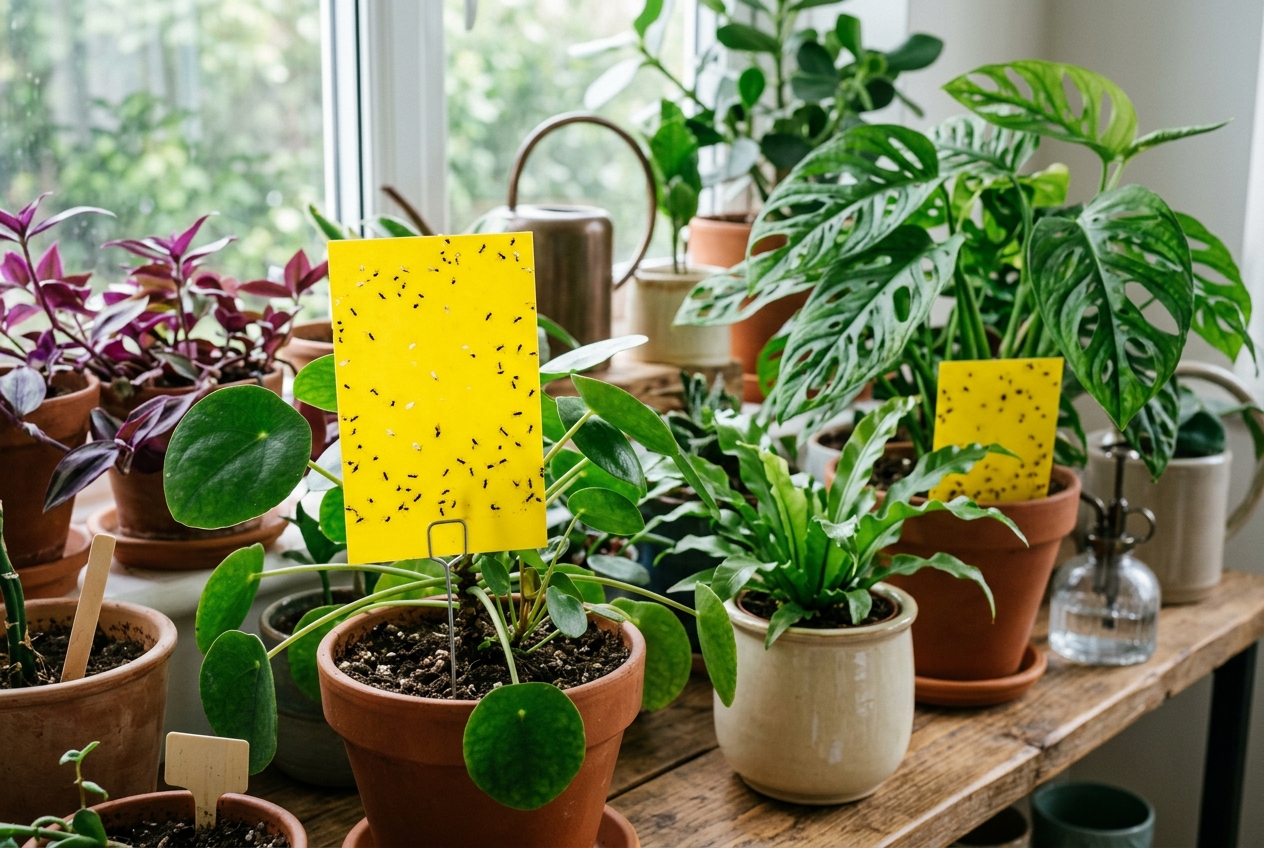
5. Environmental Safety, Pollinator Protection, and Indoor Hygiene
Because neonicotinoids are highly toxic to honeybees and wild pollinators, strict environmental rules govern their use. Never apply systemic insecticides to houseplants kept outdoors on open balconies, patios, or gardens during flowering periods. Indoor houseplants rarely flower, and indoor living spaces contain zero beneficial pollinators, making systemic application ecologically safe when contained strictly indoors.
Always wear nitrile gloves during application, wash measuring spoons with hot soapy water, and store granules in their original child-resistant containers well out of reach of children and domestic pets. If lower leaves drop following application, consult our guide on Why Are My Plant Leaves Turning Yellow: 7 Proven Fixes to distinguish chemical stress from cultural factors.
Systemic Insecticide Spectrum and Treatment Reference Matrix
To assist indoor gardeners in diagnosing target pests and administering correct systemic treatments, Dennis Hansen has compiled this structured treatment matrix:
| Target Pest | Vascular Vulnerability | Dennis’s Tested Eradication Protocol |
|---|---|---|
| Thrips (Western Flower / Greenhouse) | Extremely High (Xylem & cell contents) | Apply systemic granules at label rate; pair with spinosad foliar spray for immediate adult knockdown; repeat in 6 weeks. |
| Mealybugs (Citrus & Long-Tailed) | High (Phloem sapsuckers) | Dab visible waxy clusters with 70% isopropyl alcohol; work systemic granules into substrate; water thoroughly. |
| Scale Insects (Brown Soft & Armored) | High (Vascular sap feeders) | Scrape mature waxy shells from stems with soft brush; apply systemic granules to eliminate juvenile crawlers internally. |
| Fungus Gnats (Larvae in substrate) | High (Direct soil contact & ingestion) | Incorporate granules into upper 1 inch of soil; place yellow sticky cards for flying adults; allow topsoil to dry between waterings. |
| Aphids (Green & Black Peach) | Very High (Rapid sap engorgement) | Rinse foliage under lukewarm shower to dislodge clusters; apply systemic granules for 8-week residual eradication. |
| Spider Mites (Tetranychidae) | NOT EFFECTIVE (Mites are arachnids) | Do not use neonicotinoids. Treat with insecticidal soap, sulfur spray, or neem oil; maintain room humidity above 55%. |
Dennis’s Advanced Diagnostic Troubleshooting: 7 Critical Solutions
When executing systemic insect control, unexpected plant responses or persistent infestations require systematic troubleshooting. Use this diagnostic protocol covering seven common scenarios to safeguard your collection:
1. Pests Still Visible 48 Hours After Granular Application
What the symptom looks like: Adult thrips, mealybugs, or scale remain moving along leaf blades two days after granules were added to the soil.
Possible cause: Natural vascular translocation lag; the active ingredient has not yet reached lethal concentrations in upper leaf margins.
How to identify the cause: Confirm that granules were watered in thoroughly and that the plant is in warm, bright conditions promoting active transpiration.
What to do: Do not add extra granules. Spray the foliage with insecticidal soap or wipe down stems with a damp microfiber cloth to manage adult populations while the chemical finishes moving upward.
How to prevent the problem: Always inform yourself of the 5-to-10 day translocation lag and pair systemic treatments with an immediate contact knockdown spray.
2. Leaf Tip Burn and Margin Scorching After Drenching
What the symptom looks like: Leaflet tips turn brown, crispy, or black within 48 hours of applying systemic insecticide.
Possible cause: Applying systemic chemicals to severely dehydrated, bone-dry potting mix, causing chemical osmotic root scorch.
How to identify the cause: Review your application steps. If the soil was completely dry before treatment, fertilizer/chemical burn is the definitive cause.
What to do: Flush the container thoroughly with plain, room-temperature water. Allow two to three gallons of water to run completely through the drainage holes to wash out concentrated chemical residues. Trim scorched leaf margins cleanly.
How to prevent the problem: Always pre-hydrate plants with clean water 24 hours prior to applying systemic granules or drenches.
3. Exploding Spider Mite Outbreak Following Systemic Use
What the symptom looks like: Dusty yellow stippling and fine silky webbing blanket leaf undersides several weeks after applying imidacloprid granules.
Possible cause: Imidacloprid stimulates spider mite reproduction (hormesis) while eliminating beneficial predatory insects, allowing mite populations to surge.
How to identify the cause: Inspect webbing under a 10x hand lens. Moving oval specks confirm spider mites.
What to do: Immediately wash the plant in the shower to knock down webs. Spray thoroughly with an organic miticide, insecticidal soap, or diluted neem oil every five days for three weeks. Elevate room humidity above 55%.
How to prevent the problem: Never use neonicotinoid systemics on plants with pre-existing spider mite issues. Maintain steady humidity to deter mites.
4. White Mold and Granules Clumping on the Soil Surface
What the symptom looks like: Granules remain resting in dry clumps on top of the soil, covered in a fuzzy white saprophytic mold.
Possible cause: Granules were sprinkled on top of the soil but not worked into the substrate, followed by shallow, insufficient watering.
How to identify the cause: Scrape the topsoil. If the granules are sitting dry on top, lack of incorporation is the issue.
What to do: Use a chopstick to scratch the granules down one-half to one inch into the potting mix. Water thoroughly until liquid streams from bottom drainage holes, ensuring full dissolution.
How to prevent the problem: Always incorporate granules beneath the surface and water deeply until runoff occurs.
5. Soil Giving Off Sour Odors and Lower Leaves Collapsing
What the symptom looks like: Stems turn limp, lower leaves yellow and drop, and the container emits a sour, swampy odor after systemic application.
Possible cause: The grower over-saturated the soil repeatedly in a dense, non-draining mix while trying to dissolve granules, inducing root rot.
How to identify the cause: Unpot the plant. If roots are dark, slimy, and mushy, root hypoxia and water molds have set in. Consult our guide on creating a balanced houseplant soil mix for aeration remedies.
What to do: Trim away rotted roots using sterilized shears. Soak remaining healthy roots in a 1:4 hydrogen peroxide to water solution for 10 minutes. Repot into fresh, chunky aroid substrate with coarse perlite and orchid bark.
How to prevent the problem: Only apply systemics to fast-draining potting soils and discard saucer runoff after 20 minutes.
6. Mealybugs Persisting on Thick Woody Stems
What the symptom looks like: Waxy white mealybug clusters remain entrenched on lower woody trunks or bark crevices despite two weeks of systemic treatment.
Possible cause: Heavy exterior waxy secretions insulate mature adult females, and vascular sap flow is slower in old woody tissues.
How to identify the cause: Check the pest locations. If clusters are confined to thick bark, mechanical shielding is preventing ingestion.
What to do: Manually eradicate mature females by dipping cotton swabs in 70% isopropyl alcohol and applying directly to waxy clusters. The systemic will kill emerging nymphs internally as they begin feeding.
How to prevent the problem: Combine manual alcohol spot treatments with systemic granules for 100% eradication.
7. Re-Infestation 8 to 10 Weeks Later
What the symptom looks like: Pests reappear on new foliage approximately two to three months after a successful initial treatment.
Possible cause: Systemic compounds naturally degrade in plant tissues and soil over 60 to 75 days, allowing newly hatched eggs or reintroduced pests to survive.
How to identify the cause: Check your maintenance log. If more than 8 weeks have elapsed since application, residual protection has expired.
What to do: Reapply systemic granules at the labeled maintenance rate, work into the soil, and water thoroughly. Quarantine newly acquired plants to prevent reinfection.
How to prevent the problem: Re-treat susceptible specimens every two months during spring and summer, and inspect all new plant purchases diligently.
Seasonal Adjustments: Spring Through Winter Pest Management Cycles
Pest reproduction rates and plant vascular activity fluctuate across the seasons. Aligning your systemic insect control routines with celestial cycles guarantees year-round defense:
Spring (March Through May): Preventive Armoring
As day lengths extend and indoor temperatures warm, overwintering pest eggs hatch rapidly just as houseplants produce tender, nutrient-rich vegetative flushes. Spring is the single best window for preventive systemic application. Apply granular systemic insecticide to all susceptible foliage plants in mid-April. Rapid spring transpirational pull ensures swift vascular uptake, creating an internal shield that eliminates emerging thrips and aphid populations before infestations establish.
Summer (June Through August): Peak Infestation Management
Summer brings maximum metabolic activity and rapid pest reproductive cycles; thrips and mealybug generations can complete lifecycles in under two weeks. Inspect leaf axils and undersides weekly using a 10x hand lens. Maintain adequate watering so transpiration pulls systemic active ingredients into rapidly expanding leaf canopies. Reapply granules in late July if earlier spring protection is expiring.
Autumn (September Through November): Pre-Winter Quarantine & Cleanout
As autumn arrives and outdoor temperatures fall, growers often bring outdoor container plants indoors for the winter. Never bring outdoor plants directly into your houseplant collection without treatment. Three weeks before moving plants indoors, treat all containers with systemic granules and spray foliage thoroughly with insecticidal soap. Keep plants quarantined in a separate room for 14 days to confirm zero hitchhiking pests.
Winter (December Through February): Conservative Defense and Humidity Support
Winter brings slow vegetative growth and reduced water consumption, slowing transpirational uptake. Furthermore, dry furnace heating creates ideal conditions for spider mites. Avoid applying heavy doses of systemics to semi-dormant winter plants; rely on manual alcohol spot-cleaning and insecticidal soap sprays for minor outbreaks. Operate room humidifiers to maintain humidity above 55%, preventing spider mite outbreaks.
Master FAQ: In-Depth Expert Answers on systemic houseplant insect control
How long does it take for systemic houseplant insect control to start working?
Systemic houseplant insect control typically requires five to ten days to achieve lethal concentrations in plant foliage after application. Because systemic active ingredients (such as imidacloprid) must dissolve in soil moisture, absorb through root hairs, and travel upward through xylem vessels powered by natural transpiration, there is an unavoidable biological lag period. In warm, bright rooms with actively transpiring plants, initial mortality among feeding pests begins within 72 hours, with complete eradication of sap-sucking populations achieved within two weeks. To protect foliage during this initial lag phase, always combine systemic soil applications with an immediate contact spray of insecticidal soap or neem oil to knock down adult pests instantly.
Does systemic houseplant insect control work on spider mites?
No, standard granular systemic houseplant insecticides containing imidacloprid or dinotefuran do not kill spider mites. Spider mites are arachnids, not insects, and possess fundamentally different biological receptor systems. In fact, peer-reviewed entomological studies show that imidacloprid exposure can actually stimulate female spider mite egg production (a phenomenon known as hormesis) while killing beneficial predatory insects, resulting in explosive spider mite outbreaks. If your houseplant has spider mites, never use neonicotinoids. Instead, treat with specialized miticides, insecticidal soap, sulfur spray, or pure cold-pressed neem oil, and maintain room humidity above 55%.
How often should you apply systemic insecticide granules to houseplants?
Under typical indoor conditions, systemic insecticide granules provide continuous residual protection for approximately six to eight weeks (roughly two months). Over this period, the active compound is gradually broken down by plant metabolic enzymes and microbial activity in the potting soil. For plants recovering from severe infestations or highly susceptible species like monsteras, alocasias, and calatheas, reapply granules every eight weeks during active spring and summer growth. Suspend systemic applications from late autumn through mid-winter when plants enter dormancy and transpiration rates drop.
Are systemic insecticides safe to use on indoor houseplants around pets?
When used strictly according to label directions on non-edible indoor houseplants, systemic granules are safe for home environments. Because the chemical is locked inside the plant’s internal vascular system and incorporated beneath the soil surface, there is no airborne chemical drift or residue on external surfaces once the foliage is dry. However, the plant tissue itself becomes toxic to chew on. If you have pets (such as cats or dogs) that habitually chew on houseplant leaves, you must keep treated plants on high shelves, in hanging planters, or behind closed doors. Never use systemic insecticides on edible indoor herbs, vegetables, or fruiting plants.
Can you use systemic houseplant insect control on newly repotted plants?
It is best to wait two to three weeks after repotting before applying systemic insecticide granules or drenches. During repotting, delicate fine feeder roots and root hairs inevitably suffer microscopic tearing and transplant stress. Applying concentrated chemical formulations to damaged root systems can cause chemical root burn, exacerbating transplant shock. Allow the plant two to three weeks to establish new root hairs and resume active water uptake in its fresh potting mix before administering systemic treatments.
Do systemic insecticides eliminate fungus gnats in houseplants?
Yes, systemic granules containing imidacloprid are remarkably effective at eradicating fungus gnat infestations. The active ingredient dissolves in the upper soil layers where adult fungus gnats lay eggs and larvae feed on decaying organic matter and root hairs. When gnat larvae come into contact with or ingest the treated substrate, they are poisoned and die within 24 to 48 hours. For maximum control, combine systemic soil granules with yellow sticky traps placed at the soil surface to capture flying adult gnats before they lay additional eggs, and allow the top two inches of potting mix to dry out between waterings.
Authoritative Horticultural References
For verified entomological research, mode of action data, and university cooperative extension guidance on systemic insecticides and indoor pest management, consult these authoritative academic resources:
- University of Maryland Extension: Managing Insects and Pests on Indoor Plants — Research bulletin covering systemic active ingredients, cultural controls, and diagnostic keys for sap-sucking pests.
- Colorado State University Extension: Managing Houseplant Pests — Comprehensive guide detailing contact vs. systemic chemical controls, target pest spectrums, and application safety.
- University of Kentucky Department of Entomology: Managing Insect Pests on Indoor Plants — In-depth research on neonicotinoid transpirational translocation, thrips control, and non-target safety protocols.
Dennis P. Hansen
Dennis P. Hansen is a home gardener with a genuine passion for plants and the simple pleasure of growing them. He enjoys caring for houseplants, succulents, and other plants at home while continually learning from everyday gardening experiences. Dennis likes to share practical plant care tips, useful observations, and simple solutions that can help others grow healthier plants. He believes that caring for plants is a rewarding journey and that there is always something new to learn along the way.