
Houseplant Pest Control: 7 Proven Steps to Eradicate Bugs


Mastering houseplant pest control is the ultimate defensive skill required to safeguard your indoor botanical sanctuary from devastating insect outbreaks. I am Dennis P. Hansen, an everyday home gardener sharing simple, practical plant care tips based on my day-to-day gardening practice at home. In this definitive guide, I will share the biological lifecycles of the most destructive houseplant invaders, provide clinical identification keys, and detail my proven organic eradication protocols to eliminate pests permanently without toxic chemical fumes.
Table of Contents: Jump to a Section
- 1. The Integrated Pest Management (IPM) Framework
- 2. Clinical Pest Identification Matrix (Mites, Thrips, Gnats, Scale, Mealybugs)
- 3. 7 Proven Steps for Houseplant Pest Control
- 4. Organic Treatments: Neem Oil, Insecticidal Soaps, and Isopropyl Rubs
- 5. Biological Warfare: Releasing Beneficial Predatory Insects
- 6. The 30-Day New Plant Quarantine Protocol
- 7. Critical Pest Control Mistakes to Avoid
- 8. Frequently Asked Questions (FAQ)
- 9. Final Verdict & Dennis’s Seasonal IPM Maintenance Calendar
When cultivated in enclosed domestic environments, houseplants exist in an artificial ecosystem completely devoid of natural outdoor biocontrols—such as ladybugs, lacewings, predatory mites, and heavy cleansing rainfall. In this climate-controlled environment with steady ambient warmth and zero natural predators, a single pregnant female spider mite or thrips adult can multiply exponentially into an uncontrollable infestation within three weeks. Understanding houseplant pest control is essential because sap-sucking pests puncture cellular membranes, siphon off vital phloem nutrients, and inject phytotoxic saliva that causes rapid stippling, chlorosis, and vascular collapse.
Furthermore, early diagnosis is the key to preventing widespread collection loss. Many common houseplant pests are microscopic or cryptically colored, hiding along the underside of leaf veins, inside tight petiole sheaths, or directly below the soil line. By implementing a proactive houseplant pest control regimen, you detect infestations at the earliest nymph stage, disrupt reproductive breeding cycles, and maintain vigorous, resilient foliage across all tropical and succulent species. Effective houseplant pest control is not about toxic chemicals; it is about strategic biological intervention.
The Integrated Pest Management (IPM) Framework
In commercial botanical facilities, relying solely on reactive synthetic chemical sprays is regarded as outdated and counterproductive. Pests rapidly develop genetic resistance to chemical pesticides, while synthetic chemicals eliminate beneficial microbes and pose health risks to indoor pets and humans. Instead, professional horticulturists utilize Integrated Pest Management (IPM): a holistic, multi-tiered strategy combining cultural, mechanical, biological, and organic controls for houseplant pest control.
1. Prevention and Cultural Vigilance
The first tier of houseplant pest control is creating an inhospitable physical environment for pests. Pests prey overwhelmingly on physiologically weakened, water-stressed, or light-starved plants. Providing optimal lighting, practicing proper soil drainage, and preventing moisture-induced root rot as outlined in Why Are My Plant Leaves Turning Yellow forms your first line of defense in houseplant pest control.
2. Mechanical Sanitation and Physical Exclusion
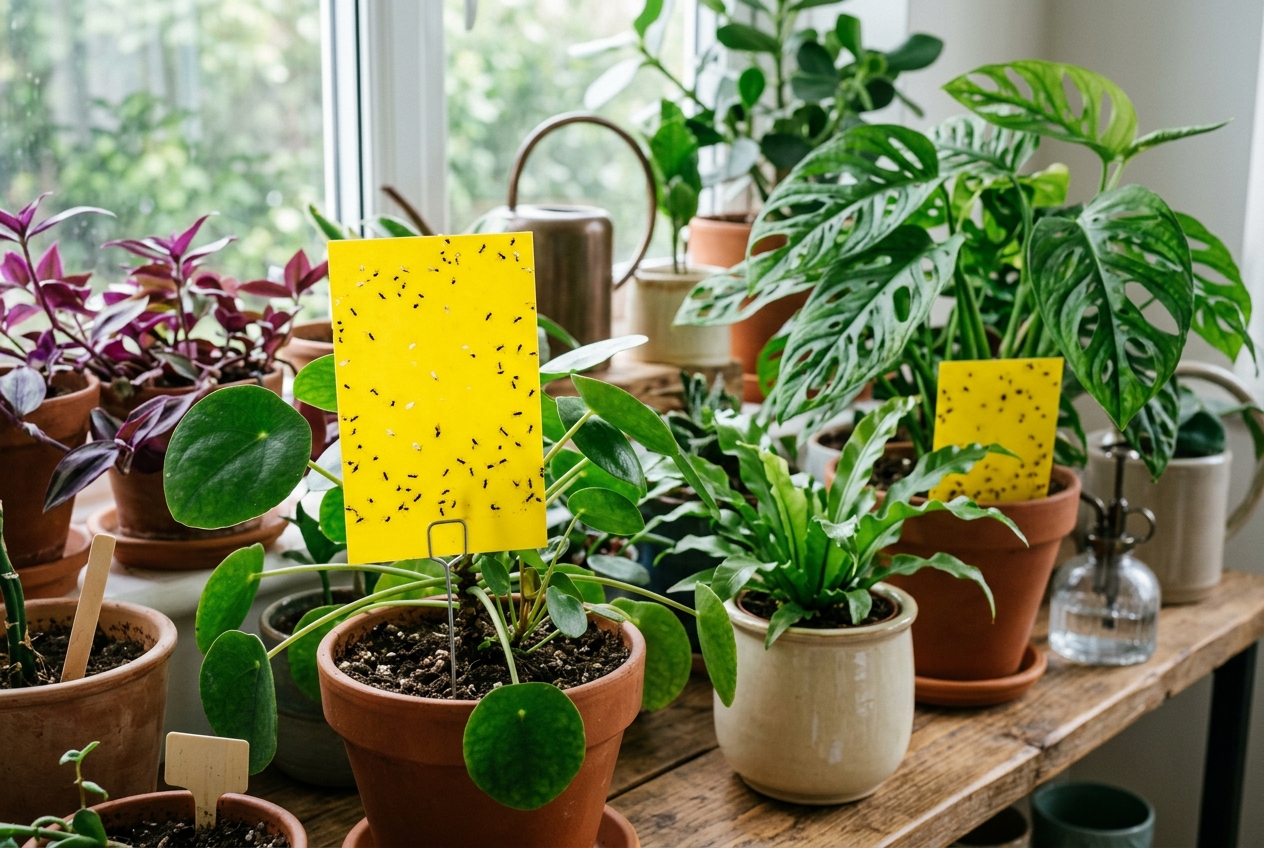
Mechanical control in houseplant pest control involves physically washing foliage, pruning heavily infested stems, using yellow sticky cards, and cleaning leaf surfaces. Routine leaf bathing strips away protective webbing and dislodges emerging nymphs before they reproduce. For step-by-step leaf grooming techniques, consult our guide on How to Clean Indoor Plant Leaves, which forms an integral component of houseplant pest control.
3. Targeted Botanical and Biological Interventions
When pests are detected, targeted organic surfactants (potassium-based insecticidal soaps, cold-pressed neem emulsions) and beneficial predatory insects are deployed in houseplant pest control to eliminate pest colonies with zero toxic residue.
Clinical Pest Identification Matrix (Mites, Thrips, Gnats, Scale, Mealybugs)
Accurate identification is mandatory for effective houseplant pest control, as treatments that eradicate fungus gnats will not eliminate armored scale. Below is my clinical diagnostic identification matrix for houseplant pest control:
| Pest Species | Visual Identification & Behavior | Primary Foliar Damage Symptoms | Dennis’s Targeted Treatment |
|---|---|---|---|
| Two-Spotted Spider Mites (Tetranychus urticae) | Microscopic (0.4 mm) red/tan arachnids; fine silky webbing in leaf axils | Dense yellow foliar stippling, bronze discoloration, premature leaf drop | Insecticidal soap spray every 4 days + elevate humidity above 60% |
| Greenhouse Thrips (Thripidae family) | Tiny slender (1–2 mm) black/yellow insects; rapid crawling; black frass droplets | Silvery metallic patches, distorted new leaves, brown necrotic scarred margins | Systemic spinosad spray + blue sticky traps + beneficial predatory mites |
| Fungus Gnats (Bradysia spp.) | Small black flies (2–3 mm) hovering near soil surface; clear larvae in soil | Larvae consume root hairs; seedling wilt; secondary root fungal rot | Bottom Watering Plants + Bacillus thuringiensis israelensis (BTI) drench |
| Citrus Mealybugs (Pseudococcidae) | Soft, oval insects covered in white cottony wax; cluster in deep stem crevices | Stunted new growth, yellowing foliage, sticky honeydew, sooty black mold | Direct 70% isopropyl alcohol swab + weekly horticultural oil spray |
| Armored & Soft Scale (Coccidae family) | Immobile, dome-shaped brown/tan waxy bumps along main stems and midribs | Severe chlorosis, leaf drop, massive honeydew excretion attracting mold | Manual fingernail/brush removal + isopropyl swab + horticultural neem drench |
7 Proven Steps for Houseplant Pest Control

When an infestation is detected, executing an organized, multi-step eradication protocol guarantees complete pest elimination without repeated flare-ups. Below is my clinical 7-step houseplant pest control protocol:
Step 1: Immediate Quarantine Isolation
The instant you detect a single pest or suspicious foliar stippling, physically move the affected plant to an isolated room at least 15 feet away from other houseplants. Pests like thrips and winged aphids migrate rapidly across neighboring foliage, making isolation critical in houseplant pest control.
Step 2: Mechanical Knockdown Wash
Transport the quarantined specimen to your shower or outdoor hose station. Using lukewarm water and a moderate pressure spray, thoroughly wash all leaves, stems, and petioles. This physical jet knocks off up to 80% of adult pests, nymphs, and loose webbing instantly, initiating your houseplant pest control.
Step 3: Surgical Pruning of Heavily Infested Growth
If specific lower leaves or dense shoot tips are heavily encrusted with scale or mealybug masses, prune them off cleanly with sterilized shears and seal them inside a plastic bag for disposal. Removing sacrificial foliage dramatically reduces the active reproductive population in houseplant pest control. If propagating cuttings, follow How to Propagate Pothos on clean, pest-free stems only.
Step 4: Target Hard-Bodied Pests with Isopropyl Swabs
Dip a cotton swab directly into 70% isopropyl alcohol and touch it directly to visible mealybugs and scale insects. The alcohol dissolves the protective waxy epicuticle instantly, desiccating and killing the insect on contact without harming leaf tissue during houseplant pest control.
Step 5: Apply Full-Coverage Organic Surfactant Sprays
Mix an organic insecticidal soap or cold-pressed neem oil emulsion (1 teaspoon pure neem oil + 1/2 teaspoon pure castile soap mixed into 1 quart of warm distilled water). Spray the entire plant until dripping wet, paying special attention to the shaded undersides of leaves and stem joints during houseplant pest control.
Step 6: Deploy Soil Larvicide and Sticky Traps
Insert yellow sticky cards at the soil line to catch flying fungus gnats and thrips adults. For soil-dwelling larvae, drench the potting medium with Bacillus thuringiensis israelensis (BTI / Mosquito Bits tea) or beneficial entomopathogenic nematodes (Steinernema feltiae) to complete your houseplant pest control.
Step 7: Execute a Multi-Cycle Repeat Treatment
Insecticidal sprays kill active nymphs and adults but cannot penetrate hard insect egg shells. To prevent recurring outbreaks in houseplant pest control, repeat your soap or neem spray treatments every 4 to 5 days for a minimum of 3 consecutive cycles (covering 15 to 20 days) to destroy newly hatched nymphs before they reach reproductive maturity.
Pure Cold-Pressed Horticultural Neem Oil Concentrate
100% pure organic cold-pressed neem oil high in active Azadirachtin. Disrupts reproductive insect cycles and clears fungus gnats, mites, and scale without toxic synthetic chemicals.
Organic Treatments: Neem Oil, Insecticidal Soaps, and Isopropyl Rubs

Understanding the exact chemical mode of action behind organic treatments ensures you apply them with maximum efficacy during houseplant pest control:
1. Pure Potassium-Based Insecticidal Soaps
Insecticidal soaps are derived from potassium salts of fatty acids. When sprayed onto soft-bodied pests (aphids, thrips, spider mites), the fatty acid chains penetrate and disrupt the insect’s cellular lipoid membranes, causing rapid cellular leakage and dehydration. Soaps work exclusively as contact sprays in houseplant pest control; once dry, they leave zero residual toxicity.
2. Cold-Pressed Horticultural Neem Oil (Azadirachtin)
Cold-pressed virgin neem oil contains over 100 biologically active liminoid compounds, with azadirachtin being the most potent. Azadirachtin functions as an insect growth regulator (IGR), anti-feedant, and hormonal disruptor. When ingested by chewing or sucking insects, it halts ecdysone (molting hormone) synthesis, preventing juvenile nymphs from shedding their exoskeletons and reaching adulthood, serving as a pillar of houseplant pest control.
3. 70% Isopropyl Alcohol Solutions
A diluted 1:3 isopropyl alcohol to water solution makes an exceptional foliar wipe for cleaning dusty foliage and dissolving light mealybug webs without leaving soapy films in houseplant pest control.
Biological Warfare: Releasing Beneficial Predatory Insects
For large plant collections, greenhouse rooms, or indoor atriums, releasing microscopic beneficial predatory insects provides automated, non-toxic, around-the-clock houseplant pest control:
1. Phytoseiulus persimilis (Spider Mite Specialists)
These voracious predatory mites consume up to 20 pest spider mites or eggs per day. They actively hunt through dense webbing and eradicate severe spider mite colonies within two weeks in relative humidity above 60%, delivering supreme houseplant pest control.
2. Amblyseius swirskii & Neoseiulus californicus
Generalist predatory mites that feast on greenhouse thrips larvae, whitefly eggs, and broad mites. They are available in slow-release paper breeding sachets that can be hung directly from plant stems for 4 to 6 weeks of continuous biological houseplant pest control.
3. Steinernema feltiae (Beneficial Soil Nematodes)
Microscopic roundworms applied via watering can that actively hunt and parasitize fungus gnat larvae in potting soil, breaking the pest cycle within 72 hours and reinforcing houseplant pest control.
The 30-Day New Plant Quarantine Protocol
Over 90% of severe indoor pest infestations originate from newly purchased nursery plants brought home without proper inspection. Follow Dennis’s strict 30-day quarantine rule for houseplant pest control:
- Store in a Separate Room: Place newly acquired plants in a dedicated quarantine room with good lighting for 30 full days to maintain houseplant pest control.
- Perform 10x Loupe Inspection: Inspect the underside of leaves, stem nodes, and the root ball with a magnifying lens for signs of microscopic pests or egg clusters.
- Preemptive Neem Foliar Wash: Give all new plants a thorough shower and preventative insecticidal soap treatment on Day 1 and Day 14.
- Clear for Integration: Only integrate the new plant into your main display after 30 days of zero pest activity, preserving your houseplant pest control barrier.
Critical Pest Control Mistakes to Avoid
Avoid these four fatal mistakes when executing houseplant pest control:
- Spraying Plants and Placing Them in Direct Sun: Applying oils and soaps under direct sunlight causes severe phototoxic foliar burn. Always treat plants in the evening or in shaded areas during houseplant pest control.
- Stopping Treatment After a Single Application: One spray kills active adults but leaves hundreds of eggs intact. Always execute at least 3 repeat treatments spaced 4 days apart in houseplant pest control.
- Using Harsh Synthetic Aerosol Bug Sprays: Household fly and roach sprays contain petroleum carriers that melt plant leaf cuticles, killing foliage within hours.
- Neglecting Undersides and Soil Surfaces: Pests hide in shaded crevices and soil. Ensure 100% full-canopy and substrate coverage during every houseplant pest control session.
Frequently Asked Questions (FAQ)
What is the fastest way to achieve houseplant pest control?
The fastest method combines an immediate mechanical shower wash to dislodge 80% of pests, followed by a thorough spray with organic insecticidal soap or neem oil, repeated every 4 days for two weeks.
Can pests spread between plants without touching?
Yes. Thrips and winged fungus gnats fly between plants, while microscopic spider mites drift on ambient indoor air currents or crawl across tabletops.
Is neem oil safe for all indoor houseplants?
Neem oil is safe for most broad-leaf tropicals, but should be avoided on delicate ferns, fuzzy pubescent leaves, and farina-coated succulents during houseplant pest control.
How do I stop fungus gnats permanently?
Switch to Bottom Watering Plants to keep the top inch of soil dry, deploy yellow sticky traps for adults, and apply BTI (Mosquito Bits tea) to kill larvae.
Should I repot a plant that has pests?
Repotting is only necessary if the soil is heavily infested with root mealybugs or severe root rot. Foliar pests are best managed with targeted sprays in houseplant pest control.
Final Verdict & Dennis’s Seasonal IPM Maintenance Calendar
Achieving a pest-free indoor jungle does not require harsh chemical toxins; it requires consistent observation, rapid quarantine, and methodical organic treatment cycles. By mastering houseplant pest control with scientific precision, you protect your botanical investments and ensure vibrant, flourishing growth year after year.
Here is Dennis’s seasonal IPM rule: Inspect your foliage undersides weekly with a 10x magnifying lens, wash your leaves bi-weekly with clean water, and quarantine every new plant for 30 days. Your houseplants will reward your vigilance with pristine, lush green vitality!
{
“@context”: “https://schema.org”,
“@graph”: [
{
“@type”: “Article”,
“@id”: “https://www.plantingcare.com/houseplant-pest-control-guide/#article”,
“isPartOf”: {
“@type”: “WebPage”,
“@id”: “https://www.plantingcare.com/houseplant-pest-control-guide/”
},
“headline”: “Houseplant Pest Control: 7 Proven Steps to Eradicate Bugs”,
“description”: “Master houseplant pest control with Dennis P. Hansen’s 7 proven steps to eliminate spider mites, fungus gnats, thrips, and scale organically.”,
“image”: “https://www.plantingcare.com/wp-content/uploads/2026/08/featured_houseplant_pest_control_1787908934569.jpg”,
“author”: {
“@type”: “Person”,
“name”: “Dennis P. Hansen”,
“jobTitle”: “Hobby Gardener”,
“worksFor”: {
“@type”: “Organization”,
“name”: “PlantingCare.com”
}
},
“publisher”: {
“@type”: “Organization”,
“name”: “PlantingCare”,
“url”: “https://www.plantingcare.com”
},
“mainEntityOfPage”: “https://www.plantingcare.com/houseplant-pest-control-guide/”
},
{
“@type”: “HowTo”,
“name”: “How to Eradicate Houseplant Pests Organically”,
“description”: “Step-by-step integrated pest management protocol to eliminate indoor houseplant pests.”,
“image”: “https://www.plantingcare.com/wp-content/uploads/2026/08/featured_houseplant_pest_control_1787908934569.jpg”,
“totalTime”: “PT25M”,
“tool”: [
{“@type”: “HowToTool”, “name”: “Pressure Trigger Sprayer”},
{“@type”: “HowToTool”, “name”: “Yellow Sticky Monitoring Cards”}
],
“supply”: [
{“@type”: “HowToSupply”, “name”: “Organic Insecticidal Soap”},
{“@type”: “HowToSupply”, “name”: “Cold-Pressed Neem Oil”}
],
“step”: [
{
“@type”: “HowToStep”,
“name”: “Quarantine Affected Plant”,
“text”: “Immediately isolate the infested plant in a separate room to prevent pests from spreading to neighboring foliage.”,
“image”: “https://www.plantingcare.com/wp-content/uploads/2026/08/featured_houseplant_pest_control_1787908934569.jpg”
},
{
“@type”: “HowToStep”,
“name”: “Spray with Organic Insecticidal Soap”,
“text”: “Thoroughly coat both upper and lower leaf surfaces with insecticidal soap spray to dissolve pest cell membranes.”,
“image”: “https://www.plantingcare.com/wp-content/uploads/2026/08/neem_soap_spray_treatment_1787908952741.jpg”
},
{
“@type”: “HowToStep”,
“name”: “Deploy Sticky Traps and Larvicide”,
“text”: “Insert yellow sticky cards at soil level to trap flying adults and apply BTI larvicide to eliminate soil larvae.”,
“image”: “https://www.plantingcare.com/wp-content/uploads/2026/08/sticky_traps_fungus_gnats_1787908974806.jpg”
}
]
},
{
“@type”: “FAQPage”,
“mainEntity”: [
{
“@type”: “Question”,
“name”: “What is the fastest way to achieve houseplant pest control?”,
“acceptedAnswer”: {
“@type”: “Answer”,
“text”: “Combine an immediate mechanical water wash with organic insecticidal soap sprays repeated every 4 days for two weeks.”
}
},
{
“@type”: “Question”,
“name”: “Can pests spread between plants without touching?”,
“acceptedAnswer”: {
“@type”: “Answer”,
“text”: “Yes, thrips and fungus gnats fly between plants while spider mites drift on indoor air currents.”
}
},
{
“@type”: “Question”,
“name”: “Is neem oil safe for all indoor houseplants?”,
“acceptedAnswer”: {
“@type”: “Answer”,
“text”: “Neem oil is safe for most tropicals but should not be used on delicate ferns, fuzzy leaves, or farina succulents.”
}
},
{
“@type”: “Question”,
“name”: “How do I stop fungus gnats permanently?”,
“acceptedAnswer”: {
“@type”: “Answer”,
“text”: “Switch to bottom watering to keep surface soil dry, use yellow sticky traps for adults, and apply BTI drench for larvae.”
}
},
{
“@type”: “Question”,
“name”: “Should I repot a plant that has pests?”,
“acceptedAnswer”: {
“@type”: “Answer”,
“text”: “Repotting is only necessary for severe root mealybugs or root rot. Foliar pests are best managed with targeted sprays.”
}
}
]
}
]
}
Dennis P. Hansen
Dennis P. Hansen is a home gardener with a genuine passion for plants and the simple pleasure of growing them. He enjoys caring for houseplants, succulents, and other plants at home while continually learning from everyday gardening experiences. Dennis likes to share practical plant care tips, useful observations, and simple solutions that can help others grow healthier plants. He believes that caring for plants is a rewarding journey and that there is always something new to learn along the way.