
The Best Indoor Climbing Plants to Elevate Empty Spaces


Table of Contents
Introduction
Do your walls feel a little… empty? Maybe there’s a corner of your home that looks dull no matter how you arrange the furniture. You’re not alone—so many of us crave a touch of life in our living spaces, but don’t always know where to start. The solution is simpler, more beautiful, and more refreshing than you might think: indoor climbing plants.
These natural wall-dwellers don’t just sit in a pot; they stretch, climb, and cascade, transforming boring vertical spaces into lush green displays. With the right indoor climbing plants, you can turn lifeless corners into thriving focal points, while boosting your air quality and even reducing stress. Best of all? Many of these fast-growing, low-maintenance indoor wonders don’t demand a green thumb—just a little guidance and creativity.
In this guide, you’ll discover the best indoor climbing plants to elevate empty spaces, from graceful vines that thrive in low light to dramatic, statement-making plants that add architectural beauty. Whether you’re trying to figure out what is the best climbing indoor plant for beginners or hunting for a variety that will instantly fill a wall with life, you’re about to unlock a fresh way to decorate with nature.
So, are you ready to breathe new life into every forgotten corner of your home? Let’s climb right in.
Why Indoor Climbing Plants Are Perfect for Transforming Empty Spaces

Benefits of Adding Indoor Climbing Plants to Home Décor
There’s something magical about watching a plant grow, stretch, and weave itself into the design of your home. Indoor climbing plants don’t just sit quietly in a corner—they interact with your space. They climb trellises, cascade down shelves, and frame windows, turning plain walls into natural artwork.
Here’s how they elevate your décor:
- Instant vertical interest: Empty walls and tall bookcases suddenly feel intentional and styled.
- Flexible styles: From sleek minimalism with slim vines to bold statements with large indoor climbing plants, you can match any aesthetic.
- Year-round greenery: Unlike seasonal flowers, most indoor climbers stay vibrant no matter the month.
They are essentially living décor that adapts as your home evolves.
How Indoor Vines Purify Air and Boost Wellbeing
Beyond their aesthetic appeal, indoor climbing plants come with hidden superpowers—especially when it comes to your health. Many popular varieties, like pothos and philodendrons, are natural air-purifiers. By absorbing airborne toxins and releasing oxygen, they create a fresher, cleaner living environment.
But the benefits don’t stop there. Studies show that indoor greenery can:
- Lower stress levels.
- Improve focus and productivity (hello, home office upgrade!).
- Increase humidity, which helps balance dry indoor air.
In short, choosing the best indoor climbing plants isn’t just about décor—it’s an investment in your mental and physical wellbeing.
Solving the Problem of Lifeless Corners with Greenery
Every home has that one awkward corner. Too dark for a piece of furniture, too blank to be left alone. This is where indoor climbers shine. A single potted vine trained up a pole, wall, or trellis can completely transform “dead space” into the most admired spot in your home.
With strategic placement, you can:
- Draw the eye upward, making ceilings feel higher.
- Add softness to harsh edges or architectural lines.
- Create natural divisions in open-concept rooms.
The beauty of indoor climbing plants lies in their versatility. Whether you’re styling a studio apartment or a spacious home, these plants give personality to even the dullest corners.
Best Indoor Climbing Plants for Every Home
What Is the Best Climbing Indoor Plant?
If you’ve ever asked yourself this, you’re not alone. The truth is, “best” depends on your lifestyle and space. For many beginners, pothos is considered one of the best indoor climbing plants—it’s forgiving, adaptable, and grows beautifully with very little fuss. Philodendrons and ivy come close contenders, offering both versatility and beauty.
Think of it this way: if you’re new to caring for houseplants, pothos is your loyal starter plant. If you want a touch of elegance, philodendron varieties can win your heart (and your wall).
Popular Large Indoor Climbing Plants That Make a Statement
Sometimes, subtle isn’t enough—you want drama. That’s where large indoor climbing plants step in. Species like Monstera adansonii (the “Swiss Cheese Vine”) or climbing philodendrons add lush, textured leaves that feel almost sculptural.
These bold climbers:
- Transform entire walls into living tapestries.
- Draw attention in open-plan living and dining spaces.
- Create an instant architectural feature that feels luxurious.
If your goal is impact, go big. These plants don’t whisper—they own the room.
Fast-Growing Indoor Climbing Plants for Quick Transformations
Patience might not be your strongest suit—and that’s okay. Some vines grow quickly, filling empty corners in just weeks. Fast-growing indoor climbing plants like pothos (Epipremnum aureum) or heartleaf philodendron practically race up poles or across floating shelves.
Why choose these?
- Immediate visual change – Lifeless walls disappear fast.
- Easy propagation – Snip and grow new plants to expand your collection.
- Great for experimentation – See your training and styling ideas come alive quickly.
They’re perfect if you’ve just moved into a new place and need greenery to make it feel like home—fast.
Indoor Climbing Plants with Flowers for a Touch of Color
While most climbers are prized for their foliage, some bring blossoms into the mix. Indoor climbing plants with flowers—like jasmine or hoya (often called the “wax plant”)—offer blooms that brighten your home with beauty and fragrance.
These options are wonderful if:
- You want to break the monotony of green with pops of color.
- You love fragrant interiors that feel fresh and uplifting.
- You’re looking for something slightly more unique than common vining houseplants.
A single flowering climber on a sunny windowsill can add both charm and a sensory experience.
Indoor Climbing Plants Low Light Conditions Can Support
Not all homes are blessed with endless sunlight. The good news? You still have excellent choices. Certain indoor climbing plants low light settings support—like pothos, ivy, and philodendron—thrive even in dim corners.
Low-light friendly climbers are ideal for:
- Apartments with shaded balconies.
- Rooms that face away from direct sun.
- Offices or bedrooms that only get filtered daylight.
They prove that greenery doesn’t always need a bright spotlight—it can flourish quietly and gracefully, even in the softest light.
Top Picks: Best Indoor Climbing Plants to Elevate Empty Walls
The Best Vining Plant for Indoors
When it comes to indoor greenery, not all vines are created equal. If you’re searching for the best vining plant for indoors, pothos nearly always takes the crown. This versatile climber grows quickly, adapts to different environments, and brings cascading beauty without demanding much in return.
Other top contenders include:
- Philodendron hederaceum (Heartleaf Philodendron): Its soft, heart-shaped leaves bring warmth to any wall or shelf.
- English Ivy (Hedera helix): A classic climber known for its timeless elegance.
- Hoya (Wax Plant): A unique vine with glossy leaves and occasional star-shaped flowers.
All are excellent members of the indoor climbing plants family, making them a staple whether you live in a modern apartment or a cozy cottage.
Low-Maintenance Options That Thrive Anywhere
Let’s face it—sometimes our schedules are packed, and remembering to water plants feels like another chore on the to-do list. The good news? Some of the best indoor climbing plants don’t hold grudges if you forget about them now and then.
Top low-maintenance choices include:
- Golden Pothos – Nearly indestructible and happy in low to bright light.
- Philodendron Brasil – Striking variegation with the same forgiving nature.
- Devil’s Ivy – A tough plant that tolerates both uneven watering and less-than-ideal soil.
These are the “set it and forget it” plants of the climbing world. They’ll keep your walls green and full even if you’re more of a weekend plant parent than a daily caretaker.
Stylish Trailing and Hanging Vines to Add Vertical Beauty
Sometimes, it’s not about filling an empty wall—it’s about softening a space with movement and flow. Trailing varieties of indoor climbing plants are perfect for hanging baskets, tall bookshelves, or floating wall planters.
Consider these ideas for instant vertical beauty:
- String of Hearts (Ceropegia woodii): A dainty, romantic vine with silvery leaves that looks stunning in high places.
- Neon Pothos: Bright chartreuse foliage that adds a bold splash of color against neutral walls.
- English Ivy in Hanging Pots: Cascades gracefully to create a natural curtain-like effect.
The visual appeal of trailers is their ability to guide the eye downward, creating balance in rooms where most of the design exists at eye level or above.
With the right combination of vining, low-maintenance, and stylish trailing plants, you can curate a living gallery of greenery. Whether it’s a bold ivy climbing up a trellis or a delicate string of hearts flowing from a ceiling hook, indoor climbing plants offer endless opportunities to elevate your home—and your walls will never look empty again.
Growing and Caring for Indoor Climbing Plants
Light, Water, and Soil Essentials for Indoor Vines
The secret to thriving indoor climbing plants isn’t complicated—it’s about giving them the right foundation. Just like people, plants have their own “comfort zones,” and once you know them, care becomes second nature.
Light:
- Most climbers, like pothos and philodendrons, do best in bright, indirect light.
- Avoid harsh midday sun—it can scorch delicate leaves.
- Many varieties tolerate lower light, but growth may be slower.
Water:
- Overwatering is the most common mistake with indoor vines—roots need more air than you think.
- Stick to the “finger test”: if the top inch of soil is dry, it’s watering time.
- Use pots with drainage holes to prevent soggy roots.
Soil:
- Choose a lightweight, well-draining mix made with peat moss or coco coir.
- Add perlite for extra airflow around roots, helping climbers stretch higher and healthier.
Training Climbing Plants Along Walls, Poles, or Trellises
One of the most exciting parts of growing indoor climbing plants is shaping them to fit your space. Instead of a wild, tangled vine, you can create intentional displays by offering them support.
Some creative ways to train your climbers:
- Walls: Use adhesive hooks or climbing clips to guide tendrils upward into patterns or frames.
- Poles: Moss poles or coir sticks mimic their natural jungle habitats, encouraging larger, healthier leaves.
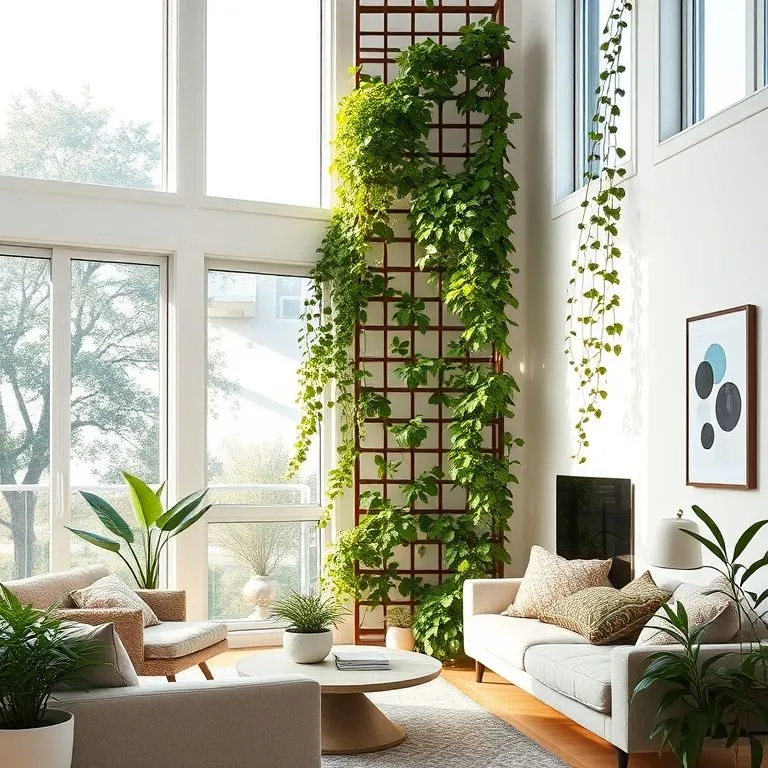
- Trellises: Create a vertical green feature, perfect for filling empty corners or acting as a room divider.
This not only elevates the style of your home but also helps the plant grow stronger and fuller, rewarding your effort with lush coverage.
Preventing Common Issues in Fast-Growing Indoor Climbing Plants
It’s true—many fast-growing indoor climbing plants like pothos, ivy, and philodendron shoot up with impressive speed. But growth spurts can sometimes bring a few challenges along the way.
Here’s how to manage the most common issues:
- Yellowing Leaves: Usually a sign of overwatering—adjust your schedule and check soil drainage.
- Leggy Vines: If the plant stretches out thin and bare, it may be craving more light. Rotate or relocate for balance.
- Drooping Growth: Often caused by dry soil. A good soak revives most vines quickly.
- Pest Problems: Keep an eye out for spider mites or aphids. A gentle wipe with neem oil works wonders.
Remember, the faster the plant grows, the more it appreciates occasional pruning. Trimming not only controls size but also encourages fuller, bushier growth—exactly what makes indoor vines look so lush.
By mastering light, water, training techniques, and a bit of troubleshooting, caring for indoor climbing plants feels less like work and more like a rewarding hobby. With just a little attention, your vines will repay you with cascading greenery and vibrant walls that feel alive year-round.

Creative Design Ideas with Indoor Climbing Plants
Turning Empty Walls into Living Vertical Gardens
Imagine walking into a room and seeing an entire wall wrapped in greenery—it’s not just décor, it’s a living masterpiece. With the right setup, indoor climbing plants can be trained into a living vertical garden, covering plain walls with lush textures and vibrant foliage.
Creative ideas for vertical walls:
- Use trellises or grid panels to guide your vines upward in patterns.
- Frame a mirror or artwork with green tendrils for a natural border.
- Create a “green accent wall” by dedicating one vertical surface entirely to climbers.
Vertical gardens don’t just look gorgeous—they maximize small-space living by bringing nature into areas where floor space is limited.
Enhancing Home Offices and Bedrooms with Vining Plants
Working from home? Spending long nights unwinding in your bedroom? Indoor climbing plants can make these personal spaces calmer, fresher, and more inspiring. Studies show greenery can reduce stress and improve focus—perfect for an office retreat or cozy sleep sanctuary.
Placement ideas for vining plants:
- Home Office – Guide a pothos or philodendron along shelving above your desk for a burst of greenery in your line of sight.
- Bedroom – Hang trailing vines like string of hearts or devil’s ivy near windows for a relaxing, stylish effect.
- Headboard Accent – Create a natural canopy by training vines on a minimalist trellis above the bed.
With thoughtful placement, greenery feels less like background décor and more like part of your everyday environment.
Mixing Indoor Climbing Plants with Other Houseplants
Climbers may love climbing, but they also play well with their plant cousins. By mixing indoor climbing plants with potted or floor-standing greenery, you can create layers of texture that make your home feel like a miniature indoor jungle.
Ways to combine climbers with houseplants:
- Pair bold leafy plants like monstera deliciosa with delicate trailing ivy for contrast.
- Use flowering climbers alongside small succulents for a mix of color and shape.
- Place tall floor plants near trellised vines to blur the line between vertical and horizontal greenery.
Blending climbers with other houseplants adds depth and personality while keeping your space fresh and dynamic. It transforms your space from “just decorated” to “thoughtfully designed.”
Frequently Asked Questions About Indoor Climbing Plants
What Is the Best Climbing Indoor Plant for Beginners?
If you’re just getting started with indoor climbing plants, pothos is your best friend. Known as the “beginner’s vine,” it thrives on neglect, tolerates a range of light conditions, and doesn’t demand a strict watering routine. The heartleaf philodendron is another excellent option—its graceful leaves look lush without overwhelming you with maintenance.
Beginner-friendly climbers to consider:
- Golden Pothos (Epipremnum aureum)
- Heartleaf Philodendron (Philodendron hederaceum)
- English Ivy (Hedera helix) if you want a slightly classic, trailing look
These are considered some of the best indoor climbing plants to build confidence before moving on to more delicate varieties.
What Is the Best Vining Plant for Indoors?
The best vining plant for indoors depends on what you value most—beauty, resilience, or growth speed. For timeless elegance, English Ivy is hard to beat. If you prefer something bold and tropical, try Monstera adansonii (the “Swiss Cheese Vine”), which offers dramatic, perforated leaves that make a wall feel alive.
For everyday adaptability, pothos and philodendrons dominate once again—they’re resilient, attractive, and endlessly versatile.
What Is the Fastest Indoor Climbing Plant?
If you’re impatient (and who isn’t when it comes to empty walls?), you’ll want fast-growing indoor climbing plants. Pothos tops the list here, too—it can extend several feet in a single growing season with proper care. Ivy is another speedy stretch, quickly filling trellises and corners with dense greenery.
Pro tip: Speedy growers often need more pruning, but that’s actually a good thing—it encourages bushier, lusher vines that decorate your space even better.
What Is the Best Plant to Climb a House?
Looking for a true statement-maker? While many indoor climbing plants thrive inside on shelves and trellises, some varieties are also well-suited for climbing exterior walls or large indoor structures. For indoor areas with ample space, larger philodendrons or creeping fig can create that dramatic, climbing effect that makes it feel like your home and nature are blending seamlessly.
Still, if you mean “climb a house” literally in an outdoor sense, go with English Ivy—but note, while stunning, it’s best kept in check to avoid damage to brick or siding. Indoors, opt for vining philodendrons or monstera varieties to safely achieve the same towering lushness without structural issues.
By considering beginner-friendly options, resilient vines, and rapid growers, it’s clear that indoor climbing plants provide something for every type of plant enthusiast—from casual hobbyists to bold decorators. These FAQs serve as an easy guide to find the perfect green match for your space, lifestyle, and design vision.
Conclusion: Elevate Your Home with the Best Indoor Climbing Plants
Choosing the Right Plant for Your Space and Lifestyle
At the end of the day, the best greenery for your home is the one that works in harmony with you. Not everyone has a sun-drenched loft—or the time to baby a fussy plant—and that’s where the versatility of indoor climbing plants really shines.
- For busy schedules: Low-maintenance options like pothos and philodendrons grow beautifully with little attention.
- For statement décor lovers: Large, bold varieties like monstera adansonii or climbing philodendrons make walls feel like a living mural.
- For smaller apartments: Compact trailing vines or fast-growing indoor climbing plants can add greenery without stealing square footage.
By matching a plant’s needs with your lifestyle and home’s conditions, you set yourself—and your foliage—up for success.
Transforming Lifeless Corners into Beautiful Green Displays
Think back to that one corner you’ve been ignoring, or the wall that always felt “too plain.” With the addition of indoor climbing plants, those spaces transform into focal points. Empty corners no longer feel forgotten; instead, they become lush, living features that elevate the entire room.
Picture it: vines softly trailing from a shelf, or bold leaves trained on a trellis drawing the eye upward. These subtle shifts can:
- Add instant depth and character to your interior.
- Improve air quality and comfort in overlooked spaces.
- Create mood-boosting greenery that makes your house feel more like home.
The beauty of indoor vines lies in their adaptability—they can be elegant, playful, dramatic, or understated depending on how you style them.
Wrapping up, it’s clear that indoor climbing plants aren’t just another décor trend. They’re a practical, health-enhancing, and endlessly stylish way to bring your space to life. Whether you’re chasing jungle vibes or looking for just a touch of greenery, these plants prove that even the emptiest corners can become your home’s most beautiful features.
Dennis P. Hansen
Dennis P. Hansen is a home gardener with a genuine passion for plants and the simple pleasure of growing them. He enjoys caring for houseplants, succulents, and other plants at home while continually learning from everyday gardening experiences. Dennis likes to share practical plant care tips, useful observations, and simple solutions that can help others grow healthier plants. He believes that caring for plants is a rewarding journey and that there is always something new to learn along the way.