
Houseplants Near Me: 7 Best Ways to Find Happy Greenery

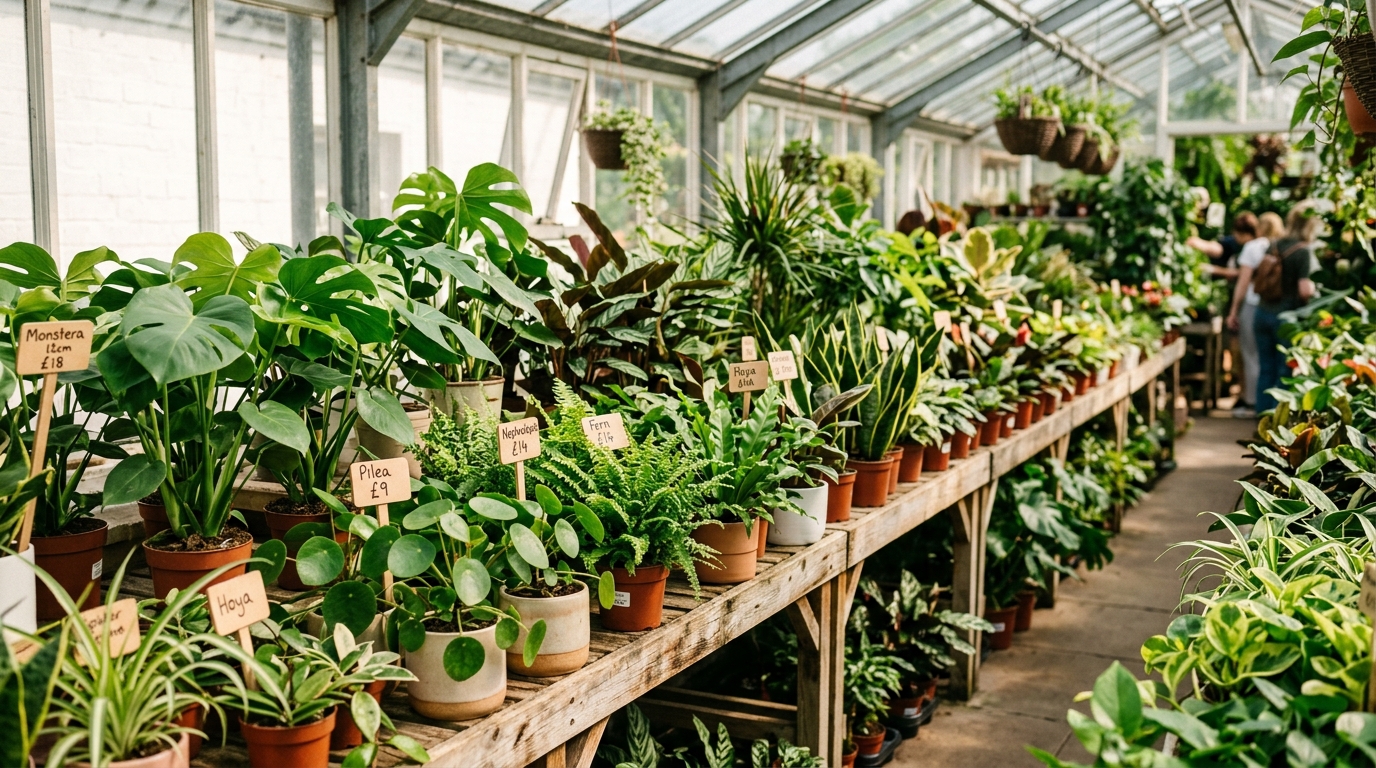
Whenever plant lovers ask me about finding thriving indoor specimens, their very first search is almost always for houseplants near me. I am Dennis P. Hansen, and through years of visiting neighborhood garden centers, specialized boutique greenhouses, and community plant swaps, I have developed a discerning eye for quality. In this comprehensive guide, you will learn how to evaluate local plant retailers, thoroughly inspect nursery stock for hidden pests, safely transport new foliage, and successfully acclimate fresh greenery into your home environment.
Table of Contents
- Why Sourcing Houseplants Locally Matters
- Evaluating Local Plant Retailers: Nurseries vs. Big-Box Stores
- The 5-Point Nursery Inspection Protocol
- Safe Transportation: Protecting Foliage in Transit
- Home Quarantine and Environmental Acclimation
- Local Plant Sourcing Comparison Matrix
- Dennis’s Advanced Troubleshooting for New Purchases
- Seasonal Sourcing Guide: When to Buy
- Master FAQ: Finding and Buying Houseplants Locally
Why Sourcing Houseplants Locally Matters
The convenience of online plant delivery has expanded our access to exotic botanical cultivars, but there remains no true substitute for seeing, touching, and evaluating a living specimen in person. When you search for houseplants near me, you tap into a regional horticultural ecosystem where plants have already adjusted to your local climate, atmospheric humidity, and seasonal photoperiods.
Online mail-order foliage frequently endures significant transit trauma: prolonged darkness inside shipping cartons, extreme thermal fluctuations within delivery trucks, soil spillage, and mechanical foliar bruising. In contrast, sourcing from nearby growers allows you to hand-select plants that display vigorous root systems, balanced canopies, and unblemished cuticles. According to consumer horticulture guidance from Penn State Extension on purchasing and caring for houseplants, physically inspecting foliage, stem joints, and root balls prior to purchase drastically reduces the introduction of pathogens into established indoor collections.
Furthermore, establishing relationships with local greenhouse curators connects you with experienced horticulturists who understand the mineral profile of your municipal tap water and the typical indoor microclimates found in your region. Local plant shopping transforms a transactional purchase into an educational experience that strengthens your gardening confidence.
Evaluating Local Plant Retailers: Nurseries vs. Big-Box Stores
When searching for houseplants near me, you will generally encounter three distinct retail environments: independent botanical nurseries, boutique plant shops, and large home improvement retail centers. Each offers specific benefits and drawbacks regarding plant vitality, pricing, and species diversity.
1. Independent Botanical Nurseries and Greenhouses
Independent production nurseries and dedicated retail greenhouses represent the gold standard for healthy indoor greenery. These operations typically maintain purpose-built, climate-controlled glasshouses featuring specialized overhead shade cloths, automated ventilation fans, and calibrated misting benches. Nursery staff members are frequently trained horticulturists who actively monitor plant health, apply biological pest controls, and water on demand rather than on rigid, arbitrary schedules.
While prices at independent greenhouses may be slightly higher than discount retailers, the superior vigor and longevity of the plants justify the investment. Nursery-grown specimens develop thicker root networks and denser internodal spacing, which means they experience significantly less transplant shock when moved into residential living spaces.
2. Boutique Urban Plant Shops
Boutique plant shops operate primarily in urban city centers and walkable commercial districts. These specialty retailers curate aesthetic selections of tropical aroids, rare variegated cultivars, architectural cacti, and artisanal pottery. Because boutique owners operate in compact retail footprints with limited inventory turnover, they typically hand-clean foliage, stage specimens in decorative containers, and inspect individual pots closely.
Boutique shops are fantastic venues for finding uncommon species such as Monstera dubia, Philodendron verrucosum, or unusual hoya varieties that large commercial nurseries rarely distribute. However, be mindful that plants displayed under decorative indoor shop lighting for extended periods may require gentle reacclimation to higher light levels once brought home.
3. Big-Box Home Improvement Centers and Supermarkets
National hardware chains and big-box garden centers offer unmatched affordability and volume. Millions of tropical plants pass through commercial supply chains, arriving weekly on massive rolling metal carts. You can frequently acquire large, mature specimens like 6-foot fiddle leaf figs, cascading golden pothos baskets, or snake plants at steep discounts.
However, quality control at big-box centers is notoriously inconsistent. Floor employees rarely receive horticultural training, resulting in chronic cultural errors such as plants left drowning in standing flood trays or left bone-dry under drafty loading bay doors. When purchasing from discount retailers, timing is critical: shop immediately on delivery days before poor watering practices and stagnant retail conditions degrade root vigor.
The 5-Point Nursery Inspection Protocol
Never purchase an indoor plant based solely on its attractive top growth. Many commercially sold houseplants appear lush and green while harboring severe root pathogens or dormant insect colonies beneath the soil surface. Use this systematic five-point inspection routine whenever evaluating houseplants near me.
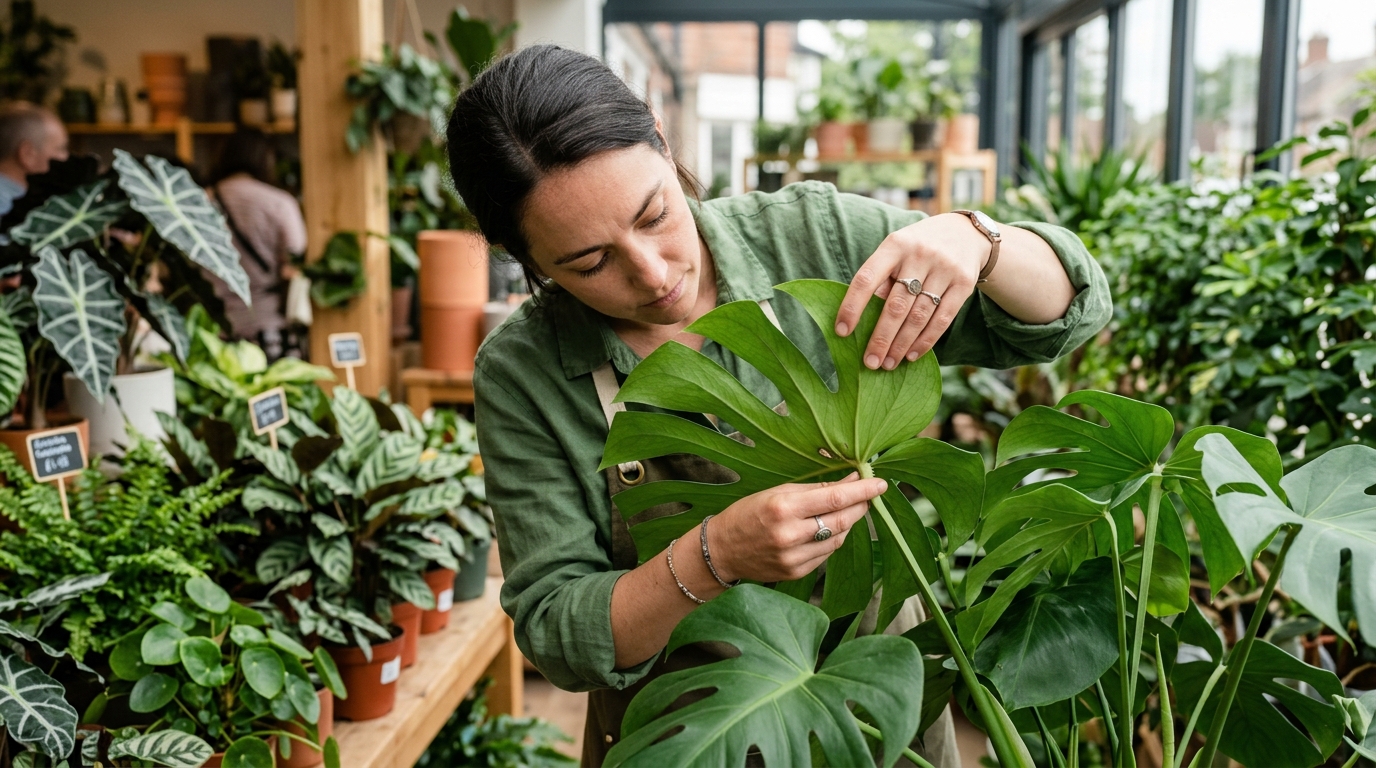
1. Examine Foliar Undersides and Branch Axils
Flip several broad leaves over and inspect the abaxial (underside) surfaces under bright ambient light. Pests such as two-spotted spider mites, scale insects, and mealybugs naturally congregate along major veins and inside tight leaf petiole axils. Look for fine silken webbing, microscopic amber specks, sticky clear honeydew secretions, or white cottony masses. If you detect any evidence of active infestation on a single plant, avoid purchasing any specimens sharing that immediate display bench.
2. Check Stem Rigidity and Internodal Spacing
Gently touch the primary stems to confirm turgor pressure. Healthy stems feel firm and resilient, while plants suffering from vascular decline or root rot feel spongy or hollow. Examine the distance between adjacent leaves (internodal length). Sturdy, well-grown nursery specimens have compact, dense node spacing. Avoid specimens displaying etiolated, stretched-out growth with tiny leaves, which indicates the plant was kept in insufficient light during warehouse holding.
3. Perform the Gentle Root Ball Slide Test
With permission from nursery staff, place your palm over the soil surface with the main stem between your fingers, invert the pot gently, and slide the container off the root ball. Healthy roots appear white, tan, or fleshy orange, and emit a fresh, earthy aroma. Avoid plants that are severely root-bound with circling, woody root grids, as well as plants sitting in waterlogged, foul-smelling soil with brown, mushy root filaments.
4. Evaluate Potting Medium Quality
Inspect the top layer of substrate in the container. Avoid pots coated in heavy green algae films, white fungal crusts, or standing water. Gently tap the side of the pot; if dozens of tiny dark gnats scatter from the surface, the medium is infested with fungus gnats (Bradysia spp.). Bringing home gnat-infested substrate quickly spreads larvae to other containers. For proven eradication methods, consult our comprehensive guide on houseplant pest control and eradication.
5. Look for Fresh Apical Growth
Search the plant’s crown and shoot tips for active vegetative buds, emerging leaf spikes, or fresh unfurling foliage. A plant actively pushing out vibrant new leaves has established robust vascular flow and will transition into your home with far greater ease than a dormant or declining specimen.
Safe Transportation: Protecting Foliage in Transit
Selecting a pristine specimen is only half the battle; transporting houseplants near me from the retail checkout to your living room requires deliberate care. Foliage is vulnerable to mechanical wind whipping, thermal shock, and vehicle tipping.
Thermal Protection During Extreme Weather
Most commercial tropicals originate from equatorial biomes and experience acute cellular damage when exposed to temperatures below 50°F (10°C). During autumn and winter, even a sixty-second walk across a chilly nursery parking lot can trigger severe foliar shock, causing blackened leaves and premature leaf drop within 48 hours. Always request that nursery staff wrap plants in brown kraft paper sleeves or large plastic bags. In freezing conditions, preheat your vehicle’s cabin before carrying plants outdoors.
Conversely, during midsummer heat waves, never leave newly purchased plants inside an unventilated vehicle while running additional errands. Interior car temperatures easily climb above 120°F (49°C) in under twenty minutes, scorching delicate leaf margins and boiling root tissue inside thin plastic nursery containers.
Physical Stabilization in Vehicles
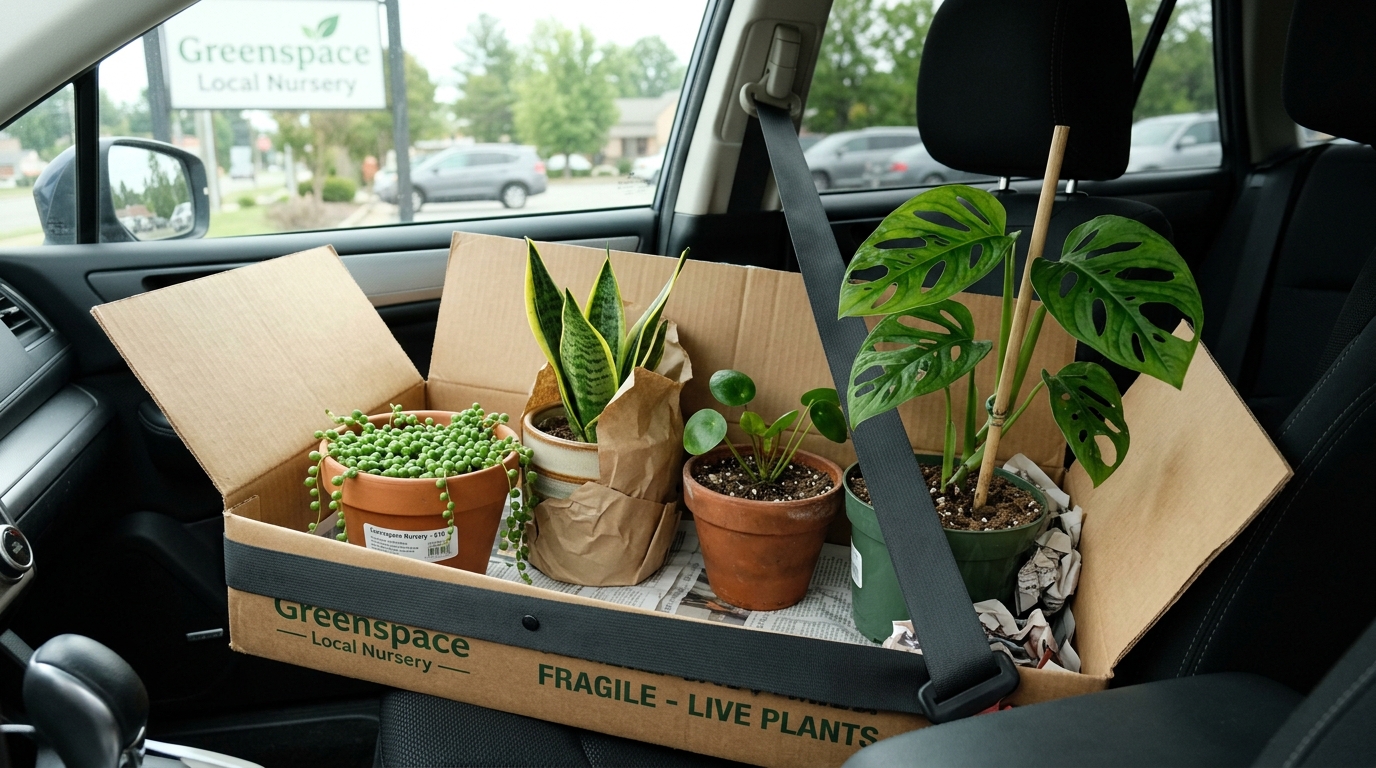
Loose pots placed directly on vehicle floorboards or trunks inevitably tip over during sudden stops or turns, fracturing mature stems and spilling substrate. Bring a shallow cardboard produce box or plastic storage bin lined with rolled towels or crumpled newspaper. Pack containers snugly side-by-side so they support each other upright. Secure tall floor specimens with a passenger seatbelt or wedge them securely in the rear footwell behind the front seats.
Home Quarantine and Environmental Acclimation
When you arrive home with fresh foliage, resist the immediate urge to display your new plant alongside your established collection. Introducing a newly acquired plant straight into a crowded plant shelf is the single most common cause of widespread indoor pest outbreaks.

The Two-Week Quarantine Period
Designate an isolated isolation zone—such as a bright bathroom, home office, or secondary bedroom—located at least ten feet away from other indoor greenery. Keep newly purchased houseplants near me in this quarantine space for a minimum of 14 to 21 days. Many microscopic insect eggs and larvae remain undetectable during initial nursery inspection but hatch within seven to ten days in warm indoor air. Inspect the foliage every three days using a hand lens.
Managing the Light and Humidity Transition
Commercial greenhouse environments maintain optimal photosynthetic conditions: 70% to 85% ambient humidity, perfectly diffused overhead sunlight, and steady warmth. Residential living rooms, by comparison, typically operate at 30% to 45% relative humidity with unilateral side-lighting from windows. This sharp environmental contrast can trigger stress-induced yellowing or temporary foliar drop.
To ease this transition, place newly acquired plants in medium-bright, indirect ambient light, shielded from harsh direct sunbeams. Maintain elevated localized humidity by running an ultrasonic cool-mist humidifier nearby or grouping newly quarantined plants together. As recommended by the Clemson Cooperative Extension on indoor plant selection and care, gradual acclimation prevents sudden transpiration shock and allows leaf cuticles to adapt naturally to drier residential air.
Postponing Immediate Repotting
One of the most frequent mistakes excited gardeners make is immediately unpotting a newly purchased plant into decorative ceramic pottery. Repotting causes unavoidable root hair disturbance and micro-tears. When combined with the stress of environmental relocation, immediate repotting frequently triggers transplant collapse. Allow the plant to stabilize in its original plastic grower pot for at least three to four weeks before repotting. When the time comes, follow our step-by-step tutorial on how to repot houseplants to prevent root shock.
Local Plant Sourcing Comparison Matrix
To help you decide where to direct your search for houseplants near me, this reference table compares the three primary local sourcing channels across key horticultural criteria.
| Retail Venue | Plant Health & Vigor | Species Diversity | Price Point | Staff Expertise |
|---|---|---|---|---|
| Independent Nursery | Superior (grown under greenhouse care) | High (common & collector tropicals) | Moderate to Premium | Certified horticulturists on staff |
| Boutique Plant Shop | Excellent (individually curated) | Specialized (rare aroids, hoyas, succulents) | Premium (includes boutique styling) | Passionate plant enthusiasts |
| Big-Box Retail Center | Variable (best on fresh delivery days) | Standard commercial foliage | Budget-friendly discounts | Minimal to no horticultural training |
| Community Plant Swap | High vigor (hardy home-propagated) | Unique heritage cuttings & divisions | Free or nominal barter trades | Experienced local home gardeners |
Dennis’s Advanced Troubleshooting for New Purchases
Bringing fresh greenery home occasionally triggers unforeseen physiological responses. Drawing from my own hands-on gardening observations, here is how to diagnose and resolve the five most common post-purchase dilemmas.
1. Sudden Lower Foliar Yellowing After Bringing Plants Home
What the symptom looks like: Within five to ten days of purchase, three or four lower leaves turn pale yellow, wilt slightly, and drop off cleanly at the petiole base.
Possible cause: Light acclimation shock. The plant was grown in high-intensity greenhouse sunlight and is shedding older, energy-inefficient shade leaves to rebalance its photosynthetic demands in residential ambient light.
How to identify the cause: If the upper canopy and apical buds remain firm, bright, and healthy, the yellowing is simply natural acclimation rather than root rot.
What to do: Allow the yellow leaves to drop naturally or trim them with clean shears. Do not panic and drench the plant with excess water or fertilizer; keep the soil moderately moist and maintain consistent indirect light.
How to prevent the problem: Position newly acquired plants in bright indirect lighting initially, moving them gradually to their permanent display location over two weeks.
2. Soil Repelling Water and Pooling on Top
What the symptom looks like: When you attempt to water your new plant, water pools on the surface or runs rapidly down the inside edges of the pot and out the drainage holes, leaving the root ball bone-dry.
Possible cause: Hydrophobic peat-based substrate. Commercial growers rely heavily on sphagnum peat moss. When peat dries out completely during retail display, its organic fibers become water-repellent (hydrophobic).
How to identify the cause: Insert a wooden skewer into the center of the root ball after watering. If the core comes out dry and dusty despite water running out the base, the soil is hydrophobic.
What to do: Submerge the bottom half of the grower pot in a bucket or sink filled with lukewarm water for 30 to 45 minutes, allowing capillary action to fully rehydrate the peat core.
How to prevent the problem: Monitor moisture weekly and never allow peat-heavy commercial substrate to desiccate into a hardened, shrunken block.
3. Hidden Spider Mites Emerging Post-Purchase
What the symptom looks like: Fine silken webbing spans across leaf petioles, accompanied by tiny pale stippling dots across the foliage surface.
Possible cause: Microscopic mite eggs laid in the greenhouse hatched under warm, dry indoor residential heating.
How to identify the cause: Hold a blank sheet of white paper beneath a leaf and gently tap the foliage. If tiny dark specks drop onto the paper and begin crawling, spider mites are present.
What to do: Carry the plant to a shower or sink and rinse all foliage thoroughly with a strong spray of lukewarm water to dislodge the colony. Follow up by applying cold-pressed neem oil or horticultural insecticidal soap, coating both upper and lower leaf surfaces.
How to prevent the problem: Enforce a strict two-week quarantine period and maintain relative humidity above 50%, as spider mites thrive in arid indoor air.
4. Drooping Stems Despite Saturated Potting Medium
What the symptom looks like: The foliage appears limp, wilted, and dull, yet the potting substrate feels heavy, cold, and soggy to the touch.
Possible cause: Retail nursery overwatering resulting in acute root hypoxia. In accordance with botanical research from the University of California IPM on houseplant care and disorders, waterlogged substrate suffocates tender root hairs, preventing vascular water transport upward.
How to identify the cause: Slide the pot off. Decayed roots appear mushy, brown, and pull away from their central vascular cords with a foul, sour odor.
What to do: Gently wrap the saturated root ball in layers of dry paper towels to wick away excess water. Trim off necrotic, mushy root filaments using sterilized scissors, and repot into a porous substrate containing 40% coarse perlite.
How to prevent the problem: Always inspect drainage outlets before purchasing and never buy plants left sitting in standing drainage water at retail stores.
5. White Powdery Mineral Deposits on Clay Containers
What the symptom looks like: Chalky white, crusty rings accumulate along the exterior rim of terracotta pots or on the soil surface of newly purchased plants.
Possible cause: Efflorescence caused by high mineral concentrations in commercial greenhouse irrigation water and synthetic fertilizer salts evaporating through porous clay.
How to identify the cause: Scrape the white deposit with your fingernail; if it feels gritty and dissolves in water, it is harmless mineral salt residue rather than fungal mycelium.
What to do: Flush the potting soil thoroughly with distilled water or captured rainwater to leach away residual fertilizer salts, and wipe down the pot exterior with a damp cloth dipped in diluted vinegar.
How to prevent the problem: Water regularly with filtered or low-mineral water to prevent progressive salt accumulation.
Seasonal Sourcing Guide: When to Buy
Timing your search for houseplants near me around natural seasonal supply cycles ensures you receive the freshest, most vigorous botanical stock.
Spring and Early Summer (Peak Sourcing Window)
Spring is the premier season for houseplant shopping. Commercial growers scale up production in February and March, flooding local nurseries with vibrant, actively growing tropical foliage starting in mid-April. Warmer temperatures make vehicle transit effortless, and lengthening natural daylight hours provide optimal conditions for new plants to establish vigorous root systems in your home.
Late Summer and Autumn
By late summer, local nurseries often hold inventory reduction sales to make room for autumnal mum displays and holiday stock. You can acquire mature tropicals, hanging baskets, and decorative pottery at significant discounts. When buying in autumn, ensure you bring adequate thermal wrapping to shield plants from sudden cold snaps during the ride home.
Winter Shopping Precautions
While greenhouse interiors remain delightfully warm during winter, shopping for houseplants near me between December and February requires extreme caution. Cold outdoor air can instantly freeze tender foliage. Only purchase plants from retailers who provide insulated paper wrapping, park your vehicle close to the nursery exit, and drive directly home without making intermediate stops.
Master FAQ: Finding and Buying Houseplants Locally
How do I find the best local nurseries and houseplant shops in my area?
Finding exceptional local plant retailers involves combining online mapping with local community engagement. Begin by searching for houseplants near me on Google Maps, specifically filtering for independent greenhouses, family-owned botanical nurseries, and boutique plant shops rather than general hardware retailers. Read recent customer reviews to assess staff horticultural knowledge and seasonal inventory quality. Additionally, join local gardening groups on Facebook or Reddit, where neighborhood plant enthusiasts frequently share recommendations on which local growers receive the freshest weekly shipments and offer the healthiest botanical varieties.
Is it better to buy houseplants from local nurseries or order them online?
Purchasing houseplants from local nurseries is generally superior to ordering online for several reasons. When shopping locally, you can physically inspect the plant’s foliage, stem firmness, and root system, ensuring you bring home a vigorous, pest-free specimen. Local plants also avoid the dark packaging, thermal extremes, and physical handling typical of postal shipping. Furthermore, locally sourced greenery has already acclimated to your regional temperature and humidity levels. While online specialty growers remain helpful for acquiring exceptionally rare botanical hybrids, local nurseries provide healthier, better-established plants with significantly lower mortality rates.
How long should I keep newly purchased houseplants quarantined at home?
You should quarantine all newly purchased houseplants for a minimum of 14 to 21 days in a separate room before introducing them to your primary plant collection. Even with careful nursery inspections, microscopic pest eggs, dormant fungal spores, and subterranean larvae can evade detection. Over a two-week period in warm indoor conditions, any hidden insect populations—such as spider mites, thrips, mealybugs, or fungus gnats—will hatch and become visible. Keeping new additions isolated prevents localized pests from rapidly infesting your entire indoor garden and saves hours of stressful remediation.
Should I repot a newly purchased houseplant immediately after bringing it home?
No, you should never repot a newly purchased houseplant immediately. Relocating a plant from a climate-controlled commercial greenhouse to a residential living room causes significant environmental acclimation stress. Repotting disturbs delicate root hairs and tears microscopic root tissue, compounding this initial relocation trauma. Leave the plant in its original plastic nursery pot for at least three to four weeks until you observe active new growth, which confirms that the plant has settled into your home’s humidity and light conditions. At that point, you can safely repot into a container one size larger with fresh, aerated potting mix.
What should I do if I discover pests on a newly bought houseplant?
If you discover pests on a newly purchased houseplant, act quickly while keeping the plant isolated from other greenery. Immediately carry the plant to a shower or utility sink and rinse both sides of the foliage thoroughly with a gentle stream of lukewarm water to wash away loose insects. Next, treat the foliage with an organic insecticidal soap or a cold-pressed neem oil emulsion, taking care to coat leaf undersides, petiole axils, and the soil surface. Repeat treatments every five to seven days for three consecutive weeks to interrupt the insect life cycle. Most reputable local nurseries will offer a replacement or store credit if you report the issue within 48 hours of purchase.
How can I safely transport houseplants during freezing winter weather?
Safely transporting houseplants in winter requires proactive thermal protection to prevent cellular freeze shock. Before exiting the nursery, ask staff to wrap the entire plant and container in several layers of brown kraft paper or a large insulated plastic sleeve. Preheat your vehicle’s interior so the cabin is warm when you load the plant. Carry the plant directly from the nursery doors to your heated car without lingering in the cold wind. Place the wrapped pot inside a cardboard box on the floorboard or seat, and drive straight home. Never leave tropical plants inside an unheated parked car, as foliage can suffer irreversible freeze damage in minutes.
Dennis P. Hansen
Dennis P. Hansen is a home gardener with a genuine passion for plants and the simple pleasure of growing them. He enjoys caring for houseplants, succulents, and other plants at home while continually learning from everyday gardening experiences. Dennis likes to share practical plant care tips, useful observations, and simple solutions that can help others grow healthier plants. He believes that caring for plants is a rewarding journey and that there is always something new to learn along the way.