
Houseplants Safe for Cats: 9 Best Picks for Happy Felines


Creating a vibrant indoor jungle should never come at the expense of your pet’s health and happiness. I am Dennis P. Hansen, and as both an avid home gardener and a companion to curious pets, I know how alarming it is when a pet nibbles on fresh foliage. In this complete guide, you will discover nine thoroughly verified houseplants safe for cats, understand the physiological mechanisms of plant toxicity, learn practical deterrent techniques, and master the care requirements needed to keep both your greenery and your feline companions thriving.
Table of Contents
- Feline Biology and the Chemistry of Plant Toxicity
- Top 9 Non-Toxic Houseplants Safe for Cats
- Feline-Safe Houseplant Care & Safety Matrix
- Living Harmoniously: Practical Cat-Proofing Techniques
- Dennis’s Advanced Troubleshooting for Pet Owners
- Seasonal Care in Pet-Friendly Households
- Master FAQ: Keeping Cats and Houseplants Safe
Feline Biology and the Chemistry of Plant Toxicity
Cats are obligate carnivores whose digestive systems and metabolic enzyme pathways differ fundamentally from omnivores and herbivores. While dogs can process a wider spectrum of plant materials, cats lack several essential liver enzymes—specifically hepatic glucuronyl transferase—which neutralizes many organic toxins, essential oils, and phenolic compounds found in common household plants.
Feline attraction to indoor plants is entirely natural. In the wild, felids chew on fibrous grasses to induce vomiting, clear hairballs from their gastrointestinal tracts, or obtain trace micronutrients such as folic acid. Indoors, delicate trailing vines, arching fronds that flutter in heating drafts, and fresh organic scents trigger strong predatory and exploratory behaviors. Understanding the physiological differences between harmless fibrous leaves and genuinely toxic species is critical for every pet owner.
Common indoor plants often harbor dangerous chemical defenses. For example, aroids such as monstera, pothos, and philodendron produce microscopic needle-like insoluble calcium oxalate crystals packaged inside specialized cells called idioblasts. When chewed, these crystals inject into sensitive oral tissues, causing acute burning, hypersalivation, and swelling. Far more severe are true lilies (Lilium and Hemerocallis species), which cause irreversible, fatal acute renal failure in felines from even trace pollen ingestion. Consulting verified toxicological databases such as the ASPCA Animal Poison Control list of toxic and non-toxic plants ensures that every plant you bring indoors is scientifically confirmed safe.
Top 9 Non-Toxic Houseplants Safe for Cats
The following nine species have been thoroughly examined and verified as completely non-toxic to domestic felines by veterinary toxicologists. Each offers distinctive foliage, reliable growth, and adaptable indoor care requirements.
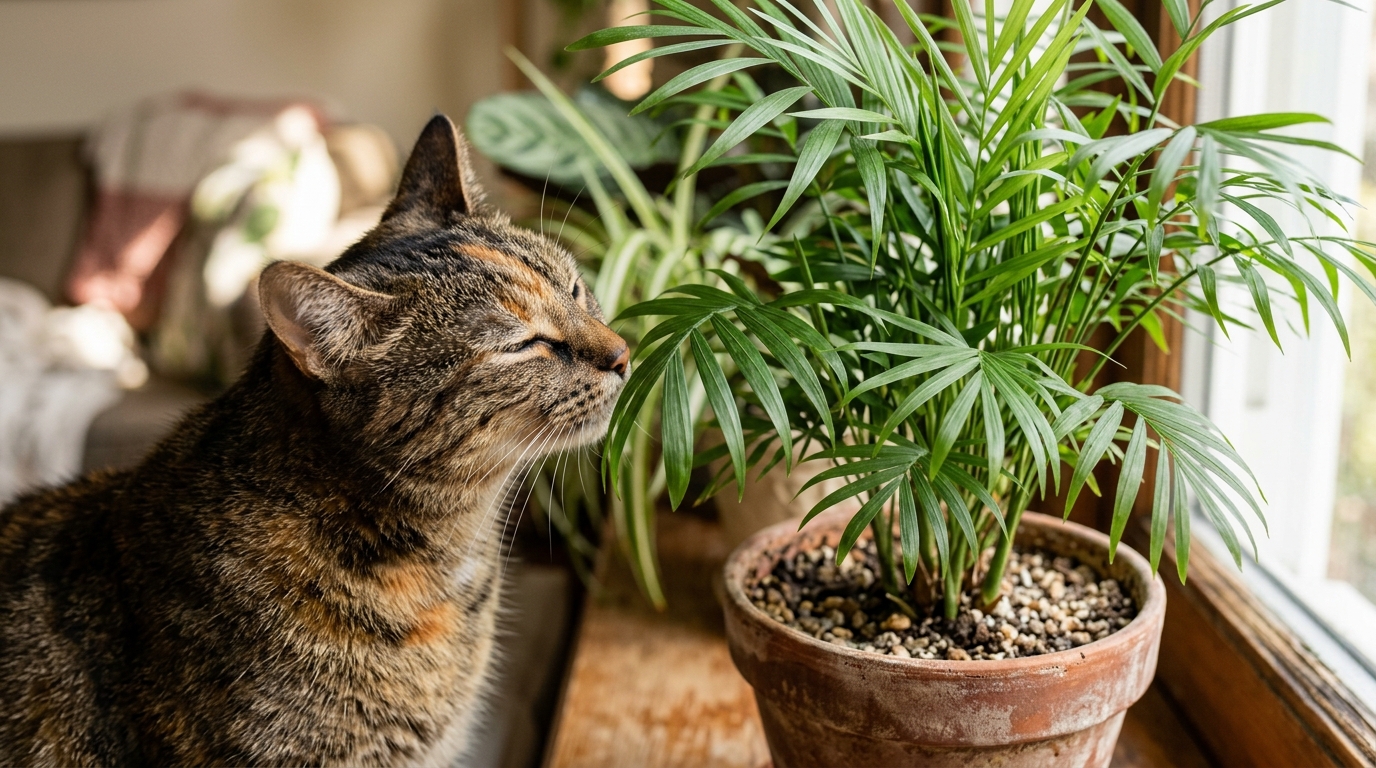
1. Parlor Palm (Chamaedorea elegans)
Originating from the shaded rainforest understories of Southern Mexico and Guatemala, the parlor palm is a timeless Victorian favorite. Its delicate, feathery pinnate fronds create an elegant, architectural presence without posing any threat to felines. Parlor palms thrive in medium to low indirect light, making them ideal for living room corners and dim bedrooms. Water when the top inch of potting soil feels dry, and avoid overwatering. For homes with dimmer ambient light, pairing this palm with other low light houseplants that thrive indoors creates a lush, stress-free interior display.
2. Spider Plant (Chlorophytum comosum)
Native to coastal and tropical regions of Southern Africa, the spider plant produces fountain-like clumps of arching, linear green and cream foliage. Spider plants are completely non-toxic to cats, though felines frequently show intense interest in them. Spider plant leaves contain mild chemical compounds related to opium alkaloids that can produce a harmless, mild hallucinogenic or euphoric effect in cats, similar to catnip. While safe, chewing large quantities may cause mild stomach upset. For step-by-step propagation and cultivation methods, consult our complete guide on proper spider plant care and maintenance.
3. Boston Fern (Nephrolepis exaltata ‘Bostoniensis’)
With its cascading, sword-shaped fronds composed of delicate, ruffled pinnae, the Boston fern adds lush, vibrant texture to any room. Boston ferns are completely safe for cats and dogs, possessing no toxic alkaloids or saponins. Because cats love swatting at hanging fronds, Boston ferns look best displayed in ceiling-mounted macrame hangers. They thrive in bright, filtered light and demand consistently moist (never waterlogged) potting soil along with high atmospheric humidity above 55%.
4. Watermelon Peperomia (Peperomia argyreia)
Belonging to the botanical family Piperaceae, peperomias encompass over a thousand species, all of which are recognized as feline-safe. Peperomia argyreia stands out for its peltate, rounded leaves featuring iridescent silver and dark-green stripes resembling watermelon rinds. Its thick, semi-succulent leaves store moisture, allowing the plant to tolerate occasional missed waterings. Position in bright indirect light and allow the top two inches of substrate to dry out between waterings to prevent basal stem rot.
5. Calathea / Prayer Plant (Goeppertia and Maranta species)
Known for their spectacular foliar patterns and nyctinastic leaf movements—where leaves fold upward at night like hands folded in prayer—calatheas and marantas are 100% non-toxic to pets. Varieties like Calathea orbifolia, Calathea medallion, and Maranta leuconeura offer vivid burgundy undersides and intricate geometric patterns. They require soft, diffused light, steady warmth (68°F to 78°F), and pure, low-mineral water (distilled or captured rainwater) to avoid foliar tip scorch.

6. Cast Iron Plant (Aspidistra elatior)
If you want a virtually indestructible foliage specimen that requires minimal maintenance and poses zero danger to pets, the cast iron plant is unmatched. Its broad, leathery, dark-green leaves rise directly from subterranean rhizomes. It tolerates deep shade, fluctuating room temperatures, and irregular watering cycles. Cats rarely show interest in chewing its tough, fibrous leaf blades, making it an exceptionally durable choice for high-traffic pet households.
7. African Violet (Saintpaulia ionantha)
Native to cloud forest regions in Tanzania, African violets are compact, flowering favorites featuring rosettes of velvety, pubescent leaves and clusters of jewel-toned purple, pink, or white flowers. Both the velvety foliage and floral petals are completely harmless to cats. African violets prefer gentle, bright indirect light and bottom-watering with lukewarm water, as cold moisture droplets on fuzzy leaves can cause unsightly foliar ring spot.
8. Haworthia Succulents (Haworthiopsis fasciata and attenuata)
For succulent lovers who must avoid toxic aloes and euphorbias, zebra haworthias offer an architectural alternative. Featuring rosettes of thick, pointed, dark-green leaves patterned with raised white horizontal tubercles, haworthias resemble miniature aloes but are verified 100% non-toxic by veterinary experts. They thrive on sunny sills in gritty, fast-draining cactus soil and require deep watering only when the soil is completely dry.
9. Polka Dot Plant (Hypoestes phyllostachya)
Originating from Madagascar, the polka dot plant provides eye-catching splashes of pink, rose, white, and green speckled across soft, compact leaves. It is completely non-toxic to felines and adds cheerful color to kitchen counters and sunny windowsills. Pinch back growing stem tips monthly to maintain a bushy, compact habit, and keep the soil evenly moist to prevent sudden wilting.
Feline-Safe Houseplant Care & Safety Matrix
This comparative reference matrix summarizes the essential botanical parameters, care conditions, and safety profiles across our featured feline-safe indoor houseplants.
| Plant Species | Light Requirement | Watering Schedule | Ideal Humidity | Veterinary Status |
|---|---|---|---|---|
| Parlor Palm | Low to bright indirect | Every 7–10 days (dry top inch) | 45%–60% | Non-Toxic (ASPCA Verified) |
| Spider Plant | Medium to bright indirect | Every 7–10 days (dry top 50%) | 40%–60% | Non-Toxic (Mild Catnip Effect) |
| Boston Fern | Bright filtered indirect | Every 4–6 days (consistently moist) | 55%–75% | Non-Toxic (ASPCA Verified) |
| Watermelon Peperomia | Medium to bright indirect | Every 8–12 days (dry top 2 inches) | 50%–65% | Non-Toxic (ASPCA Verified) |
| Calathea / Prayer Plant | Medium indirect shade | Every 5–8 days (damp, pure water) | 60%–80% | Non-Toxic (ASPCA Verified) |
| Cast Iron Plant | Low to deep shade | Every 10–14 days (dry top half) | 35%–55% | Non-Toxic (Tough Foliage) |
| African Violet | Gentle bright indirect | Every 6–9 days (bottom water) | 45%–60% | Non-Toxic (ASPCA Verified) |
| Zebra Haworthia | Bright indirect to partial sun | Every 2–3 weeks (dry fully) | 30%–45% | Non-Toxic (Safe Aloe Alternative) |
| Polka Dot Plant | Bright indirect light | Every 5–7 days (evenly moist) | 50%–65% | Non-Toxic (ASPCA Verified) |
Living Harmoniously: Practical Cat-Proofing Techniques
Even though non-toxic houseplants will not poison your cat, vigorous chewing, pot tipping, and soil digging can damage delicate foliage and create household messes. Implementing physical barriers and behavioral enrichments preserves both your plants and your peace of mind.
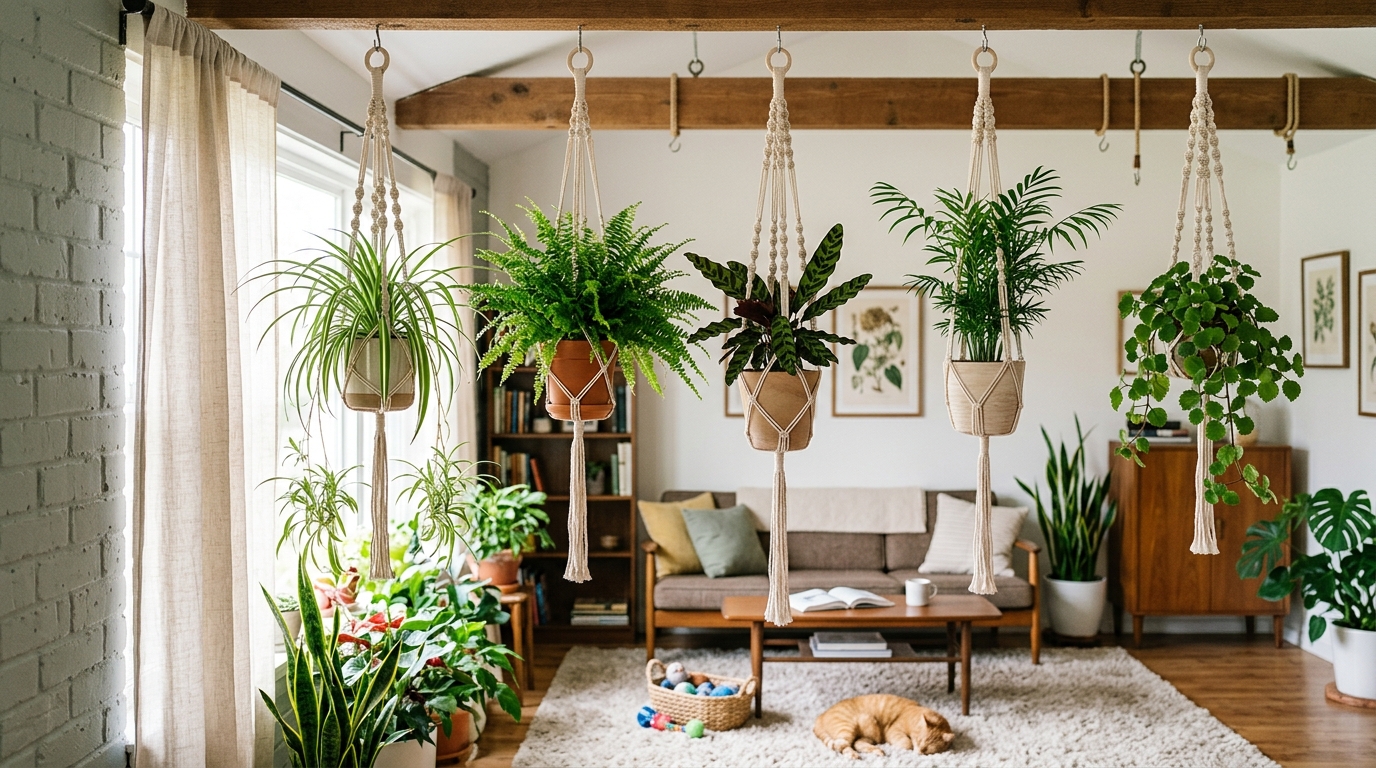
Elevate Greenery with Vertical Hanging Planters
The most reliable way to prevent plant nibbling is taking advantage of vertical space. Install heavy-duty ceiling hooks or wall brackets and suspend trailing varieties like Boston ferns and spider plants in sturdy macrame or ceramic hanging baskets. Ensure planters hang at least four feet away from nearby bookshelves, mantlepieces, or cat climbing towers so agile jumpers cannot launch toward the foliage.
Top-Dress Soil to Prevent Litter-Box Digging
Cats are instinctively drawn to bare, loose potting soil as potential litter-box substrate. To discourage digging, cover the soil surface with large, smooth river stones (at least two inches in diameter), decorative pine bark nuggets, or breathable plastic soil grates. Heavy stones prevent paws from reaching the soil while allowing air and water to penetrate freely.
Provide Dedicated Pet Greens
Rather than attempting to suppress your cat’s natural grazing instinct entirely, redirect it toward acceptable alternatives. Grow a small tray of organic cat grass (typically a blend of wheatgrass, oat, barley, and rye sprouts) placed next to their feeding station. Providing fresh, appetizing cat grass satisfies their urge to chew greens and diverts their attention away from decorative houseplants.
Dennis’s Advanced Troubleshooting for Pet Owners
Managing indoor plants alongside domestic pets requires observing how environmental and behavioral variables intersect. Based on my hands-on gardening experience, here is how to resolve the five most common challenges.
1. Cat Chewing and Shredding Spider Plant Fronds
What the symptom looks like: Foliar tips on spider plants appear ragged, crushed, or severed, with leaf ribbons scattered across the floor.
Possible cause: Feline attraction to the mild euphoric compounds in spider plant leaves and the irresistible motion of arching runners swaying in drafts.
How to identify the cause: Direct visual observation of your cat batting at or chewing on hanging runners.
What to do: Move the container immediately to a high ceiling hook. Trim shredded leaf margins with clean shears at a natural angle. Offer fresh oat cat grass at floor level to satisfy their craving for greens.
How to prevent the problem: Keep trailing plant runners trimmed or suspended higher than six feet off the floor.
2. Soil Spills from Knocked-Over Floor Planters
What the symptom looks like: A potted parlor palm or cast iron plant is knocked sideways off a plant stand or table, dumping substrate across the rug.
Possible cause: Unstable, lightweight plastic nursery pots top-heavy with lush foliage, bumped during feline zoomies.
How to identify the cause: The pot tipped easily with minimal sideways pressure.
What to do: Repot into heavy ceramic or cast-iron cachepots that provide a wide, low center of gravity. Secure plant stand legs with museum wax or rubber anti-slip pads.
How to prevent the problem: Avoid tall, slender plant pedestals in rooms where cats run and play.
3. White Fungal Growth on Disturbed Soil
What the symptom looks like: A fuzzy, white, powdery mold blankets the soil surface within days of a cat digging into the pot.
Possible cause: Moisture and organic matter brought to the surface combined with pet saliva or stagnant air, facilitating harmless saprophytic mold.
How to identify the cause: Examine the growth; if it is superficial, soft, and does not penetrate into stems, it is harmless surface mold.
What to do: Scrape off the top half-inch of soil. Dust the surface lightly with ground cinnamon (a natural antifungal) and top-dress with coarse perlite or river pebbles.
How to prevent the problem: Increase room air circulation and avoid overwatering.
4. Mild Vomiting After Ingesting Non-Toxic Foliage
What the symptom looks like: Your cat regurgitates a small puddle of clear foam containing undigested green leaf fragments.
Possible cause: Mechanical stomach irritation caused by indigestible plant fiber, entirely distinct from systemic poisoning. Veterinary clinical guidance from Colorado State University Veterinary Medicine confirms that mechanical irritation is self-limiting and does not cause organ dysfunction.
How to identify the cause: The cat remains active, alert, and eats normally within an hour; the plant ingested is confirmed non-toxic.
What to do: Remove access to the chewed plant. Provide fresh drinking water. Monitor your pet for 24 hours. If lethargy, diarrhea, or repeated vomiting occurs, consult your veterinarian.
How to prevent the problem: Place all foliage out of direct reach.
5. Brown Foliar Tips from Chemical Repellent Sprays
What the symptom looks like: Leaf margins develop dry, necrotic brown spots after being sprayed with homemade citrus or vinegar deterrent mixtures.
Possible cause: Phytotoxic foliar burn caused by acidic vinegar or concentrated citrus essential oils disrupting the waxy leaf cuticle.
How to identify the cause: Necrotic spots mirror the exact droplet spray pattern on the foliage.
What to do: Rinse the foliage immediately with lukewarm water. Discontinue spraying essential oils directly onto plant leaves; use physical barriers or citrus peels placed in the soil tray instead.
How to prevent the problem: Never apply undiluted acidic or essential oil sprays directly to tender indoor foliage.
Seasonal Care in Pet-Friendly Households
Managing feline-safe plants across different seasons requires balancing environmental controls with pet safety.
Spring and Summer Management
During warm months, open windows bring fresh breezes that can flutter delicate fronds, tempting curious cats to swat at greenery. Secure window screens tightly to prevent escapes, and inspect outdoor balconies for toxic volunteer weeds before allowing pets outside. Active plant growth requires increased watering; ensure runoff trays are emptied promptly so pets do not drink stagnant fertilizer runoff.
Fall and Winter Heating Precautions
Winter home heating drastically lowers ambient humidity, drying out fern tips and calathea leaves. Run ultrasonic humidifiers safely out of pet reach, keeping electrical cords concealed inside protective cable sleeves. For detailed indoor humidity techniques, read our guide on how to increase humidity for indoor plants. During the holiday season, strictly avoid traditional holiday plants like poinsettias, amaryllis, and especially true lilies, which pose severe toxic hazards.
Master FAQ: Keeping Cats and Houseplants Safe
Which houseplants are most dangerous to keep in homes with cats?
The most dangerous plants to keep around cats are true lilies belonging to the genera Lilium (such as Easter, Asiatic, and Stargazer lilies) and Hemerocallis (daylilies). Every part of a true lily—including petals, leaves, stem, pollen, and even water from the vase—is acutely nephrotoxic to felines, causing fatal acute kidney failure within 36 to 72 hours from microscopic exposure. Other highly toxic houseplants include sago palms (Cycas revoluta), which contain the deadly liver toxin cycasin; oleander; autumn crocus; and cyclamen. Additionally, common aroids like monstera, ZZ plant, and snake plants contain insoluble calcium oxalate crystals that cause intense oral pain, swelling, and vomiting if chewed.
Why do cats chew on houseplants, even when provided with cat grass?
Cats chew on indoor greenery due to a combination of evolutionary instinct, exploratory curiosity, and sensory stimulation. In nature, wild felines consume fibrous grasses to facilitate digestion and eliminate hairballs. Indoors, fine fluttering leaves like palm fronds and spider plant runners mimic the movement of prey insects or birds, triggering predatory stalking and swatting behaviors. Furthermore, some plants—most notably the spider plant (Chlorophytum comosum)—contain mild chemical compounds that produce a mild, harmless euphoric sensation similar to catnip. Providing cat grass helps satisfy this instinct, but active physical placement of plants out of reach remains necessary.
Are fertilizer residues or plant foods harmful to cats?
Yes, concentrated synthetic and organic fertilizers can pose significant toxic risks to domestic pets if ingested directly. Chemical plant foods contain concentrated nitrogen, phosphorus, potassium, and micronutrients such as iron, copper, and zinc. If a curious cat drinks standing drainage runoff from saucer trays or licks freshly applied liquid fertilizer from the soil, it can suffer chemical gastrointestinal irritation, vomiting, diarrhea, or acute mineral toxicity. When feeding indoor plants, always empty saucer drainage trays immediately after watering, store fertilizer bottles inside locked cabinets, and keep pets away from freshly watered plants until soil surfaces dry completely.
What should I do immediately if I suspect my cat ate a toxic plant?
If you suspect your cat has chewed or ingested any portion of a toxic plant, act immediately without waiting for symptoms to appear. Carefully remove any remaining plant material from your cat’s mouth and paws, and secure a sample or clear photograph of the plant for accurate botanical identification. Contact your veterinarian, a local veterinary emergency hospital, or the ASPCA Animal Poison Control Center immediately. Never attempt to induce vomiting at home with hydrogen peroxide or salt, as this can cause severe hemorrhagic gastritis or fatal aspiration in felines. Prompt veterinary administration of intravenous fluids and activated charcoal is critical for recovery.
How can I stop my cat from using indoor plant pots as a litter box?
Preventing cats from digging in plant pots requires modifying the soil surface to eliminate its appeal as a digging substrate. Cover the soil with large, heavy river stones (at least two inches across) packed closely around the plant stem, which prevents paws from digging while allowing water and air to penetrate. Alternatively, cut plastic craft grates or wire mesh to fit snugly inside the pot rim. Provide multiple clean litter boxes throughout your home, ensuring at least one litter box per cat plus one extra, and place them in quiet, accessible locations. You can also place pinecones or double-sided pet tape around the pot base as gentle textural deterrents.
Can safe houseplants still cause stomach upset in cats?
Yes, even certified non-toxic houseplants can trigger mild, self-limiting digestive upset if a cat consumes a significant amount of fibrous foliage. Cats are obligate carnivores whose digestive tracts are not evolved to break down substantial plant cellulose and coarse fiber. Ingesting large amounts of leaves can irritate the sensitive gastric lining, leading to harmless regurgitation or mild diarrhea within a few hours. This reaction is a purely mechanical physical response rather than chemical poisoning. As long as your cat remains alert, well-hydrated, and active, the upset will resolve naturally once the fibrous material is expelled.
Dennis P. Hansen
Dennis P. Hansen is a home gardener with a genuine passion for plants and the simple pleasure of growing them. He enjoys caring for houseplants, succulents, and other plants at home while continually learning from everyday gardening experiences. Dennis likes to share practical plant care tips, useful observations, and simple solutions that can help others grow healthier plants. He believes that caring for plants is a rewarding journey and that there is always something new to learn along the way.