
Baby Bio Concentrate Houseplant Food: 5 Pro Thriving Steps

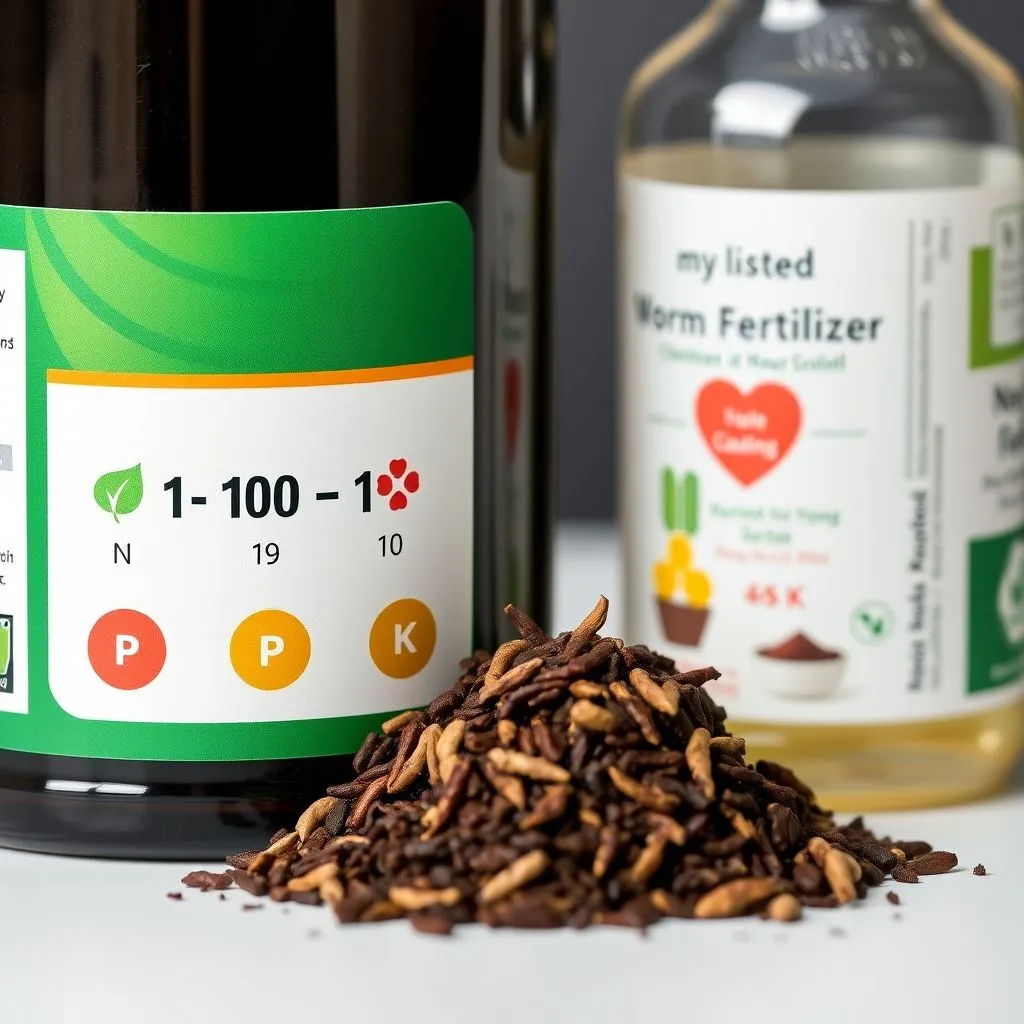
For more than seven decades, the iconic round brown bottle with its bright green cap has been a trusted fixture on plant shelves around the world. I am Dennis P. Hansen, and in my years of tending indoor houseplants, Baby Bio Concentrate houseplant food has remained one of the most reliable liquid concentrates for steady foliar growth. In this comprehensive horticultural guide, you will explore the precise chemical formulation of Baby Bio Original, master exact dropper dilution rates, compare its performance against modern fertilizers, and learn how to feed your houseplants safely without risking mineral burn or toxic salt accumulation.
Table of Contents
- Heritage and Chemical Formulation of Baby Bio
- Analyzing the 10.6-4.4-1.7 N-P-K Analysis
- The Role of Seaweed Extracts and Essential Trace Minerals
- Dropper Dosing and Step-by-Step Dilution Protocol
- Water Quality Factors: Tap, Rainwater, and Salinity Chemistry
- Baby Bio Product Comparison Matrix
- Plant Suitability and Species-Specific Dosing Guide
- Dennis’s Advanced Troubleshooting: Dosing & Salt Management
- Seasonal Feeding Calendars and Flushing Regimens
- Master FAQ: Baby Bio Concentrate Houseplant Food
Heritage and Chemical Formulation of Baby Bio
First formulated in the United Kingdom in 1949, Baby Bio was engineered specifically to solve the unique nutritional challenges of indoor potted plants. Unlike outdoor garden fertilizers designed for vast root systems stretching through living agricultural loam, Baby Bio was tailored for confined potting substrates where accessible minerals are rapidly exhausted by root uptake and leaching.
Its signature formulation blends highly soluble primary mineral salts with natural cold-water seaweed extracts. These bio-stimulants supply secondary plant growth hormones (such as betaines, auxins, and cytokinins) alongside organic conditioning agents that improve cellular membrane flexibility. The enduring appeal of Baby Bio lies in its immediate bioavailability. Because mineral ions are fully dissolved in an aqueous concentrate, root hair cells absorb them through passive osmotic diffusion and active carrier-protein transport immediately upon application.
Guidance from the Royal Horticultural Society on liquid plant fertilizers emphasizes that concentrated liquid feeds allow indoor gardeners to regulate nutrient concentrations with extreme precision. Unlike solid granular spikes or coated prills that depend on soil temperatures above 21°C (70°F) to release their payload, liquid feeds function reliably across seasonal indoor temperatures, delivering predictable nutrition whenever water is applied.
Analyzing the 10.6-4.4-1.7 N-P-K Analysis
A careful inspection of the guaranteed chemical analysis on the Baby Bio Original bottle reveals a distinct nutritional profile: 10.6% total nitrogen (N), 4.4% phosphorus pentoxide (Pâ‚‚Oâ‚…), and 1.7% potassium oxide (Kâ‚‚O). Understanding how these macronutrients behave inside container soil is essential for achieving lush indoor greenery.
1. High Nitrogen Ratio (10.6%) for Foliar Expansion
Nitrogen is the foundational building block of amino acids, proteins, and chlorophyll molecules. With 10.6% nitrogen derived from ammoniacal and ureic sources, Baby Bio Original is weighted strongly toward vegetative foliar expansion. When tropical foliage plants—such as monsteras, pothos, ficus, and philodendrons—enter active growth, their demand for nitrogen spikes. The urea nitrogen hydrolyzes gradually into bioavailable ammonium and nitrate within warm potting mixes, preventing sudden osmotic spikes while sustaining rich chlorophyll pigmentation over several weeks.
2. Moderate Phosphorus (4.4%) for Root Energy Transfer
Phosphorus plays an indispensable physiological role in the synthesis of adenosine triphosphate (ATP), the primary energy currency of plant cells. At 4.4%, the phosphorus fraction provides abundant metabolic energy to power root tip elongation and cellular division. While flowering specimens like African violets or peace lilies benefit from higher phosphorus levels during bud set, 4.4% is ideal for foliage houseplants, supporting dense root branching without precipitating insoluble zinc or iron compounds in the root zone.
3. Balanced Potassium (1.7%) for Turgor Pressure and Stomatal Regulation
Potassium functions as an internal osmotic regulator, controlling the opening and closing of microscopic foliar stomata during transpiration. It reinforces secondary cellulose cell walls, helping climbing vines and broad foliage maintain structural stiffness. When combined with proper watering practices outlined in our comprehensive guide to houseplant fertilizer fundamentals, this balanced potassium fraction supports steady, disease-resistant vegetative growth.
The Role of Seaweed Extracts and Essential Trace Minerals
While primary N-P-K values dominate the label, the inclusion of cold-water marine kelp extract is what truly elevates Baby Bio above standard synthetic fertilizers. Indoor houseplants grown in soilless peat, coco coir, or bark mixes do not have access to the deep mineral weathering of natural outdoor soils. Over time, soilless mixes experience severe micronutrient depletion.
The natural seaweed component in Baby Bio provides a broad spectrum of bioavailable trace elements and organic compounds:
- Iron (Fe) & Manganese (Mn): Essential cofactors in chlorophyll synthesis that prevent interveinal chlorosis (yellowing between leaf veins while veins stay green).
- Zinc (Zn): Drives internodal stem elongation and enzyme activation, preventing stunted foliage clusters.
- Boron (B): Critical for cell wall carbohydrate synthesis and pollen tube development during brief blooming phases.
- Natural Cytokinins & Betaines: Organic signaling molecules that stimulate lateral bud break, encouraging bushier, multi-stemmed growth in vining aroids and ficus trees.
- Alginic Acids: Natural organic polysaccharides that enhance soil moisture retention and nourish beneficial microbial flora within potting substrates.
Dropper Dosing and Step-by-Step Dilution Protocol
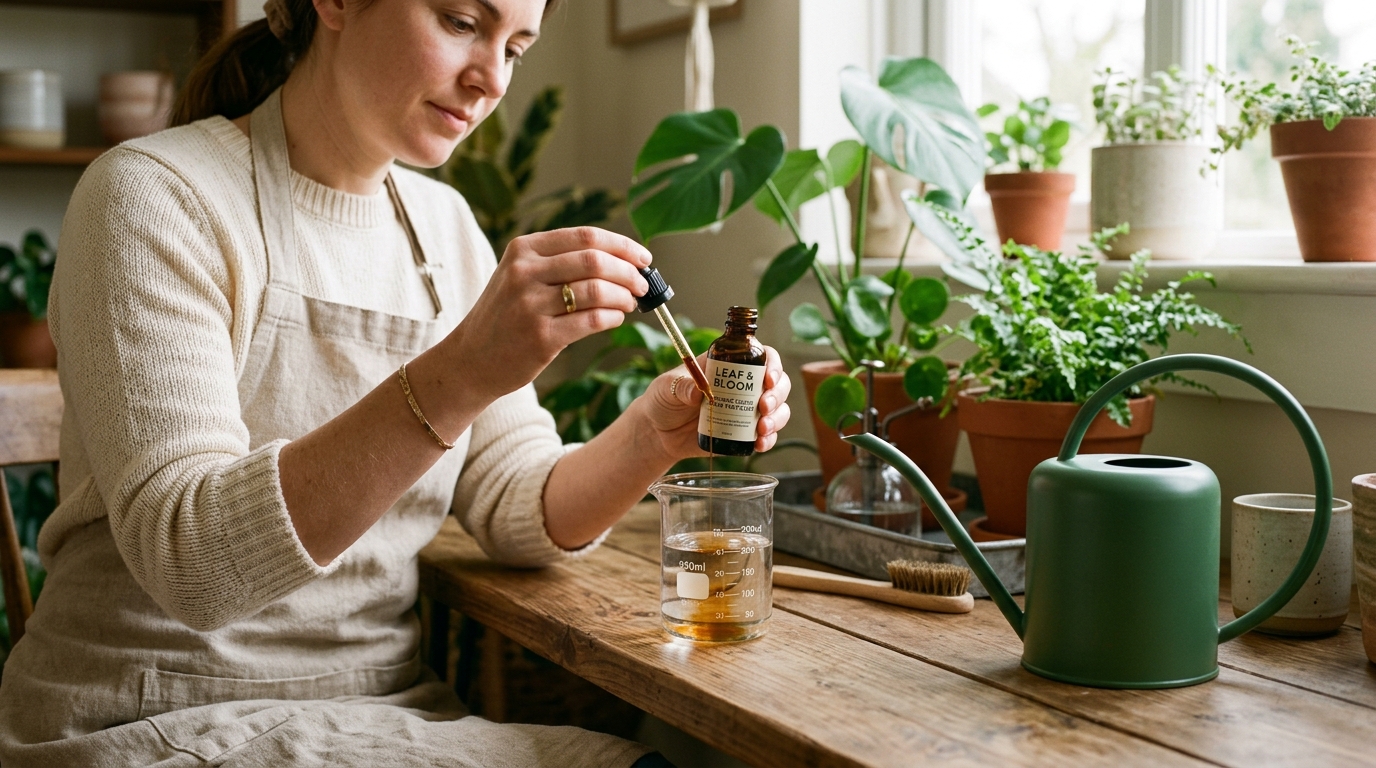
One of the hallmark innovations of the Baby Bio bottle is its integrated precision dropper nozzle. Unlike wide-mouth fertilizer bottles that demand awkward measuring spoons or easily misplaced caps, Baby Bio allows you to meter individual drops directly into your watering can.

Standard Bi-Weekly Dosing Rates
The manufacturer’s baseline specification calls for 5 to 10 drops per 500 ml (approximately one pint) of water. In home horticultural practice:
- For 1 Liter of Water: Dispense 10 to 15 drops.
- For 2 Liters (Half-Gallon Watering Can): Dispense 20 to 25 drops.
- For 1 Gallon (approx. 3.8 Liters): Dispense 40 to 50 drops (approximately 2.5 ml or half a level teaspoon).
The “Weakly, Weekly” Micro-Dosing Regimen
In residential environments where indoor temperatures and ambient light shift between sunny afternoons and overcast mornings, applying heavy doses every two to four weeks can create abrupt electrical conductivity (EC) swings in container soil. Instead, many experienced gardeners adopt the “weakly, weekly” micro-dosing technique. Dilute Baby Bio to 5 drops per liter of water and apply it with every routine irrigation during spring and summer. This constant, mild nutrient flow replicates the continuous nutrient leaching found in tropical rainforest habitats.
Step-by-Step Watering and Feeding Routine
- Inspect Root-Zone Moisture: Never pour fertilizer solution onto bone-dry potting media. Dry peat moss repels moisture and concentrated salts can burn dry root hairs. If soil is parched, moisten lightly with plain water thirty minutes beforehand.
- Agitate the Bottle: Invert and shake the Baby Bio bottle for ten seconds to resuspend any settled seaweed solids.
- Meter Dropper Drops: Count drops into a clean watering can filled with lukewarm water (ideally 20°C to 22°C / 68°F to 72°F).
- Swirl Thoroughly: Stir the liquid to achieve complete dissolution throughout the container.
- Saturate the Substrate: Slowly pour the solution around the perimeter of the root ball until liquid drains freely from bottom drainage holes.
- Discard Saucer Runoff: Empty drip trays within twenty minutes. Allowing pots to stand in fertilizer runoff causes reverse osmosis and root rot.
Water Quality Factors: Tap, Rainwater, and Salinity Chemistry
The interaction between your household irrigation water and Baby Bio Concentrate significantly influences plant health. Guidance published by the University of Florida IFAS Extension on indoor plant nutrition highlights that container plants accumulate dissolved minerals rapidly when municipal tap water is used in tandem with synthetic fertilizers.
Keep these water chemistry guidelines in mind:
- Hard Municipal Tap Water: High in calcium carbonate and magnesium bicarbonate, hard water gradually raises soil pH above 7.0, locking out iron and phosphorus. When using hard water, reduce Baby Bio dosing by 20% to prevent excessive mineral accumulation.
- Softened Water Warning: Water softened with sodium chloride or potassium chloride contains high levels of sodium ions that displace essential nutrients, resulting in rapid foliar margin scorch. Never use softened water for indoor plants.
- Captured Rainwater or Reverse Osmosis (RO) Water: Rainwater and RO water have virtually zero electrical conductivity (EC) and a slightly acidic pH (5.8 to 6.5), making them the ideal delivery vehicle for Baby Bio Concentrate. The pure water allows plant roots to absorb the fertilizer’s N-P-K ions without competing mineral salts.
Baby Bio Product Comparison Matrix
Over the decades, the Baby Bio product line has expanded to address the distinct physiological demands of specialized plant genera. Use this comprehensive comparison matrix to select the appropriate formulation for your indoor collection.
| Formula Name | N-P-K Ratio | Key Additives | Recommended Frequency | Target Plant Families |
|---|---|---|---|---|
| Baby Bio Original | 10.6-4.4-1.7 | Natural seaweed extract | Every 1–2 weeks (active season) | General foliage, Monsteras, Pothos, Palms, Ficus |
| Baby Bio Orchid Food | 5.3-2.2-0.85 | Low-urea nitrogen, seaweed | Every 2–3 weeks during growth | Phalaenopsis, Dendrobiums, Oncidiums, Cattleya |
| Baby Bio Cactus & Succulent | 2.5-4.5-8.0 | High potassium, low nitrogen | Once every 4–6 weeks in spring | Desert cacti, Haworthias, Echeverias, Crassula |
| Baby Bio Herb Food | 7.0-3.0-5.0 | Organic botanical extracts | Every 2 weeks in bright sun | Indoor Basil, Parsley, Mint, Rosemary, Thyme |
| Baby Bio Leaf Shine | Foliar spray (0-0-0) | Natural botanical oils | Monthly foliar dusting | Ficus elastica, Monstera deliciosa, Peace Lily |
Plant Suitability and Species-Specific Dosing Guide
Because Baby Bio Original possesses a nitrogen-forward profile, tailoring your dropper counts to individual plant species ensures balanced growth without foliar stretching or fertilizer toxicity.

1. Fast-Growing Aroids (Monstera, Pothos, Philodendron)
Aroids are vigorous feeders that readily utilize Baby Bio’s nitrogen for stem elongation and rapid fenestration development. Feed these species every two weeks with 10 drops per liter during peak spring and summer growth. For ideal interior placements, check our curated guide to the best houseplants for indoor aesthetics.
2. Ficus Varieties (Fiddle Leaf Fig, Rubber Tree)
Large ficus trees consume significant quantities of nitrogen to support broad, leather-like leaves. Feeding with 10 to 12 drops per liter every two to three weeks prevents bottom leaf drop and ensures vigorous terminal bud expansion throughout warm weather.
3. Palms and Dracaenas
Palms (such as Areca, Kentia, and Parlor palms) and dracaenas have sensitive fibrous root systems that are prone to fluoride and salt injury. Reduce Baby Bio dosing to 5 to 7 drops per liter, and feed only once per month. Always flush the soil thoroughly between feedings.
4. Sensitive Species (Calatheas, Marantas, and Ferns)
Prayer plants and delicate ferns have thin, delicate root hairs that easily succumb to mineral scorch. When feeding calatheas or maidenhair ferns with Baby Bio, dilute to one-quarter strength (3 to 4 drops per liter of distilled water) and apply once every four weeks during active growth.
Dennis’s Advanced Troubleshooting: Dosing & Salt Management
Even with decades-proven formulas, improper dosing or irregular watering can trigger plant distress. Here are my step-by-step diagnostic and treatment protocols for the five most frequent houseplant feeding complications.
1. Crispy, Brown Foliar Margins and Scorched Leaf Tips
What the symptom looks like: Leaf tips and perimeter edges turn dry, brown, and brittle within 48 to 72 hours of fertilizer application.
Possible cause: Applying fertilizer to dehydrated potting soil, causing osmotic water extraction from root tissues, or using an excessive dropper concentration.
How to identify the cause: Necrosis appears abruptly following feeding, primarily affecting older leaves and leaf tips where transpiration minerals accumulate.
What to do: Immediately place the plant in a sink or shower. Run lukewarm water through the potting substrate for four to five minutes, allowing all excess salts to leach out of the drainage holes. Snip away scorched edges with sterilized shears and withhold fertilizer for four to six weeks.
How to prevent the problem: Always pre-moisten the root ball with plain water thirty minutes before applying any fertilizer solution.
2. Crusty White Efflorescence on Soil Surface and Terracotta Pots
What the symptom looks like: A chalky white or pale yellow crust forms on the top layer of potting soil and around the porous rims of terracotta containers.
Possible cause: Fertilizer mineral salts and tap water bicarbonates evaporating at the surface and crystallizing into insoluble deposits.
How to identify the cause: Scrape the white deposit with your fingernail; if it crumbles like dry powder and dissolves under warm running water, it is harmless mineral efflorescence.
What to do: Carefully scrape off the top half-inch of crusted soil and replace it with fresh potting mix. Submerge the container in a tub of clean water for ten minutes to leach interior salts, then wipe exterior terracotta surfaces with a damp cloth.
How to prevent the problem: Leach container soils with plain water every six weeks during the active feeding season.
3. Floppy, Weak Stems with Abnormally Rapid Vegetative Growth
What the symptom looks like: The plant produces long, spindly, fragile stems with pale foliage that cannot support its own weight.
Possible cause: Excessive nitrogen applications combined with insufficient ambient lighting, causing rapid cell enlargement without structural lignin reinforcement.
How to identify the cause: Internodal distances (spacing between leaf nodes) are stretched and stems bend easily under gentle pressure, despite healthy white root systems.
What to do: Halve the feeding frequency to once a month, move the container closer to a bright window or supplemental LED grow light, and stake floppy branches.
How to prevent the problem: Never feed plants that are stationed in dim, low-light corners where photosynthesis is severely limited.
4. Stalled Vegetative Growth Despite Faithfully Regular Feeding
What the symptom looks like: You supply Baby Bio every two weeks, yet the plant remains completely dormant, leaves look dull, and no new shoots unfurl.
Possible cause: Substrate compaction, alkaline soil pH locking out micronutrients, or severely bound root systems. Horticultural research from Michigan State University Extension on houseplant nutrition confirms that indoor plants cannot process nutrient inputs without adequate ambient light and aerated root systems.
How to identify the cause: Unpot the plant to inspect roots. If roots form a dense, spiraling ring around the container base with little visible soil, root restriction is preventing nutrient absorption.
What to do: Repot into a container one size larger using fresh, aerated potting soil with perlite and orchid bark. Resume light feeding four weeks after repotting once root tips establish.
How to prevent the problem: Repot actively growing tropicals every 12 to 18 months.
5. Fungus Gnat Larvae Multiplying in Potting Substrate
What the symptom looks like: Tiny, mosquito-like black flies fly out of the potting mix whenever the plant is disturbed or watered.
Possible cause: Keeping the upper soil profile perpetually saturated, combined with organic seaweed solids in the fertilizer nourishing surface mold and fungus gnat larvae.
How to identify the cause: Inspect the top half-inch of damp potting media under bright light to spot tiny translucent larvae with shiny black heads.
What to do: Allow the top two inches of substrate to dry thoroughly between waterings. Apply biological Bacillus thuringiensis israelensis (BTI) drench to eradicate larvae, hang yellow sticky cards to capture flying adults, and implement our proven field-tested steps on how to get rid of gnats in houseplants permanently.
How to prevent the problem: Adopt bottom-watering techniques and avoid leaving the top soil layer continuously wet.
Seasonal Feeding Calendars and Flushing Regimens
Synchronizing your Baby Bio applications with the natural biological cycles of indoor houseplants is the secret to sustained, lifelong vigour.
Spring (March to May) — Awakening & Foliar Ignition
As spring days lengthen and natural light intensity climbs, indoor plants emerge from winter dormancy. In mid-March, initiate feeding with a light dose of 5 drops per liter once every three weeks. By May, as vegetative growth surges, increase to 10 drops per liter every two weeks.
Summer (June to August) — Peak Canopy Expansion
Summer delivers maximum ambient light and warmth, driving rapid photosynthesis and transpirational water demand. Apply Baby Bio every 10 to 14 days, or implement the weekly micro-dose protocol at 5 drops per liter with each watering. Always water deeply before feeding to protect roots from high-temperature transpiration stress.
Autumn (September to October) — Growth Tapering
With daylight hours waning in late September, plant metabolic activity slows. Scale back feeding to once every four to five weeks at half strength (5 drops per liter). By late October, discontinue feeding entirely as temperatures drop and plants enter their natural winter resting phase.
Winter (November to February) — Dormancy and Soil Flushing
Do not apply Baby Bio during the short, dim days of winter. Forcing fertilizer into dormant root zones when light levels are inadequate causes salt toxicity and root rot. Instead, use mid-winter as an opportunity to leach your pots: flush each container with generous amounts of plain water once in January to wash away accumulated summer mineral residues.
Master FAQ: Baby Bio Concentrate Houseplant Food
How many drops of Baby Bio should I use per liter of water?
For standard bi-weekly feeding during active spring and summer growth, add 10 to 15 drops of Baby Bio Concentrate per liter of room-temperature water. If you prefer applying fertilizer with every watering (the “weakly, weekly” routine), reduce the concentration to 5 to 7 drops per liter. Inverting the bottle gives you complete control, as the precision dropper nozzle dispenses uniform droplets. Always mix the drops thoroughly into your watering can before pouring, and never add undiluted concentrate directly onto potting soil or plant foliage.
Can I use Baby Bio Original on orchids and succulents?
While Baby Bio Original can technically be used on orchids and succulents if drastically diluted (to one-quarter strength or less), it is far better to use the specialized formulas designed for those botanical families. Baby Bio Original has a high-nitrogen analysis (10.6-4.4-1.7) designed for broad-leaved foliage plants. Cacti and succulents require low nitrogen and higher potassium (such as Baby Bio Cactus 2.5-4.5-8.0) to prevent soft, bloated growth, while epiphytic orchids require specialized low-urea nitrogen formulas that do not burn aerial roots.
Does Baby Bio Concentrate expire or lose potency over time?
Unopened bottles of Baby Bio Concentrate have an indefinite shelf life when stored in a cool, dark cupboard away from direct sunlight and freezing temperatures. Once opened, the liquid concentrate remains fully potent for at least two to three years. Over extended periods, you may notice slight settling of natural organic seaweed particles at the bottom of the bottle; simply shake the container vigorously before dispensing to resuspend the solids. If the liquid develops an abnormal odor or crystalizes heavily inside the dropper nozzle, replace the bottle.
Can I apply Baby Bio as a foliar spray directly onto plant leaves?
No, Baby Bio Concentrate houseplant food is formulated specifically for root zone soil application, not as a foliar spray. Applying concentrated synthetic mineral salts directly onto leaf blades can disrupt the waxy foliar cuticle, cause chemical leaf scorch, and leave unsightly white mineral spots on foliage. Furthermore, moisture lingering on leaves indoors can encourage fungal leaf spot pathogens. Always apply diluted Baby Bio solution directly to the potting substrate around the base of the plant.
Is Baby Bio Concentrate safe for homes with cats and dogs?
Once properly diluted in irrigation water and absorbed into the potting soil, Baby Bio poses no significant hazard to domestic pets. However, the undiluted concentrate in the bottle contains concentrated mineral salts and should always be stored securely inside a closed cabinet out of reach of curious animals. Additionally, you should ensure that pets do not drink standing fertilizer drainage water collected in saucer trays beneath pots, as stagnant mineral runoff can cause mild gastrointestinal irritation or vomiting if consumed.
How does Baby Bio compare to other liquid houseplant fertilizers?
Baby Bio distinguishes itself through its long-established, reliable formulation that combines primary synthetic macronutrients with natural cold-water seaweed extract. While many modern synthetic fertilizers provide only purified N-P-K mineral salts, the seaweed component in Baby Bio supplies essential trace elements, amino acids, and natural plant hormones that enhance root resilience and cellular health. Its built-in dropper nozzle also provides unmatched dosing precision for small indoor collections compared to messy measuring caps found on competing brands.
Dennis P. Hansen
Dennis P. Hansen is a home gardener with a genuine passion for plants and the simple pleasure of growing them. He enjoys caring for houseplants, succulents, and other plants at home while continually learning from everyday gardening experiences. Dennis likes to share practical plant care tips, useful observations, and simple solutions that can help others grow healthier plants. He believes that caring for plants is a rewarding journey and that there is always something new to learn along the way.