
Houseplants Identification: 9 Proven Tips for Joyful Care

Walking into a plant nursery or receiving a green clipping from a neighbor often brings a thrilling mystery into your home. You hold a potted specimen with graceful green leaves, but the plastic tag simply reads foliage plant or tropical houseplant. Without knowing the exact species, providing proper care becomes a guessing game. Does this plant thrive in bone-dry soil, or will its root system collapse without constant humidity? Does it demand direct morning sunshine, or will its tender foliage scorch under gentle rays? Accurate houseplants identification is the vital foundation that transforms uncertain guesswork into confident, flourishing gardening.
Over thirty years of tending indoor greenery in my home, I have welcomed countless unlabeled specimens onto my propagation shelves. While mobile identification apps offer quick suggestions, they frequently confuse closely related cultivars or fail entirely when lighting is imperfect. True mastery comes from learning how to read the anatomical clues that plants display in plain sight. By examining leaf geometry, vein architecture, stem petiole attachments, sap characteristics, and root formations, you can deduce the botanical family and precise genus of virtually any indoor plant. In this practical guide, I will walk you through nine proven diagnostic techniques to help you identify your green companions with ease.
1. Decoding Leaf Shape and Overall Blade Geometry
The overall outline of a leaf blade, known botanically as leaf morphology, provides the quickest entry point for narrowing down potential plant families. When evaluating an unknown houseplant, place a mature, fully expanded leaf flat against your palm and observe its primary geometric contour. Avoid judging immature juvenile leaves, as many tropical species produce simple rounded juvenile foliage that changes dramatically as the plant matures.
Cordate leaves resemble classic Valentine hearts, with a rounded base that indents where the petiole joins the blade. This shape is hallmark to many popular Araceae family members, including juvenile Monstera deliciosa, Philodendron hederaceum, and Anthurium clarinervium. Lanceolate leaves are noticeably longer than they are wide, tapering gradually to a sharp point like a spearhead. You will encounter lanceolate foliage on Aglaonema (Chinese evergreens), Dracaena varieties, and Ficus maclellandii. Oblong or elliptic leaves feature roughly parallel margins and rounded ends, as seen on rubber trees (Ficus elastica) and Peperomia obtusifolia.
Peltate leaves present a unique circular or shield-like profile where the stem attaches directly underneath the center of the leaf blade rather than at the margin. Pilea peperomioides (the Chinese money plant) and Stephania erecta are celebrated examples of peltate morphology. Meanwhile, linear or ensiform leaves are long, narrow, and strap-like, characteristic of spider plants and cast iron plants. For a comprehensive index of plant taxa and structural definitions, explore the North Carolina State Extension Plant Toolbox.
Sagittate and hastate shapes feature basal lobes that point backward or outward like an arrowhead. Syngonium podophyllum (arrowhead vine) and many Alocasia varieties display sagittate foliage. If you notice asymmetric leaves where one side of the blade base is noticeably larger than the other, you are almost certainly examining a member of the Begonia family, where leaf asymmetry is a universal taxonomic trait.
2. Examining Leaf Margins: Smooth, Toothed, and Lobed Edges
Once you have identified the general shape of the leaf blade, look closely at the outer perimeter. The edge of a leaf, termed the margin in botanical terminology, holds consistent genetic markers that differentiate species with remarkably similar silhouettes.
Entire margins are completely smooth and uninterrupted around the entire edge of the leaf. Tropical foliage plants native to sheltered rainforest understories, such as peace lilies, cast iron plants, and most ficus species, display entire margins that shed rainwater efficiently. If your unknown plant has a smooth margin with no indentations, serrations, or notches, you can eliminate thousands of temperate and arid species immediately.
Serrate and dentate margins feature sharp, forward-pointing or outward-pointing teeth resembling a saw blade. Plectranthus scutellarioides (coleus), Begonia species, and Hibiscus rosa-sinensis exhibit distinct toothed margins. Crenate margins have rounded, scalloped teeth rather than sharp points, as seen on Kalanchoe blossfeldiana and Swedish ivy. Lobed margins exhibit deep indentations that cut inward toward the central midrib without dividing into separate leaflets, such as the dramatic fiddle-shaped lobes of Ficus lyrata or the oak-leaf lobes of Philodendron bipennifolium.
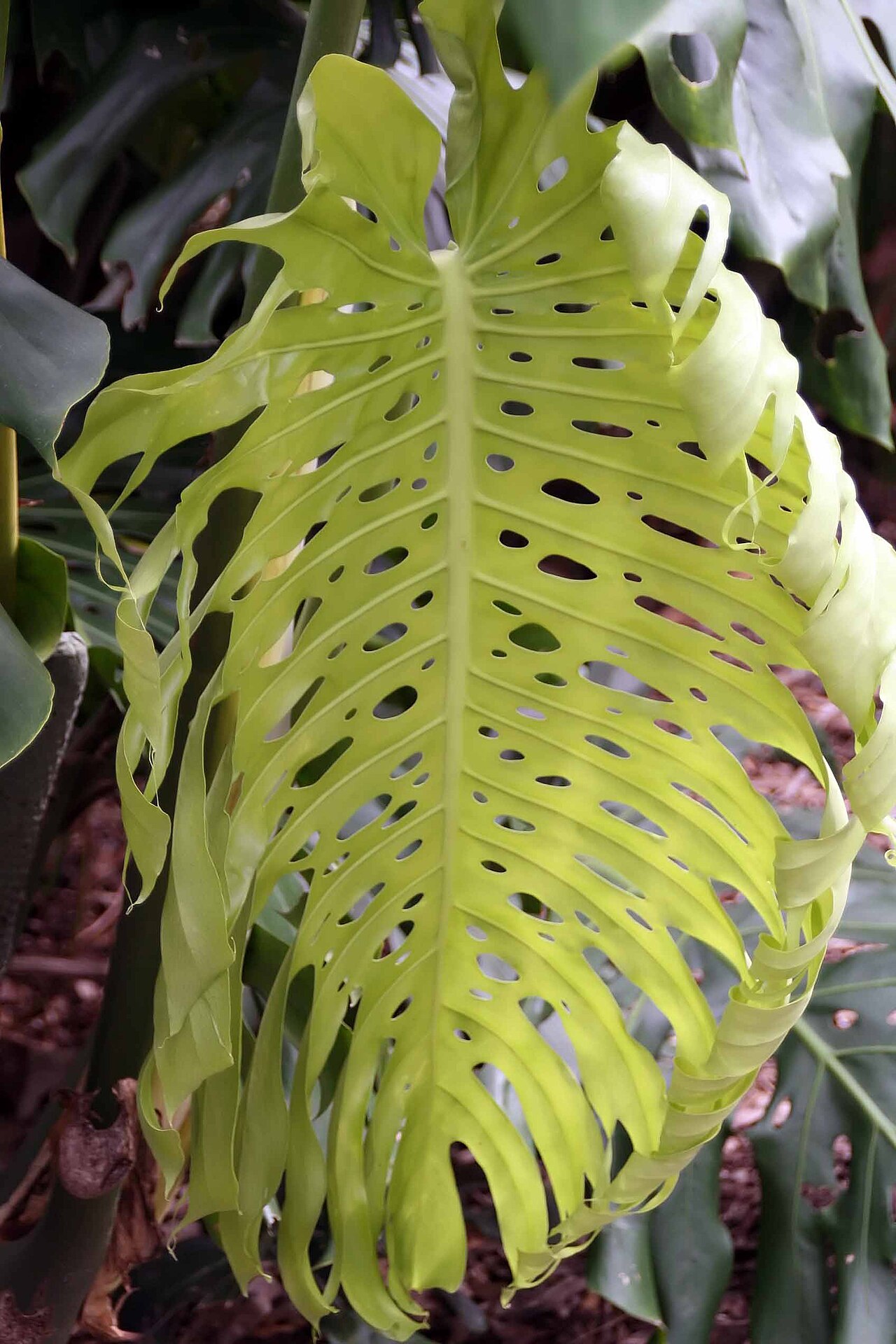
Fenestrated leaves represent one of the most exciting margin adaptations in the plant kingdom. True fenestration occurs when the leaf blade develops perforations, holes, or deep splits along the edges to allow tropical wind and light to pass through to lower canopy foliage. If your specimen displays natural oval holes inside the blade, you are likely admiring a Monstera adansonii or Monstera deliciosa.
3. Analyzing Leaf Venation Patterns and Vascular Architecture
The vascular system of a leaf distributes water and nutrients through a network of visible veins. This venation architecture is deeply rooted in evolutionary taxonomy, serving as a reliable divider between broad botanical classifications.
Parallel venation features secondary veins that run straight and parallel alongside one another from the leaf base to the tip without intersecting into a web. This is the defining characteristic of monocotyledons. If your mystery houseplant displays parallel veins, it belongs to monocot groups such as Marantaceae (calatheas and prayer plants), Araceae, Asparagaceae (spider plants), or Orchidaceae. You can learn more about caring for parallel-veined strap plants in our guide to spider plant care.
Pinnate venation consists of one prominent central midrib from which secondary veins branch outward alternately or oppositely, resembling the structure of a bird feather. You will see pinnate venation clearly in rubber trees, coffee plants, and citrus trees. Palmate venation, by contrast, features several primary veins that radiate outward from a single point at the base of the blade like fingers on an open hand, typical of fatsia japonica, passiflora, and certain begonias.
Reticulate or net venation forms an elaborate web of tiny intersecting veinlets throughout the leaf tissue, characteristic of dicotyledonous plants. In some prized houseplants, such as Anthurium crystallinum, Fittonia albivenis (nerve plant), and Ludisia discolor (jewel orchid), the veins produce striking white, silver, or pink cellular pigmentation that highlights the vascular framework against velvety green tissue.
4. Investigating Petioles, Sheaths, and Stem Attachments
Gardeners often focus so intently on the leaf blade that they overlook the petiole, the stalk that connects the leaf to the main stem. In houseplants identification, the petiole is often the single most dependable feature for resolving confusing lookalikes.
Consider the classic confusion between heartleaf philodendron (Philodendron hederaceum) and golden pothos (Epipremnum aureum). At first glance, both produce heart-shaped green trailing leaves. However, look closely at the petiole where it meets the stem. A pothos petiole features a distinct longitudinal groove or channel running down its top surface, and the base of the petiole forms a winged sheath that wraps around the stem. By contrast, a heartleaf philodendron possesses a smooth, rounded, cylindrical petiole with no groove. Philodendrons also produce papery cataphylls, protective modified leaves that dry into brown sheaths and fall away as new leaves emerge, whereas pothos never produce cataphylls. Compare these trailing distinctions further in our detailed article on pothos plant care.
Examine the junction where the petiole joins the leaf blade as well. Certain plants, such as Maranta leuconeura and Calathea species, possess a swollen, flexible joint called a pulvinus at the top of the petiole. The pulvinus acts like a hydraulic hinge, pumping fluid in and out of cells to physically raise the leaves vertically at night and lower them horizontally during the day. If your mystery plant raises its foliage after sunset like hands folded in prayer, you are unequivocally observing a member of the Marantaceae family.
Additionally, note the presence of winged petioles. Certain citrus plants and philodendron species produce broad, flattened leaf-like wings along the petiole stalk itself, creating a double-leaf effect that serves as an immediate visual confirmation for varieties like the kaffir lime (Citrus hystrix).
5. Leaf Arrangement: Alternate, Opposite, and Whorled Nodes
The spatial arrangement of leaves along a stem, known as phyllotaxy, follows precise mathematical rules that never vary within a species. Look at the stem of your plant and count how many leaves emerge from each individual node.
Alternate leaf arrangement occurs when a single leaf emerges from each node, alternating sides as you move up the stem. Ficus species, begonias, philodendrons, and monsteras consistently exhibit alternate phyllotaxy. Opposite leaf arrangement occurs when two leaves emerge directly across from each other at the exact same node. Many beloved houseplants, including Crassula ovata (jade plant), Hoya carnosa, Plectranthus, and members of the mint and coffee families, produce paired opposite leaves. If your stem exhibits opposite leaves with square-shaped stems, you have almost certainly found a member of the Lamiaceae family.
Whorled arrangement features three or more leaves radiating outward in a circle around a single node. Nerium oleander, Peperomia verticillata, and certain Schefflera varieties display whorled or pseudo-whorled arrangements. Rosette arrangement, seen in snake plants, haworthias, and African violets, occurs when stem internodes are so extremely compressed that the leaves emerge in a tight circular spiral right at the soil line.
6. Distinguishing Underground Structures: Bulbs, Corms, and Rhizomes
When aerial foliage leaves you uncertain, inspecting the root zone unlocks diagnostic certainty. Many tropical houseplants produce specialized subterranean storage organs adapted to endure seasonal droughts or monsoons in their native habitats.
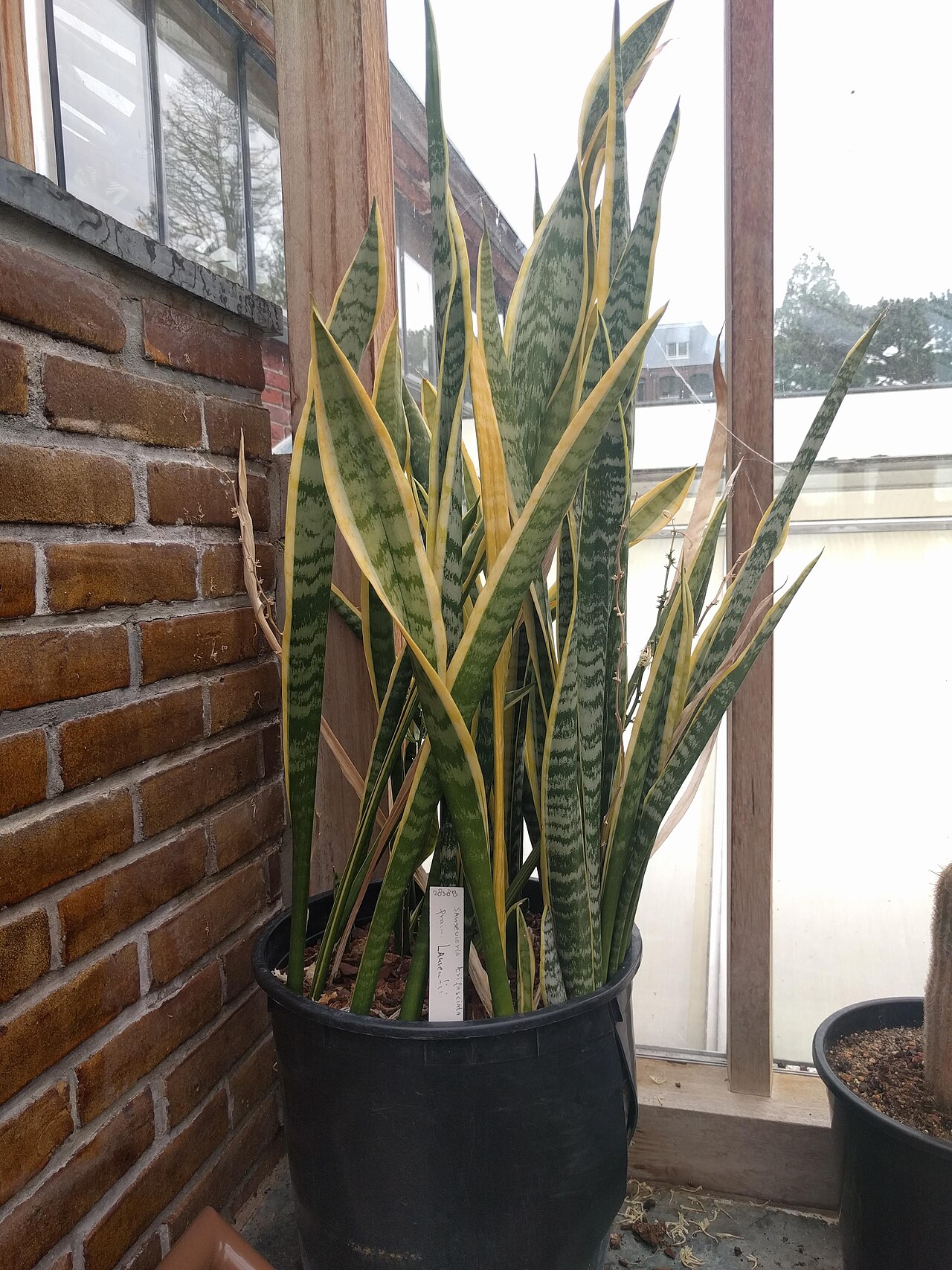
Rhizomes are modified horizontal stems that grow along or just beneath the soil surface, sending down roots from their undersides and pushing up leafy shoots from terminal buds. Sansevieria (snake plants), Calathea, Aspidistra, and rhizomatous begonias spread exclusively via sturdy rhizomes. If your plant has thick, fleshy, creeping horizontal stems at the soil surface, you are dealing with a rhizomatous species.
Tubers are swollen underground structures formed from thickened stems or roots that store carbohydrates and water. Zamioculcas zamiifolia (the ZZ plant) produces potato-like subterranean tubers that allow it to survive months without water. If your plant features glossy pinnate leaves rising from rounded brown tubers, explore our guide to ZZ plant care to understand its unique watering cycle.
Corms and true bulbs represent another distinct class. Alocasia and Colocasia species grow from firm, rounded underground corms with visible horizontal rings. Oxalis triangularis (false shamrock) grows from small scaly corms resembling miniature pinecones. Amaryllis and ornamental alliums produce true layered bulbs composed of fleshy scales wrapped around a central embryonic shoot. Diagnostic guidelines from Clemson Cooperative Extension on indoor plant care highlight that identifying root structures prevents disastrous overwatering mistakes during winter dormancy.
7. Assessing Sap, Latex, and Cut-Tissue Characteristics
The liquid that flows through plant vascular bundles contains diagnostic chemical compounds that provide immediate clues to plant family identity. When making a small propagation clipping or removing a damaged leaf, take note of the color, consistency, and aroma of the exuded sap.
Milky white latex sap is the definitive hallmark of two major plant families: Moraceae (the mulberry and fig family, including all Ficus species) and Euphorbiaceae (the spurge family, including African milk trees and poinsettias). If a snapped stem oozes opaque, sticky white milk, handle the plant with caution. Euphorbia latex contains diterpene esters that irritate skin and eyes severely, while Ficus sap contains ficin that can cause contact dermatitis.
Clear, watery, mucilaginous sap that feels slippery or gelatinous between your fingers is common in succulents, Aloe species, and Tradescantia varieties. The thick gel inside Aloe vera foliage contains acemannan polysaccharides that soothe burns. By contrast, orange or yellow-tinted sap can indicate Papaveraceae or Clusiaceae family lineage. Remember to always wash your hands thoroughly after inspecting plant sap, and never taste unknown plant fluids.
8. Variegation Patterns: Cellular Chimeras Versus Genetic Markings
Modern plant collections are filled with breathtaking patterned leaves, but understanding how variegation forms helps you separate true cultivars from naturally patterned wild species. Variegation falls into two primary categories: genetic patterning and chimeric mutation.
Natural genetic patterning, also known as pigment variegation, is coded into the DNA of every cell and reproduces reliably from seed. Examples include the silver brushstrokes on Calathea medallion, the pink nerve netting on Fittonia, and the silver speckles on Scindapsus pictus. In these plants, the pattern is consistent, symmetrical, and identical on every successive leaf.
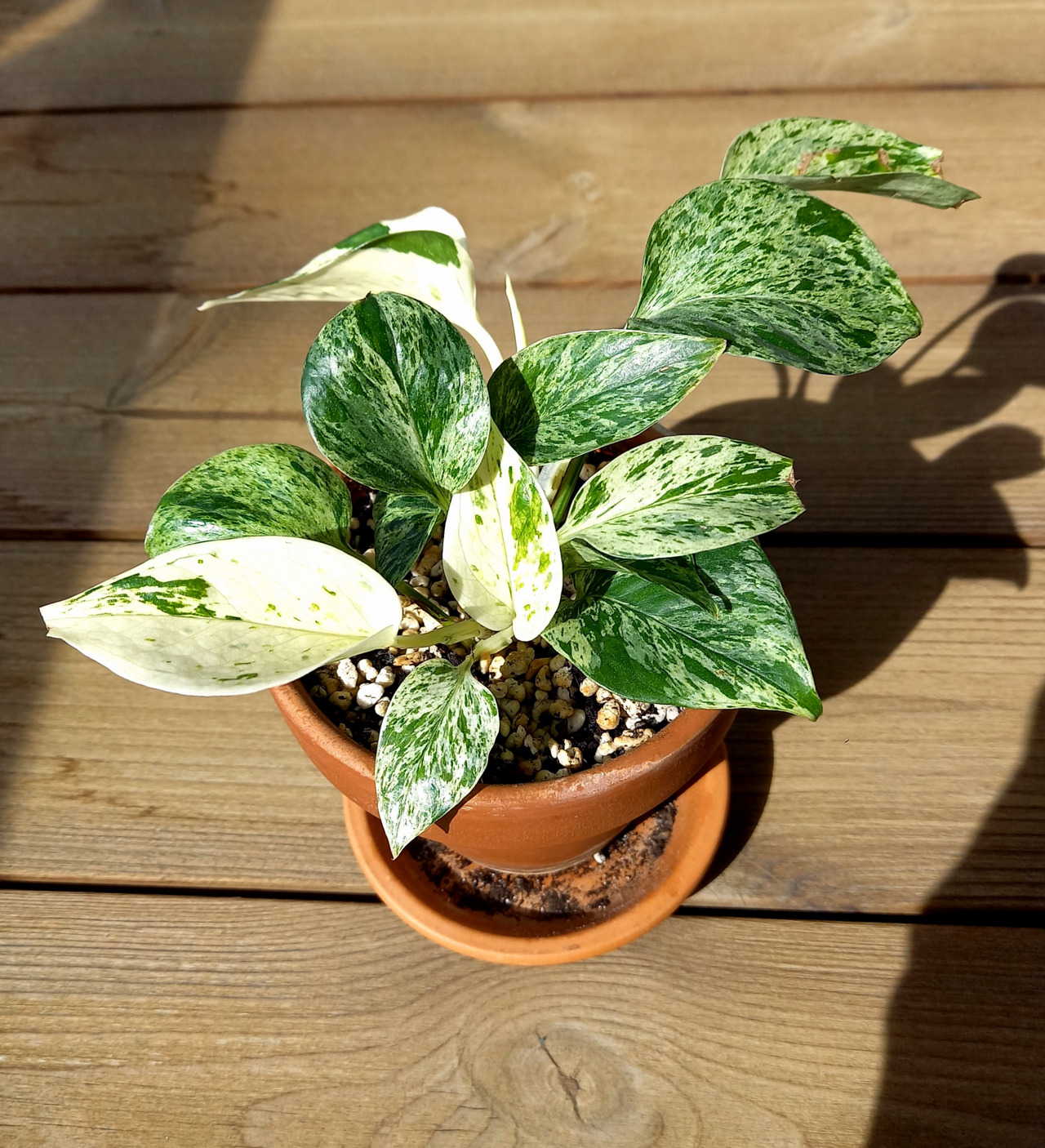
Chimeric variegation, by contrast, occurs when a random cellular mutation causes some cell layers to lack chlorophyll entirely, producing irregular splashes, half-moon sectors, or marbling in shades of cream, white, or light yellow. You will see chimeric variegation in Monstera deliciosa Albo Variegata, Epipremnum aureum Marble Queen, and Ficus elastica Tineke. Because chimeric tissue lacks photosynthetic chlorophyll, these white sectors rely on neighboring green cells for food. Chimeras can also revert to solid green if placed in low light, as the plant attempts to maximize photosynthetic surface area.
Blister or reflective variegation occurs when an air pocket forms between the outer epidermal layer and the underlying palisade mesophyll cells. When light strikes the leaf, the air pocket reflects photons back toward your eye like a mirror, creating a shimmering silver appearance without actual pigment loss. Pilea cadierei (aluminum plant) and Scindapsus pictus exhibit magnificent reflective blister variegation.

9. Recognizing Plant Family Signatures: The Quick Field Guide
To synthesize your diagnostic observations into a conclusive result, match your specimen against the signature profiles of the most common indoor plant families. For additional diagnostic support, consult the Colorado State University Extension guide to houseplant diagnosis.
Araceae (Aroid Family): Characterized by alternate leaves with grooved or sheathed petioles, fleshy aerial root buds at nodes, and unique inflorescences consisting of a central spadix surrounded by a modified leaf called a spathe. Includes Philodendron, Monstera, Epipremnum, Syngonium, Alocasia, Aglaonema, and Zamioculcas.
Asparagaceae: Monocotyledonous plants often featuring rosette or clumping habits, fibrous root networks or underground rhizomes, and tough linear or strap-like leaves. Includes Sansevieria (Dracaena), Chlorophytum (spider plant), Aspidistra (cast iron plant), and Beaucarnea recurvata (ponytail palm).
Moraceae (Fig Family): Woody trees, shrubs, and climbers characterized by milky white latex sap, alternate leaves with entire or lobed margins, prominent stipule caps that protect emerging leaves, and fig-like syconium fruit. Includes Ficus lyrata, Ficus elastica, Ficus benjamina, and Ficus pumila.
Crassulaceae (Stonecrop Family): Succulent plants featuring thick, water-storing leaves arranged in opposite pairs or tight rosettes, shallow fibrous root systems, and drought-hardy metabolisms. Includes Crassula (jade), Echeveria, Kalanchoe, Sedum, and Aeonium.
Marantaceae (Prayer Plant Family): Celebrated for complex symmetrical leaf patterns, prominent pulvinus joints that move foliage in response to diurnal light cycles, tuberous or rhizomatous root systems, and demanding humidity requirements. Includes Calathea, Maranta, Ctenanthe, and Stromanthe.
Gesneriaceae (African Violet Family): Herbaceous perennials noted for opposite, soft, densely pubescent leaves covered in fine protective trichome hairs, fleshy brittle petioles, and tubular flowers. Includes Saintpaulia, Streptocarpus, Episcia, and Aeschynanthus (lipstick plant).
10. Practical Troubleshooting Steps When Plants Defy Easy Classification
Occasionally, you will encounter a cultivated hybrid or juvenile mutation that defies simple identification keys. In these situations, follow a systematic isolation procedure rather than making reckless assumptions about light or watering.
First, isolate the unknown plant in moderate, indirect light with temperatures between sixty-eight and seventy-five degrees Fahrenheit. Moderate conditions prevent either scorch or light starvation while you observe its natural habits. Second, monitor its transpiration rate by checking how quickly the potting mix dries out over ten days. A plant that drinks rapidly often possesses a fibrous, high-metabolism root system, whereas a plant whose soil remains damp for two weeks likely relies on succulent storage tissues or dormant tubers.
Third, document the emergence of new growth. Take close-up photographs of newly unfurling leaf tips, stipules, and petiole sheaths every few days. The unfolding mechanism, whether circinate like a fern frond, convolute like an aroid leaf rolled into a tight spiral, or conduplicate folded flat in half, provides definitive botanical evidence. You can share these photographic details in local horticultural forums or cross-reference them with regional extension services to confirm your findings.
Frequently Asked Questions About Houseplants Identification
Can I rely entirely on smartphone identification apps for houseplants?
Smartphone identification apps provide a helpful starting point, but they should never be accepted blindly. Most apps rely on machine learning algorithms trained on photographs of flowers and mature wild specimens. When presented with immature foliage, non-blooming tropicals, or variegated cultivars, apps often deliver incorrect classifications. Use apps as a suggestive tool, then verify the result by checking morphological features such as petiole structure, venation, and leaf margins.
Why do the leaves on my young houseplant look completely different from online pictures?
Many tropical plants undergo heteroblasty, a dramatic transformation in leaf size, shape, and structure between juvenile and adult life stages. A juvenile Monstera deliciosa produces small, solid, heart-shaped leaves with no fenestrations. Only when given vertical support to climb toward brighter light does it begin producing the massive split foliage seen in mature photographs. Identifying juvenile specimens requires focusing on stem attachments and node characteristics rather than leaf shape alone.
What is the difference between a Philodendron and an Epipremnum (Pothos)?
While trailing philodendrons and pothos share heart-shaped leaves, you can distinguish them by inspecting their petioles and stem sheaths. Philodendrons have smooth, rounded, cylindrical petioles and produce papery cataphylls that dry and fall off. Pothos have a distinct groove running down the length of the petiole and produce winged petiolar sheaths that remain attached to the stem. Pothos leaves also tend to be thicker and stiffer with a slightly waxy texture.
How do I know if my succulent is a true cactus or an African Euphorbia?
True cacti (family Cactaceae) produce areoles, specialized cushion-like structures from which spines, glochids, hair, and flowers emerge. Spines on a true cactus always emerge from an areole. Euphorbias (family Euphorbiaceae) lack areoles; their thorns emerge directly from the plant body or stem ridges, typically in pairs. Furthermore, breaking or scratching a Euphorbia releases milky white latex sap, while cacti produce clear watery sap.
Can an unknown houseplant be harmful to pets before I identify it?
Yes. If you bring home an unlabeled plant, assume it may be toxic until you confirm its botanical identity. Many common houseplants, including all aroids (philodendrons, pothos, monsteras, dieffenbachias) and peace lilies, contain microscopic calcium oxalate raphide crystals that cause intense oral burning, swelling, and digestive upset if chewed by dogs or cats. True lilies (Lilium species) are fatal to felines even in tiny amounts. Keep mystery plants completely out of reach of children and pets until identification is complete.
Dennis P. Hansen
Dennis P. Hansen is a home gardener with a genuine passion for plants and the simple pleasure of growing them. He enjoys caring for houseplants, succulents, and other plants at home while continually learning from everyday gardening experiences. Dennis likes to share practical plant care tips, useful observations, and simple solutions that can help others grow healthier plants. He believes that caring for plants is a rewarding journey and that there is always something new to learn along the way.