
Hanging Houseplants: 7 Proven Picks for Cascading Indoor Vines

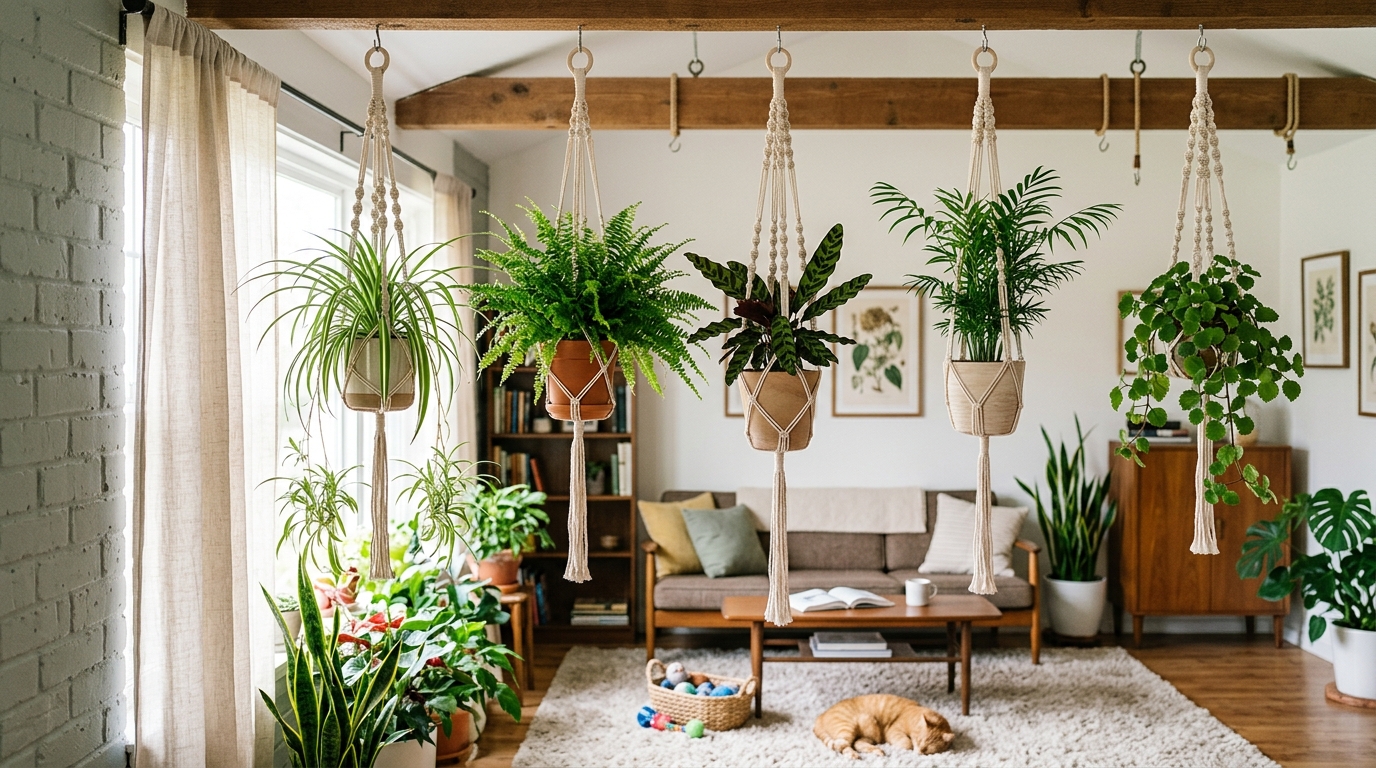
Suspending foliage from ceiling hooks, curtain rods, and wall brackets changes the way indoor greenery interacts with your living space. Hanging houseplants soften hard architectural angles, introduce living vertical movement, and allow you to grow dozens of trailing vines even when floor space and table surfaces are completely occupied. Yet cultivating plants suspended five to eight feet in the air introduces distinct microclimates and physical challenges that ground-level containers rarely experience.
Warm air naturally rises toward the ceiling, creating an overhead pocket where humidity drops and soil dries out far faster than pots resting on the floor. At the same time, upper walls and high window frames frequently sit in shadow, starving trailing stems of the photosynthetically active radiation they need to produce dense foliage. Without careful planning, a lush hanging basket can turn into a stringy curtain of bare stems with a handful of tired leaves at the bottom.
Over decades of growing trailing specimens in living rooms and sunlit corridors, Dennis Hansen has refined practical systems for selecting, mounting, watering, and pruning aerial foliage. Success depends on pairing the right trailing species with your actual light levels, building potting substrates that hold moisture without suffocating delicate roots, and mastering safe ceiling anchoring techniques so heavy wet containers remain secure.

7 Top Hanging Houseplants for Thriving Indoor Displays
Selecting trailing varieties requires looking beyond immediate nursery bench appeal. Some popular hanging varieties shed leaves at the slightest draft, while others thrive in low humidity and forgive missed waterings. These seven proven candidates offer exceptional reliability across different interior light environments.
1. Golden Pothos (Epipremnum aureum)
Golden pothos remains the undisputed benchmark for indoor trailing vines. Its heart-shaped foliage displays splashes of creamy gold and lime green across flexible running stems that can easily reach lengths of ten to twelve feet indoors. Pothos tolerates a remarkably wide spectrum of light, from moderate shade to bright filtered sun, making it ideal for ceiling corners that receive indirect illumination.
The primary advantage of golden pothos in aerial cultivation is its resilience to fluctuating moisture. While steady hydration produces the fastest stem development, pothos will bounce back from slight drought without dropping its older crown foliage. Review our detailed golden pothos care recommendations to maintain lush leaf sizing along the entire length of your hanging runners.
2. Heartleaf Philodendron (Philodendron hederaceum)
Often confused with pothos, the heartleaf philodendron offers deeper emerald foliage with a softer, matte finish and slender, elegant vine tips. It handles dim interior spaces with remarkable grace, producing steady growth where many other trailing plants stall. Its stems drape in a gentle, weeping habit that looks particularly striking against pale walls or timber cabinetry.
Philodendron hederaceum tolerates dry indoor air far better than tropical calatheas or delicate ferns. While it appreciates regular misting or ambient humidity between 40 and 50 percent, it will not develop crispy brown leaf margins under standard winter heating. Water thoroughly when the top two inches of potting medium dry to the touch.
3. String of Pearls (Senecio rowleyanus)
For windowsills and ceiling anchors that receive direct morning sunshine, string of pearls provides unmatched geometric beauty. Its spherical, pea-like leaves serve as water-storage reservoirs, allowing the plant to thrive in dry air and intense light. Cascading strands of round green beads can drape down three feet, creating a living bead curtain.
Because Senecio rowleyanus is a true succulent native to dry regions of southwest Africa, its root system is shallow and exceptionally sensitive to saturated soil. Hanging baskets must feature rapid drainage holes, and the potting mix should contain at least 50 percent coarse pumice or perlite. Explore our comprehensive string of pearls care guide for precise watering intervals that prevent mushy root decay.
4. Boston Fern (Nephrolepis exaltata)
Gardeners seeking immense volume and classic Victorian charm will find the Boston fern an exceptional choice. Rather than sending out single trailing vines, Nephrolepis exaltata produces dozens of arching, feather-like fronds that spill outward and downward in a dense green fountain. A mature specimen in an eight-inch hanging basket can easily spread three feet across.
Boston ferns demand steady moisture and high relative humidity. Placing them in dry drafts or right beneath air conditioning vents results in heavy leaflet drop. Hang them near east-facing windows, in well-lit bathrooms, or suspend a wide pebble tray beneath the basket to maintain local air moisture around the foliage.
5. English Ivy (Hedera helix)
With its sharply lobed leaves and classic evergreen appearance, English ivy adds formal structure to hanging planters. It prefers cooler room temperatures between 55 and 68 degrees Fahrenheit, making it well suited for north-facing windows, drafty hallways, and unheated sunrooms where tropical plants struggle. Cultivars with white or cream variegation brighten dark indoor corners effectively.
Watch English ivy closely for spider mite activity during dry winter months. Warm, stagnant indoor air invites these tiny pests to spin fine webbing in the leaf axils. Rinsing the entire foliage canopy under lukewarm shower water every two weeks keeps dust down and deters pest colonies before they establish.
6. String of Hearts (Ceropegia woodii)
String of hearts produces delicate, wiry purple-tinted stems lined with pairs of small, fleshy, heart-shaped leaves patterned in silvery marbling. Native to southern Africa, this succulent vine grows from small woody tubers that form along the stems and within the soil. It is remarkably drought-tolerant, lightweight, and capable of trailing five to six feet from a modest four-inch pot.
Ceropegia woodii thrives in bright, filtered light with two to three hours of direct gentle morning sun. If light is too dim, the internodes between leaf pairs stretch out, leaving long gaps of bare string. Keep the soil slightly dry between waterings, and reduce hydration significantly during late autumn and winter dormancy.
7. Spider Plant (Chlorophytum comosum)
Chlorophytum comosum is famous for producing arching grassy foliage and dozens of long, slender stolons bearing miniature plantlets that dangle below the parent container. This clumping and cascading habit makes it one of the most rewarding hanging plants for beginners. Variegated cultivars with crisp white stripes brighten living room ceilings effortlessly.
Spider plants develop thick, fleshy tuberous roots that store water efficiently. They forgive irregular watering routines but will display brown leaf tips if irrigated with water containing high levels of municipal fluoride or salts. Use filtered or rainwater whenever possible, and repot every two years when the expanding root mass begins pushing the soil surface upward.
Understanding Light and Microclimates at Ceiling Height
The single most common mistake indoor gardeners make when hanging houseplants is misjudging the light available near the ceiling. Because human eyes adjust automatically to ambient brightness, an upper room corner may seem brightly illuminated to you while registering under 40 foot-candles on a botanical light meter. Most trailing tropical species require a minimum of 100 to 250 foot-candles for maintenance and 400 to 800 foot-candles for active, dense vegetative growth.
Window frames create a sharp overhead shadow line known as the lintel shadow. If you hang a planter above the top edge of a window glass, the upper crown of the pot sits in permanent gloom even if sunlight pours through the lower panes. When the top of the pot receives insufficient light, the leaves at the base of the stems turn yellow and drop off, creating what growers call bare-head syndrome. Always hang your planters low enough that natural daylight strikes the top of the soil and crown foliage directly.
Thermal stratification poses another invisible challenge. Warm air naturally rises, while cooler, heavier air settles near the floor. In homes heated during winter, the temperature near a nine-foot ceiling can be six to ten degrees warmer than floor level. This elevated heat accelerates the rate of foliar transpiration and soil evaporation. When warm air combines with low indoor humidity, hanging root systems dehydrate at double the rate of tabletop plants. University research from Clemson Cooperative Extension on indoor hanging baskets highlights how elevated container placement alters water demand and root zone temperature dynamics throughout the growing season.
| Plant Species | Ideal Light Range (Foot-Candles) | Temperature Tolerance | Watering Frequency | Drought Tolerance Level |
|---|---|---|---|---|
| Golden Pothos | 75 to 450 fc | 60 to 85 F | Every 7 to 10 days | High |
| Heartleaf Philodendron | 75 to 400 fc | 62 to 82 F | Every 7 to 10 days | Moderate to High |
| String of Pearls | 400 to 1200 fc | 55 to 80 F | Every 12 to 18 days | Extremely High |
| Boston Fern | 150 to 500 fc | 60 to 75 F | Every 4 to 6 days | Low |
| English Ivy | 150 to 600 fc | 50 to 70 F | Every 6 to 9 days | Moderate |
| String of Hearts | 350 to 900 fc | 60 to 80 F | Every 10 to 14 days | High |
| Spider Plant | 100 to 600 fc | 55 to 80 F | Every 6 to 8 days | High |
Hardware, Anchors, and Safe Ceiling Installation
A ten-inch hanging basket filled with moist soil, heavy ceramic pottery, and mature foliage can easily weigh between twelve and eighteen pounds immediately following thorough irrigation. Relying on basic plastic drywall plugs or adhesive hooks will lead to catastrophic ceiling collapses that ruin flooring, damage furniture, and destroy your prized plant specimens. Professional installation requires matched hardware and secure structural attachment.
Locating Ceiling Joists
The safest method for suspending heavy planters is screwing directly into solid ceiling joists. Use a reliable electronic stud finder to scan the ceiling surface, marking both edges of the wooden framing timber. Once you locate the center of the joist, drill a pilot hole using a bit slightly smaller than your screw hook. Install heavy-duty forged steel screw hooks rated for at least thirty pounds of working load. When threaded firmly into solid wood, these hooks provide permanent, rock-solid support that will never pull free.
Using Toggle Bolts in Hollow Drywall
If your ideal decorative spot does not fall directly beneath a ceiling joist, toggle bolts represent the only acceptable hardware for hollow drywall ceilings. A toggle bolt features spring-loaded metal wings that fold flat to pass through a drilled hole in the plasterboard, then snap open on the hidden upper surface. As you tighten the bolt, the wide wings distribute the downward pulling force across a broad area of the drywall backing.
Never use expanding plastic ribbed anchors or threaded plastic drywall screws in ceiling applications. While plastic plugs work well in vertical walls against shearing forces, ceiling gravity exerts direct tensile pull that slides smooth plastic straight down out of drywall over time. Always verify that your toggle bolt hook carries a verified working load limit suitable for water-saturated containers.
Selecting Hanging Ropes, Chains, and Macrame
Beyond ceiling anchors, inspect the suspension material holding the pot itself. Traditional macrame holders woven from natural unbleached cotton cord offer timeless charm and broad base support, but cotton fibers degrade if subjected to constant dampness. If your pot has bottom drainage that drips onto cotton knots, the fibers will weaken over several years. Synthetic polyester ropes, braided paracord, brass chains, and coated stainless steel wire cables resist rot and provide dependable long-term security.
Crafting Porous Soil Mixtures for Aerial Containers
Potting mixes for hanging houseplants must satisfy two opposing physical requirements: they must drain rapidly to prevent stagnant root rot, yet hold adequate moisture so you are not forced to water overhead pots every other day. Standard nursery potting soil straight from the bag is often too dense, containing fine peat dust that compacts into a soggy brick inside hanging pots.
When soil compacts in an overhead container, oxygen cannot penetrate down to the root tips. Anaerobic conditions develop, causing roots to rot from the base upward. Foliage begins turning yellow and wilting despite the soil remaining damp to the touch. Dennis Hansen uses a customized porous blend that maintains loose structural channels for months without settling:
- Two parts high-grade Canadian sphagnum peat moss or washed coconut coir for primary moisture retention and light weight.
- Two parts coarse perlite or horticultural pumice to create permanent air pockets and facilitate rapid gravity drainage.
- One part medium orchid bark chips to provide structural texture that prevents soil compaction over time.
- One-half part worm castings to deliver gentle, slow-release organic nutrition without burning sensitive aerial roots.
This substrate drains instantly when water is poured across the surface, yet holds a reservoir of moisture within the bark and peat fibers. Because perlite and pumice are exceptionally lightweight, this blend significantly reduces the total weight hanging from your ceiling anchors. When your plants outgrow their containers, consult our step-by-step tutorial on how to repot houseplants safely to refresh the root system without snapping trailing runners.
Overhead Watering Methods Without Messy Floor Runoff
Watering hanging baskets without spilling muddy runoff onto carpets, hardwood floors, and upholstery is one of the greatest practical hurdles indoor growers face. Neglecting drainage by using sealed pots without holes is not an option; stagnant water accumulating at the bottom of a pot guarantees root suffocation within weeks. Fortunately, several clean watering strategies make regular maintenance straightforward.
The Two-Pot Cachepot System
The cleanest approach for indoor hanging planters is the nested two-pot method. Plant your trailing specimen directly into a standard lightweight plastic nursery pot with abundant drainage holes. Place this plastic pot inside an attractive hanging cachepot, ceramic basket, or metal planter that has no drainage holes. When watering day arrives, lift the inner plastic pot out of the hanging holder, take it to your kitchen sink, shower, or laundry tub, and drench the soil thoroughly until water runs freely through the drainage holes.
Allow the inner pot to drain completely for fifteen to twenty minutes on a drying rack before returning it to the decorative hanging cachepot. This technique guarantees thorough soil saturation while completely eliminating the risk of water damage to your floors below.
Drip Trays and Clip-On Saucers
If your hanging planters are mounted high on ceiling joists or suspended from elaborate macrame that makes removing the pot cumbersome, use containers fitted with deep, securely attached drip trays. Clear plastic clip-on saucers attach directly to the rim of plastic hanging baskets, catching surplus runoff as it exits the base. Add water slowly using a long-spouted indoor watering can, pausing to observe the saucer. Pour only enough water to moisten the root zone with a quarter-inch of runoff entering the tray. Within an hour, capillary action will draw this residual moisture back into the bottom soil layer.
Pulley Systems and Plant Lowering Hooks
For high ceilings exceeding nine or ten feet, retractable plant pulleys make plant care painless. These devices mount between the ceiling hook and the planter rope, operating like a seatbelt retractor. By lifting the pot slightly, you release the internal ratchet mechanism and smoothly lower the plant to chest height for inspection, watering, and pruning. Once care is complete, push the container upward until the ratchet clicks into its locked resting position.
Fertilization and Nutritional Balance for Trailing Vines
Hanging houseplants possess a finite volume of soil to support meters of vegetative growth. Over time, frequent irrigation washes soluble minerals through the drainage holes, leaving the potting mix depleted of primary nutrients. Without supplemental feeding, new leaves emerge smaller, internodes lengthen, and mature foliage loses its rich deep green color.
However, over-fertilizing hanging plants can cause root burn and unsightly salt crusts on ceramic rims and hanging cords. Trailing vines should be fed with a balanced, urea-free liquid fertilizer diluted to one-quarter or one-half of the manufacturer’s recommended strength. Dennis Hansen recommends feeding every two to three weeks during active spring and summer growth, reducing application to once every six weeks in late autumn and winter. The horticulture faculty at the University of Florida IFAS Extension on indoor foliage care emphasizes that dilute, consistent fertilizer applications produce stronger cell walls and denser foliage in tropical indoor containers than infrequent heavy feedings.
Always moisten the potting soil with plain water before applying liquid fertilizer. Pouring concentrated nutrient solutions onto parched root systems causes immediate chemical desiccation of delicate root hairs. Flush the potting mix with generous amounts of pure water once every two months to leach out accumulated mineral salts.

Pruning, Pinching, and Managing Long Trailing Vines
Left untouched, trailing houseplants naturally prioritize apical dominance, channeling energy toward the extreme tips of their longest runners. As vines grow past five, six, or eight feet, the base of the plant near the top of the pot can become thin and sparse. Regular pruning and pinching redirect growth hormones back into dormant nodes, maintaining a full, bushy crown.
The Pinching Technique
Pinching involves using your thumbnail or clean shears to snip off the terminal growing tip of a stem, removing the top leaf pair and terminal bud. This simple action disrupts auxin production at the stem apex, prompting two or more dormant lateral buds along the runner to break into new branches. Pinching young trailing vines every month during spring turns a single dangling stem into a multi-branched cascade.
Deep Rejuvenation Pruning
When an older hanging basket develops extensive leggy sections with bare stems near the crown, perform a corrective rejuvenation prune. Using sterilized pruning shears, cut the longest stems back by one-third to one-half their total length, making each cut a quarter-inch below an active leaf node. Avoid cutting all stems back simultaneously; trim half the runners in early spring, allow new growth to emerge over four weeks, and then prune the remaining older vines. Within two months, fresh growth will emerge from the crown, restoring dense canopy cover.
Rooting Pruned Stem Cuttings
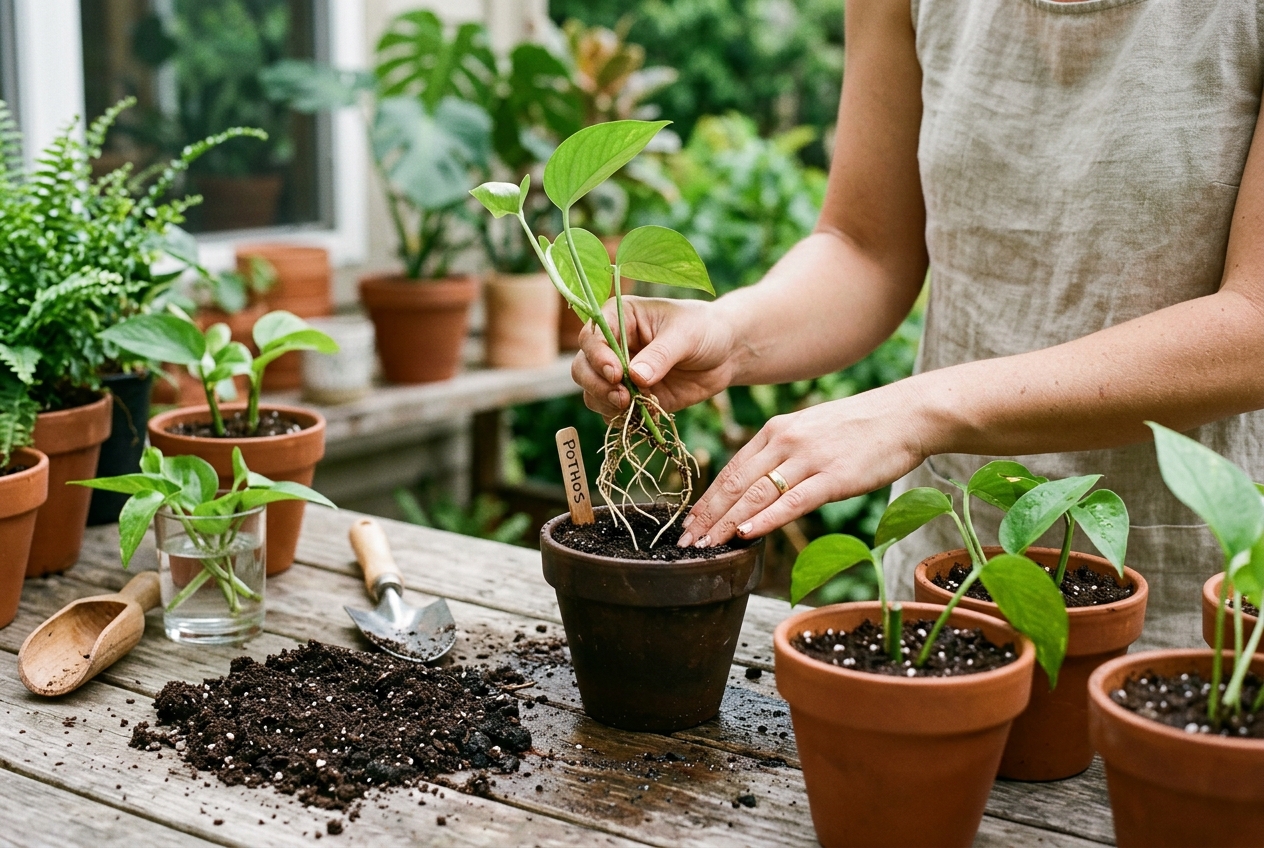
Never discard healthy stems removed during pruning. Trailing houseplants like pothos, philodendron, and string of hearts propagate readily in water or moist potting mix. Take four-inch to six-inch stem cuttings, strip off the lower two leaf pairs to expose the root nodes, and submerge the cut ends in clean water. Once new roots reach one to two inches in length, plant multiple cuttings directly back into the top of the parent basket. This technique immediately thickens sparse soil surfaces and maintains a dense, luxuriant crown.
Troubleshooting Common Hanging Houseplant Problems
Growing plants overhead creates diagnostic challenges because gardeners cannot easily look into the top of the pot during daily routines. Learning to interpret foliar symptoms helps you catch environmental imbalances before significant damage occurs.
1. Bare Soil Surface with Long Straggly Stems
If your hanging basket looks lush from below but resembles a bare, bald head when viewed from above, the pot is hung too high relative to the window frame. The top surface of the soil is resting in lintel shadow. Lower the suspension hook or lengthen the hanging cords by twelve to eighteen inches so natural light strikes the soil surface. Prune the leggy vines back and root fresh cuttings into the bare crown to re-establish dense foliage.
2. Sudden Leaf Dropping and Yellowing
When multiple leaves turn pale yellow and drop simultaneously across the entire plant, saturated soil and root rot are the primary suspects. Because hanging planters dry quickly in warm upper air, growers often overcompensate by pouring water into containers too frequently. Take the pot down and insert your index finger three inches into the soil. If the medium feels cold and soggy while the plant wilts, root rot has set in. Remove dead, black roots and repot into fresh porous soil with improved drainage.
3. Crispy Brown Foliage Tips and Shriveled Leaf Margins
Brown, dry, papery leaf tips indicate either low ambient humidity, warm dry air drafts from ceiling vents, or accumulated fertilizer salts in the substrate. Relocate the hanging basket away from forced-air furnace ducts. Rinse the potting mix thoroughly under a gentle shower to dissolve mineral crusts, and consider grouping several hanging planters together to create a localized microclimate with higher natural humidity.
4. Pest Outbreaks in Aerial Foliage
Spider mites, mealybugs, and scale insects thrive in the warm, stagnant air pockets that collect near indoor ceilings. Inspect the undersides of leaves and stem joints every week. If you notice fine webbing, sticky honeydew droplets, or white cottony deposits, take the hanging basket down immediately. Wash the foliage with a spray of lukewarm water, and apply an organic insecticidal soap or diluted neem oil solution thoroughly across both sides of every leaf. University guidance from the UGA Extension on indoor plant light and care confirms that early physical removal of pests followed by targeted horticultural soaps prevents severe infestations without damaging delicate indoor foliage.
Seasonal Care Adjustments for Overhead Displays
Indoor microclimates shift dramatically between summer and winter, requiring corresponding adjustments to your hanging plant maintenance routine:
- Spring Renewal: As natural day length expands in March and April, inspect hanging root systems. Repot root-bound specimens, replace degraded soil, and resume dilute bi-weekly fertilization. Prune winter lankiness to stimulate vigorous multi-stem branching.
- Summer Maintenance: Long sunny days and warm weather accelerate water uptake. Check hanging baskets twice weekly. Ensure plants hung near south or west windows are shielded by sheer curtains during harsh midday sun to prevent foliar scorching.
- Autumn Transition: As heating systems turn on in October, ceiling temperatures rise while air humidity drops. Reduce fertilizer applications to once every six weeks. Monitor soil moisture closely as warm rising air can dry containers unexpectedly fast.
- Winter Protection: Shorter daylight slows vegetative growth. Water only when the top half of the potting soil feels dry. Keep foliage from touching freezing window glass, and clean accumulated dust off leaves monthly to maximize photosynthetic efficiency in low winter light.
Suspending foliage overhead transforms any room into a lush, multi-layered botanical space. By pairing resilient trailing species with appropriate light, securing rock-solid ceiling hardware, utilizing porous lightweight potting soils, and mastering clean watering routines, you can cultivate stunning cascades of green foliage that thrive year after year.
Dennis P. Hansen
Dennis P. Hansen is a home gardener with a genuine passion for plants and the simple pleasure of growing them. He enjoys caring for houseplants, succulents, and other plants at home while continually learning from everyday gardening experiences. Dennis likes to share practical plant care tips, useful observations, and simple solutions that can help others grow healthier plants. He believes that caring for plants is a rewarding journey and that there is always something new to learn along the way.