
Dracaena Houseplant: 7 Proven Secrets for Indestructible Care


Known for their clean architectural lines and forgiving nature, dracaenas are among the most reliable indoor plants you can grow. My name is Dennis P. Hansen, and in this guide, I share my practical methods for keeping the dracaena houseplant healthy and full of foliage over many years. You will learn how to prevent brown leaf tips caused by tap water chemicals, how to balance watering cycles to protect woody canes from soft rot, how to prune overgrown stems, and how to revive struggling plants.
Table of Contents
Botanical Classification and Cane Anatomy
The dracaena houseplant genus belongs to the Asparagaceae family, native predominantly to tropical Africa, Madagascar, and parts of southern Asia. These plants are characterized by thick, woody stems or canes topped with fountain-like rosettes of strap-shaped leaves. In their native habitats, many dracaena species mature into large shrubs or small trees reaching fifteen to twenty feet in height.
The thick woody canes act as moisture reservoirs. Similar to succulents, dracaenas store water and simple starches inside their fibrous stem tissues, allowing them to withstand weeks of drought during dry seasons. When grown indoors, this anatomical feature makes them tolerant of missed waterings. However, it also means that keeping the root ball constantly wet leads quickly to soft rot along the base of the cane.
Inside the cane, bundles of vascular tissues called xylem and phloem transport water and sugars between the roots and the terminal crown. When roots suffocate from lack of oxygen in saturated soil, these vascular bundles collapse, cutting off water delivery to the leaves even while standing in soggy substrate. Understanding this internal transport network explains why overwatered dracaenas often show symptoms of severe drought, such as wilting and leaf curl.
Dracaena foliage features parallel venation with narrow stomata that open primarily in moderate humidity. The plants are sensitive to dissolved chemical ions, especially fluoride, chloride, and boron. Research conducted by the Clemson University Cooperative Extension Service confirms that dracaenas absorb tap water fluorides through root tissues and translocate them directly to leaf tips, where the minerals accumulate and cause localized cell death.
Popular Dracaena Varieties and Their Unique Traits
The genus includes dozens of cultivated varieties offering varied colors, leaf widths, and heights. Choosing a variety that fits your home lighting simplifies long-term maintenance.
Dracaena marginata (Madagascar Dragon Tree): This classic variety features slender, twisting woody stems topped with narrow, ribbon-like leaves edged in deep red or magenta. The cultivar ‘Tricolor’ features green, cream, and red striping. Dragon trees grow upright, reaching six to eight feet while maintaining a compact horizontal footprint.
Dracaena fragrans (Corn Plant): Featuring thick woody canes and broad, arching foliage resembling sweet corn leaves, this variety brings substantial presence to room corners. The cultivar ‘Massangeana’ features a central lime-green stripe running down each dark green leaf. It handles lower light levels better than fine-leaf varieties.
Dracaena deremensis (Janet Craig & Warneckii): ‘Janet Craig’ features broad, solid dark green leaves that tolerate dim office lighting and dry conditioned air. ‘Warneckii’ displays crisp white margins flanking gray-green foliage. Both produce dense foliage clusters that remain bushy for years.
Dracaena reflexa (Song of India): Featuring multiple branching stems covered in spiraling, lance-shaped leaves with golden-yellow margins, Song of India requires higher light levels than other dracaenas to maintain its bright leaf coloration.
Dracaena sanderiana (Lucky Bamboo): Often grown in water without soil, lucky bamboo is in fact a true dracaena. When potted in well-draining soil, it develops thicker stalks and deeper green foliage than when kept indefinitely in standing water.
7 Proven Secrets for Indestructible Care
Maintaining a dracaena houseplant over the long term requires respecting its native African habitat. These plants survive neglect far better than excessive pampering. By following these seven core rules, you can keep your dracaena producing clean, colorful foliage year after year.
1. Provide Medium to Bright Indirect Light
While dracaenas are marketed as low-light plants, they perform significantly better in medium to bright filtered light. Direct afternoon sun scorches their leaves, leaving bleached white or yellow patches that eventually turn dry and crispy. In dim rooms, growth halts, new leaves emerge pale and limp, and variegated types lose their colorful striping.
An east-facing window with gentle morning sun is ideal. If placing near a south- or west-facing window, pull the plant four to six feet back from the glass or hang a sheer curtain. Solid green varieties like ‘Janet Craig’ tolerate lower light than striped cultivars like ‘Song of India’ or ‘Marginata Tricolor’. Rotating the container ninety degrees every two weeks ensures upright vertical cane growth.
2. Irrigate with Fluoride-Free Water
Tap water containing added fluoride is the leading cause of brown leaf tips and margins on indoor dracaenas. Unlike other houseplant families that can tolerate municipal water chemicals, dracaenas accumulate fluoride in their leaf edges until toxic thresholds are reached, killing outer tissue cells.
To keep leaf tips pristine, water your dracaenas with rainwater, distilled water, or water purified through reverse osmosis. Standard carbon water filters do not remove dissolved fluoride ions. If you must use municipal tap water, collect it in an open bucket and let it sit for twenty-four hours to let chlorine dissipate, though fluoride will remain. Flushing the pot with a gallon of pure water twice a year helps wash accumulated salts out of the root zone.
3. Follow the Half-Dry Soil Rule
Because dracaena canes store moisture internally, their roots cannot tolerate sitting in wet, soggy soil. Waterlogging suffocates fine root hairs and invites pythium and phytophthora fungal pathogens into the base of the cane.
Allow the top half of the potting soil to dry out completely before watering again. Insert a wooden dowel deep into the pot: if it comes up clean and dry from the top four to six inches, it is time to irrigate. Saturate the soil until water trickles from the drainage holes, then discard all runoff from the saucer after twenty minutes. Never allow the container base to remain submerged in standing drainage water.
4. Mix a Sandy, Fast-Draining Substrate
Heavy potting soil holds moisture for too long around dracaena root balls. A suitable substrate must provide fast drainage and plenty of aeration to keep roots firm and white.
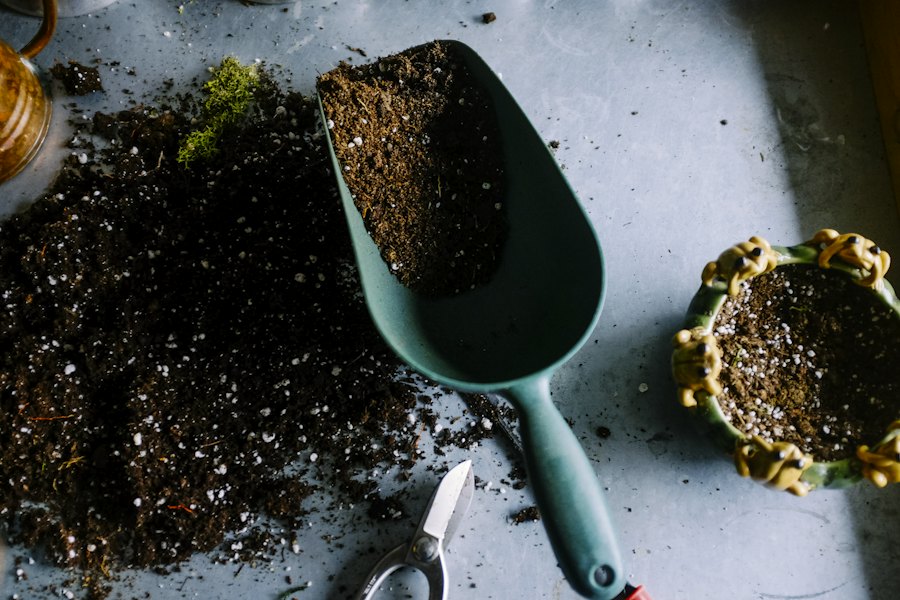
Blend three parts standard potting mix with one part coarse perlite and one part coarse horticultural sand or fine orchid bark. The sand and perlite prevent compaction, allowing excess water to escape rapidly while leaving behind moist air pockets that roots need to respire. In unglazed terracotta containers, porous clay walls breathe and allow excess moisture to evaporate through the sides.

5. Trim Brown Leaf Tips Properly
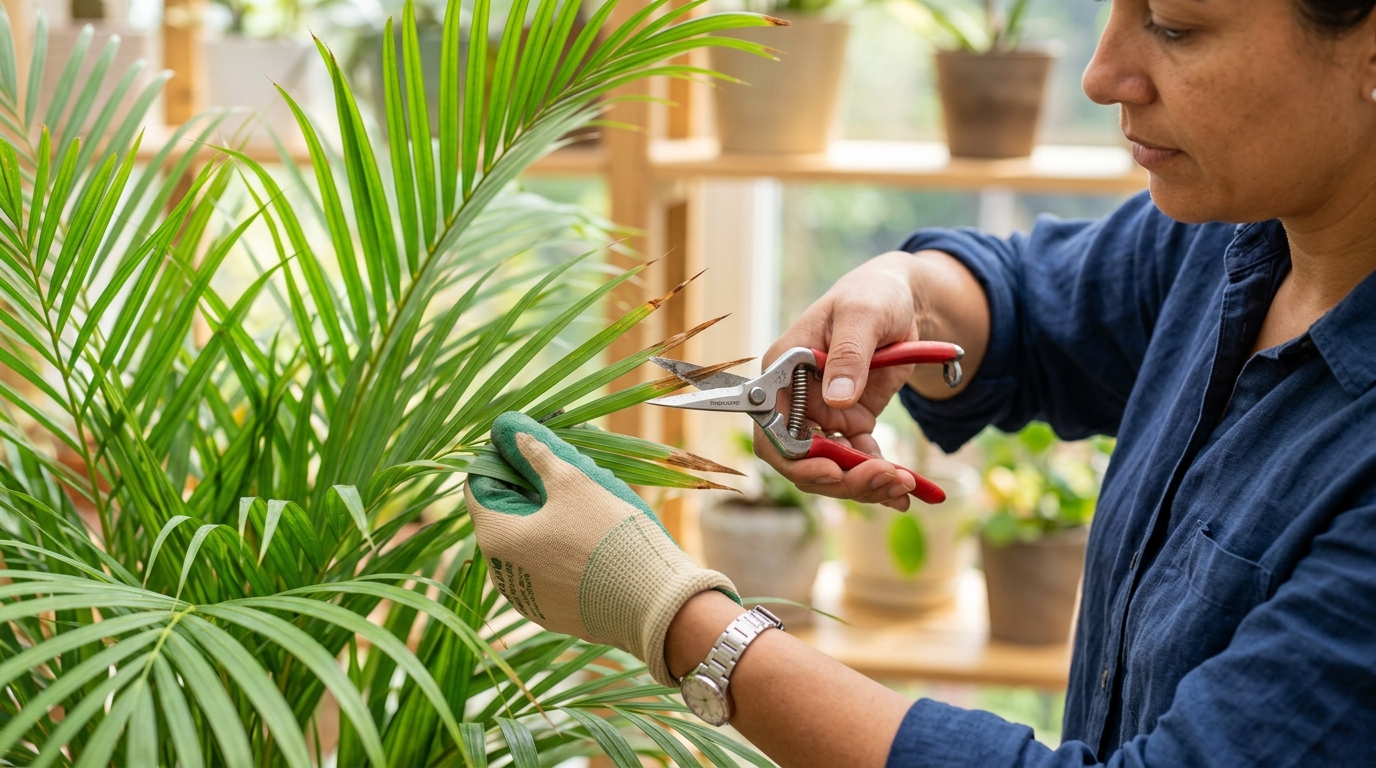
If your dracaena develops brown crispy leaf tips from dry winter air or mineral salts, you can trim them to restore a tidy appearance. Use sharp floral snips sanitized with rubbing alcohol. Follow the natural tapered contour of the leaf blade as you cut.
Crucially, leave a tiny sliver of dry brown tissue (about one millimeter) intact. If you cut into live green leaf tissue, you create a fresh wound that will dry out and produce a new brown edge. Preserving the thin dry margin prevents the plant from losing additional moisture through the cut.
6. Feed Lightly During Active Growth
Dracaenas are slow to moderate growers with low nutritional requirements. Heavy fertilizer applications lead to chemical leaf tip scorch and build up toxic salts in the potting mix.
Feed only during spring and summer using a balanced liquid houseplant fertilizer diluted to half or quarter strength once a month. Never apply fertilizer to dry soil, as this burns delicate root hairs. Pause all feeding entirely from October through February when the plant rests.
7. Protect from Cold Drafts and Sudden Temperature Drops
Dracaenas thrive in room temperatures between sixty-five and seventy-eight degrees Fahrenheit. Exposure to cold drafts below fifty-five degrees causes leaves to curl inward, turn gray-black, and drop suddenly.
Keep your plants away from exterior doors that open frequently in winter, poorly insulated single-pane windows, and cold air drafts from air conditioning vents. For broader guidance on tropical care principles, review my guide on tropical houseplants.
Pruning, Beheading, and Cane Propagation
Over several years, a dracaena naturally sheds its lower leaves as it grows taller, eventually leaving long bare canes with tufts of foliage at the very top. If your plant becomes leggy or outgrows your room, you can prune it back to restore a compact, bushy shape.
Dracaenas possess remarkable regenerative ability. You can cut the woody cane at any desired height using clean, sharp bypass loppers or a fine hand saw. Within four to six weeks, dormant buds beneath the cut will swell and push out two to three new leafy crowns, creating a fuller canopy than before. Seal the cut cane top with a dab of melted candle wax or pruning sealant to prevent moisture loss while new buds form.
Do not discard the top portion you removed. The leafy crown can be rooted easily in water or moist potting mix to start a brand new plant. Trim the lower leaves off the cut stem, let the wound dry for two hours, and insert it into a small pot filled with perlite and peat. When you need to transplant mature specimens into larger containers, follow my tested steps on how to repot houseplants.
Dennis’s Advanced Troubleshooting Guide
Because dracaenas store moisture in thick woody canes, health issues develop slowly and can go unnoticed until symptoms appear on upper foliage. Spotting early distress signs allows you to make corrections before stems soften or roots rot.
Brown Leaf Tips and Margins: If leaf tips turn brown, papery, and brittle, often with a narrow yellow boundary line separating live and dead tissue, chemical accumulation from tap water is the primary cause. Municipal tap water containing added fluoride, chlorine, and soluble mineral salts travels to leaf extremities where it concentrates. Low room humidity below forty percent also accelerates tip drying. Switch to distilled water, rainwater, or reverse osmosis water, and run a cool-mist humidifier during winter.
Soft, Mushy Stems and Base Cane Rot: If a cane feels soft, spongy, or wrinkled near the soil line and gives off a sour smell, root rot has spread into the vascular system of the stalk. This happens when the plant sits in saturated, airless potting mix for weeks. Once the base of a cane turns mushy, that portion cannot be saved. Cut the cane above the decayed section until you reach firm, clean, white wood. Root the healthy top cutting in fresh perlite, and discard the rotted stump and waterlogged soil.
Sudden Yellowing and Dropping of Lower Leaves: While dracaenas naturally shed occasional lower leaves as they grow taller, rapid yellowing of multiple lower leaves indicates overwatering or severe light shock. Waterlogged roots cannot absorb oxygen, triggering the plant to shed foliage to balance water demand. For detailed diagnostic techniques to identify whether yellowing is caused by watering, light, or nutrient imbalances, check my guide on why are my plant leaves turning yellow.
Pale, Limp Foliage and Loss of Leaf Striping: When leaves lose their rich coloration, variegation fades to dull green, and leaves droop without firm turgor pressure, the plant is not receiving enough usable light. Relocate the plant closer to an east-facing window or an unshaded northern window to increase ambient photon levels.
Spider Mites and Mealybugs in Leaf Axils: The tight crevices where leaves attach to the cane provide shelter for common indoor pests. Spider mites spin delicate webbing around the leaf bases, causing leaves to look dusty and speckled. Mealybugs appear as white, cotton-like masses nestled deep inside the crown. Wipe infested areas with a cotton pad soaked in seventy-percent isopropyl alcohol, or spray thoroughly with insecticidal soap. Extension plant pathology bulletins from the University of Georgia Extension recommend isolating pest-infested plants to protect surrounding indoor houseplants from insect migration.
Bleached White or Gray Leaf Patches: Large, paper-thin white or straw-colored patches appearing on upper leaves indicate sunburn from sudden exposure to harsh direct sunlight. Move the plant immediately back from direct sun rays. The bleached tissue cannot heal, but new growth will emerge healthy once the plant is relocated to filtered light.
Yellow Spots with Brown Centers (Fusarium Leaf Spot): Small water-soaked spots that develop reddish-brown centers and yellow halos on young foliage point to fungal infection, usually caused by splashing water onto leaves in still, humid air. Avoid wetting leaves when watering, improve room air circulation with a small fan, and remove heavily spotted leaves with clean shears.
Cold Damage and Leaf Blackening: If your dracaena sits near a freezing window pane or open door during winter, foliage can turn limp, dark brown, or black within twenty-four hours. Move the plant immediately to a warm spot away from drafts. Allow the plant several weeks to stabilize before pruning off blackened leaves, as cutting damaged tissue too quickly can introduce secondary infections.
Seasonal Light and Water Adjustments
Adjusting your care with the seasons protects your dracaena from common winter stresses while supporting active spring and summer growth.
Spring and Summer Care: As natural day length increases, dracaenas resume active growth, producing fresh whorls of leaves from their cane tips. During warm months, check soil moisture every seven to ten days, watering thoroughly whenever the top half of the potting soil feels dry. Apply a balanced liquid houseplant food diluted to quarter strength once a month through August. Spring is also the prime season to prune overgrown canes, repot rootbound specimens, or start stem cuttings.
Fall and Winter Care: During the winter months, shorter daylight hours cause the plant’s metabolic rate to drop. Water consumption decreases significantly. A pot that needed water every ten days in summer may only need water once every three to four weeks in winter. Always check deep soil moisture before watering to prevent cold root rot. Cease all fertilizer applications from October through February. Move plants closer to bright windows to capture weak winter sun. Research publications from the University of Florida IFAS Extension emphasize that protecting tropical cane houseplants from cold window glass and heating unit drafts prevents winter foliar collapse.
Master FAQ for Dracaena Houseplants
Why are the leaf tips on my Dracaena houseplant turning brown and crispy?
Brown crispy leaf tips on a Dracaena houseplant are almost always caused by tap water sensitivity or low ambient room humidity. Dracaenas are sensitive to fluoride, chlorine, and mineral salts found in municipal tap water. When you irrigate with city tap water, the plant absorbs these dissolved chemicals and transports them through its vascular system to the leaf tips, where they accumulate until tissue cells die, creating a brown tip with a yellow margin. To stop this problem, switch to watering with rainwater, distilled water, or reverse osmosis water. In addition, keep household humidity above forty-five percent during winter heating seasons.
How often should a Dracaena houseplant be watered indoors?
A Dracaena houseplant should never be watered on a fixed calendar schedule because temperature, pot size, light intensity, and seasonal growth rates change how quickly the soil dries out. In general, allow the top half of the potting soil to dry out completely before watering again. For an eight-inch pot, this usually means watering every ten to fourteen days in spring and summer, and every three to four weeks in winter. Test moisture levels by inserting a wooden dowel six inches into the substrate: if it emerges dry with no soil clinging to it, water thoroughly until liquid drains from the base.
What should you do when a Dracaena cane becomes soft or wrinkled?
A soft, spongy, or wrinkled Dracaena cane is a clear warning sign of advanced root rot caused by prolonged overwatering or poor drainage. Once fungal rot enters the woody stalk, the vascular tissues break down, preventing water from traveling upward and causing the cane to soften. To save the plant, remove it from its pot and inspect the roots, trimming away brown mushy sections. If the lower cane is soft, use clean bypass pruners to cut through the trunk above the soft area until you reach firm, clean green-and-white wood. The healthy top cutting can then be rooted in fresh, airy perlite or moist potting soil.
How do you propagate a Dracaena houseplant from cane cuttings?
Propagating a Dracaena from cane cuttings is straightforward due to the plant’s natural regenerative ability. Using clean, sanitized loppers or a sharp hand saw, cut a healthy cane into six- to eight-inch sections, making sure to note which end is the top and which is the bottom. Allow the cut ends to dry on a paper towel for twenty-four hours to form a protective callus. Dip the bottom end in rooting hormone powder and insert it two inches deep into a pot filled with damp perlite, coarse sand, or light potting mix. Keep the container in warm, bright indirect light and maintain light moisture until new roots and leafy shoots emerge.
Is the Dracaena houseplant toxic to cats and dogs?
Dracaena houseplants are toxic to cats and dogs if ingested. The leaves and woody stems contain chemical compounds known as steroidal saponins. If a pet chews on or swallows dracaena foliage, the saponins irritate the lining of the gastrointestinal tract, leading to symptoms such as excessive drooling, vomiting (sometimes with blood), loss of appetite, depression, and severe weakness. In cats, ingestion can also cause dilated pupils and unsteadiness on their feet. If you suspect your cat or dog has eaten any part of a dracaena, contact your veterinarian or the ASPCA Animal Poison Control Center promptly.
Dennis P. Hansen
Dennis P. Hansen is a home gardener with a genuine passion for plants and the simple pleasure of growing them. He enjoys caring for houseplants, succulents, and other plants at home while continually learning from everyday gardening experiences. Dennis likes to share practical plant care tips, useful observations, and simple solutions that can help others grow healthier plants. He believes that caring for plants is a rewarding journey and that there is always something new to learn along the way.