
How to Grow and Care for Elephant Ear Plant Flowers: Ultimate Guide


Table of Contents
Introduction
Elephant ear plants are striking tropical additions to any garden, admired for their huge, heart-shaped leaves and lush, dramatic presence. But did you know some elephant ears also bloom? Although rare, the flowers are stunning and worth the effort. In this comprehensive guide, we’ll break down everything you need to know about growing and caring for elephant ear plant flowers—from choosing the right variety to creating perfect planting conditions and troubleshooting common issues. Whether you’re growing them indoors or out, you’ll learn how to keep your elephant ears thriving year-round.
What Is an Elephant Ear Plant flower ?
Elephant ear plants are a group of tropical foliage plants renowned for their large, dramatic leaves that resemble the ears of an elephant. These plants bring an exotic, lush vibe to any garden or indoor space, making them popular among plant enthusiasts and landscapers alike. Characterized by their broad, heart-shaped (cordate) leaves, elephant ears add a bold splash of greenery and texture, ideal for creating focal points or enhancing tropical-themed gardens.
Elephant ears belong primarily to three genera: Alocasia, Colocasia, and Xanthosoma. These rhizomatous plants thrive in warm, humid environments and require well-drained soil with ample moisture to flourish. Because of their tropical foliage, they’re often used in landscaping to evoke a jungle-like atmosphere or to add height and structure to container gardens.

Overview of Alocasia, Colocasia & Xanthosoma
Understanding the differences between Alocasia, Colocasia, and Xanthosoma helps in proper care and selection of elephant ear plants:
- Alocasia: Often called “African Mask” or “Elephant Ear,” Alocasia species are prized for their strikingly veined, arrowhead-shaped leaves with a glossy finish. These plants typically have upright, architectural leaves and prefer bright indirect light. Being rhizomatous plants, they propagate via underground stems, allowing them to spread and grow robustly.
- Colocasia: Commonly referred to as “Taro” plants, Colocasia species feature large, heart-shaped leaves that tend to droop downward. Their broad, cordate leaves have a matte texture and often a bluish-green hue. Colocasia is well-known for its adaptability in wet conditions, making it perfect for pond edges or water gardens.
- Xanthosoma: Sometimes called “Giant Taro,” Xanthosoma has thick, often upright leaves with a more leathery texture compared to the other genera. These plants have slightly different leaf shapes and textures but share the rhizomatous growth habit. Xanthosoma is popular in tropical landscaping due to its durability and impressive leaf size.
Each genus contributes to the diverse range of tropical foliage options known collectively as elephant ear plants, all sharing the distinctive large leaves and rhizomatous growth, but differing slightly in leaf shape, texture, and preferred growing conditions.
Do Elephant Ear Plants Actually Flower?
Many people wonder if elephant ear plants actually flower, and the answer is yes, but with some caveats. Elephant ears produce a unique type of flowering structure called an inflorescence, which consists of a spadix surrounded by a leaf-like bract called a spathe. This flower structure is typical of the Araceae family to which these plants belong.
However, flowering in elephant ear plants is relatively rare, especially when grown indoors or outside of their native tropical habitats. The blooms are often small, inconspicuous, and not showy like typical garden flowers, which leads many to believe these plants don’t flower at all. The main appeal of elephant ears remains their striking tropical foliage rather than their flowers.
When they do bloom, the inflorescence emerges near the base of the plant and can be an interesting feature to observe, especially for avid plant collectors. Encouraging flowering may require optimal growing conditions such as high humidity, warmth, and sufficient maturity.
Choosing the Right Elephant Ear Variety
Selecting the right elephant ear variety is all about understanding your goals—are you growing for lush tropical foliage or are you interested in occasional blooms? Are you planning to plant in open garden beds, or do you prefer container gardening? Your choice of variety and growth habit can have a big impact on maintenance and overall design.
Popular Varieties for Foliage vs. Flowering
Most elephant ear enthusiasts grow these plants for their bold, oversized foliage rather than flowers. However, some varieties are known to bloom more readily under the right conditions. Here’s a quick look at standout types based on your gardening goals:
Best for Show-Stopping Foliage
- Alocasia ‘Regal Shield’
- Features rich, dark green leaves with prominent purple undersides and light green veining.
- Excellent for indoor or patio containers due to its upright habit.
- Adds a regal, structured look to modern or tropical spaces.
- Features rich, dark green leaves with prominent purple undersides and light green veining.
- Colocasia ‘Black Magic’
- Dramatic, deep purple to almost black leaves with a matte finish.
- Ideal for bold landscape contrast or container centerpieces.
- Performs well in moist soils and can tolerate pondside planting.
- Dramatic, deep purple to almost black leaves with a matte finish.
- Xanthosoma ‘Lime Zinger’
- Vibrant chartreuse leaves that glow in shady gardens.
- Fast-growing and eye-catching, especially when used in contrast with darker plants.
- Vibrant chartreuse leaves that glow in shady gardens.
More Likely to Flower
While most elephant ear plants rarely flower, varieties grown in optimal tropical conditions (outdoors in full sun, high humidity, and nutrient-rich soil) may produce spathe-and-spadix inflorescences. In general, Colocasia types are slightly more likely to flower than Alocasia, especially when left to mature for several seasons.
Still, flowering is unpredictable, and even “flowering-friendly” varieties will prioritize leaf production in most environments.
Clumping vs. Runner Habits and Garden Use
Understanding the growth habit of your elephant ear plant is crucial—some varieties stay neatly contained while others can spread aggressively via underground runners.
Clumping Varieties
- These types grow in tight bunches, forming a more compact footprint.
- Easier to manage and ideal for container gardening or small garden beds.
- Example: Alocasia ‘Polly’ — perfect for interiors or patios where space is limited.
Runner-Type Varieties
- Spread through underground rhizomes or invasive runners.
- Can quickly colonize garden beds if not monitored.
- Best used in large landscapes or controlled via root barriers.
- Example: Colocasia esculenta ‘Illustris’ — known for its fast-spreading nature and bold leaf coloration.
Garden Use Tip:
- If you’re growing in a limited area or near other perennials, choose clumping types or plant runner types in containers to control their spread.
- Container suitability is a big advantage for urban gardeners or those with seasonal climates—plants can be brought indoors or stored over winter with ease.
By carefully selecting based on growth habit and foliage characteristics, you’ll ensure that your elephant ear plant not only thrives in your environment but also complements your garden’s overall aesthetic and maintenance preferences.
Best Planting Conditions for Elephant Ear Plant Flowers
While elephant ear plants are most often cultivated for their tropical foliage, creating the ideal environment increases the chances of witnessing their rare and fascinating inflorescences. Whether you’re growing in containers or directly in the ground, getting the conditions just right is essential for vibrant foliage and the occasional bloom.
Ideal Light Levels — Full Sun, Partial Shade, or Bright Indirect?
Elephant ear plants can adapt to a range of light conditions, but the correct lighting varies depending on the species and setting (indoor vs. outdoor).
Outdoor Growing:
- Colocasia tends to thrive in full sun, but in hotter climates, it benefits from partial shade to prevent sun scorch on the delicate foliage.
- Alocasia prefers bright indirect light or dappled shade, especially in regions with intense midday sun.
Indoor Growing:
- Place elephant ears in rooms with bright, filtered light — near east or west-facing windows.
- Avoid placing them in direct, unfiltered sunlight indoors, which can burn the leaves.
- Too little light may cause slow growth and dull foliage color.
Shade tolerance depends on the variety. While many can tolerate light shade, lower light levels may reduce growth and flowering potential.
Pro Tip: Observe the leaf color and posture — scorched or yellowing leaves may indicate too much direct sun, while drooping or pale leaves suggest insufficient light.
Soil Prep: Rich, Moist, Well-Drained with Organic Matter
Elephant ear plants flourish in nutrient-rich, loamy soil that holds moisture but drains well. Soil health plays a major role in encouraging strong root development and, potentially, flower formation.
Ideal Soil Characteristics:
- Texture: Loamy and friable, not sandy or clay-heavy.
- Drainage: Retains moisture without becoming waterlogged — standing water can rot rhizomes.
- Organic Content: Enrich with compost, well-rotted manure, or peat moss to improve fertility and structure.
How to Prepare:
- Work the soil 12–15 inches deep.
- Mix in 2–3 inches of compost or aged manure.
- For potted plants, use a high-quality, moisture-retaining potting mix with perlite or bark for drainage.
Elephant ears are heavy feeders, so regularly amending the soil with organic matter improves nutrient availability and supports lush foliage.
Temperature & Humidity Requirements
Native to tropical climates, elephant ear plants require warm temperatures and high humidity to reach their full potential, and this includes rare chances of flowering.
Temperature:
- Optimal range: 18–29 °C (65–85 °F)
- Temperatures below 10°C (50°F) can shock or damage the plant, especially outdoors.
- In cooler zones, grow in containers and bring indoors before the first frost.
Humidity:
- Prefers 60% or higher relative humidity.
- Indoor air is often too dry, especially in winter—combat this with:
- Regular misting
- Humidity trays
- Room humidifiers
- Regular misting
Seasonal Adjustments:
- During colder months, elephant ears often go dormant, especially in temperate zones.
- Reduce watering and stop fertilizing when growth slows; resume in spring when new shoots appear.
High humidity and consistent warmth not only enhance leaf size and color but also create conditions where a spathe and spadix bloom might develop, though this remains rare outside of equatorial climates.
Planting Your Elephant Ear Corms
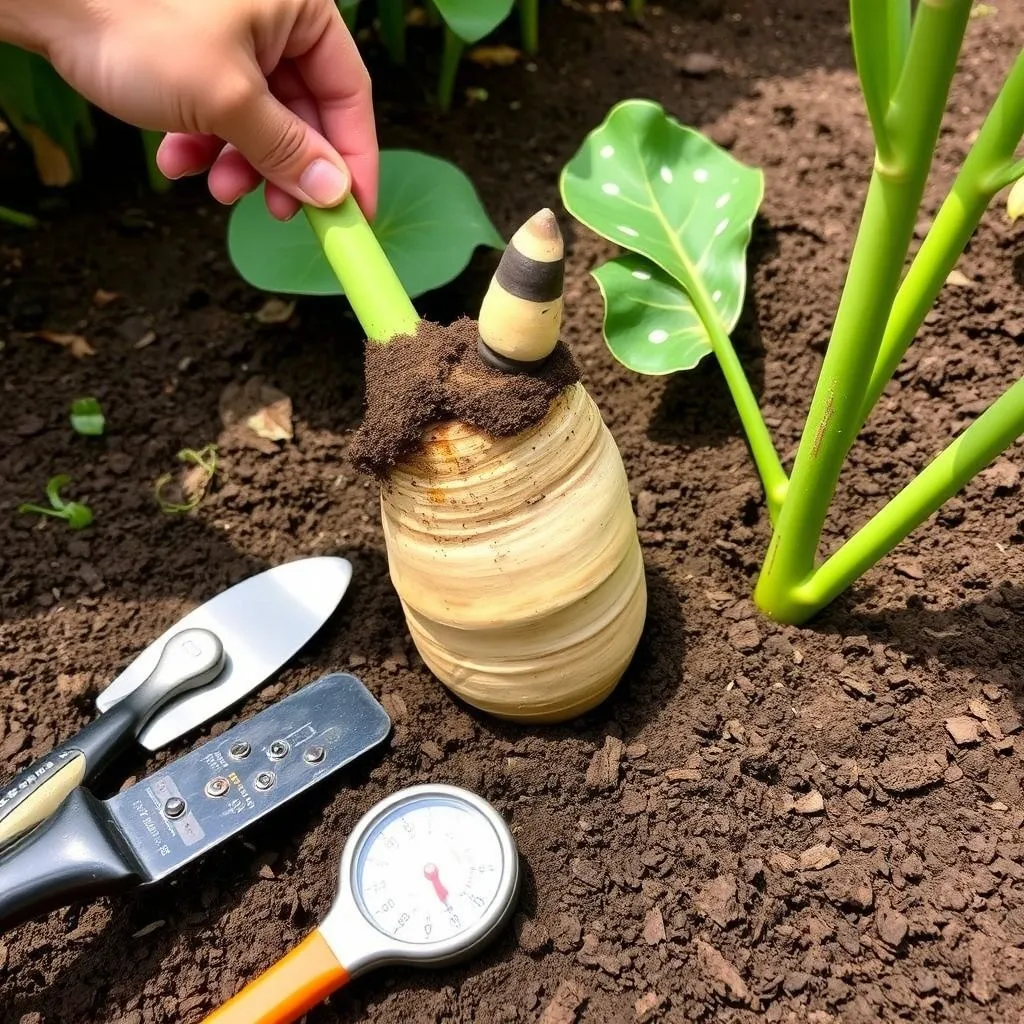
Getting your elephant ear plants off to a strong start begins with proper corm planting techniques. Whether you’re planting outdoors or in containers, timing, soil temperature, and depth are key factors that affect germination and early growth.
When to Plant: Spring After Frost, Soil ≥ 65°F
The ideal time to plant elephant ear corms is in the spring, after the last frost has passed and soil temperatures have consistently reached at least 65 °F (18 °C). Planting too early in cold soil can delay sprouting or even cause rot.
Planting Prep Checklist:
- Wait until nights are consistently above 50°F (10 °C).
- Use a soil thermometer to confirm ground temperatures are safe.
- Warm, moist soil speeds up sprouting and reduces transplant shock.
Orientation Tips:
- Plant the corm with the pointed or budded side facing up.
- If you’re unsure, plant sideways—most corms will orient themselves as they grow.
- Avoid planting upside down, which can delay or inhibit sprouting.
Proper planting depth and corm orientation are crucial for healthy emergence and early root development.
How to Plant Corms: Depth, Spacing & Container vs. In-Ground
Elephant ear corms are bulb-like structures that need room to grow both above and below ground.
Depth & Spacing Guidelines:
- Depth: Plant corms 4–6 inches deep, fully covered with soil.
- Spacing: Space 2–4 feet apart, depending on the variety’s mature size.
Container vs. Ground Planting:
| Type | Pros | Considerations |
| In-Ground | Natural spread, less watering | May need digging/storing in winter (zones 8 and below) |
| Container | Portable, ideal for cold climates | Requires large containers (18–24 in wide) and rich soil |
When planting in containers, ensure drainage holes are present and use a lightweight, moisture-retentive soil blend enriched with compost.
Tips for Indoor Pot Planting
Indoor elephant ear plants can be stunning focal points, but they require the right container and soil mix to thrive.
Key Tips:
- Use large containers (e.g., whiskey-barrel pots or 14–24 inch planters).
- Mix regular potting soil with perlite or bark for aeration and good drainage.
- Place in a bright, humid location—near windows with filtered light is ideal.
- Elevate pots slightly with saucers or stands to avoid trapped moisture.
Avoid compact soils that retain too much water, which can rot the corm.
Care Tips for Vibrant Elephant Ear Leaves and Flowers
To keep your elephant ear plants thriving, their foliage lush, and their environment supportive of rare blooms, consistent care is essential. From watering to pruning, each element of maintenance helps maintain plant health and encourages growth.
Watering Frequency & Techniques
Elephant ear plants require consistently moist soil to thrive, mimicking their native tropical environments. Inconsistent watering can lead to wilting, yellowing leaves, or stunted growth.
General Watering Guidelines:
- Outdoor plants in garden beds or borders should be watered deeply 2–3 times a week, depending on rainfall and soil drainage.
- Container plants may need daily watering in warm weather due to faster evaporation.
- Keep the soil evenly moist but not soggy—overwatering may cause root rot.
Specialized Techniques:
- If grown near a pond margin, elephant ears can tolerate and even thrive in very wet soil conditions, especially Colocasia varieties.
- Use mulch to help retain moisture and prevent evaporation.
- Install a drip irrigation system for consistent watering in large garden beds.
Keeping the root zone consistently damp encourages large, healthy leaves and supports the plant’s energy reserves—key if it ever attempts to flower.
Fertilizing Schedule & Type
As heavy feeders, elephant ear plants need regular nutrition to support their vigorous growth. A proper fertilizing routine can also improve the chances of blooming.
Fertilizer Options:
- Use a balanced fertilizer like 20-20-20 every 2–3 weeks during the growing season (spring through early fall).
- Apply organic slow-release fertilizers like worm castings, fish emulsion, or composted manure at planting time and once every 6–8 weeks.
- For indoor plants, dilute liquid fertilizers to half strength to avoid root burn.
Tips:
- Water before and after applying fertilizer to avoid root damage.
- If leaves turn pale or yellow, it may indicate a nutrient deficiency—boost with a nitrogen-rich formula.
Feeding regularly keeps foliage lush and supports strong rhizome development, increasing the plant’s long-term vigor.
Temperature and Humidity Care
Elephant ears love tropical warmth and humidity. Keeping them in the right climate zone or adjusting indoor conditions can significantly improve their overall health.
Temperature Guidelines:
- Ideal range: 18–29 °C (65–85 °F)
- Avoid cold drafts or temperatures below 10 °C (50 °F)
- Move potted plants indoors before the first frost
Boosting Humidity:
- Indoors, use a humidifier in dry climates or winter months
- Create a misting routine every morning, especially if leaf edges brown
- Place containers on humidity trays (pebble trays with water)
Consistent warmth and high humidity replicate the elephant ear’s natural habitat, leading to lush growth and the best chance of rare spathe and spadix formation.
Deadheading, Pruning & Leaf Maintenance
While elephant ears don’t require constant pruning, regular leaf maintenance is key to their ornamental appeal and long-term health.
Maintenance Tasks:
- Remove yellow leaves at the base to prevent disease and improve air circulation
- Deadhead any spent flowers (if present), though rare, to conserve energy for foliage
- Clean large leaves weekly with a damp cloth to remove dust and pests
Seasonal Pruning:
- Cut back plants in late fall as they enter dormancy (especially in zones below USDA 9)
- For indoor plants, remove leggy or damaged leaves to promote bushier growth
Clean, vibrant leaves aren’t just for looks—they help the plant photosynthesize efficiently and stay pest-free.
How to Encourage Flowering on Elephant Ears
Though elephant ears are primarily grown for their bold foliage, it is possible—under rare, highly favorable conditions—to see them bloom. These spathe-and-spadix blooms are subtle but exotic and worth the effort for serious plant lovers. Encouraging flowering involves a deep understanding of the plant’s maturity needs, environmental conditions, and training methods.
Age and Maturity Requirements (3+ Years)
One of the main reasons elephant ear plants don’t flower is simply because they’re not old enough. Like many rhizomatous plants, elephant ears require patience and time to reach flowering age.
Maturity Milestones:
- Most varieties need at least 3–5 years of consistent growth to reach the maturity threshold for blooming.
- Indoor plants bloom even less frequently due to less-than-ideal conditions and limited growth space.
- Mature, established plants are more likely to send up flower spikes as part of their reproductive cycle or under mild stress.
Even with proper care, many elephant ears never bloom—treat flowers as a bonus, not an expectation.
Ideal Conditions for Bloom: Light, Water, Feeding
Flowering is rare and typically requires a perfect balance of light, water, and nutrients—along with a bit of stress.
Light:
- Full sun (for Colocasia) or bright indirect light (for Alocasia) promotes bud development.
- Indoor plants must be near south-facing windows or under grow lights.
Water:
- Maintain moist soil but allow slight drying between watering to mimic stress-induced bloom conditions.
- Avoid prolonged drought, which may damage the plant.
Feeding:
- Use a balanced fertilizer like 20‑20‑20 or bloom-boosting formula every 2–3 weeks.
- Supplement with phosphorus-rich fertilizer in mid-to-late summer to encourage bloom spikes.
Spathe Care:
- If a spathe and spadix emerge, avoid overwatering and keep the area well-ventilated.
- Do not remove the flower until it naturally withers—removal too early may shock the plant.
The right combination of care and environmental cues can trigger blooming, especially in older, healthy plants.
Horizontal Training for Flower Spikes
If you’re lucky enough to see flower spikes form, horizontal training can help them develop fully and attract attention within your display.
Why Train Flower Spikes?
- Spikes can grow heavy and may bend or break without support.
- Light exposure is crucial to fully develop the spadix structure.
How to Support:
- Use lightweight garden stakes or support structures to guide spikes sideways or upward.
- Gently tie with soft garden ties, leaving room for movement.
- Rotate containers slightly each week to promote even light exposure.
Proper training allows the spike to grow strong and visible while reducing the chance of accidental damage.

Overwintering & Dividing Elephant Ear Plants
Because elephant ears are tropical foliage plants, they can’t tolerate frost and need special care in regions with cold winters. Whether you’re overwintering them indoors or looking to propagate new plants, proper storage and division are essential for long-term health and bloom potential.
Zone-Specific Strategies (Zones 8–12 vs. Cooler Regions)
Your USDA Hardiness Zone determines how you should protect elephant ear plants through the winter.
Zones 8–12 (Warm, Frost-Free Regions):
- Plants can stay in the ground year-round.
- Apply mulch (2–4 inches) around the base in late fall to protect rhizomes from unexpected cold snaps.
- Cut back yellowed or damaged leaves and reduce watering during dormancy.
Zones 7 and Below (Cooler Regions):
- Before the first frost, lift corms carefully with a garden fork or spade.
- Gently shake off soil and allow corms to air dry in a shaded, well-ventilated area for 1–3 days.
- Store in a cool, dark, and dry place (garage or basement) in peat moss or wood shavings.
Proper frost protection ensures your elephant ears survive until spring, especially in zones where freezing temperatures are common.
How to Dig, Divide, and Store Corms
Dividing elephant ear corms is not only a great way to propagate new plants, but also helps maintain vigor in mature specimens.
Step-by-Step Guide:
- Dig Up the Plant:
- Use a spade to carefully loosen the soil 6–12 inches from the base.
- Lift the entire root ball to avoid damaging the tuber or rhizome.
- Use a spade to carefully loosen the soil 6–12 inches from the base.
- Separate the Corms:
- Look for natural divisions or offsets (pups) growing from the mother corm.
- Use a clean, sharp knife if needed to gently separate them.
- Look for natural divisions or offsets (pups) growing from the mother corm.
- Dry for Storage:
- Let corms dry for 1–3 days before storing to prevent mold.
- Place in a cardboard box or paper bag with dry peat moss or wood shavings.
- Store at 50–60°F (10–15°C) in a well-ventilated, dark area.
- Let corms dry for 1–3 days before storing to prevent mold.
Avoid plastic bags or airtight containers, which can trap moisture and lead to rot during dry storage.
Propagation by Division and Replanting
Elephant ears propagate easily by tuber division or offsets, making them an excellent plant for sharing or expanding your garden display.
Division Types:
- Offsets/Pups: Small corms or “baby plants” that develop from the sides of the parent rhizome.
- Tuber Splits: Larger clumps of the main rhizome that can be sectioned and replanted.
How to Replant:
- In spring, inspect stored corms for firmness and sprouting eyes.
- Plant divided tubers or offsets 4–6 inches deep, pointed side up.
- Water thoroughly and fertilize after new growth appears.
Propagation through offsets and tuber division not only multiplies your collection but can also rejuvenate aging plants.
Common Problems & Troubleshooting
Even with ideal care, elephant ear plants can sometimes run into issues. Whether it’s yellow leaves, pests, or diseases, identifying problems early is key to reviving your tropical foliage. Below, we tackle the most common elephant ear plant problems—and how to fix them.
Yellow or Drooping Leaves: Overwatering vs. Underwatering
If your elephant ear plant shows signs of yellowing leaves, limp stems, or overall droopiness, water stress is often the culprit—but it’s important to identify which kind.
Overwatering:
- Symptoms: Yellowing leaves, soft stems, and a musty smell from the soil.
- Cause: Poor drainage, too frequent watering, or compacted soil can lead to root rot.
- Solution:
- Ensure the pot or garden bed has well-drained, loamy soil.
- Use containers with drainage holes.
- Let the top inch of soil dry between waterings.
- Ensure the pot or garden bed has well-drained, loamy soil.
Underwatering:
- Symptoms: Crispy edges, wilting, and faded leaf color.
- Cause: Hot weather, inconsistent watering, or small pots that dry out too quickly.
- Solution:
- Maintain consistent moisture in the soil—especially during summer.
- For outdoor plants, consider mulching to retain moisture.
- Place indoor plants away from heaters and drafty windows to avoid drought stress.
- Maintain consistent moisture in the soil—especially during summer.
Tip: Stick your finger 1–2 inches into the soil—if it’s dry, your plant needs water. If it’s soggy, let it dry out before watering again.
Pest & Disease Control
Elephant ears may be bold and lush, but their large cordate leaves can attract unwanted pests and diseases. Here’s what to watch for:
Common Pests:
- Spider Mites: Look for fine webbing and tiny red or black dots under the leaves.
- Solution: Mist regularly to raise humidity (mites hate moisture), and spray with insecticidal soap.
- Solution: Mist regularly to raise humidity (mites hate moisture), and spray with insecticidal soap.
- Aphids & Mealybugs: Sticky residue or cottony white clusters on stems.
- Solution: Wipe with a damp cloth or treat with neem oil.
- Solution: Wipe with a damp cloth or treat with neem oil.
Common Diseases:
- Fungal Blight: Brown spots with yellow halos, especially in damp conditions.
- Cause: Overwatering or poor air circulation.
- Solution: Remove infected leaves, improve airflow, and apply a fungicide if needed.
- Cause: Overwatering or poor air circulation.
- Root Rot:
- Cause: Standing water or soggy soil.
- Solution: Repot in dry, well-draining soil and remove mushy roots.
- Cause: Standing water or soggy soil.
Prevention: Keep leaves clean and dry, avoid overcrowding, and quarantine new plants before adding them to your indoor jungle or garden bed.
Invasiveness of Runner Varieties
(NLP focus: clumping alternative, containment strategies)
Not all elephant ear plants behave the same in the garden. Some varieties, particularly those in the Colocasia genus, are known for their aggressive runner growth, which can quickly turn a tidy garden into a tangled jungle.
Understanding Invasive Runners
Runner-type elephant ears spread via underground rhizomes, which can creep beneath the soil surface and pop up several feet away from the original planting site. While this can create a dramatic, tropical massing effect, it also raises red flags for gardeners seeking control.
- Colocasia esculenta and some Xanthosoma types are notorious for this behavior.
- These plants are considered invasive in certain USDA zones (notably Zones 8–11) and can overtake nearby plantings or naturalized spaces.
Clumping Alternatives
If you prefer a more manageable variety, go for clumping types like:
- Alocasia ‘Polly’
- Colocasia ‘Black Coral’
- Alocasia ‘Regal Shield’
Clumping elephant ears grow in a tight, upright habit and won’t spread uncontrollably, making them ideal for container gardening, raised beds, or tight garden spaces.
Containment Strategies for Runner Varieties
If you’re already growing a runner-type or can’t resist their bold appeal, use these containment strategies:
- Underground barriers: Install root barriers at least 12–18 inches deep around the planting zone to prevent rhizomes from escaping.
- Container planting: Grow runner types in large pots, whiskey barrels, or raised beds with closed bottoms.
- Rhizome monitoring: Check the surrounding soil perimeter every few weeks during the growing season to catch new shoots early.
- Edging & trimming: Use a spade to slice and redirect runners before they root deeply.
Tip: Always check your local extension office or native plant council to see if runner-type elephant ears are considered invasive in your region.
FAQs About Elephant Ear Plants
Q: Will my elephant ear plant bloom in the first year?
A: It’s unlikely your elephant ear will bloom within the first year. Elephant ears generally require at least 3+ years to reach the maturity threshold necessary for flowering. Indoor plants bloom even more rarely due to limited light and space. Focus on nurturing strong, healthy foliage first—flowers are a bonus!
Q: How much humidity do elephant ears need?
A: Elephant ears thrive in high humidity environments, ideally above 60% relative humidity, mimicking their tropical climate origins. Indoor growers should consider regular misting, using a humidifier, or placing the plant on a humidity tray to maintain moisture levels and prevent leaf edge browning.
Q: Can elephant ear plants survive frost?
A: Elephant ears are tender tropical plants that cannot survive freezing temperatures. In USDA zones below 8, it’s important to lift corms before the first frost and store them indoors in dry peat moss or wood shavings to protect them through winter. In warmer zones (8–12), mulching can provide some frost protection outdoors.
Q: Why are my elephant ear leaves yellowing?
A: Yellowing leaves can be a sign of either overwatering or underwatering. Overwatering often leads to root rot, causing the foliage to turn yellow and droop. Underwatering causes drought stress, resulting in crispy, yellow edges. Check soil moisture levels and adjust watering accordingly.
Q: How deep should I plant elephant ear corms?
A: Plant elephant ear corms about 4–6 inches deep with the pointed side facing up. Proper planting depth ensures good root development and protects the corm from temperature fluctuations. Space corms 2–4 feet apart in garden beds to accommodate mature leaf size.
Conclusion
Elephant ear plant flowers are rare but magical. With the right conditions, care, and a bit of patience, you can enjoy both their dramatic leaves and their hidden floral charm. Whether you’re growing them indoors or out, the rewards are lush, vibrant, and truly tropical. Follow this ultimate guide, and you’ll be on your way to growing show-stopping elephant ear plants that thrive season after season.
Dennis P. Hansen
Dennis P. Hansen is a home gardener with a genuine passion for plants and the simple pleasure of growing them. He enjoys caring for houseplants, succulents, and other plants at home while continually learning from everyday gardening experiences. Dennis likes to share practical plant care tips, useful observations, and simple solutions that can help others grow healthier plants. He believes that caring for plants is a rewarding journey and that there is always something new to learn along the way.